

ART TECHNIQUES
India Ink Drawing
Line, contrast and definition.
A versatile ink drawing technique for bold lines, lively marks and subtle contrasts of light and shadow.
OUR INDIA INK DRAWINGS
Artworks to discover, choose and live with every day.

UNDERSTANDING THE ART TECHNIQUE
What is India ink drawing?
India ink traditionally consists of finely dispersed carbon pigments in a liquid with binders. It gives drawings crisp marks, strong contrasts and delicate tonal transitions when diluted with water, if the formulation permits.
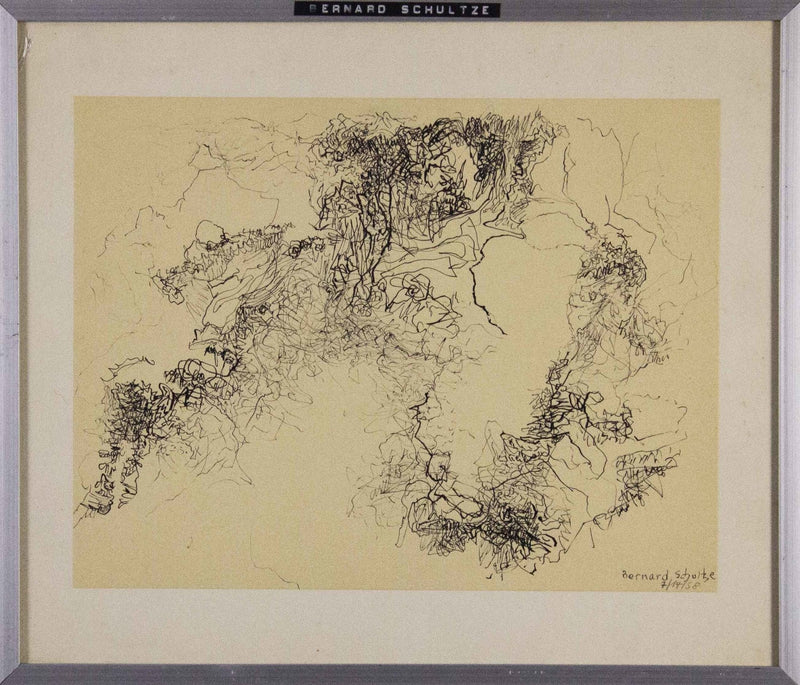
Applied with a nib or brush, the ink ranges from precise hatching to spontaneous brushwork. The interplay of black ink and the light surface is central to the image.
Origins — From drawing traditions to modern art
Carbon inks have ancient roots and are central to East Asian art, especially Chinese painting and calligraphy. Traditional ink is made from soot and binders, often formed into sticks and ground with water on an inkstone.
In Europe, ink drawing flourished in preparatory studies, illustrations and independent artworks. Modern and contemporary artists use it to simplify forms, explore the character of the line and work freely in both figurative and abstract art.
How it is made — Tools, inks and methods
India ink is usually applied to paper with nibs, compatible pens or brushes. The nib varies line weight and builds shadows through hatching. A brush makes fine lines, broad washes and spontaneous marks.
Dilution creates washes and greys. Paper texture and absorbency affect the spread of the ink, the edges and the appearance of flat areas. The artist can leave areas untouched to create highlights and contrast. Corrections are generally limited, especially once the ink dries.
Characteristics — Precision, contrast and versatility
India ink is valued for deep blacks, crisp lines and the contrast between filled and empty areas. It suits detailed compositions, portraits, landscapes and gestural abstraction.
Appearance and water resistance depend on the formulation and support. Combining it with watercolor pairs graphic definition with transparent colour and broadens its expressive possibilities.
Art in your spaces
The elegance of the drawn line.
From figurative drawings to abstractions, the contrast between ink and paper brings depth and character to interiors. Its bold but refined lines work with natural materials and both modern and classic furnishings.

EXPLORE THE TECHNIQUE
Frequently asked questions
Clear, simple answers to common questions.
What is India ink and how does it differ from other techniques?
India ink is a drawing ink traditionally made with carbon pigments. It is applied as a liquid and produces crisp lines, dense fields of colour and washes. Drawing inks vary in composition and behaviour.
What surfaces can India ink be used on?
Smooth or slightly textured paper is most common. Card and other suitable supports can also be used. Absorbency determines how much the ink spreads and how sharply marks are defined.
Is an India ink drawing an original artwork?
Yes, if it was made by the artist and is not a reproduction. It can be a preparatory study or a standalone artwork. Attribution, provenance and available documentation help establish originality.
How can you recognise a quality India ink drawing?
Consider the quality of the marks, the balance of the composition, the connection to the artist’s practice, condition and provenance. A signature or documentation must be assessed alongside the other evidence.
How should an India ink artwork be preserved?
Frame it under glass with a mat or spacer and use conservation-grade materials. Avoid direct sunlight, damp and temperature fluctuations. Keep water and cleaners off the surface and consult a conservator specialising in works on paper if treatment is needed.
EXPLORE OTHER ART TECHNIQUES
Techniques, materials, endless forms of expression.
 Etching
The appeal of the etched line
 Aquatint
The nuances of intaglio
 Lithography
Freedom of line
 Screenprint
Colour takes shape
 Linocut
The strength of shapes
 Woodcut
The line cut into wood