

ART TECHNIQUES
Collage
Materials, composition and expressive freedom.
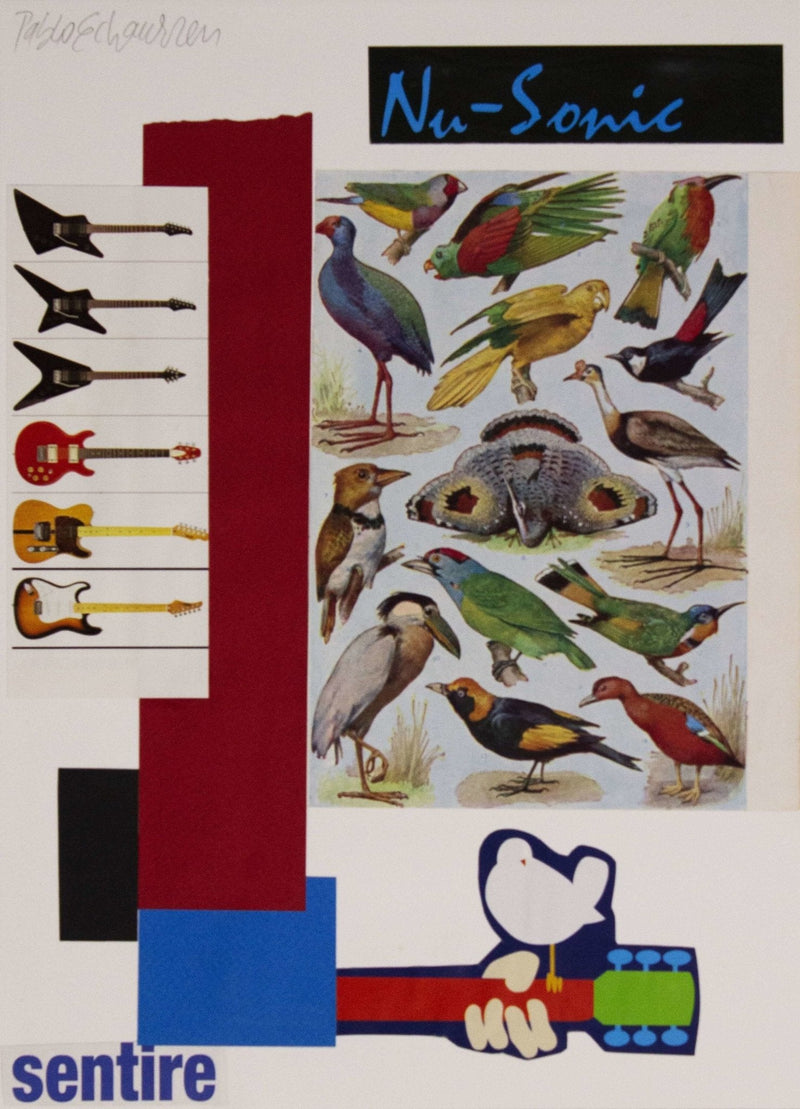
An art technique that brings together fragments of paper, images and other materials to build new compositions through juxtaposition, layering and contrast.
OUR COLLAGES
Artworks to discover, choose and live with every day.

UNDERSTANDING THE ART TECHNIQUE
What is collage?
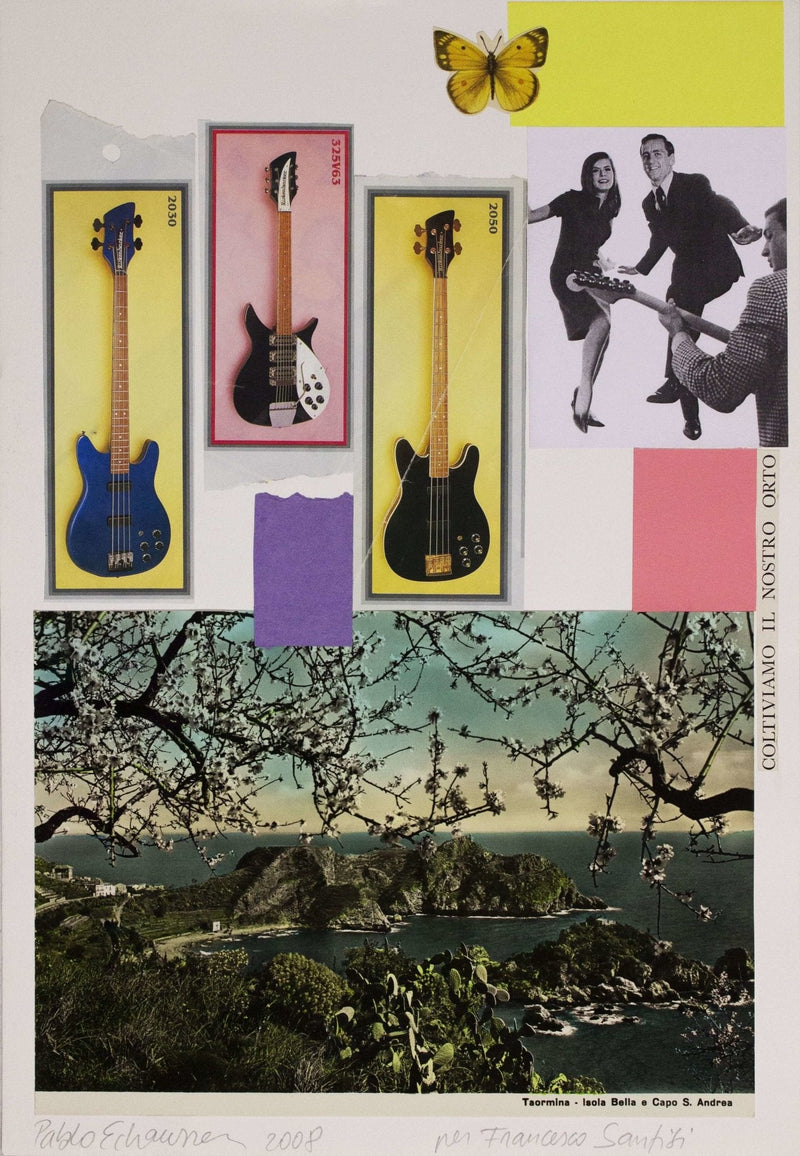
Collage is a technique in which fragments are attached to a support to create a composition. Coloured papers, newspaper clippings, photographs, fabrics and other elements can form figurative or abstract images. Placing the fragments together changes what they mean.
Collage brings existing physical materials into the composition. It can stand on its own or be combined with drawing and painting to create mixed-media artworks.
Origins — From the early avant-garde to contemporary practice
Artists had used applied papers and other materials long before collage became central to twentieth-century Western art through Cubism. In 1912 Pablo Picasso and Georges Braque incorporated printed papers and clippings, questioning the relationship between representation and reality.
Dadaists drew on everyday culture and mass media, while Surrealists explored unexpected juxtapositions and imaginative associations. After the Second World War, collage found new forms in explorations of material, Pop Art and contemporary practice, becoming a way to reflect on images, memory and society.
How it is made — Materials, supports and methods
The artist selects materials and a support, such as paper, card, canvas, board or another suitable surface. Fragments are cut, torn or shaped and arranged according to a plan or more spontaneously.
The elements are secured with adhesives suited to the materials and support. Overlaps, irregular edges, differences in thickness and changes in colour help build the image. Pencil, ink or paint can be added at the artist’s discretion.
Characteristics — Layers, material and freedom of composition
Collage brings together images, surfaces and materials from different sources. Geometric and organic shapes, even and irregular surfaces, or recognisable fragments and abstract areas can be set against one another.
The physical materials give collage a distinctive visual and tactile quality. Existing images can take on new meanings. Long-term stability depends on the materials, adhesives, support and conditions of preservation.
Art in your spaces
Materials become images.
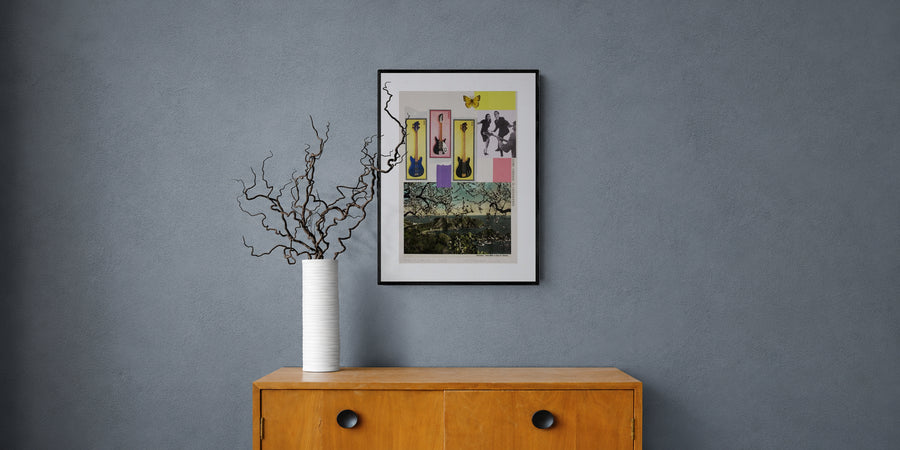
Collage brings visual richness into interiors through layers, contrasts and details. From geometric compositions to figurative and textured works, it complements contemporary furnishings, natural surfaces and understated spaces, adding character while preserving balance.

EXPLORE THE TECHNIQUE
Frequently asked questions
Clear, simple answers to common questions.
What is collage and how does it differ from mixed media?
Collage attaches fragments of materials to a support. Mixed media combines several artistic techniques in one artwork. A collage may stand alone or be combined with painting or drawing in a mixed-media artwork.
What materials and supports are used for collage?
Paper, photographs, printed clippings, fabrics and other materials can be used if they are compatible with the support and method of attachment. Common supports include paper, card, canvas and board. The choice depends on the artist’s intentions and the physical characteristics of the composition.
Is a collage an original artwork?
Yes, when the artist creates the composition directly and it is not a reproduction. An artwork that incorporates printed images can still be original. Distinguish original collages from photographic or printed reproductions and assess attribution, provenance and available documentation.
How can you recognise a quality collage?
Consider the coherence of the composition, the relationship between materials, the artist’s expressive aims and the condition of the artwork. Provenance, documents and any signature inform the assessment. Each alone is insufficient to establish authenticity. Pay particular attention to lifting, detached fragments and changes in the materials.
How should a collage be preserved?
Avoid direct sunlight, high humidity and temperature fluctuations. Paper artworks generally benefit from conservation-grade framing and adequate clearance between the surface and glazing, especially if they have raised elements. Consult a specialist conservator about loose fragments and avoid household adhesives, tapes and cleaners.
EXPLORE OTHER ART TECHNIQUES
Techniques, materials, endless forms of expression.
 Etching
The appeal of the etched line
 Aquatint
The nuances of intaglio
 Lithography
Freedom of line
 Screenprint
Colour takes shape
 Linocut
The strength of shapes
 Woodcut
The line cut into wood