
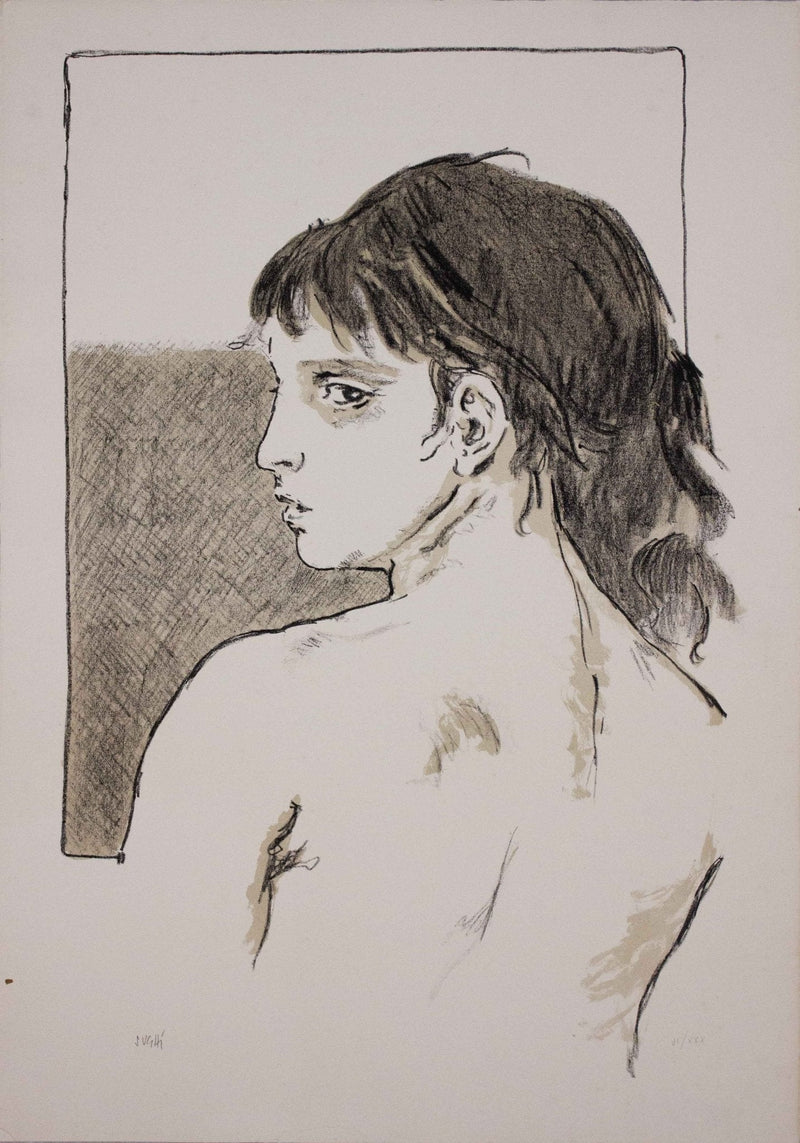
Painter
Alberto Sughi
Italy, 1928–2012
Stay up to date with this artist
Leave your email to receive updates on newly available artworks and news about this artist.
Artworks by Alberto Sughi
1 artwork

Biography of Alberto Sughi
Alberto Sughi (Cesena, 1928 – Bologna, 2012) was one of the protagonists of Italian figurative painting of the second half of the twentieth century. His oeuvre intensely addressed loneliness, human relationships and the contradictions of contemporary society, transforming everyday environments and recognizable figures into images full of psychological tension. Far from abstraction as much as from a simple realistic description, Sughi has constructed a painting…
Read the full biographyClose the biography
Alberto Sughi (Cesena, 1928 – Bologna, 2012) was one of the protagonists of Italian figurative painting of the second half of the twentieth century. His oeuvre intensely addressed loneliness, human relationships and the contradictions of contemporary society, transforming everyday environments and recognizable figures into images full of psychological tension. Far from abstraction as much as from a simple realistic description, Sughi has constructed a painting capable of telling what remains unexpressed in gestures and glances.
A figuration attentive to the human condition
Sughi's training developed through a personal journey, fueled by the observation of reality and comparison with twentieth-century painting. From the beginning, the human figure took on a central role, but not as a subject to be celebrated. The artist was interested in the concrete conditions of existence, social tensions and the distance that can separate people even when they share the same space.
His language fits into the debate on post-war figuration, maintaining an autonomous voice. The characters are recognisable, the environments are often familiar, but the scene appears permeated by a sense of uneasiness. Painting does not illustrate a thesis: it puts the viewer in front of open situations, in which the meaning arises from the atmosphere and the relationship between the figures.
The choice of figuration does not equate, for Sughi, to a naive trust in the transparency of images. A recognizable face can remain indecipherable; a realistic environment can accentuate the feeling of distance between people. The artist thus builds a complex relationship between what the painting shows and what it suggests. The characters are not reduced to symbols of a social condition, but retain an individuality that is difficult to grasp. This psychological attention allows painting to address collective themes without turning into an illustration of a message. The observer is called to participate, to question the relationships and to recognize something of his own experience in the scenes.
Bars, interiors and scenes of modern life
Among the most characteristic subjects are bars, clubs, waiting rooms and interiors populated by figures who seem to communicate with difficulty. The urban environment and places of sociality become scenarios of isolation, while postures and glances suggest stories that are not fully told. Physical closeness does not coincide with a real relationship: this is one of the most recurring tensions in his oeuvre.
The compositions are constructed with theatrical attention. The position of the characters, the openings of the space and the direction of the light guide the gaze without imposing a single narrative. Color helps to make the atmosphere tangible: deep shades and calibrated contrasts can transform an ordinary scene into an image of strong emotional intensity.
The almost theatrical character of many interiors also derives from the distribution of pauses. An isolated figure can occupy a limited portion of the canvas, while the surrounding space acquires an unexpected emotional weight. In other cases the proximity of the bodies makes the lack of communication even more evident. Sughi avoids resolving these tensions in a concluded narrative: the painting seems to retain a moment before or after an event that we will not see. The color contributes to the same suspension, alternating areas of intense material presence with more collected passages. The modernity of his subjects does not depend only on their clothes or environments, but on the ability to represent a condition of shared uncertainty.
Painting, drawing and thematic cycles
Sughi has developed over time pictorial cycles dedicated to recurring situations and themes, deepening the relationship between individual experience and social context. Seriality does not involve mechanical repetition: it allows us to observe the same problem from different points of view, as happens in a narrative divided into chapters. Drawing also plays an important role, because it allows us to study poses, spatial relationships and expressive intensities.
Working in cycles allows the artist to return to the same questions without simply repeating the images. A collective scene can highlight social dynamics, while an isolated portrait focuses attention on the vulnerability of the individual. The differences in scale, light and arrangement of the figures modify the tone of the artwork. The drawings also allow us to follow this research: a variation in the position of a hand or in the direction of the gaze can transform the relationship between the characters. For prints it is useful to reconstruct the production context and distinguish editions conceived as autonomous artworks from reproductions of paintings. A precise card does justice to this variety without confusing the narrative value of the image with its technical nature.
The artworks on paper show Sughi's ability to construct an image through a few essential elements. When it comes to prints, it is necessary to distinguish original graphics, reproduction and other forms of edition, verifying technique, support, signature, numbering and possible publisher. His contribution to Italian painting consists in having kept alive a figuration capable of questioning the present: his characters belong to a specific era, but their solitude continues to speak to today's spectators too.
Attention to the human condition makes the relationship between the individual and the environment particularly important. An interior is never just a neutral background: it can protect a figure or accentuate its isolation. The arrangement of the furniture, the openings and the shaded areas help to define the emotional quality of the scene. Sughi constructs images in which everyday life becomes a place of questioning, without the need for exceptional episodes. Even when the subject belongs to a recognizable historical moment, the tension between physical closeness and emotional distance remains accessible to observers of different generations. It is this ability to combine narrative precision and psychological ambiguity that gives continuity to his research.
Do you like Alberto Sughi?
Leave your email to receive updates on newly available artworks and news about this artist.
Alberto Sughi
Art that lives in your spaces
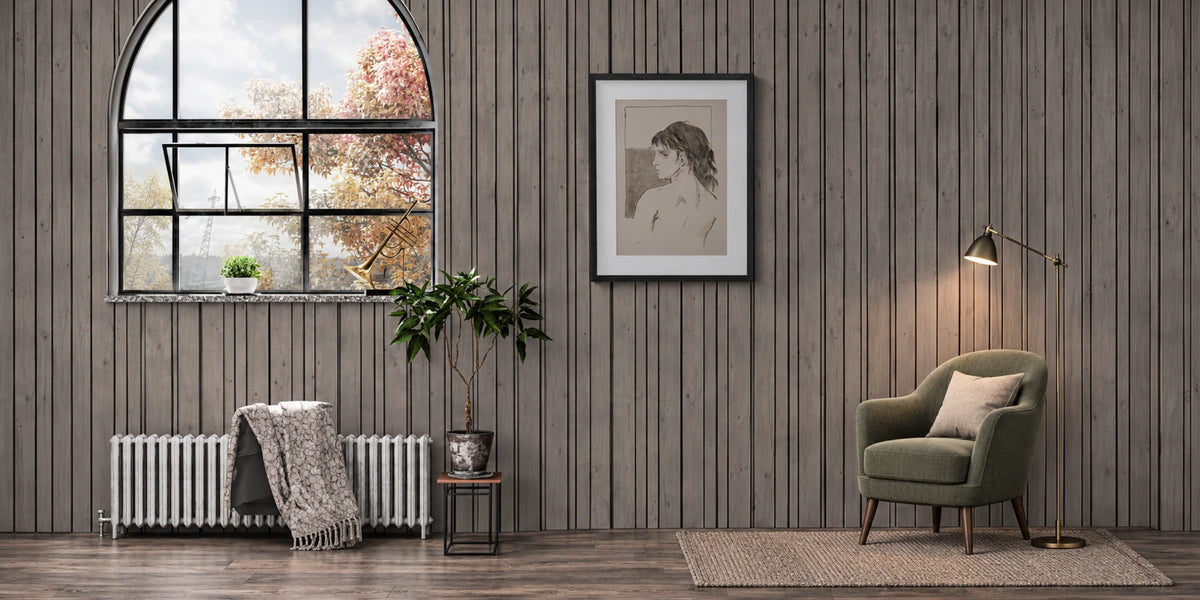
Choosing an artwork by Alberto Sughi means making room for an individual artistic language. The artworks gathered here suggest combinations and perspectives to bring into your own surroundings, letting art guide your gaze.
DISCOVER THE ARTIST
Frequently asked questions
Answers to common questions about Alberto Sughi, the artist’s life, artworks and value on the art market.
Who was Alberto Sughi?
Alberto Sughi was an Italian painter associated with a figuration attentive to the human condition and contemporary life. A climate of introspection, solitude and social observation often emerges in his artworks.
What are the main themes of Alberto Sughi's painting?
Figures in interiors, meetings, waits and scenes of urban life recur. Sughi investigates the relationships between people and the environment, entrusting an important part of the story to postures, lights and silences.
Does Alberto Sughi belong to existential realism?
His oeuvre is frequently compared to existential realism and the new Italian figuration. These definitions help to place him historically, but do not exhaust the variety of his production.
Did Alberto Sughi make lithographs and screenprints?
Alongside the paintings there are graphic artworks by Sughi. To establish whether an example is a lithograph, a silkscreen or another technique, one must refer to the data of the specific edition, not just the appearance of the image.
How to verify a signed print by Alberto Sughi?
It is necessary to check signature, technique, numbering, publisher or printer when indicated and origin. The condition of the sheet and the consistency between the description and documents are also important elements before purchasing.
Discover more artists
Explore more leading figures in modern and contemporary art


