
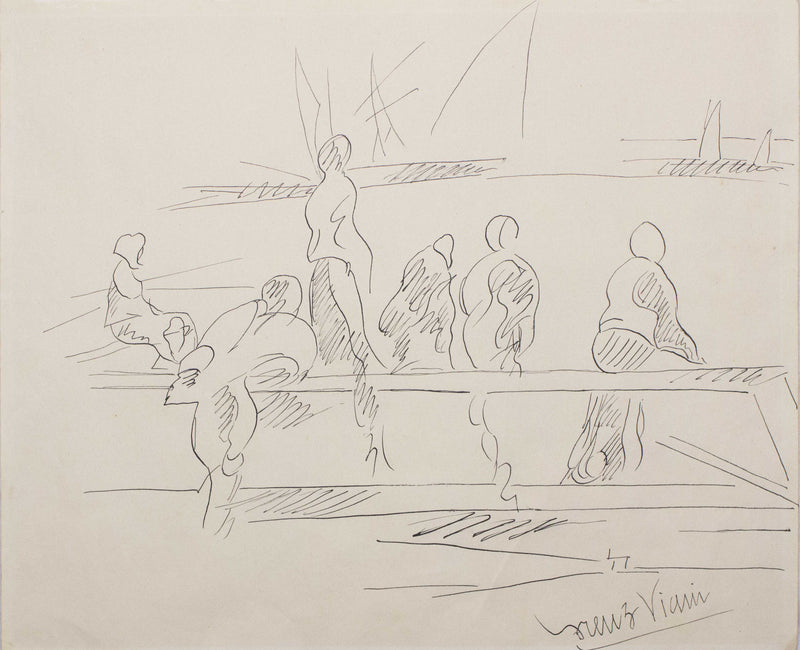

THE TECHNIQUES OF ART
Pencil
Precision, shading, and freedom of line.
A versatile and immediate drawing technique that allows for precise strokes, soft shading, and a great richness of tones, from light lines to intense chiaroscuro.
OUR PENCIL DRAWINGS
Artworks to discover, choose and live with every day.
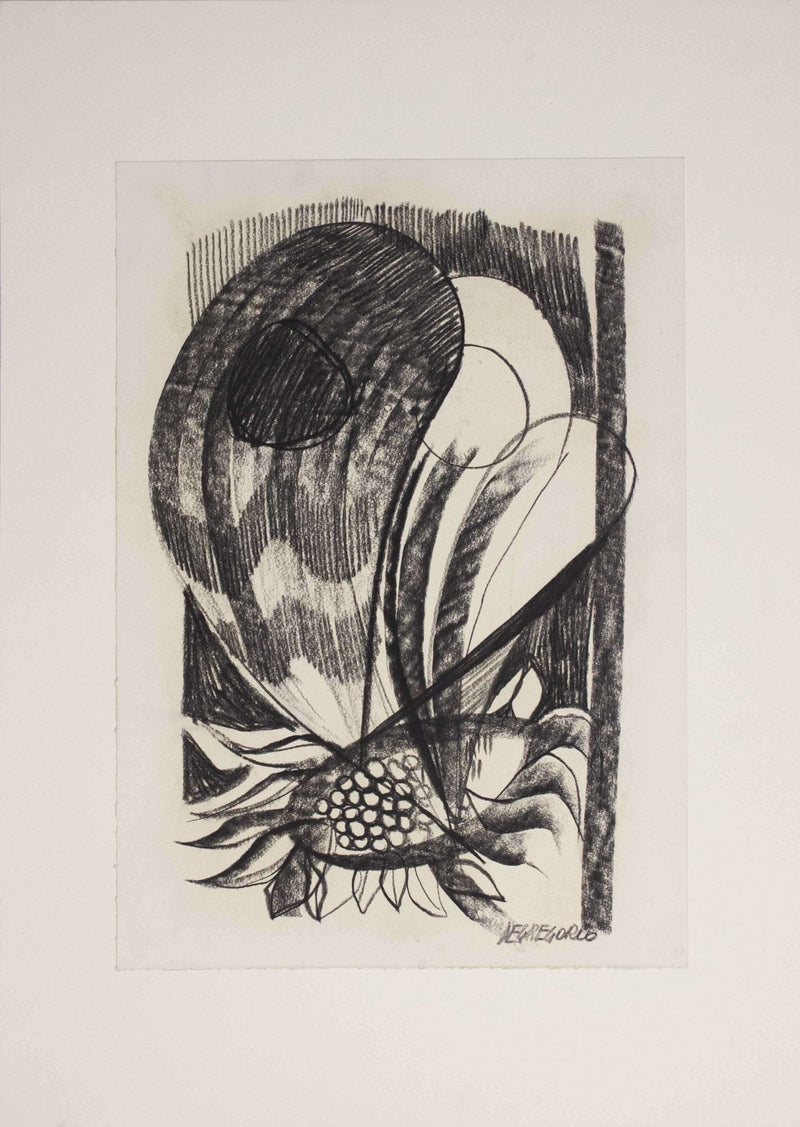

UNDERSTANDING THE ARTISTIC TECHNIQUE
What is a pencil?
A pencil is a drawing material consisting of a graphite core, generally encased in wood. It is a dry technique that allows for a great variety of marks, from the lightest lines to the most intense tones, with blended transitions, shading, and a high degree of precision.
The varying hardness of the core and the texture of the paper allow the artist to modulate the stroke, build volumes, and represent light through a rich tonal range. A pencil can be used for both preparatory studies and independent works.
Origins — From graphite to the modern pencil
Before the widespread use of the graphite pencil, artists used metal points, charcoal, and natural chalks to draw figures and study proportions. In the sixteenth century, the exploitation of the Borrowdale graphite deposits in England contributed to the spread of this material as a drawing tool.
At the end of the eighteenth century, Nicolas-Jacques Conté developed a process based on mixing graphite and clay, which allowed for the production of cores of varying hardness. In the nineteenth century, the pencil became an essential tool for academic drawing, life studies, and landscape representation. In modern and contemporary art, it has retained an important role, both in figurative work and in abstract and conceptual experimentation.
How it is used — Tools, supports, and techniques
Graphite is deposited directly onto the paper through the contact of the core with the surface. The harder H-series cores generally allow for thin, light lines; the softer B-series cores allow for dark marks and more intense areas of tone. The HB grade offers an intermediate solution.
The artist can use parallel or cross-hatching, layer several coats of graphite, or blend the mark to achieve gradual tonal transitions. The pressure of the hand, the angle of the pencil, and the texture of the support influence the result. An eraser can be used not only for corrections, but also to recover highlights and create expressive effects.
Characteristics — Versatility, control of the mark, and tonal range
The pencil is distinguished by the precision of the stroke and the ability to move from essential lines to complex chiaroscuro. Graphite allows for the representation of minute details, surfaces, depth, and volumes, but also for the development of gestural and abstract compositions. The densest areas can exhibit a characteristic sheen, which varies depending on the lighting.
The relative ease of modulating the mark encourages compositional exploration without reducing drawing to a mere preparatory phase. A pencil work can possess entirely independent formal completeness and expressive power. The surface requires protection from rubbing, and the paper must be stored in suitable conditions.
Art in your spaces
A mark with timeless appeal.
The pencil adapts to different subjects, from portraiture to figure drawing, from landscapes to studies, bringing an understated elegance and a powerful expressive intensity to any setting. The richness of the grays and the delicacy of the line complement both classic and contemporary furnishings, enhancing spaces with understated yet highly distinctive compositions.


EXPLORE THE TECHNIQUE
Frequently asked questions
Simple and clear answers to the most common questions.
What is a pencil, and how does it differ from other drawing techniques?
The graphite pencil is a dry drawing tool that allows for precise control of the stroke and a wide range of grays. Compared to charcoal, which is generally more opaque and powdery, graphite can produce thinner marks and slightly shiny surfaces. It is also distinguished from pen and ink, which uses liquid ink, and sanguine, characterized by reddish tones.
On what supports can a pencil be used?
Paper is the most common support. Smooth surfaces favor details and precision, while rougher ones enhance texture and hatching effects. Cardstock and other suitable supports, whether white or colored, can also be used depending on the desired result.
Is a pencil drawing considered an original work of art?
Yes, when it is created directly by the artist and is not a reproduction. It can be a preparatory study or an independent work. Its value depends on factors such as attribution, artistic quality, provenance, rarity, state of conservation, and available documentation.
How do you recognize a quality pencil drawing?
Artistic quality can emerge from the sensitivity of the mark, the compositional construction, the modulation of tones, and consistency with the artist's language. Realistic precision is not an essential requirement. When purchasing, it is also important to consider authenticity, provenance, the condition of the paper, and the documentation of the work.
How do you properly preserve a pencil drawing?
It is advisable to protect it with a frame fitted with glass and a mat or spacer, avoiding direct contact with the drawn surface. The work should be kept away from direct sunlight, moisture, and heat sources. Do not rub the graphite or apply fixatives yourself. For any interventions, consult a restorer specializing in works on paper.
 Etching
The appeal of the etched line
 Aquatint
The nuances of intaglio
 Lithography
Freedom of line
 Screenprint
Colour takes shape
 Linocut
The strength of shapes
 Woodcut
The line cut into wood