

ART TECHNIQUES
Watercolor
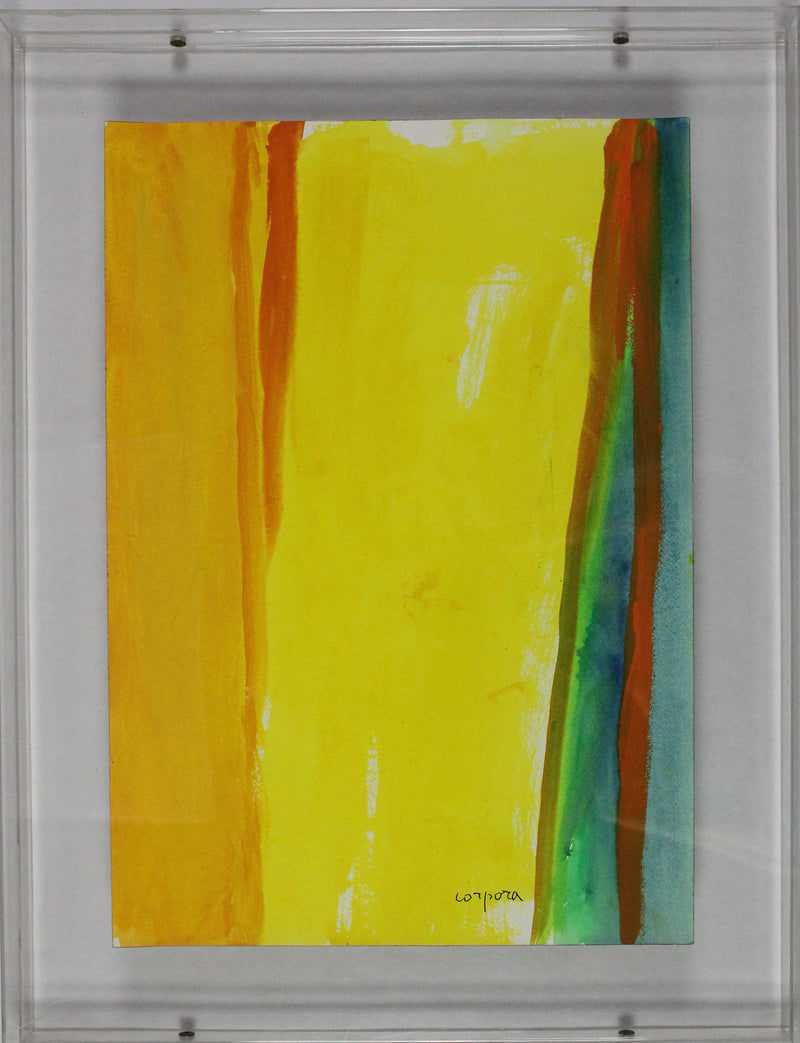
Transparency, light and lightness of colour.
A water-based painting technique that uses luminous washes and delicate gradations to create evocative atmospheres, subtle colour effects and compositions with striking immediacy.
OUR WATERCOLORS
Artworks to discover, choose and live with every day.

KNOW THE ART TECHNIQUE
What is watercolor?
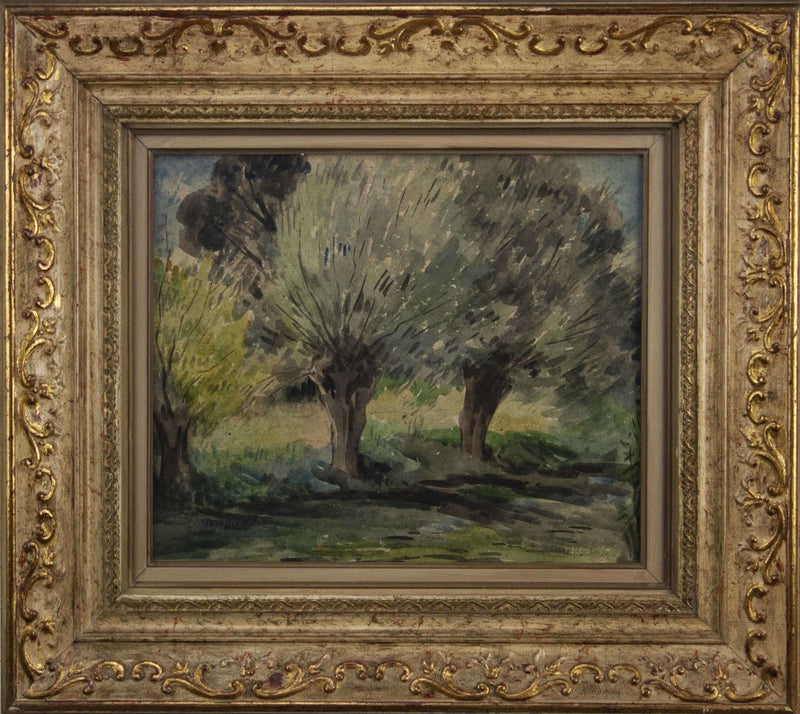
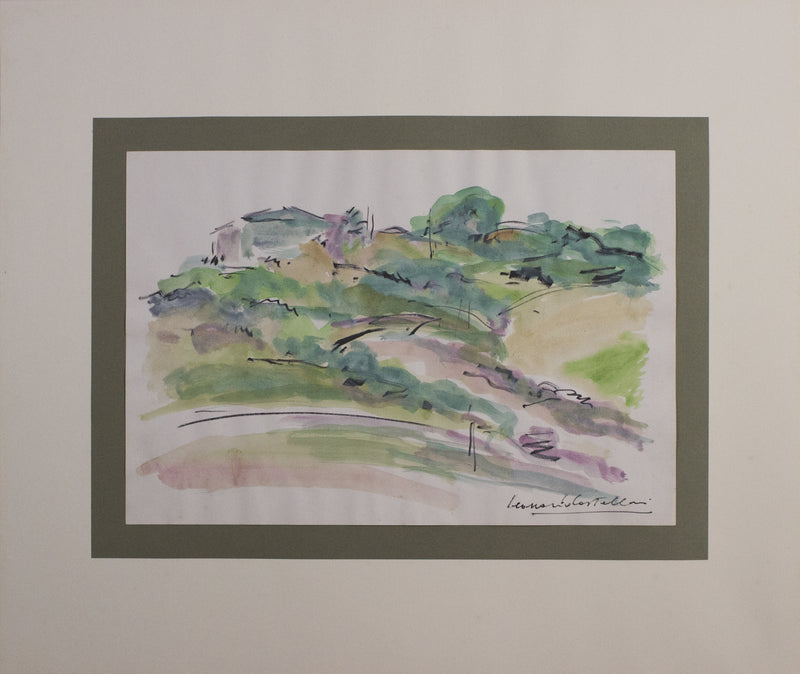
Watercolor is a painting technique that uses finely ground pigments, usually bound with gum arabic and diluted with water, applied mainly to paper. Its defining feature is the transparency of the colour, which lets the light of the support show through the painted layers and gives the work a distinctive visual lightness.
With watercolor, the white of the paper plays a central role in building the image and defining highlights, contrasts and tonal variations. The amount of water, the concentration of pigment and the properties of the support produce effects ranging from delicate washes to areas of intense colour.
Valued for its immediacy and versatility, watercolor has been used by many modern and contemporary artists for preparatory studies and work from life, as well as for independent works in which the fluidity of colour becomes a means of formal and expressive exploration.
Origins — From ancient water-based painting to contemporary art
Water-diluted pigments have been used since antiquity across very different artistic traditions. Water-based painting was known in ancient Egypt. In East Asia, the use of inks and colours on paper and silk gave rise to refined forms of art based on fluid marks, transparency and the relationship between image and surface.
In medieval Europe, water-based colours were used to decorate illuminated manuscripts, make illustrations and depict the natural world. During the Renaissance watercolor gained importance as a tool for observation and documentation. Albrecht Dürer demonstrated its expressive possibilities in his celebrated botanical, zoological and landscape studies.
In the eighteenth and nineteenth centuries watercolor flourished in Britain and became an independent painting medium. Thomas Girtin and William Turner explored the atmospheric possibilities of water-based colour, creating compositions in which light, weather and the perception of space played central roles.
With the rise of modern art, watercolor gradually moved beyond its traditional association with landscape and naturalistic representation. Paul Cézanne used its transparency to investigate the structure of forms, while Wassily Kandinsky and Paul Klee explored water-based colour in abstract work.
Throughout the twentieth century and in contemporary art, watercolor has evolved through combinations with drawing, ink, collage and other materials. Rapid execution, unpredictable blending and a wide range of possible effects make it suited to figurative work and free gestural or abstract experiments alike.
How it is made — Materials, supports and painting methods
Making a watercolor requires an understanding of how water, pigments and the surface behave. The materials are relatively simple, but controlling how they interact is one of the most complex aspects of the technique.
Watercolor paints are finely ground pigments usually combined with gum arabic, which binds the colour to the support after the water evaporates. Pans, tube paints and liquid preparations each offer different ways to apply colour.
Paper is essential to the painting process. Watercolor papers made from cotton, cellulose or a blend of fibres are absorbent and strong enough to withstand repeated wetting. Smooth, fine-grained or rough surfaces directly affect pigment distribution and mark quality.
One common method is wet-on-dry, in which diluted paint is applied to dry paper for relatively sharp edges, precise details and greater control over shapes.
In wet-on-wet, the pigment is applied to a premoistened surface. Water allows colour to spread and blend naturally, producing soft transitions suited to skies, atmospheres and abstract compositions.
Glazing involves building up thin, transparent layers of colour, usually after each preceding layer has dried. Artists can gradually develop depth, intensity and tonal complexity while retaining the luminosity of the support.
A dry brush, with very little water, picks up the texture of the paper and creates broken marks and textured surfaces.
Contemporary artists often combine these methods with each other or with pencil, charcoal, ink and other materials. The transparency of watercolor can then interact with the precision of drawing and with different qualities of the painted surface.
Characteristics — Transparency, luminosity and expressive freedom
Watercolor's defining quality is the ability to make luminous effects through transparent pigments. Light passes through the paint layers and reflects off the paper, producing a colour quality distinct from that of predominantly opaque media.
The balance of water and pigment modulates colour intensity from barely visible tones to deep saturated passages. Successive glazes bring further variations, while spontaneous blending can produce effects difficult to reproduce in other media.
Working in watercolor often requires anticipating the finished result. As paint dries, its intensity and distribution can change. The ability to correct or lift pigment depends on the paper, the pigment and the method used.
The technique strikes a balance between control and spontaneity. The artist can direct the movement of the paint and use the natural effects of water, making the unpredictability of the medium part of its expressive vocabulary.
In modern and contemporary art watercolor accommodates detailed renderings, figurative compositions, landscape studies, geometric explorations, abstract images and gestural work. It also lends itself to bold or large-scale painting.
A watercolor made directly by the artist is a unique work. Its artistic interest rests on the quality of execution, expressive inquiry, the artist’s significance and the work’s place in their practice.
Provenance, authenticity, dating and the condition of the paper and pigments are especially important when assessing a watercolor. A signature, documentation or references in the literature can help trace its history and establish its interest to collectors.
Art in your spaces
One watercolor, a thousand possibilities.
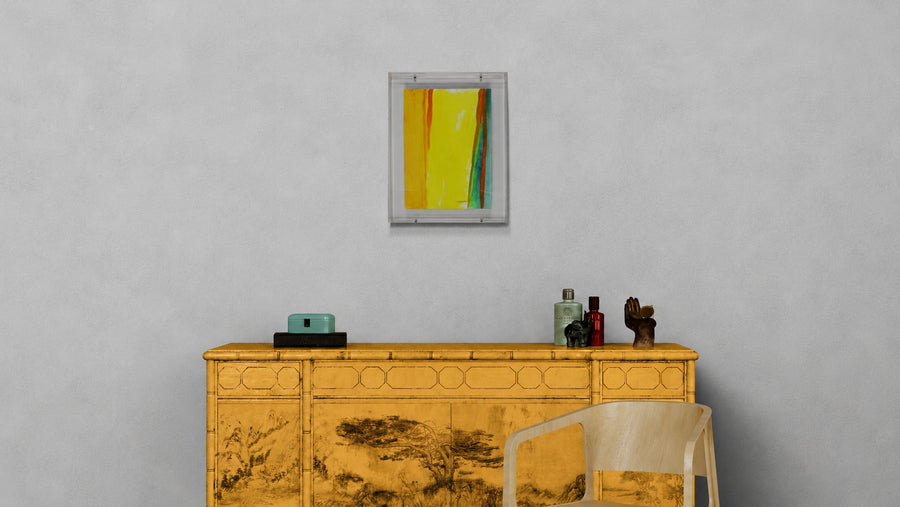
From delicate landscapes to free abstract compositions, watercolor suits different artistic approaches and interior styles. Its transparent colour, luminous surfaces and expressive range enhance classic and contemporary interiors, creating refined, personal atmospheres.
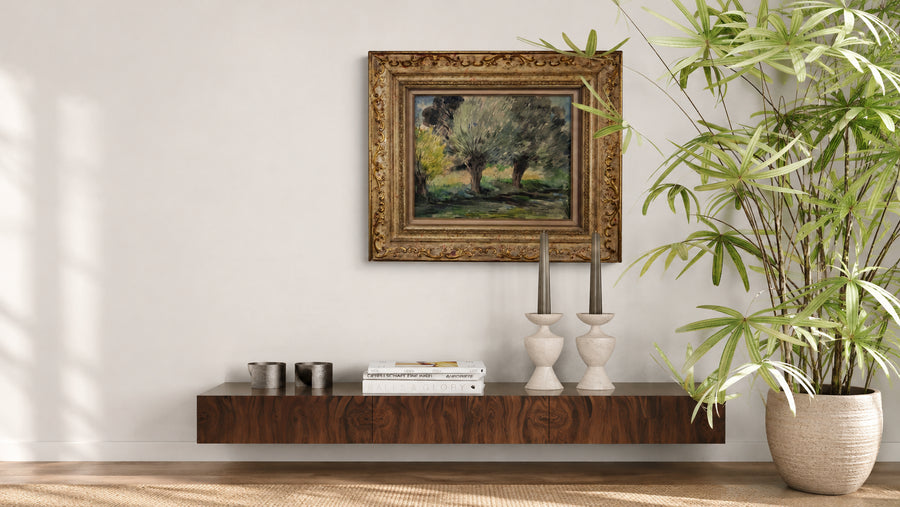

EXPLORE THE TECHNIQUE
Frequently asked questions
Clear, simple answers to common questions.
What is the difference between watercolor and gouache?
Watercolor is mainly distinguished by its transparency, which lets the lightness of the paper show through the paint. Gouache, also known as bodycolour, is more opaque and has greater covering power, generally because of a different formulation and pigment concentration. Both are water-based painting techniques with distinct visual effects.
What kind of paper is used for watercolor?
Watercolor usually requires water-resistant paper made from cotton or cellulose. Weight, fibre composition and surface texture affect absorption and the result. Artists can choose smooth, fine-grained or rough paper to suit their purposes.
Is a watercolor an original work of art?
Yes. A watercolor made directly by the artist is an original, unique work, like an oil painting, a drawing or a work made in another medium. A photographic or digital reproduction of a watercolor does not have the same uniqueness.
How can you recognise a quality watercolor?
Consider technical skill, compositional balance, use of colour and expressive coherence. Collectors also look at authenticity, provenance, date, condition and the work’s importance within the artist’s production. A signature alone does not guarantee authenticity.
How should a watercolor be preserved?
Protect watercolor from direct sunlight, excess humidity and temperature fluctuations. Use UV-filtering glazing, an acid-free mat and acid-free mounting materials, keeping the painted surface away from the glass. Proper care preserves pigment luminosity and the integrity of the paper over time.
EXPLORE OTHER ART TECHNIQUES
Techniques, materials, endless forms of expression.
 Etching
The appeal of the etched line
 Aquatint
The nuances of intaglio
 Lithography
Freedom of line
 Screenprint
Colour takes shape
 Linocut
The strength of shapes
 Woodcut
The line cut into wood