
Photographer, Painter and visual artist
Man Ray
United States, 1890–1976
Stay up to date with this artist
Leave your email to receive updates on newly available artworks and news about this artist.
Artworks by Man Ray
7 artworks
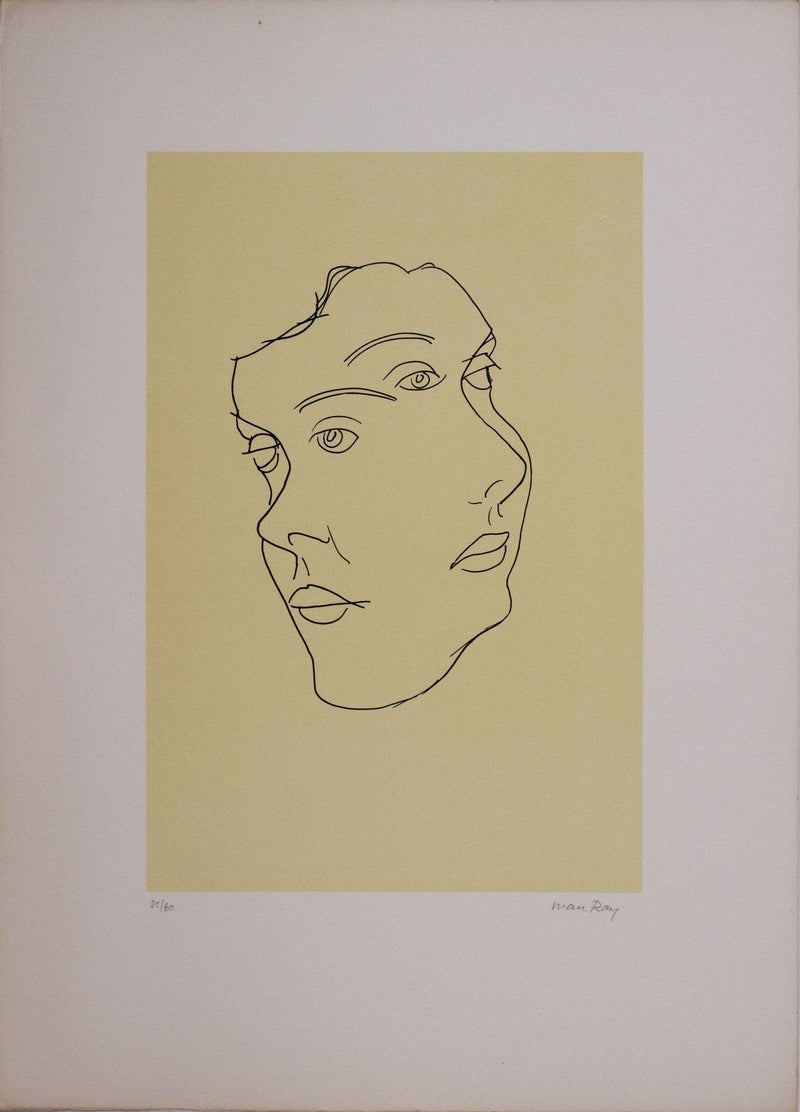
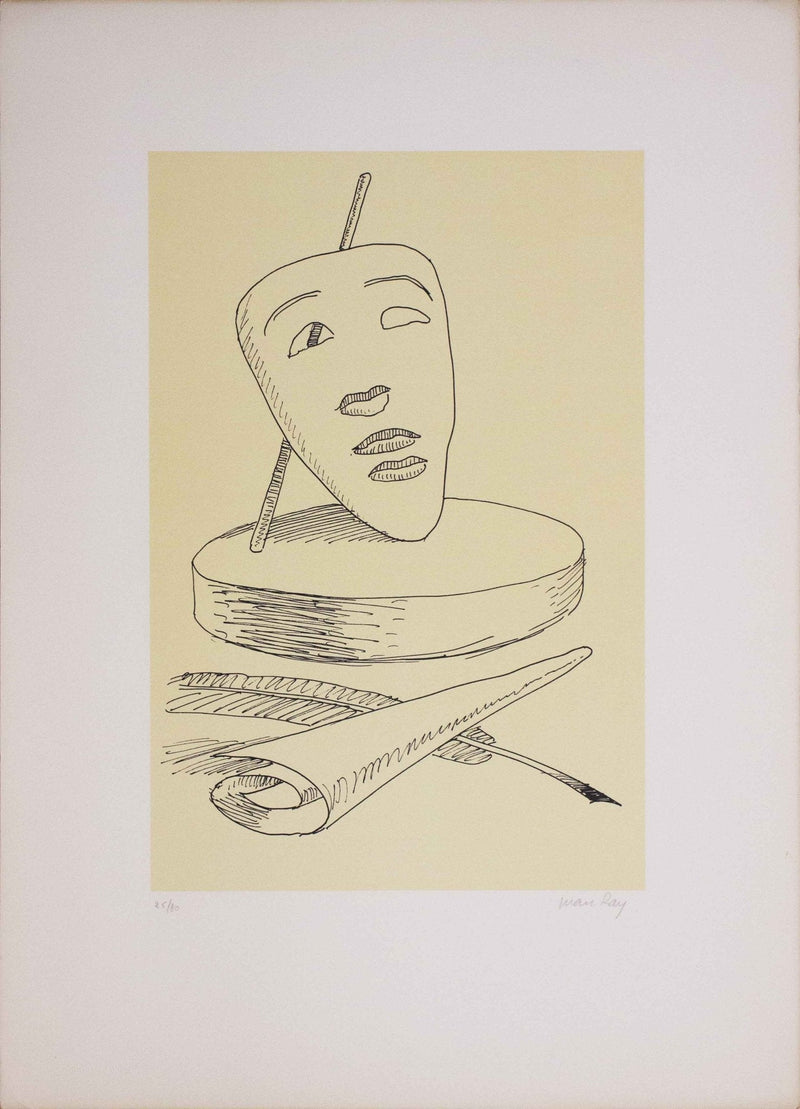
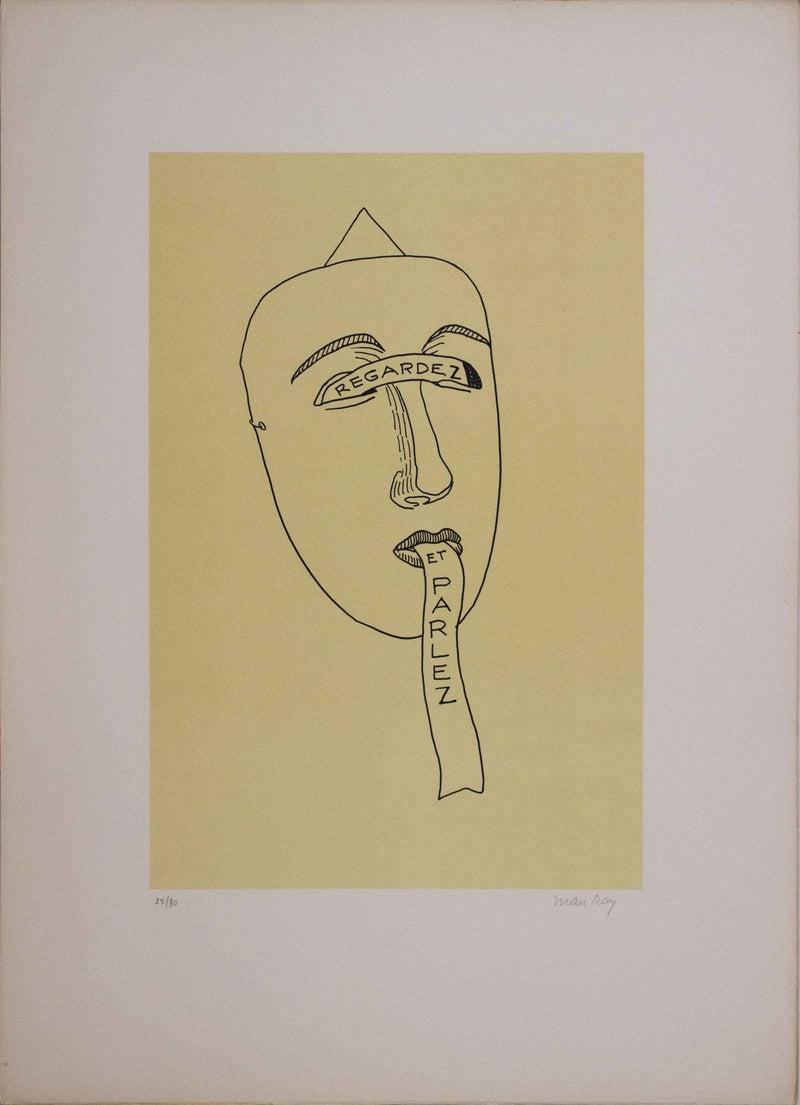


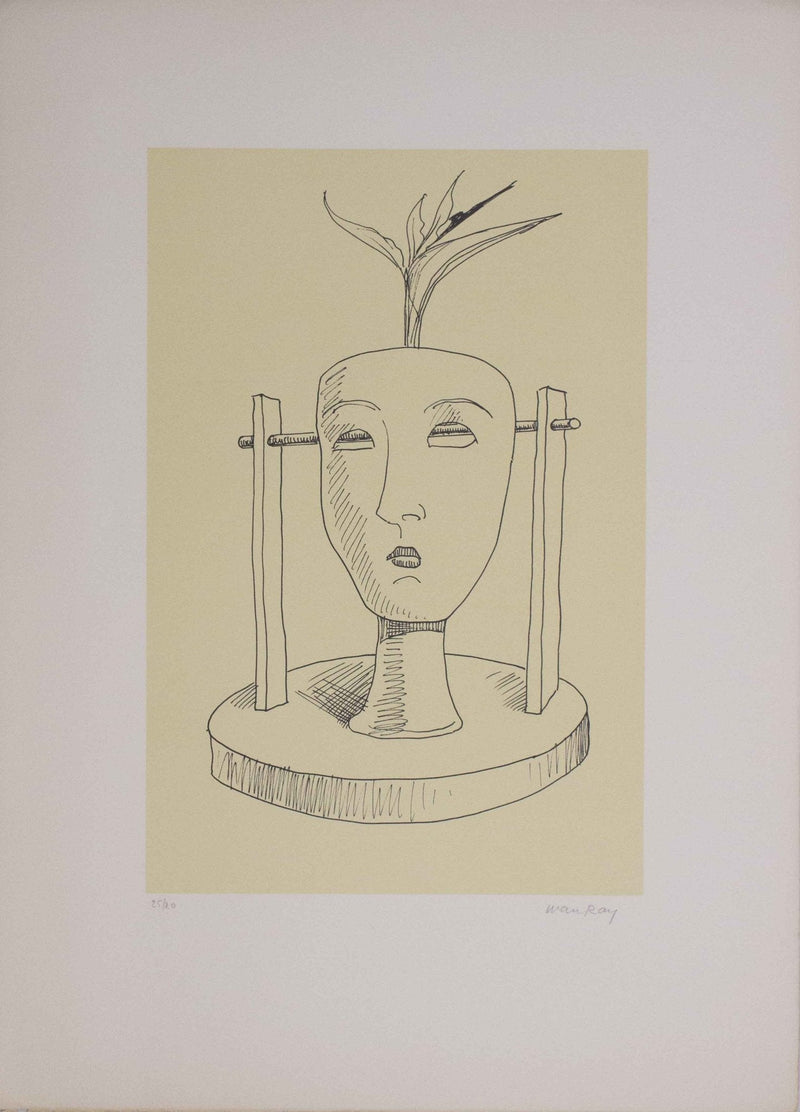
Biography of Man Ray
Painter, photographer, creator of objects and tireless experimenter, Man Ray (Philadelphia, 1890 – Paris, 1976) went through some of the most radical transformations of twentieth-century art. Born Emmanuel Radnitzky, he chose a pseudonym destined to become inseparable from his visual inventions. His oeuvre questions the boundaries between photography and painting, reality and imagination, technical gesture and randomness. More than looking for a unique style, Man…
Read the full biographyClose the biography
Painter, photographer, creator of objects and tireless experimenter, Man Ray (Philadelphia, 1890 – Paris, 1976) went through some of the most radical transformations of twentieth-century art. Born Emmanuel Radnitzky, he chose a pseudonym destined to become inseparable from his visual inventions. His oeuvre questions the boundaries between photography and painting, reality and imagination, technical gesture and randomness. More than looking for a unique style, Man Ray transformed every expressive medium into an opportunity to question the way in which images are born and acquire meaning.
New York, Dada and the meeting with Duchamp
Growing up in New York, he approached the avant-garde through the environment of Alfred Stieglitz's 291 gallery and the more experimental artistic experiences of the city. The friendship with Marcel Duchamp was decisive: both shared the desire to remove art from academic conventions and to introduce irony, a shift in meaning and conceptual freedom into the artwork. In the climate of New York Dada, the common object could become an artwork through a choice or minimal intervention, while photography ceased to be merely a documentation tool.
The comparison with Duchamp contributed to questioning the idea that the value of an artwork depended exclusively on manual skill or the faithfulness of the representation. For Man Ray, choice, the invention of the device and the change of context also mattered. An object removed from its daily function could become a visual enigma; a photograph could show not so much what the eye usually sees, but what a process makes possible. This attitude runs through his most diverse artworks and explains why his activity cannot be rigidly divided into periods dedicated to a single medium.
Man Ray created paintings, assemblages and objects that played with the observer's expectations. A familiar object, modified or combined with an unexpected element, could appear absurd and at the same time reveal a new poetic possibility. This attitude will accompany his entire career, even when the photographic language becomes the most famous part of his production.
Paris, rayographies and photographic invention
After moving to Paris in 1921, he entered into contact with the Dadaist and Surrealist circles and developed an extraordinarily innovative photographic practice. rayographs are images obtained without a camera, placing objects directly on photosensitive paper and exposing them to light. Silhouettes, transparencies and shadows produce suspended forms, sometimes recognisable, sometimes almost abstract. The process does not simply consist of photographing an object: it makes the contact between matter, light and sensitive surface visible.
Rayography is particularly significant because it eliminates traditional photographic perspective. There is no point of view established by a lens: the form depends on the position of the objects, the transparency of the materials and the duration of the exposure. The result may resemble a drawing, but arises from the direct action of light. Even the apparent randomness requires precise choices, because moving an object or varying the distance from the paper changes the image. Man Ray thus transforms a technical procedure into a poetic language in which recognition and abstraction coexist.
Another technique associated with his experimentation is solarization, explored together with Lee Miller, which can produce tonal inversions and luminous contours through particular exposure and development conditions. Even in portraits and fashion photographs Man Ray introduced cuts, lighting and compositional solutions capable of transforming the face or body into enigmatic images. His professional activity, also carried out for magazines and social circles, thus coexisted with radical research into the nature of photography.
The collaboration with Lee Miller also reminds us that the history of the avant-garde is made up of meetings and shared experiments, not just inventions attributed to a single name. In solarization the photographic process can produce inversion effects and bright edges that make the perception of the body unstable. Fashion photography and portraiture thus become fields of research, not necessarily separate activities from artistic experimentation. The publication context, the original destination and any printing variations are useful elements for understanding the path of a specific image.
Surrealism, famous objects and images
Surrealism found a particularly free interpreter in Man Ray. His oeuvre does not pretend to illustrate dreams in a literal way: rather, he creates situations in which objects and bodies lose their usual function. In Le Violon d'Ingres (1924), for example, the photograph of a female body is transformed by the addition of signs that evoke the openings of a musical instrument. The image produces a short circuit between portrait, metaphor and art history, becoming one of the symbols of surrealist photography.
Even surrealist objects show his ability to alter the meaning of things with minimal intervention. The effect often arises from the contrast between a familiar function and a modification that makes it impossible or disturbing. The public recognizes the object, but can no longer use it mentally according to daily habits. This mechanism brings Man Ray's practice closer to surrealist poetry: an unexpected juxtaposition can produce a new meaning without the need for a definitive explanation. It is a freedom that also returns in experimental cinema, where rhythm, light and editing replace conventional narration.
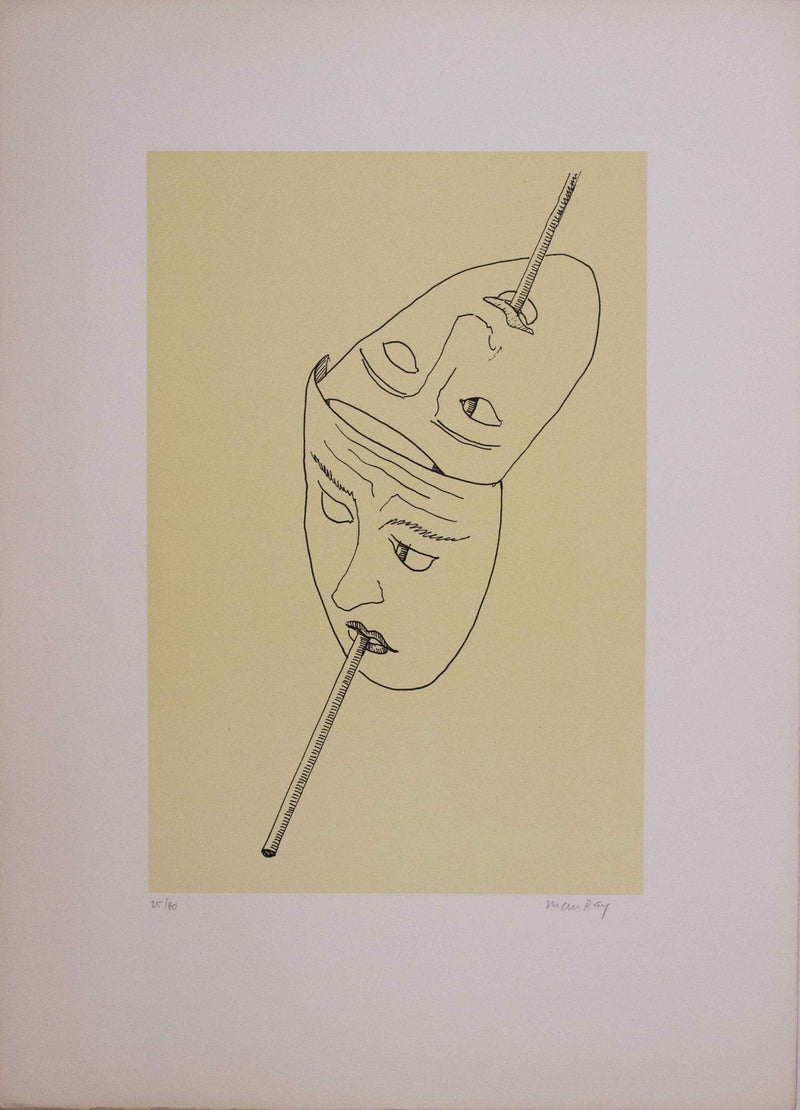
Alongside these images, Man Ray continued to produce paintings, experimental films, drawings, objects and published artworks. His ability to move between different techniques makes it difficult to confine him to the sole definition of photographer. Every material could become a means to question the idea of originality and the relationship between image and reality.
Original photography, multiples and prints
When collecting Man Ray's artworks it is particularly important to distinguish vintage photography, later photographic print, authorized edition, photogram, lithograph, engraving and reproduction. Two apparently identical images can have very different material history, dating and documentary value. A photograph printed after the original negative is not automatically equivalent to an example made during the artist's lifetime; even editions of objects require specific checks.
For photographs it is useful to distinguish the date of shooting from that of the physical print. The negative may be ancient, while the photographic specimen may have been made many years later; stamps, paper, format and provenance help to clarify this story. In the case of a rayography, the process without a photographic negative makes the description of the concrete object even more important. Even for multiples and objects recreated in an edition, authorizations, materials and production date must be documented. These checks do not diminish the strength of the image: they allow us to respect its complex historical identity.
For this reason, in the description of an artwork what matters is the process, the support, the date of the impression, the stamps, the inscriptions, any numbering and the provenance. Man Ray's legacy lies in the freedom with which he transformed technique into imagination: he showed that light can draw, that objects can change identity and that an image can be both precise and mysterious.
Do you like Man Ray?
Leave your email to receive updates on newly available artworks and news about this artist.
Man Ray
Art that lives in your spaces
Artworks by Man Ray open a window onto the imagination. In a contemporary interior, their presence invites you to pause and make room for unexpected visual encounters.
DISCOVER THE ARTIST
Frequently asked questions
Answers to common questions about Man Ray, the artist’s life, artworks and value on the art market.
Who was Man Ray and why is he important to Surrealism?
Man Ray (1890–1976) was an American artist and photographer active mainly between New York and Paris. Linked to Dadaism and Surrealism, he experimented with photography, painting and objects, transforming everyday tools into surprising images. His research contributed to redefining photography as an autonomous creative medium.
What are Man Ray's rayographies?
Rayographies are photographic images obtained without a camera: objects placed on photosensitive paper are exposed to light and leave imprints and silhouettes. Man Ray made this procedure famous in the 1920s, giving it an experimental and poetic dimension. Not all of the artist's photographs are rayographies.
What is solarization in Man Ray's photographs?
Solarization is a darkroom effect that can produce partial tonal inversions and bright edges. Man Ray and Lee Miller experimented with this technique, making it one of the hallmarks of surrealist photography. The presence of a similar effect, however, is not enough to attribute a print to Man Ray.
What is the difference between a vintage photograph and a later Man Ray print?
A vintage print is generally made close to the date of the negative; a later print may be produced many years later, even from an original negative. For collecting, the date of printing, process, possible edition, stamps, provenance and authorizations are important. Two prints of the same image can have very different values.
How to recognize an original print by Man Ray?
A distinction must be made between vintage photography, subsequent authorized prints, multiples and decorative reproductions. Support, dimensions, inscriptions, stamps, provenance and bibliographical references must be verified. The sole reproduction of a famous photograph does not constitute proof of originality or authenticity.
Discover more artists
Explore more leading figures in modern and contemporary art


