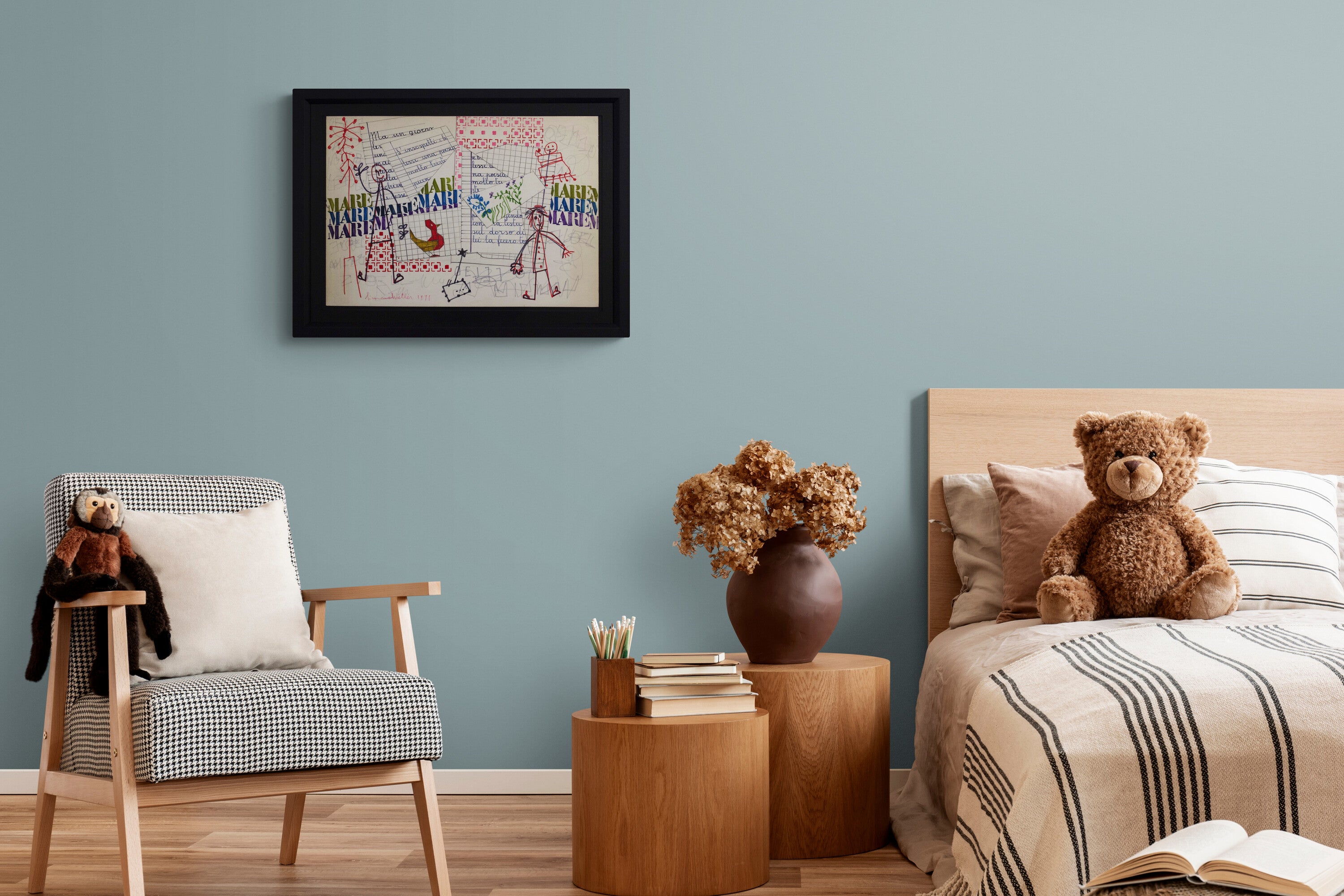

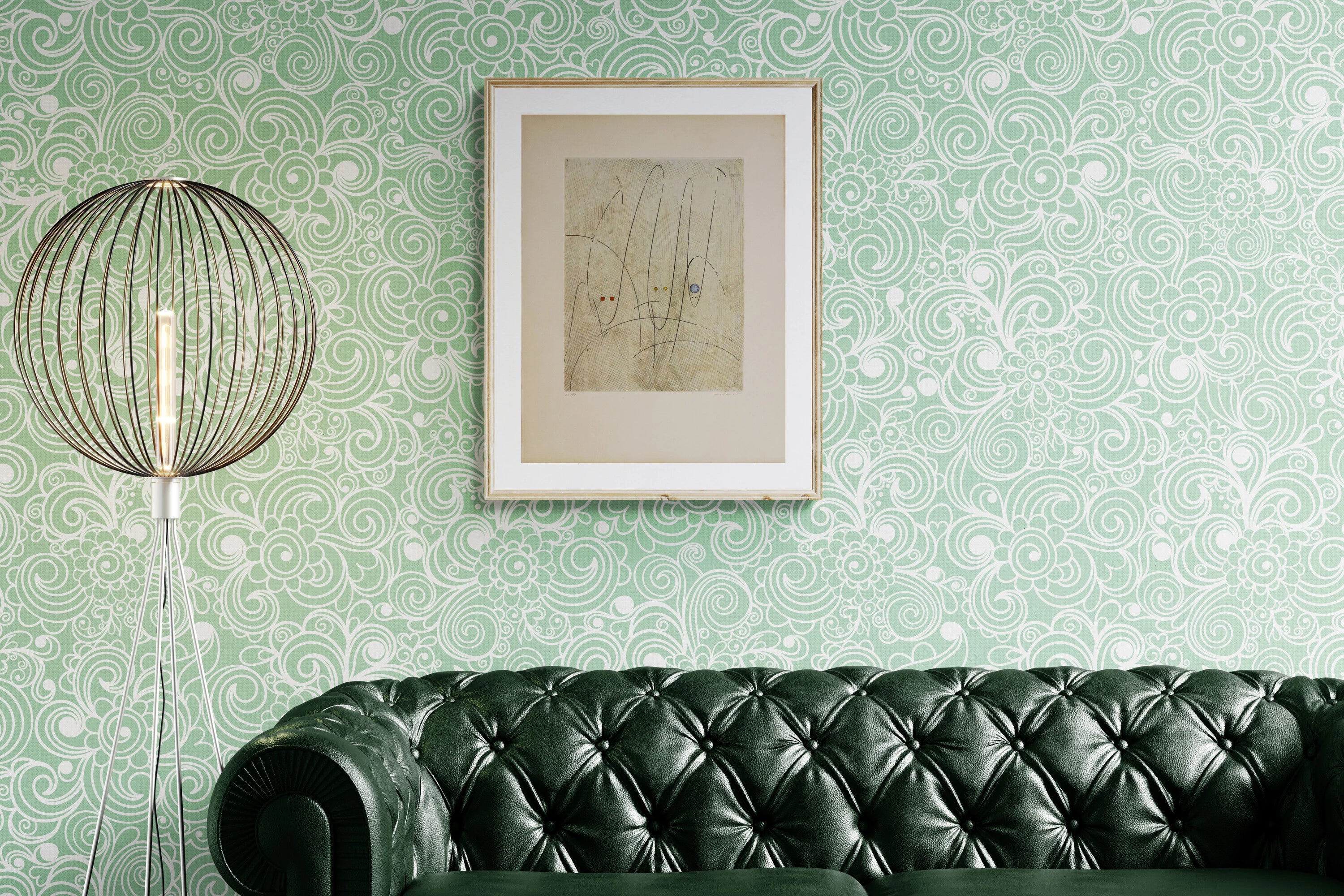


Simona Weller (Rome, 1940) has forged an artistic path in which painting and writing meet and become inseparable parts of a single language. Her canvases can evoke pages, landscapes, blackboards, and surfaces traversed by imaginary alphabets: a mark sometimes begins as a letter, but gradually transforms into rhythm, texture, and color. Alongside this visual research, the artist has pursued a significant literary career, devoted in particular to reconstructing the role of women in art history.
Education and Encounters with Other Cultures
After studying the classics, Weller attended the Academy of Fine Arts in Rome, where he came into contact with masters such as Ferruccio Ferrazzi and Mario Mafai. L’s formative experience, however, was not limited to Italy. Thanks to scholarships and stays in Thailand and Egypt, the artist discovered writing systems and visual traditions very different from those of the West. L’s interest in characters he could not decipher proved particularly fruitful: even before it is read, writing can be observed as a succession of forms, intervals, and movements.
This insight gave rise to a kind of painting that does not merely depict words. The marks can gather into dense surfaces, break off into luminous pauses, or spread out until they become broad fields of color. L'artwork invites a double take: it feels as though one is looking at a message, but its meaning does not depend on a literal translation. The composition as a whole is what communicates.
Painting-Writing and the 1970s
In 1973, participation in the 10th Rome Quadriennale brought the large canvases in which writing mingles with painting to the attention of critics. Weller belongs to a period of experimentation with language, yet retains an independent sensibility, attuned to the physical dimension of gesture and personal memory. In her artworks, a mark can evoke an erasure, a repeated phrase, a note left on a blackboard, or a landscape seen from afar.
Participation in the 1978 Venice Biennale, in the Materialization of Language section curated by Mirella Bentivoglio, marks a significant moment in this journey. The work Diary on the Wall, created between 1977 and 1978, brings together writing, collage, color, and empty intervals, showing how important the artist considers not only the marks but also the pauses between them. The relationship between word and image thus becomes an inquiry into time, memory, and the construction of identity.
Painting, ceramics, and literary writing
Over the years, Weller also expands her work into ceramics, maintaining her interest in the surface as a site of inscription and transformation. The material introduces an additional dimension: the mark is no longer simply drawn on a canvas, but can adhere to an object, follow its volume, and interact with light.
At the same time, the artist publishes essays and narrative artworks devoted to women’s creativity. With The Michelangelo Complex and other writings, she helps examine the historical reasons for the low visibility of women artists; in her fictionalized biographies of Angelica Kauffmann, Suzanne Valadon, and Benedetta Cappa, she interweaves documentation and storytelling. This activity is not separate from painting: in both cases, Weller seeks to give voice to experiences and forms of expression that are often overlooked.
For prints, it is important to distinguish original drawings, collages, any fine art prints, and reproductions, checking the technique, signature, support, and edition. L’originality of her research lies in her ability to make writing visible and painting legible in a poetic sense.
Ti piace Simona Weller?
Per ricevere gli ultimi aggiornamenti di questo artista, lascia la tua email qui sotto:Il tuo indirizzo email è stato aggiunto alla lista dell'artista.