
Photographer
Ralph Gibson
United States, 1939
Stay up to date with this artist
Leave your email to receive updates on newly available artworks and news about this artist.
Artworks by Ralph Gibson
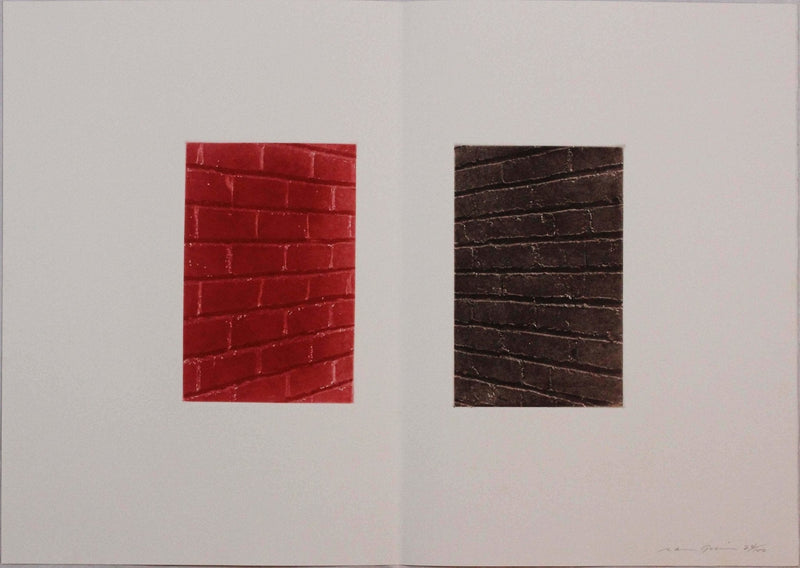
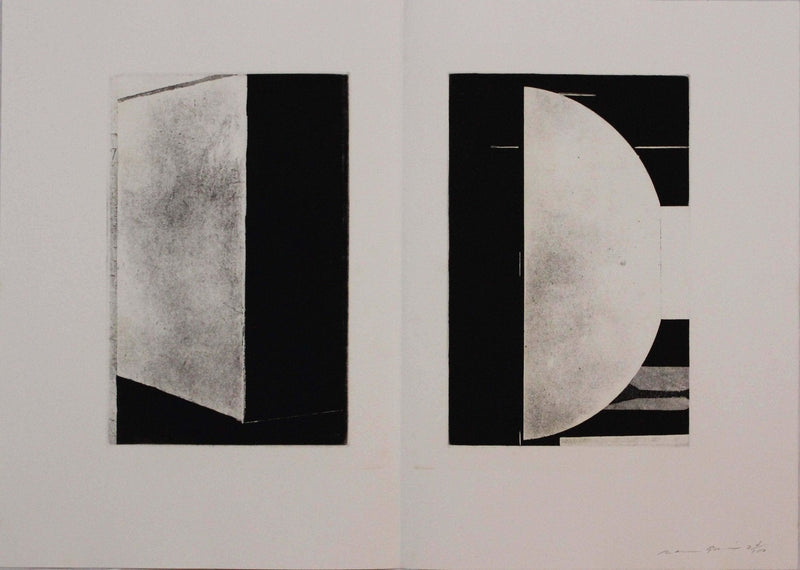
3 artworks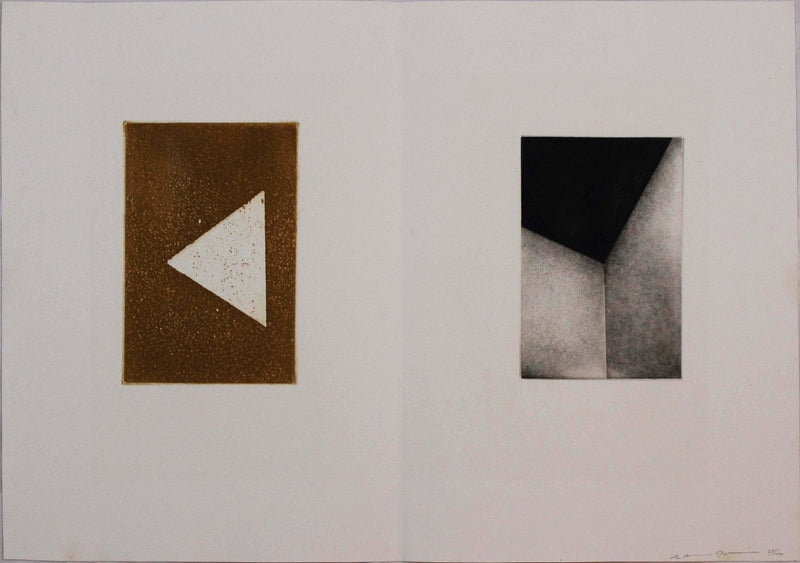

Biography of Ralph Gibson
In Ralph Gibson's photographs, a detail can carry more force than an entire scene. An isolated hand, a half-open door, part of a body, or a sharp shadow interrupts the continuity of the visible world, leaving viewers to imagine what remains outside the frame. This choice does not stem from a mere taste for mystery: it is the foundation of a photographic language in which…
Read the full biographyClose the biography
In Ralph Gibson's photographs, a detail can carry more force than an entire scene. An isolated hand, a half-open door, part of a body, or a sharp shadow interrupts the continuity of the visible world, leaving viewers to imagine what remains outside the frame. This choice does not stem from a mere taste for mystery: it is the foundation of a photographic language in which meaning takes shape through fragments, contrast, and, above all, the relationship between different images. A photographer and publisher, Gibson played a decisive role in establishing the photography book as an independent artwork.
From California to New York
Born in Hollywood in 1939, Gibson grew up in an environment close to the film industry, where his father worked as an assistant director. His familiarity with film sets allowed him to observe early on the power of images and the way a shot can transform our perception of reality. He learned the technical basics of photography while serving in the United States Navy and continued his training at the San Francisco Art Institute. In the early 1960s, he worked as an assistant to Dorothea Lange, one of the leading figures in American documentary photography, encountering an approach to observing reality founded on attention to people and their living conditions.
Another important encounter is with Robert Frank, whose artwork had helped challenge the conventions of documentary photography. Gibson, however, does not simply continue the artwork of his mentors. Gradually, he moves away from the idea that photography should explain a situation or tell a complete story about an event. When he settles in New York in the late 1960s, he finds an environment in which to develop a more subjective and experimental vision: an image can suggest rather than describe, raise a question rather than provide an answer.
Fragment, Contrast, and Sequence
Black and white becomes one of the most effective tools in his oeuvre. Gibson works with intense contrasts, deep shadows, and precisely defined areas of light. His cropping is often radical: parts of the body, architectural elements, and everyday objects are removed from their context and transformed into almost abstract forms. His affinity with Surrealism is evident in his ability to create unexpected associations and enigmatic atmospheres, but this does not necessarily mean constructing fantastical scenes. It is reality itself, viewed from an unexpected perspective, that becomes ambiguous.
A decisive aspect is the relationship between the photographs. A single image can remain deliberately open-ended, while its proximity to another introduces new possibilities for interpretation. Gibson therefore considers sequencing an integral part of the creative process: the arrangement of the pages, the rhythm of the images, and the intervals between photographs become expressive elements. The book is not merely a means of sharing a collection of shots, but a space in which to create a visual experience that could not exist in the same way through isolated photographs.
Lustrum Press and Essential Books
In 1970, Gibson founded Lustrum Press, a publishing house that allowed him to exercise direct control over the design of photobooks. That same year, he published The Somnambulist, a key artwork in defining his visual language. The images, juxtaposed according to an associative logic, evoke a dreamlike state without turning into a linear narrative. The reader moves through a succession of details, bodies, shadows, and situations that seem to echo one another across the pages, like fragments of a memory that can never be fully reconstructed.
With Déjà-vu and Days at Sea, Gibson continues this exploration, shaping a trilogy that holds an important place in the history of the contemporary photobook. His interest in the human body, architecture, and objects does not stem from a desire to classify different subjects: each can become an opportunity to study the relationships between form, desire, perception, and memory. The artist later also explores color photography, while maintaining his focus on the composition of the frame and the evocative power of the fragment.
Photographic Prints and Collecting
To understand Gibson’s oeuvre, it is important to distinguish the photographic image from its physical medium. A photograph may circulate in a book, be exhibited as an original print, or appear in an editorial reproduction: these are different objects, with non-equivalent technical and collecting characteristics. His black-and-white artwork includes prints made using the silver gelatin process, which allows refined control of tonal relationships and enhances the contrasts characteristic of his visual language. Color photographs, on the other hand, may use different processes, which should be identified on a case-by-case basis.
When describing a print intended for collectors, it is important to verify technique, signature, numbering, dimensions, date the photograph was taken, and date of the print. This last distinction is particularly important: an image photographed in a given year may be printed much later, and a later print is not automatically a period print. It is equally incorrect to call a photograph a lithograph or screenprint without precise technical evidence. The documentary value of an edition, its provenance, and the condition of the individual print all require specific attention.
Throughout his career, Gibson has received major honors, including a Guggenheim Fellowship, the Leica Hall of Fame Award, and the Royal Photographic Society’s Centenary Medal in 2023. His influence, however, cannot be measured by awards and museum collections alone. It lies above all in showing that photography can create meaning through what it excludes, through the sequence of images, and through the very form of the book that brings them together.
Do you like Ralph Gibson?
Leave your email to receive updates on newly available artworks and news about this artist.
Ralph Gibson
Art that lives in your spaces
Choosing an artwork by Ralph Gibson means making room for an individual artistic language. The artworks gathered here suggest combinations and perspectives to bring into your own surroundings, letting art guide your gaze.

DISCOVER THE ARTIST
Frequently asked questions
Answers to common questions about Ralph Gibson, the artist’s life, artworks and value on the art market.
Who is Ralph Gibson?
Ralph Gibson (born in 1939) is an American photographer known for black-and-white images characterised by strong contrasts, close-up framing and enigmatic details. His practice places great importance on photographic sequences and the artist’s book. He is a significant figure in American photography of the second half of the twentieth century.
Why are Ralph Gibson’s photographs often in black and white?
Black and white allows Gibson to concentrate on shapes, shadows, contrasts and visual fragments. A hand, a door or a detail of the body can become a self-contained, mysterious image. This is not merely an aesthetic choice: removing colour heightens the relationship between what is shown and what remains outside the frame.
What is The Somnambulist by Ralph Gibson?
The Somnambulist is an important photobook published in 1970, associated with the founding of his publishing house, Lustrum Press. The photographs do not follow a linear narrative: images and juxtapositions create a dreamlike atmosphere. The volume is fundamental to understanding Gibson’s interest in the book as an artwork and photography as a sequential language.
How can you recognise an original photographic print by Ralph Gibson?
You need to examine the type of print, when it was made, any signatures, stamps and numbering, provenance and documentation. A print made close to the date of the negative may have different collecting characteristics from a later print. A famous image alone is not enough: the photographic object offered for sale must be identified precisely.
What is the difference between a vintage photograph and a later print by Ralph Gibson?
In photography, the term vintage generally refers to a print made close to the time the photograph was taken, but the definition should be applied carefully. A later print may still be authorised and of interest to collectors. The date of the negative, date of the print, technique, edition and documentation should be stated separately to avoid confusion.
Discover more artists
Explore more leading figures in modern and contemporary art
