

Painter
Pino Pinelli
1938 – 2024
Stay up to date with this artist
Leave your email to receive updates on newly available works and news about this artist.
Works by Pino Pinelli
2 works
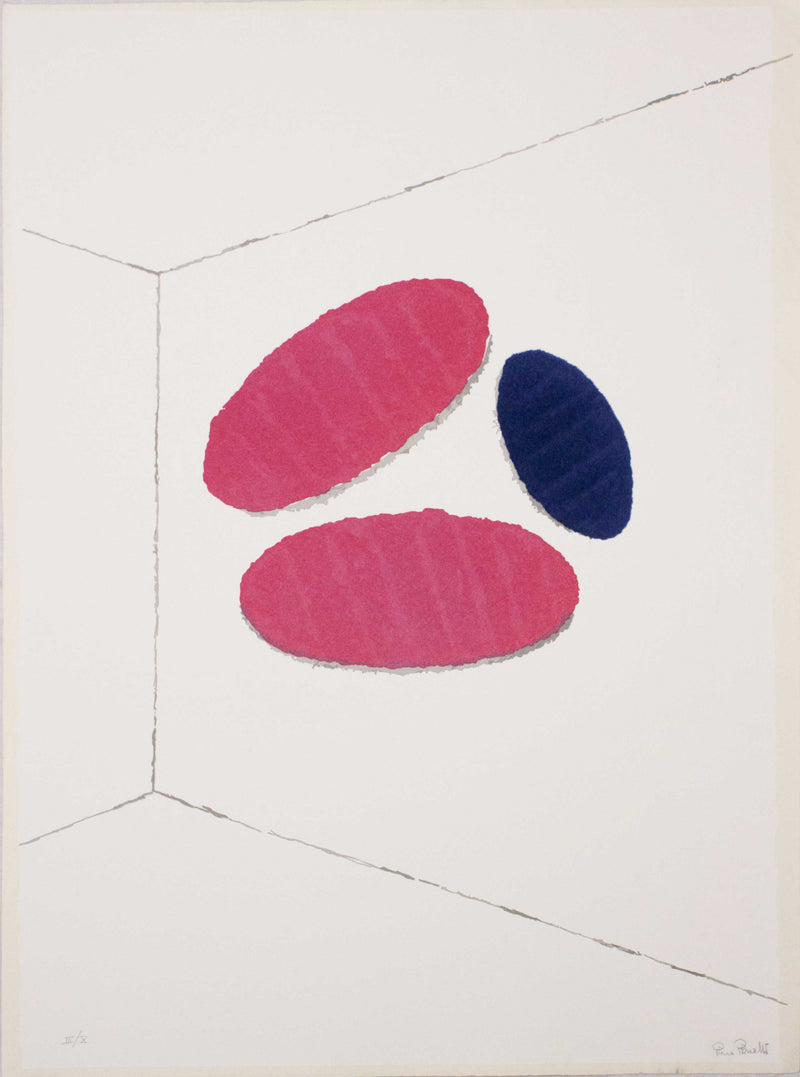

Pino Pinelli
Pino Pinelli (Catania, 1938 – Milan, 2024) was one of the protagonists of Italian pictorial research that developed from the Seventies around the very nature of the painting. His work is associated with Analytical Painting, but has taken on a personal physiognomy thanks to the progressive transformation of the surface into autonomous elements, placed directly on the wall. The color, freed from the frame, does…
Read the full biographyClose the biography
Pino Pinelli (Catania, 1938 – Milan, 2024) was one of the protagonists of Italian pictorial research that developed from the Seventies around the very nature of the painting. His work is associated with Analytical Painting, but has taken on a personal physiognomy thanks to the progressive transformation of the surface into autonomous elements, placed directly on the wall. The color, freed from the frame, does not represent something: it becomes a concrete presence in space.
From the pictorial surface to its decomposition
After moving to Milan, Pinelli came into contact with an artistic environment interested in rethinking the tools of painting after informal and conceptual experiences. Instead of abandoning color, he chose to question its functioning: what makes a surface paint? What is the relationship between pigment, support, edge and wall? The answer matured through progressive research, in which the chromatic material acquired greater and greater autonomy.
The first experiments on monochrome surfaces led to a conception of the painting no longer as a window or closed rectangle, but as a set of material presences. The dissemination, which has become characteristic of his work, consists in arranging separate pictorial elements directly on the wall, according to rhythms and relationships that involve the surrounding space. These are not random fragments of a lost painting: each element contributes to an overall open structure.
The decomposition of the painting radically modifies the relationship with the spectator. In a traditional painting the edge delimits an autonomous field of vision; in Pinelli's disseminations, however, the work no longer has a single rectangular perimeter. The chromatic elements are arranged on the wall and the intervals between them become part of the composition. The surrounding space cannot be ignored, because it helps to determine the rhythm and direction of the whole.
This passage arises from a patient reflection on the very meaning of painting. Pinelli does not replace the painting with any object: he preserves the color and its sensitive quality, but changes its location. The support is no longer just a continuous surface; it becomes a series of autonomous bodies that maintain a mutual relationship. The transformation is conceptual and, at the same time, immediately visible.
Color as a body in space
Pinelli's works are recognizable for dense, often velvety chromatic surfaces, which absorb and return light in a particular way. Reds, blues, yellows, blacks and other shades present themselves as matter, not as a simple color spread on a background. The effect depends on the consistency of the pigment, the shape of the individual elements and the distance that separates them.
The wall is not a neutral support: it enters the composition through the empty intervals. As you approach the work you perceive the physical quality of the surfaces; moving away, the rhythm of the arrangement emerges. This dual experience makes it difficult to reduce his works to a frontal photograph, because size, thickness and relationship with the architecture constitute an essential part of it.
The consistency of the surfaces is decisive for understanding these works. Chromatic matter is not only perceived through its hue, but also through its ability to absorb light. The soft and compact appearance of the elements can suggest a tactile quality, while remaining a visual experience. This tension between what we see and what we imagine touching is one of the most original characteristics of his painting.
The arrangement of the elements does not necessarily coincide with a closed geometric figure. It can suggest expansion, dispersion, concentration or movement, and changes depending on distances. A close sequence creates a fast pace; a larger interval introduces a pause. The wall thus participates in the work with its colour, its dimensions and the light of the environment.
The scale of the work also changes perception. A small set of elements invites close observation, while a large dissemination can involve the entire field of vision. In both cases the color acquires a physical identity that a simple two-dimensional reproduction cannot fully restore.
Analytical painting and autonomy of the work
The closeness to Analytical Painting concerns the attention to the process, the support and the materiality of painting. Pinelli, however, does not limit himself to describing the language of painting: he sets it in motion, making the color emerge from the confines of the painting. His research retains a strong sensitive component, in which formal precision coexists with an almost tactile perception of the material.
When you come across works on paper, multiples or editions linked to the artist, it is important to distinguish them from his three-dimensional pictorial works. An original work, a multiple and a reproduction require different descriptions, even when they use the same motif. Materials, dimensions, print run, signature and documentation must be verified without deducing the technique from the appearance of the image alone.
Pinelli's strength lies in having shown that painting can expand in space without ceasing to be painting. His disseminations invite us to observe not only the color, but also the emptiness that surrounds it and the relationships that make it alive.
The relationship with Analytical Painting must not obscure this spatial dimension. While many artists investigate the tools and gestures of painting within the surface, Pinelli develops a painting that deals directly with architecture. The wall is not just the place of exhibition: it enters into the definition of the work and requires precise decisions on the placement of the elements.
From this also derives a particular documentary need. When a work is composed of several parts, it is important to know their number, measurements, materials and, if they exist, the artist's instructions for the installation. A photograph can show a configuration, but it does not always clarify whether it is the only possible one. For multiples and works on paper it is necessary to verify the process and the print run, avoiding confusing them with the original pictorial elements.
Pinelli's research finally invites us to consider emptiness as a positive element. The spaces not occupied by color are not gaps to be filled: they allow the composition to breathe and bring out the relationship between the parts. It is in this alternation that painting finds a new possibility of existing outside the traditional confines of the painting.
Do you like Pino Pinelli?
Leave your email to receive updates on newly available works and news about this artist.
Pino Pinelli
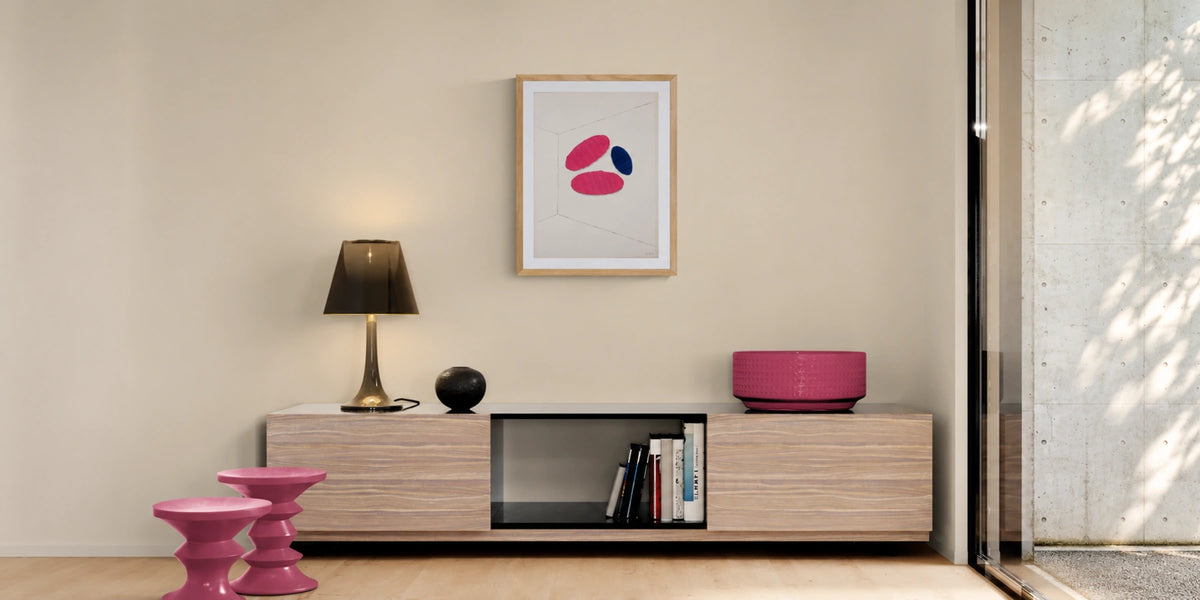
Art that lives in your spaces
Choosing a work by Pino Pinelli means making room for an individual artistic language. The works gathered here suggest combinations and perspectives to bring into your own surroundings, letting art guide your gaze.
DISCOVER THE ARTIST
Frequently asked questions
Answers to common questions about Pino Pinelli, the artist’s life, works and value on the art market.
Who was Pino Pinelli?
Pino Pinelli (1938–2024) was an Italian artist associated with Analytical Painting. He is known for works in which color and material are divided into separate elements applied directly to the wall.
What is Pino Pinelli's Analytical Painting?
It is research that reflects on the fundamental components of painting, such as colour, surface, support and gesture. Pinelli has progressively gone beyond the traditional canvas, making the pictorial elements dialogue with the exhibition space.
Why are Pino Pinelli's works composed of separate elements?
Fragmentation allows the painting to extend onto the wall and involve the space between one form and another. The work no longer necessarily coincides with a single framed rectangle.
What does 'dissemination' mean in Pinelli's work?
The term indicates the arrangement of multiple pictorial elements in space, often according to a visual rhythm. Distances and placement are part of the composition, not secondary details of the setup.
What should you check before purchasing a work by Pino Pinelli?
In addition to authenticity and provenance, it is important to check the number of elements, materials, overall dimensions and installation instructions. For a work composed of multiple parts, completeness is essential.