

Visual artist and sculptor
Nancy Graves
American, 1939 – 1995
Stay up to date with this artist
Leave your email to receive updates on newly available works and news about this artist.
Works by Nancy Graves
1 work

Nancy Graves
A camel constructed from artificial materials, a map of the Moon transformed into a painting, a group of elements fused in bronze and vividly colored: the artworks of Nancy Graves seem to belong to distant worlds, yet they stem from a sustained interest in how we observe, classify, and reconstruct reality. Science provides her with forms and information, but does not dictate the final result.…
Read the full biographyClose the biography
A camel constructed from artificial materials, a map of the Moon transformed into a painting, a group of elements fused in bronze and vividly colored: the artworks of Nancy Graves seem to belong to distant worlds, yet they stem from a sustained interest in how we observe, classify, and reconstruct reality. Science provides her with forms and information, but does not dictate the final result. Graves transforms artifacts, data, images, and movements into a personal language in which the apparent accuracy of documentation coexists with artistic invention. Her work spans sculpture, painting, film, and original prints, continually challenging the boundaries between these fields.
Born in 1939 in Pittsfield, Massachusetts, Graves developed an early interest in the natural world and museum collections, also fueled by visits to her city’s natural history museum. After studying at Vassar College, graduating in 1961, she continued her education at Yale University, where she earned a Master of Fine Arts in 1964. During these years, the American art scene was shaped by Minimalism and new reflections on the relationship between object, space, and process. Graves took part in this climate, but chose a distinctive path: rather than abandon recognizable references, she subjected them to transformations that blurred the boundary between observation and construction.
Camels, artifacts, and reinvented nature
In 1969, a solo exhibition at the Whitney Museum of American Art presented her celebrated life-size camel sculptures. At first glance, the animals seem to come from a zoological museum, but a closer look reveals a complex construction made from fur, fabrics, plaster, and other materials. Graves does not simply try to fool viewers with a perfect replica: she makes perceptible the distance between the living animal, its image, and the artifact that claims to represent it. LThe work recalls a scientific specimen and, at the same time, undermines its apparent neutrality.
This tension continues in sculptures inspired by bones, fossils, and archaeological artifacts. The materials and forms evoke the work of scholars who reconstruct an organism from fragments, but the artist introduces assemblages and variations that prevent the object from being mistaken for a mere document. Sculpture thus becomes a site of confrontation between the human desire to order the world and the impossibility of exhausting its complexity. From this perspective, nature is not a repertoire to be faithfully copied, but a system of forms to be interpreted.
From lunar maps to the movement of images
In the early 1970s, Graves transferred part of her research into painting, using lunar maps, satellite photographs, and weather diagrams. These materials, created to measure or describe phenomena, are transformed into compositions of dots, lines, and fields of color. LTheir scientific origins sometimes remain recognizable, but the arrangement of the marks creates rhythms and densities that now belong to the logic of the painting. This is a significant shift: the data is not illustrated, but reinterpreted through the autonomous possibilities of visual language.
The same curiosity leads Graves toward experimental cinema, where she can explore movement and the passage of time. A gesture or an animal’s movement through space is not considered merely an event to document, but a structure to observe and rework. The relationship between still and moving images broadens her conception of form, which need not necessarily be confined to an immobile object. In the late 1970s, this freedom also appears in polychrome bronze sculptures, created through casting and the assemblage of heterogeneous elements. Bronze loses the monumental gravity often associated with it and becomes the material for compositions that appear mobile, irregular, and exuberant in color.
Original printmaking as a laboratory for experimentation
Printmaking occupies a prominent place in Nancy Graves’s career and cannot be considered merely a paper reproduction of her sculptures. LThe artist experiments with lithography, etching, aquatint, drypoint, and screenprint, sometimes combining several techniques on the same sheet and adding manual interventions. Collaborations with specialized studios, including Tyler Graphics, enable her to undertake technically complex editions in which each step contributes to the construction of the image.
Lithography, for example, lends itself to translating onto paper the variety of marks and areas of color inspired by astronomical cartography. In V Montes Appeninus Region of the Moon from 1972, the reference to the lunar surface is developed into an image that preserves the evocative quality of a map without becoming a mere illustration of one. In artworks such as Ngetal from 1977, however, the focus shifts to the possibility of combining intaglio techniques and color interventions. LEtching makes it possible to build the drawing through lines bitten into the plate, aquatint introduces tonal values, and drypoint produces marks of varying quality; any additions by hand make the surface even more intricate.
In the 1980s, Graves also used screenprint, as documented in editions such as Six Frogs and 75 x 75 from 1985. The layering of colors and the possibility of integrating different techniques bring some prints close to the visual complexity of polychrome sculptures. For those studying or collecting her prints, it is therefore essential to check the full description of the technique, the edition size, and any hand-applied interventions: two seemingly similar sheets may be the result of very different processes.
Until his death in 1995, Graves continued to explore materials such as glass, resins, aluminum, and bronze, while maintaining her dialogue with scientific imagery. The Nancy Graves Foundation preserves and further explores her work. Her contribution remains relevant precisely because it does not separate scientific knowledge from the freedom of the imagination: it shows how a system of data, an artifact, or a natural form can become the starting point for a new aesthetic experience.
Do you like Nancy Graves?
Leave your email to receive updates on newly available works and news about this artist.
Nancy Graves
Art that lives in your spaces
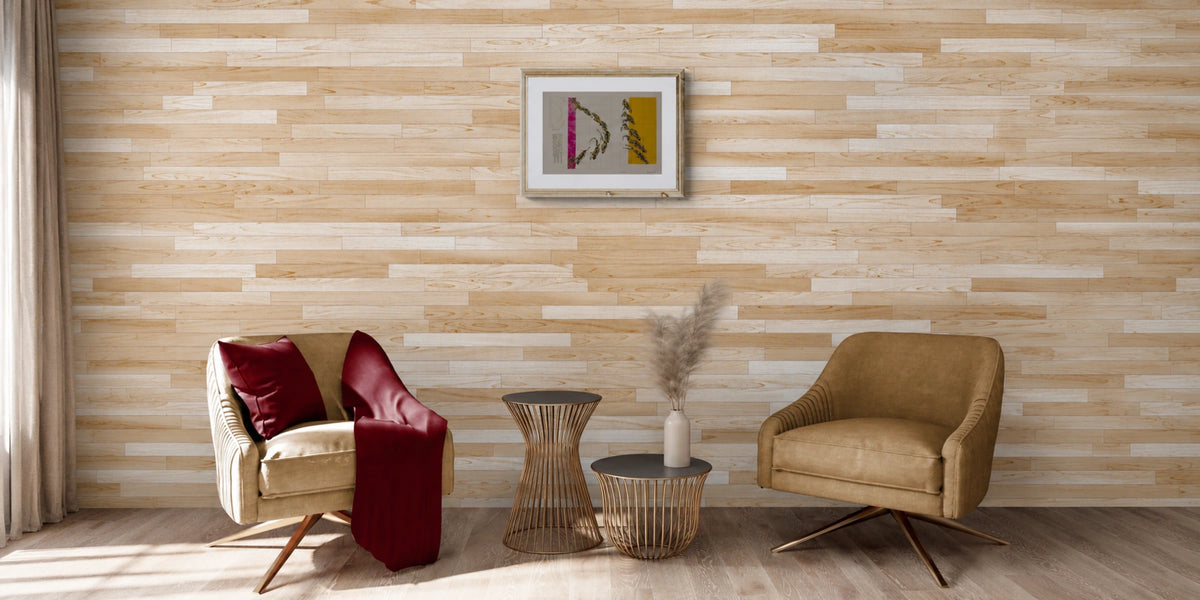
Marks, rhythms and forms: works by Nancy Graves bring a new sense of balance to a space. Understated furnishings give the composition room to breathe and invite you to rediscover it every day from a different perspective.
DISCOVER THE ARTIST
Frequently asked questions
Answers to common questions about Nancy Graves, the artist’s life, works and value on the art market.
Who was Nancy Graves?
Nancy Graves (1939–1995) was an American artist who worked in sculpture, painting, drawing, printmaking, and experimental film. She is known for her interest in science, cartography, animals and systems of representation. Her works transform data, natural forms and scientific observations into highly inventive images and objects.
Why did Nancy Graves make camel sculptures?
Camels are among the best-known subjects of her early sculptural production. Graves studied them with almost scientific attention, using materials and procedures that question the boundary between naturalistic model and contemporary sculpture. These works express her interest in how we observe, classify and represent living things.
What is the relationship between Nancy Graves and cartography?
Maps, satellite images, geographic data and diagrams influenced her language. Graves did not limit herself to reproducing cards: she reworked lines, textures and information to construct autonomous compositions. Cartography thus becomes a meeting point between scientific knowledge and visual freedom.
What printing techniques did Nancy Graves use?
Graves' graphic production includes various techniques and experiments, often linked to the superposition of signs, colors and structures. To identify a specific specimen it is necessary to read the technical data sheet: lithography, etching and other procedures are not interchangeable. Print run, signature and provenance contribute to correctly describing its collectible character.
How do you evaluate an original print by Nancy Graves?
The evaluation depends on the technique, date, size, print run, signature, condition, provenance and interest of the subject. It is important to distinguish an original authorized print from an editorial reproduction. Market comparisons must, when possible, concern the same work or truly similar examples, avoiding generic average prices.