


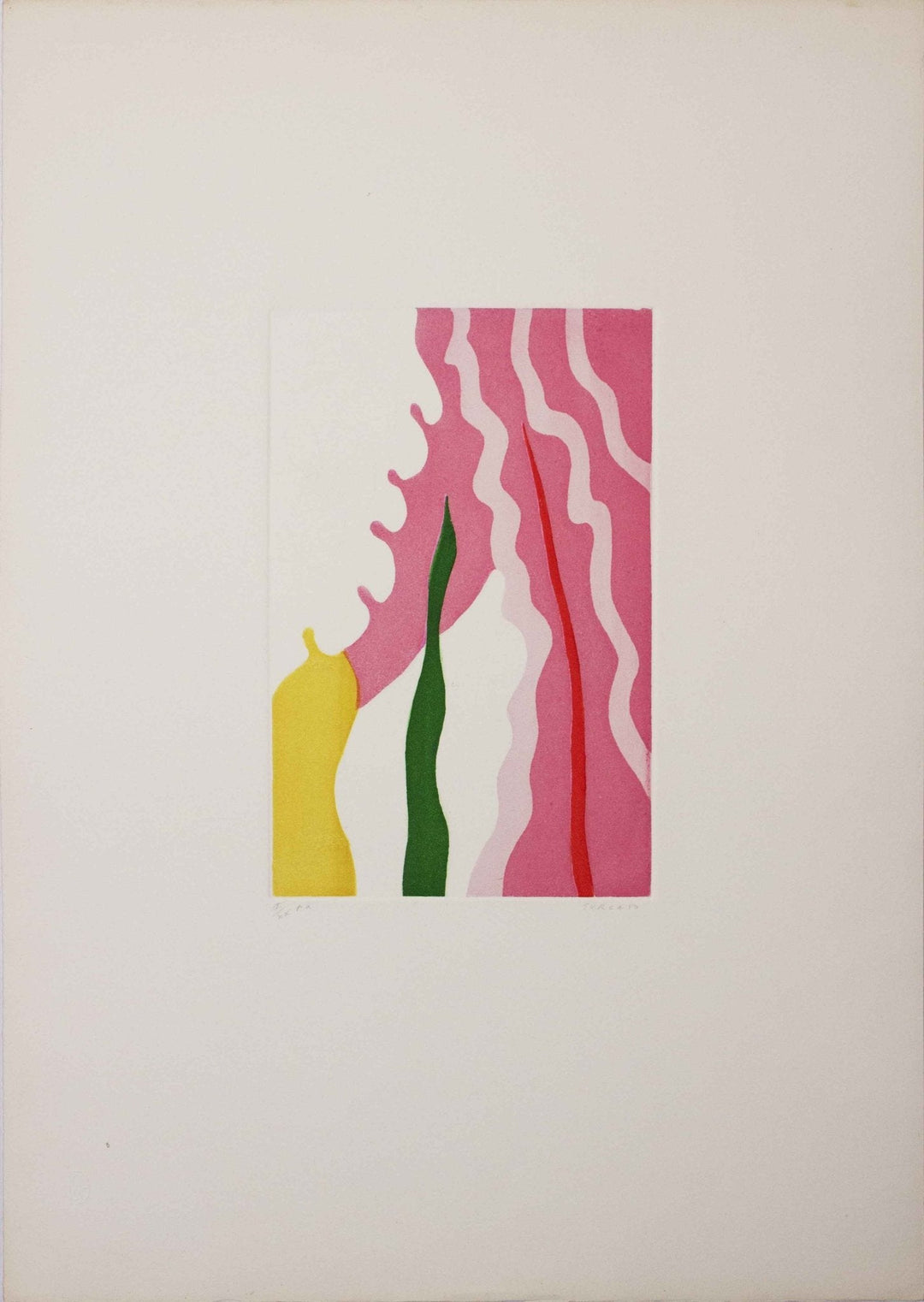
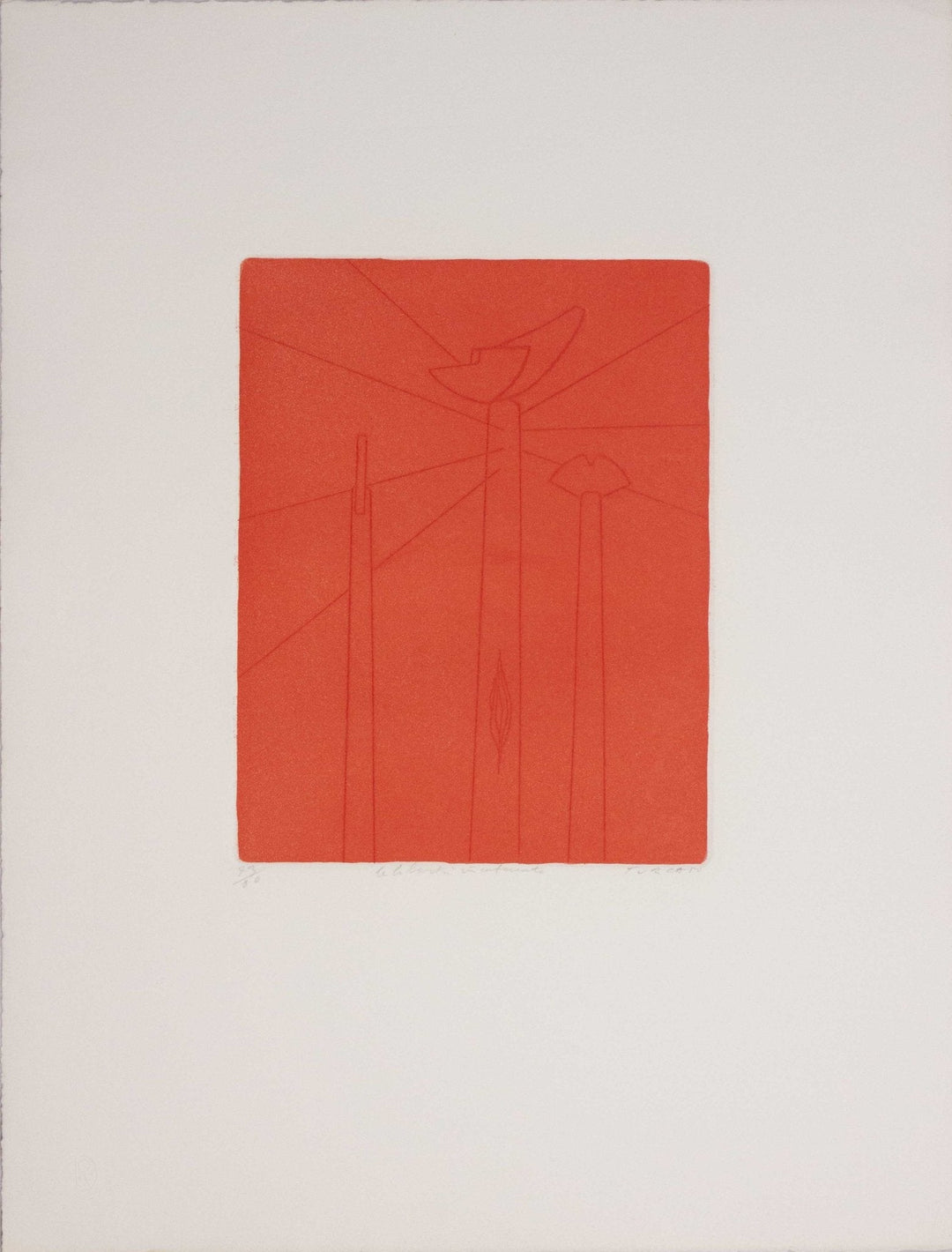
Giulio Turcato (Mantua, 1912 – Rome, 1995) was one of the leading figures of postwar Italian abstraction. His painting is distinguished by its freedom of color, variety of materials, and ability to transform essential forms into highly evocative images. Although he took part in important collective movements, Turcato maintained a personal artistic inquiry in which compositional rigor coexists with unpredictability, experimentation, and an often luminous sensibility.
The postwar period and the «Forma 1» experience
After his early artistic experiences and his move to Rome, Turcato became part of the climate of renewal that followed the Second World War. In 1947, he was among the signatories of the Forma 1 manifesto, alongside artists who championed the possibility of reconciling a progressive political vision with the freedom of abstract language. The debate was particularly heated: some in Italian culture called for art to directly represent social reality, while the group’s artists defended the autonomous value of form and color.
Turcato did not consider abstraction an escape from the world. On the contrary, he sought a kind of painting capable of expressing the energies of contemporary life without relying on depictions of recognizable objects. His compositions developed through marks, areas of color, and chromatic rhythms that could suggest movement, depth, or suspension. Color does not simply fill an already established form: it is often the true element that organizes the image.
Color, material, and experimental surfaces
Over the years, Turcato continually expanded his artistic toolkit. Alongside traditional painting materials, he used unusual supports and substances, exploring the tactile and luminous possibilities of the surface. The celebrated Moon Surfaces, also made with foam rubber, show how material can suggest imaginary landscapes without resorting to naturalistic representation. The reference to the Moon belongs to the cultural climate of the time, but above all becomes an opportunity to explore relief, shadow, and perceptual shifts.
Other series testify to his curiosity about the phenomena of light, transparency, and the relationship between color and space. The compositions may seem light and spontaneous, but this impression stems from a long familiarity with pictorial balance. Turcato knew how to alternate almost silent surfaces with bursts of color, while always maintaining a distinctive style.
Screenprints, lithographs and graphic research
His graphic work offers an approach to his visual language through prints in which the distribution of color plays a central role. Screen printing and lithography, when documented for an individual work, offer different possibilities: the former lends itself to flat areas of color and crisp overlays, while the latter can retain qualities closer to drawing and gesture. However, you should not automatically infer the technique from the appearance of a print, since editions and reproductions exist that were made using different processes.
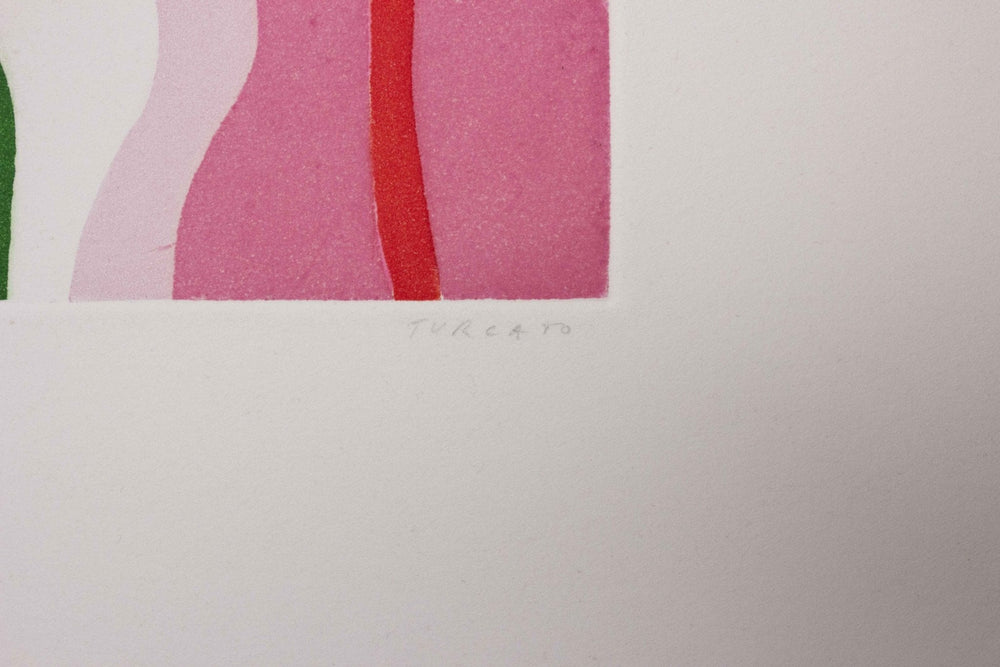
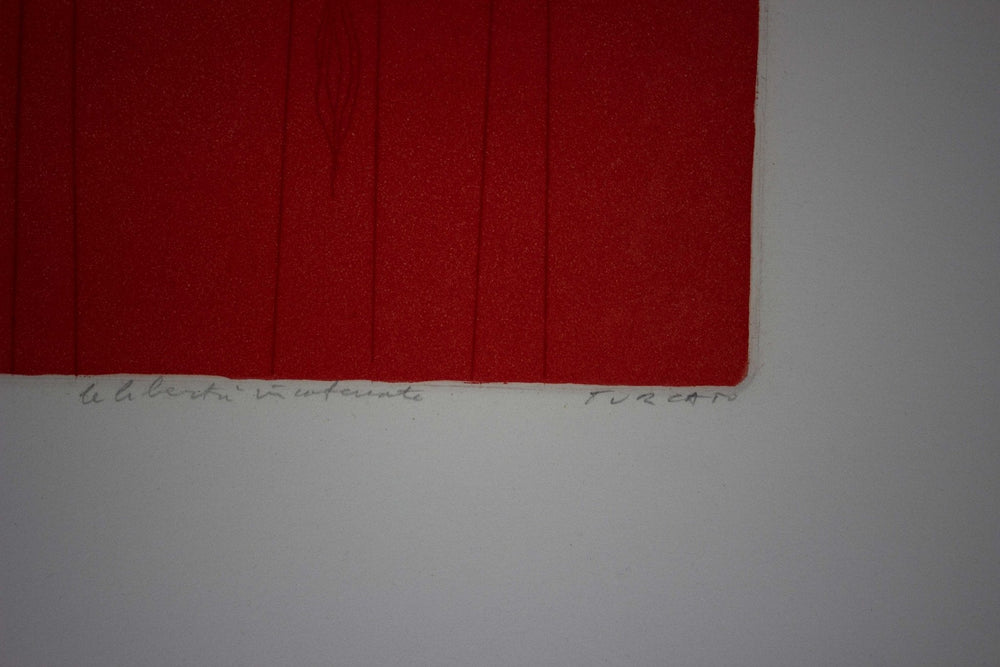
When assessing a print, the signature, numbering, publisher, support, and any catalog references all matter. L's interest in the graphic artworks lies not only in their accessibility to collectors: they make the artist’s ability to create space and emotion through essential color relationships clear. L's legacy is that of an abstract painter whose work was never reduced to a formula, always open to surprise and the possibility of seeing the world in a new way.
Ti piace Giulio Turcato?
Per ricevere gli ultimi aggiornamenti di questo artista, lascia la tua email qui sotto:Il tuo indirizzo email è stato aggiunto alla lista dell'artista.
