

Lorenzo Tornabuoni biography
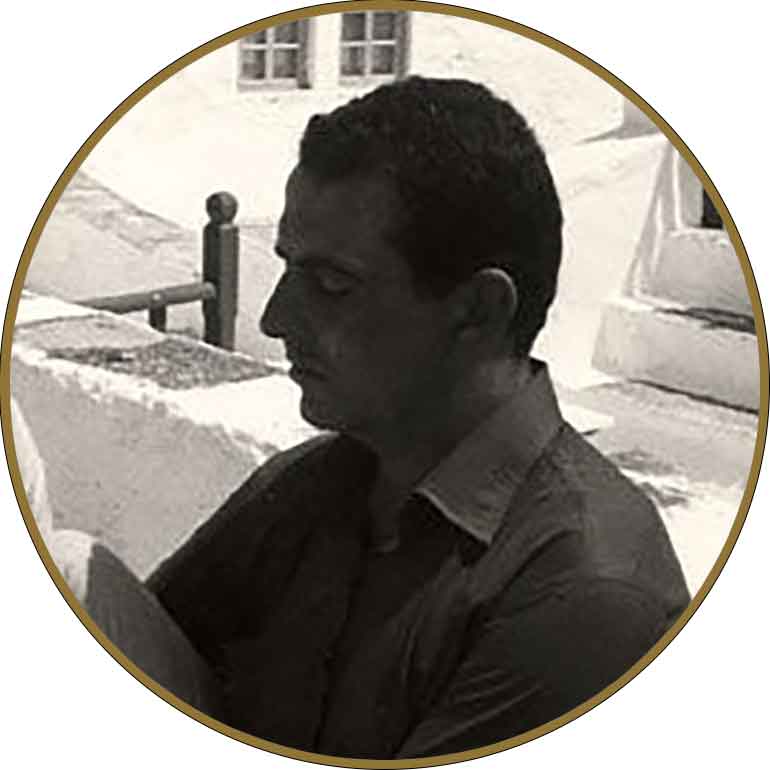
Lorenzo Tornabuoni is an Italian artist born in Rome on July 17, 1934. Son of a family with a rich history and noble origins, his childhood is marked by adventures and moves between Italy and East Africa, where he spends part of his early years. These travels help shape his artistic sensitivity, exposing him to different cultures and visual stimuli.
The passion for art begins to make its way into his life at the age of 12, when he starts taking drawing lessons from Andrea Spadini, son of the famous painter Armando Spadini. Despite his classical studies at the Tasso high school in Rome, he has always felt attracted to art and creativity, so much so that he began exhibiting his paintings as early as 1954, at the Galleria L'Obelisco.
Lorenzo Tornabuoni did not limit himself to the artistic path alone but embraced a life rich in experiences and knowledge. Although he undertakes university studies in the Faculty of Letters in Rome, he leaves his studies incomplete. His interest in reading, particularly authors like Proust and Freud, enriches his cultural background and influences his artistic vision. Among the Artworks that deeply mark his artistic formation stands out "The Raft of the Medusa" by Théodore Géricault, an artwork that influences his interest in narrative painting.
The artist's evolution is characterized by a variety of influences and themes. He participates in numerous art exhibitions, gaining recognition throughout Italy and also abroad. Artworks such as figures in the act of love, rowers, and athletes become his distinctive trait, expressing love for the human body and its interaction with the surrounding environment. The choice to often work on free canvas, hung on the wall or on chipboard, gives his Artworks a sense of freedom and dynamism.
Lorenzo Tornabuoni's artistic journey is not without challenges. In 1963, he is involved in a serious car accident that leaves permanent consequences on his body, limiting the functionality of the left side. Despite these difficulties, the artist shows extraordinary strength of spirit and continues to work.
His drawing skill is particularly appreciated. The sketches and quick-execution drawings he creates, especially in the '70s and '90s, show his ability to capture the essence of a moment or movement with few and swift strokes. His dedication to drawing is praised by critics and colleagues, demonstrating how his artistic talent can express itself through different forms and techniques.
Lorenzo Tornabuoni's passion for art and his tireless dedication inspire many, including art critics and collectors. His Artworks, both pictorial and graphic, touch the hearts of many people and are admired for their beauty and depth. His skill in representing the human body, especially in the act of love, has demonstrated his understanding of human emotions and their visual expression.
The figure of Lorenzo Tornabuoni becomes an essential part of the Italian artistic landscape of the post-war period. His dedication to his artwork, despite adversities, has inspired both his contemporaries and future generations of artists. His Artworks continue to be exhibited and admired, bearing witness to the legacy of a man who made art a testimony of life itself.