
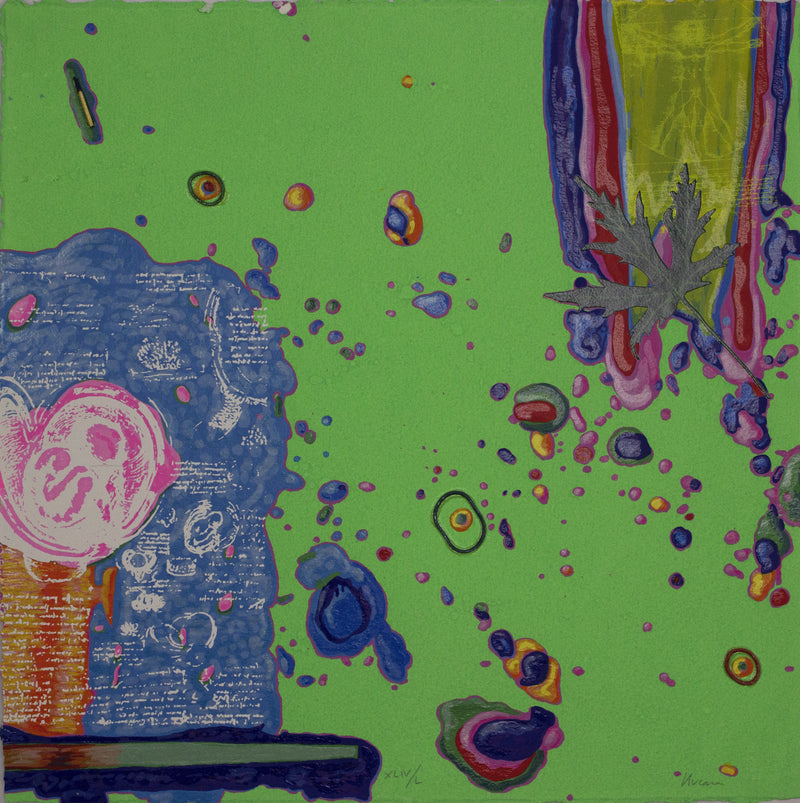
Visual artist
Renzo Nucara
Italy, 1955
Stay up to date with this artist
Leave your email to receive updates on newly available artworks and news about this artist.
Artworks by Renzo Nucara
1 artwork

Biography of Renzo Nucara
Born in Crema in 1955, Renzo Nucara has developed a path in which painting, writing, objects and synthetic materials become tools for questioning memory and the transformations of matter. His research is also known for the role played in the foundation of the Cracking Art Group, a collective experience that brought attention to the use of plastic, recycling and the relationship between industrial production and…
Read the full biographyClose the biography
Born in Crema in 1955, Renzo Nucara has developed a path in which painting, writing, objects and synthetic materials become tools for questioning memory and the transformations of matter. His research is also known for the role played in the foundation of the Cracking Art Group, a collective experience that brought attention to the use of plastic, recycling and the relationship between industrial production and the environment. Alongside that public dimension, Nucara has however maintained a complex personal research, in which time leaves traces, the materials seem to preserve memories and the surface of the artwork becomes a space of stratification.
The diary as an image
After studying at the Bergamo Art School and attending the Brera Academy, Nucara presented his first solo show in Milan in 1977. In the 1980s he developed research linked to the Diary, introducing words, fragments of sentences and notes that allude to daily experience into painting. Writing, however, is not used as a message to be read in a linear fashion. It can be reversed, interrupted or made only partially decipherable, as happens with memories that resurface incompletely.
In this phase the artwork is placed between confession and confidentiality. The diary is traditionally the place where what happens is recorded, but Nucara highlights the distance between the event and its story. Words become visual signs, they acquire an autonomous rhythm and suggest that memory is not an ordered archive, but rather a matter in continuous transformation. The painting does not simply illustrate the text: it takes on its fragmentation and emotional tension.
The presence of writing also modifies the viewing time. The viewer is led to look for recognizable words, then to give up continuous reading and to consider letters and sentences as part of the composition. The meaning does not disappear: it remains suspended between communication and secrecy. This oscillation makes the Diary something different from both purely gestural painting and an illustrated literary page.
From memory boxes to artefacts
As the research proceeds, the relationship between word and image extends to three-dimensional space. In the Memory Boxes appear heterogeneous materials, wood, recovered objects and transparent films. The box becomes a small environment in which apparently common elements acquire a new meaning through juxtaposition. The gesture of conserving is accompanied by that of reinventing: an object is not only valid for what it was, but also for the associations it is capable of arousing.
In the 1990s the Reperti took shape, artworks that evoke objects marked by time, almost remains from an imaginary archaeology. Papier-mâché, foam rubber, plastic materials, pigments and natural components contribute to building surfaces with a corroded or sedimented appearance. The reference to the find does not necessarily imply a real past: it rather suggests that every material can tell a story and that the present already contains the traces of its future transformation.
The transition from the painted surface to the object allows this idea of stratification to be made physical. It is no longer just the color that covers and reveals: it is the materials themselves that have thicknesses, transparencies and signs of wear. A box may suggest a personal archive, while an artifact seems to come from an unidentifiable time. In both cases Nucara questions the distinction between what is preserved and what is reinvented.
Cracking Art and plastic as a cultural issue
In 1993 Nucara participated in the founding of the Cracking Art Group, together with other artists interested in exploring the expressive possibilities of plastic. The choice of material does not only concern its ductility: it brings with it a reflection on the industrial cycle, consumption and environmental consequences. The large installations of colorful animals, often placed in public spaces, transform a material commonly associated with serial production into an immediate and collective means of communication.
Among the group's best-known interventions is SOS World, presented as part of the 2001 Venice Biennale, with a multitude of turtles in recycled and golden plastic. The image of the animal, accessible even to those who do not usually go to museums, makes visible a complex issue: the relationship between nature, industry and human responsibility. However, the collective experience does not erase Nucara's identity, which continues to independently investigate matter and memory.
The use of plastic introduces a deliberately visible contradiction: the industrial material, associated with durability and the accumulation of waste, takes the form of animals that recall the vulnerability of the natural world. The monumental scale and bright color encourage an encounter with the public, but behind the immediacy of the image remains a question about the fate of man-made objects. The environmental dimension is thus intertwined with the symbolic one and with the theme, already present in his individual research, of the transformation of matter.
Resins, stratifications and artworks on paper
In subsequent artworks, such as the Resinfilm and the Stratofilm, resins, pigments and natural or artificial elements are organized in stratifications. The transparency and density of the material allow us to observe traces at different depths, almost as if the image preserved multiple moments at the same time. Time is not just a theme: it is evoked by the very structure of the artwork, in which something emerges and something else remains incorporated.
Transparency allows you to see elements placed at different levels, while opaque areas interrupt the gaze. The result is an experience close to the functioning of memory: some fragments emerge clearly, others remain partially hidden. The material process therefore becomes part of the content, and the surface cannot be interpreted only as a decorative composition. Ambient light can also change the perception of layers and details.
The variety of its production requires particular attention in cataloging. A resin artwork, an assemblage, a painting and an edition print have different processes and characteristics; it is not correct to define them all generically as serigraphs or multiples. For artworks on paper it is necessary to verify technique, signature, print run and documentation, while for three-dimensional artworks materials, dimensions and conservation conditions are important. Nucara has built a language in which the material is never neutral: every surface seems to question what we remember, what we consume and what we leave behind us.
Do you like Renzo Nucara?
Leave your email to receive updates on newly available artworks and news about this artist.
Renzo Nucara
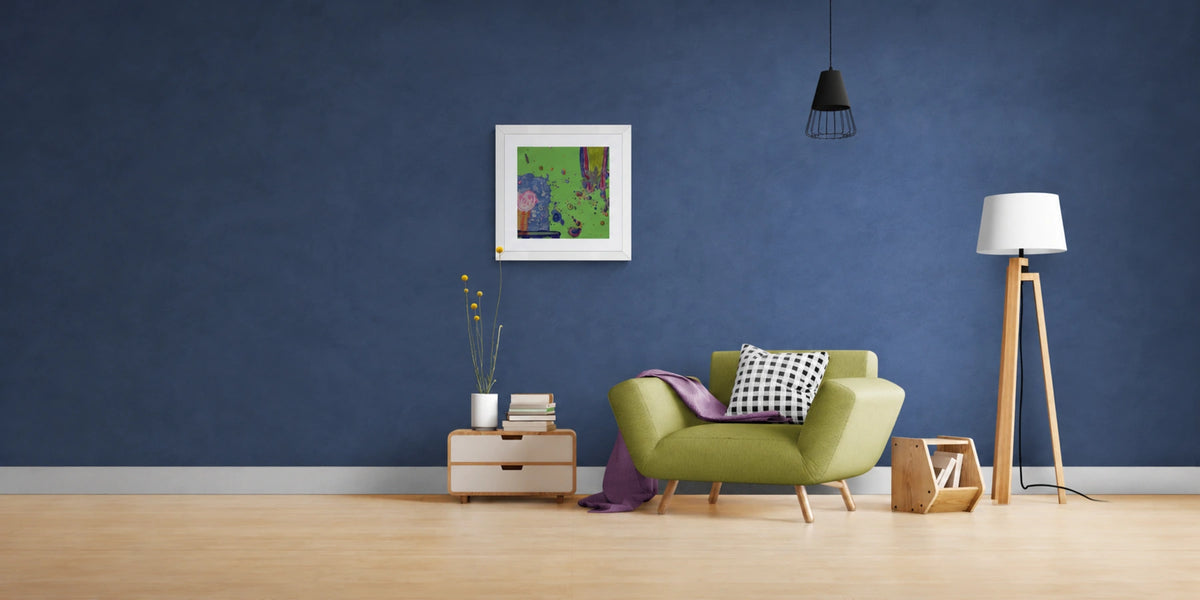
Art that lives in your spaces
Choosing an artwork by Renzo Nucara means making room for an individual artistic language. The artworks gathered here suggest combinations and perspectives to bring into your own surroundings, letting art guide your gaze.
DISCOVER THE ARTIST
Frequently asked questions
Answers to common questions about Renzo Nucara, the artist’s life, artworks and value on the art market.
Who is Renzo Nucara?
Renzo Nucara (born 1955) is an Italian artist known for research that combines painting, matter and plastic experimentation. His oeuvre includes layered surfaces and three-dimensional artworks, often characterized by intense colors and organic shapes.
What is Cracking Art and what role did Renzo Nucara have?
Nucara is among the founders of the Cracking Art movement, born in the nineties, which uses plastic materials and installations to reflect on the relationship between nature, artifice and environment. The movement is also known for large, colorful animals placed in public spaces.
Why are animals important in Cracking Art?
The animals constitute immediate and recognizable images that bring the theme of nature into urban and artificial places. Their creation in plastic creates an intentional contrast between living forms and industrial materials, inviting us to reflect on sustainability.
What materials does Renzo Nucara use in his artworks?
Nucara's production includes different materials and techniques, from layered pictorial surfaces to plastic elements and resins. The description of a single artwork must always be based on its technical data sheet, because materials and processes vary according to series and period.
How to evaluate an artwork by Renzo Nucara?
Authenticity, series, technique, dimensions, uniqueness or possible edition, state of conservation and provenance count. It is important to distinguish Nucara's individual artworks from the objects or installations linked to the collective project Cracking Art.