

Giuseppe Santomaso biography
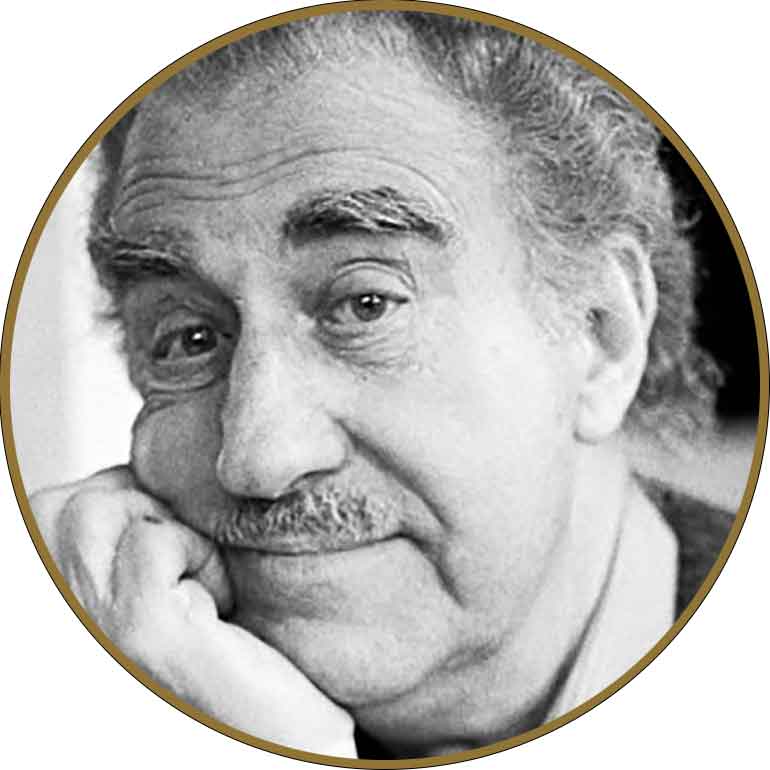
Giuseppe Santomaso, born in 1907 in Venice to a Venetian goldsmith and a woman from Padua, was one of the most influential Italian painters of the 20th century. From a young age, he showed an innate talent for painting, which led him to first attend the Fondazione Bevilacqua La Masa and later the Accademia di Belle Arti di Venezia, where he came into contact with the sculptor Alberto Viani.
Initially, his style was naturalistic and figurative, typical of many young artists of the time. However, Giuseppe Santomaso was not content to follow traditional canons and increasingly approached avant-garde art. In 1937, he traveled to the Netherlands to study the Impressionists and Fauves, and the use of color in works such as those by Van Gogh had a significant impact on his artistic evolution.
His first solo exhibition took place in Paris in 1939, at the Galerie Rive Gauche. In the 1940s, he actively participated in the anti-fascist movement, contributing to the founding of the artist groups New Italian Artistic Secession and New Front of the Arts. This period marked a turning point in his artistic production, in which his style evolved towards an abstract and lyrical expression.
His still life and portrait works were replaced by a freer and more experimental painting. From 1948, Giuseppe Santomaso began exhibiting regularly at the Venice Biennale, consolidating his reputation and receiving numerous awards, including the First Prize for Italian Painting in 1954. Alongside exhibitions and artistic events, he also carried out significant teaching activities at the Venice Academy of Fine Arts from 1957 to 1975. The trip to the United States in 1957 marked a crucial moment in the artist's career. During his stay in New York, Giuseppe Santomaso came into contact with representatives of Abstract Expressionism, which greatly influenced his style and artistic themes. His works became increasingly luminous and architectural, exploring the possibilities of color and light.
In the 1960s, the artist underwent another phase of change in his artistic production. He approached minimalism, reducing forms and simplifying compositions to essential geometric elements. This period marked a deeper reflection on the very nature of painting, exploring the autonomy of the image and the interaction between form and color.
In the last years of his life, Giuseppe Santomaso continued to produce significant works, maintaining a prominent place in the Italian contemporary art scene. In 1990, shortly after his death, a major retrospective dedicated to his work was organized at the Pinacoteca Rusca in Locarno.
Giuseppe Santomaso was an eclectic and visionary artist, capable of adapting and reinventing himself throughout his career. His ability to express abstract emotions and tensions through color and form made him one of the main representatives of lyrical and expressionist abstraction in Italy. His artistic legacy continues to inspire and influence subsequent generations of artists.