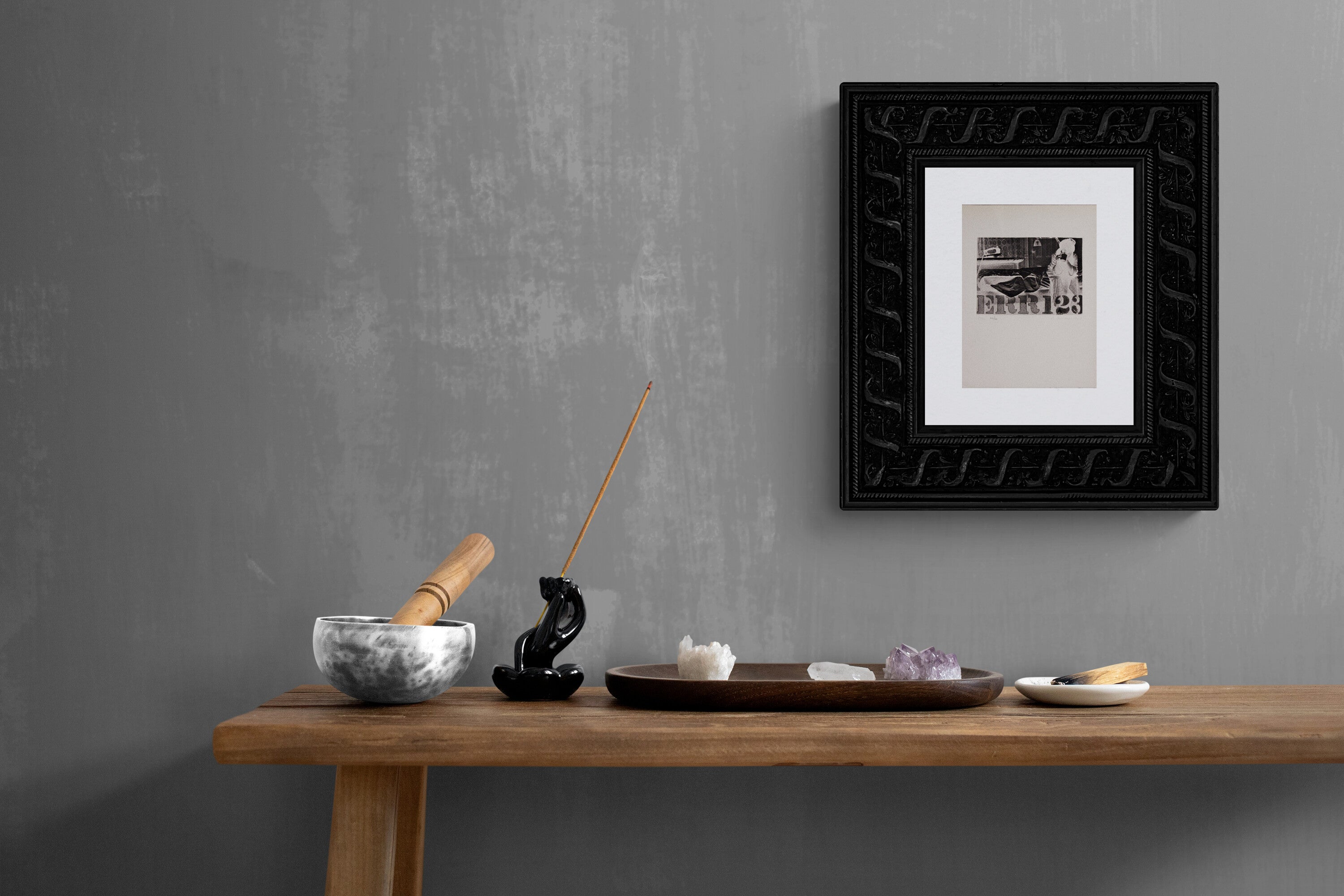


INDIANA Robert


A four-letter word can become an image known around the world. That is what happened with LOVE, the celebrated motif by Robert Indiana, in which the tilted letter O transforms an everyday word into an immediately recognizable visual structure. Born Robert Clark in New Castle, Indiana, in 1928, the American artist is one of the most important figures associated with Pop Art, but his work goes far beyond the success of a single image. Through letters, numbers, signs, and symbols, Indiana developed a personal reflection on memory, identity, and the messages that permeate American culture.
From childhood in the Midwest to the New York scene
Indiana’s youth was marked by frequent moves, an experience that helped make house numbers, road signs, and the lettering he encountered in everyday life particularly significant. After military service, he studied art in Chicago and spent a period training in Europe before settling in New York. There, he came into contact with the artists active in the Coenties Slip area, an environment where found materials, painterly experimentation, and an interest in urban culture coexisted with abstract exploration. In 1958, he chose to adopt the name Robert Indiana, turning his home state into a permanent sign of his artistic identity.
The earliest artworks reveal an interest in found objects, circular forms, and structures reminiscent of signs and targets. Gradually, these elements gave way to increasingly rigorous compositions, organized through flat areas of color, typography, and color contrasts. Indiana liked to describe himself as a sign painter, an expression that helps explain how he used language: words do not accompany the image as explanations, but constitute its main subject. Their graphic form is as important as the meaning they convey.
Words, numbers, and hidden meanings
L’s approach to Pop Art depends on choosing a visual vocabulary familiar to the public, close to advertising and urban communication. Indiana, however, gives these signs an autobiographical and symbolic depth that sets them apart from a simple celebration of mass culture. Numbers can allude to places, dates, or turning points in his life, while words become messages capable of evoking desire, hope, loss, or belonging. The simplicity of the image therefore does not eliminate the complexity of its references; on the contrary, it concentrates them in an extremely controlled visual form.
The LOVE motif, developed in the 1960s and later disseminated through paintings, sculptures, and prints, is the most famous example of this strategy. The arrangement of the four letters within a compact structure makes the word both legible and abstract, transforming it into an emblem. The image's extraordinary circulation has sometimes overshadowed other parts of Indiana's output, including numerical compositions and works devoted to civic and commemorative themes. Considering the artist's entire career, however, helps us understand how his practice has always concerned the public and private power of symbols.
Screenprints, sculptures, and editions
screenprint is a process particularly well suited to Indiana's visual language, as it allows for uniform areas of color, precise edges, and crisp lettering. In an original print, however, the technique is only one factor to consider: the edition, its relationship to the artist's project, the print run, and the documentation for the individual print also matter. The same iconographic motif may appear in a sculpture, an art screenprint, or a commercial reproduction, though these categories are not equivalent in material or collecting terms.
LOVE's immense popularity makes this distinction particularly important. An image's recognizability alone does not guarantee that an object is an authorized original print, nor does it establish its authenticity and value. Proper cataloging must begin with an examination of the individual work, not merely its resemblance to the artist's most famous motif.
The word as public image
Robert Indiana died in Maine in 2018, leaving behind a visual language that continues to circulate far beyond museum walls. His contribution lies in showing how letters and numbers, seemingly devoid of pictorial qualities, can become tools for organizing color, space, and meaning. In his artworks, a word is never merely something to read: it is also a form to observe, a symbol to remember, and sometimes a question about the relationship between individual experience and the collective imagination.
Ti piace Robert Indiana?
Per ricevere gli ultimi aggiornamenti di questo artista, lascia la tua email qui sotto: