

Remo Squillantini biography
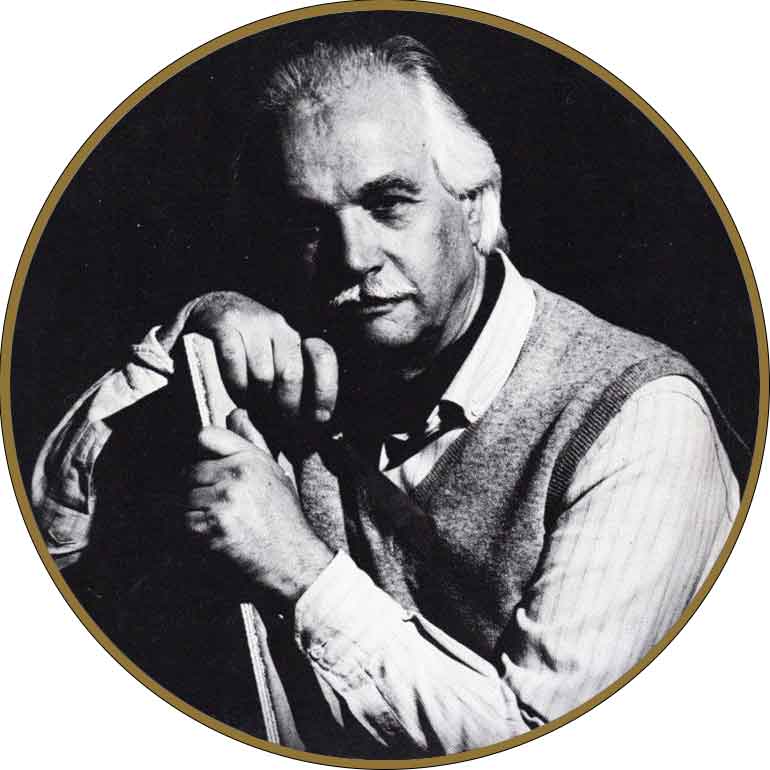
Remo Squillantini, Italian painter of the twentieth century, was born in Stia, in the province of Arezzo, in 1920. His life and artistic career were a fascinating journey through the art of illustration and painting. Remo Squillantini lived and worked in Florence until his death in 1996, leaving behind a legacy of artworks loved by collectors and recognized by the general public.
His artistic career began as an illustrator, working with major publishers both in Italy and abroad. However, the desire to find an identity in the subject and the passion for painting pushed him to fully dedicate himself to this art form. From the beginning, his artistic research focused on expressing a deep melancholy, depicting a bored humanity devoid of values and aspirations. In his paintings, Remo Squillantini skillfully captures with sensitivity and ironic poetry the sadness of aged men and faded women, now devoid of dreams and illusions. Among the artist's most famous works are the cycles "The Jazz Players" and "The Gamblers", which made him known to the general public and loved by collectors.
Squillantini's particular expressionist technique, which often ironically reworks artworks from the past, is characterized by the representation of very distinctive "types", placed in contexts dear to the Impressionists or the German Expressionists of the Neue Sachlichkeit. His artistic production focused on thematic cycles, such as "The Seven Deadly Sins", "The Sea", "The Cabaret", and "Sinopie Early 1900s", each exploring different aspects of human existence and its vices.
Critics have often emphasized the Tuscan affinity of his art, linked both to masters like Giotto and Piero della Francesca and to his native land, Stia, a place of Dante's exile and a source of artistic inspiration. Starting from the '70s, Remo Squillantini dedicated all his effort to painting, achieving immediate recognition and success. In 1975, he had his personal exhibition simply titled "Squillantini", at the Piero Della Francesca Art Gallery in Arezzo, with which he established a lasting collaboration until his death.
During the '80s and '90s, the artist achieved definitive recognition, participating in numerous national exhibitions and shows, including the "Arte Fiera di Bologna" and the "Expo Arte" in Bari. Remo Squillantini's works are displayed in important public and private galleries, and his works are found in prestigious collections in Italy and abroad, including the United States, Canada, Germany, Switzerland, and the Netherlands.
His art touched deep chords in the public, who found in his paintings an invitation to reflect on their own existence and to live fully, filling life with passions and civic commitment. In addition to the personal exhibitions already mentioned, Remo Squillantini exhibited on numerous other occasions, presenting his thematic cycles and engaging the public with his expressionist irony and deep melancholy. His works have left an indelible mark on the Italian artistic scene, testifying to his mastery in capturing the essence of the human soul and conveying it through brushstrokes capable of evoking authentic emotions.
Remo Squillantini was, above all, a simple and reserved man, who preferred to speak mainly through his works. His art, full of meaning and depth, continues to inspire and move the public, demonstrating that art is a powerful vehicle to reflect on the human condition and the meaning of existence. His artistic legacy still lives today, continuing to illuminate the path for new artistic and human explorations.