
Visual artist
Grazia Varisco
Italy, 1937
Stay up to date with this artist
Leave your email to receive updates on newly available artworks and news about this artist.
Artworks by Grazia Varisco
6 artworks
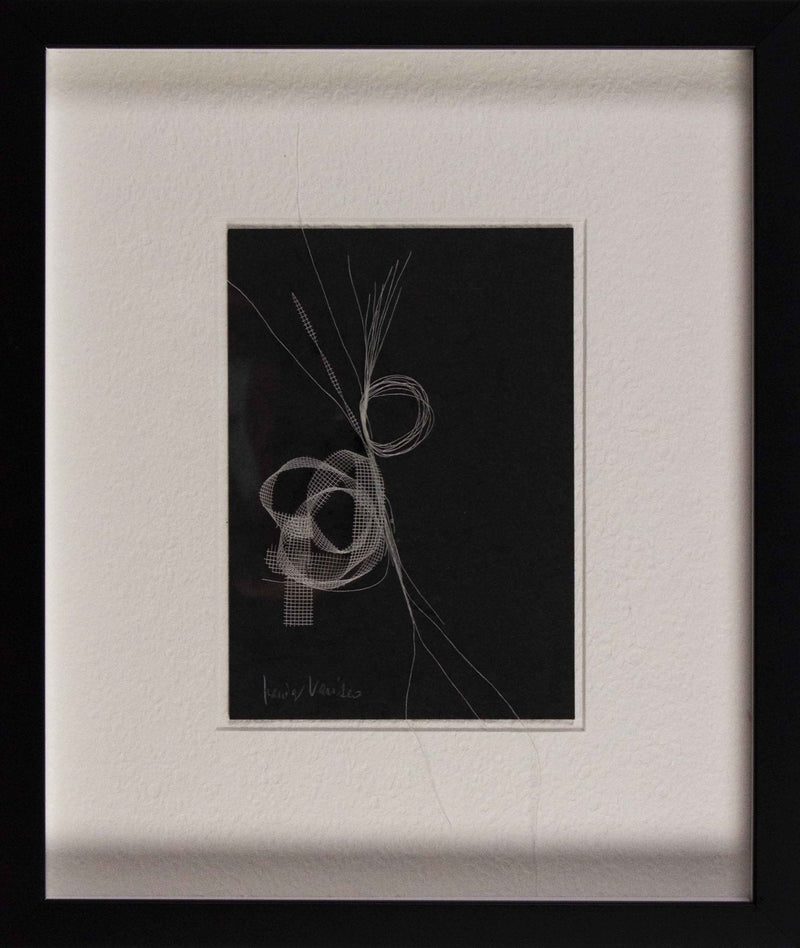
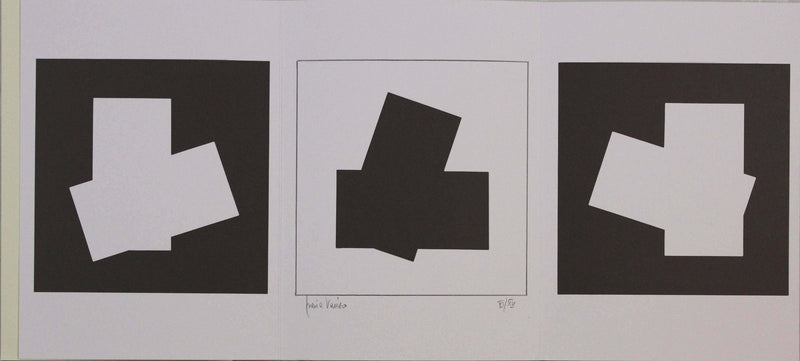

Biography of Grazia Varisco
Born in Milan in 1937, Grazia Varisco is one of the Italian protagonists of kinetic and programmed art. Her oeuvre focuses on a question as simple as it is radical: what do we really see when we look? Through mobile surfaces, variable geometries, three-dimensional structures and devices that involve light, the artist shows how perception is not a passive act, but an experience that changes…
Read the full biographyClose the biography
Born in Milan in 1937, Grazia Varisco is one of the Italian protagonists of kinetic and programmed art. Her oeuvre focuses on a question as simple as it is radical: what do we really see when we look? Through mobile surfaces, variable geometries, three-dimensional structures and devices that involve light, the artist shows how perception is not a passive act, but an experience that changes with the movement, time and position of the observer.
Brera, the T Group and research on movement
Between 1956 and 1960 Varisco studied at the Brera Academy, where she also attended the teachings of Achille Funi. In 1960 she joined the Gruppo T, together with Giovanni Anceschi, Davide Boriani, Gianni Colombo and Gabriele De Vecchi. The Milanese environment is then crossed by an intense comparison between art, design, science and new technologies. The Miriorama events and the experiences of Programmed Art propose artworks that no longer coincide with an immobile image: they change over time, react to light or require the intervention of the public.
The spectator's participation does not necessarily coincide with the possibility of touching or operating a device. Even an immobile structure may require movement of the body to reveal its complexity. The visual experience is then constructed through a sequence of observations, each partial. This characteristic makes the relationship between artwork and exhibition particularly important: a frontal photograph can document the object, but does not exhaust what happens when looking at it from different positions. Varisco's oeuvre thus invites us to recognize the active, temporal and even surprising character of every perception.
Gruppo T's collective research is distinguished from the simple representation of movement: change becomes a property of the artwork or of the relationship with the viewer. This perspective shifts attention from the painting as a definitive image to the device as a situation. The repetition of geometric elements, the variation of light and the possibility of changing the point of view introduce a temporal component. Even when the mechanism is elementary, the experience is not: the public discovers how easily the gaze interprets as stable forms that in reality depend on changing conditions.
In this context Varisco develops a personal interest in the instability of vision. A shape can appear different depending on the point from which it is observed; a seemingly orderly surface can produce an impression of movement; a simple shift can transform the equilibrium of a whole. The artwork does not offer a single answer, but makes visible the process through which the gaze constructs its own meaning.
Geometries, variations and real space
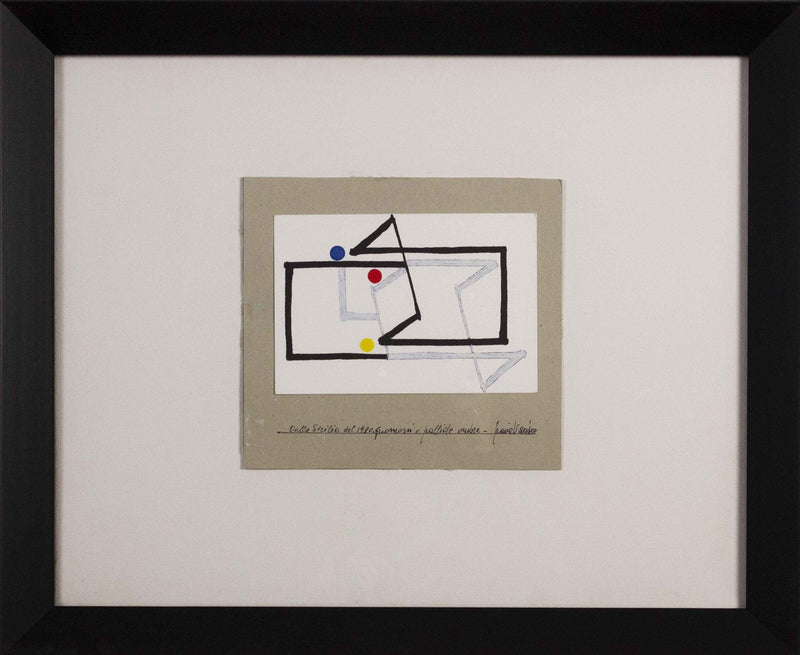
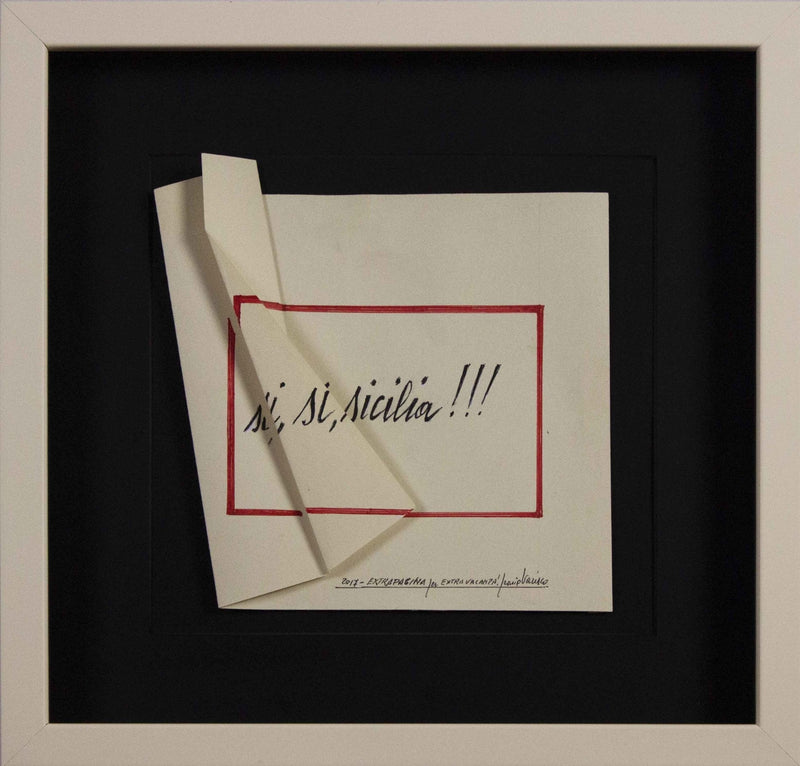
After the collective experience was concluded, from the mid-1960s the artist continued her research independently. In her subsequent artworks, geometry is not a cold and immutable discipline, but rather a field open to the unexpected. Folds, openings, diagonals, frames and overlapping surfaces create situations in which perception oscillates between real depth and apparent depth. The relationship between full and empty becomes just as important as that between light and shadow.
In the autonomous phase, geometric rigor often acquires a questioning character. A diagonal can suggest a direction and simultaneously deny it; a folded margin changes the reading of the plan; an opening creates an unexpected relationship between the front and the back. The interest does not consist in producing an illusion as an end in itself, but in showing that space is constructed by relationships. The apparent simplicity of some artworks therefore requires careful observation: a minimal variation can profoundly transform the way we perceive the entire composition.
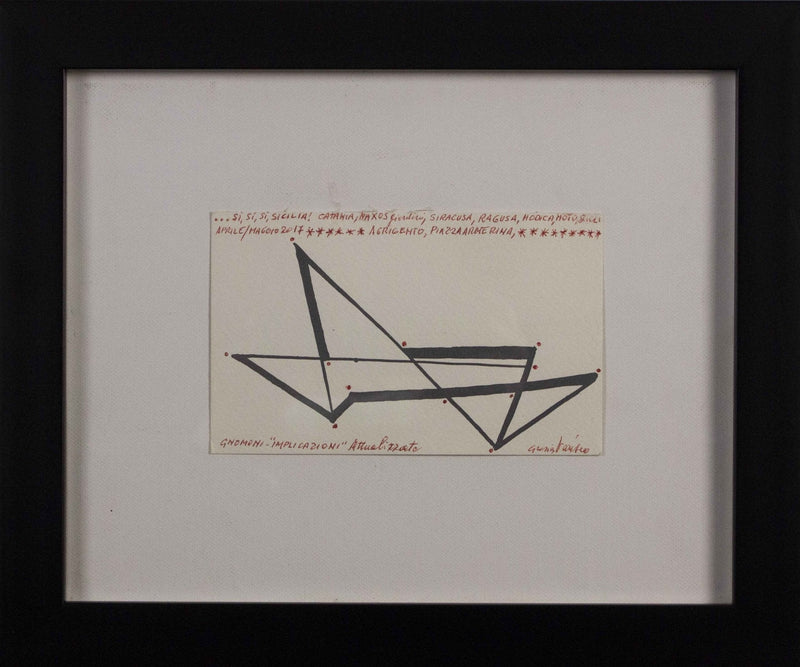
The series of Implications, Angles and other core elements of her production show how a minimal variation can modify the entire visual structure. The viewer is invited to move, get closer, change perspective. This attention to perceptive behavior links Varisco's oeuvre to the culture of design, but preserves its poetic freedom: the rigor of the construction produces different experiences each time.
Graphics, projects and collectible artworks
Between the Sixties and the following decade Varisco also worked in the field of visual communication, collaborating with companies such as La Rinascente, Abitare and Kartell. The relationship with design strengthens her sensitivity to materials, proportions and structural clarity. She later taught Theory of Perception at the Brera Academy, helping to convey a conception of art based on direct experience.
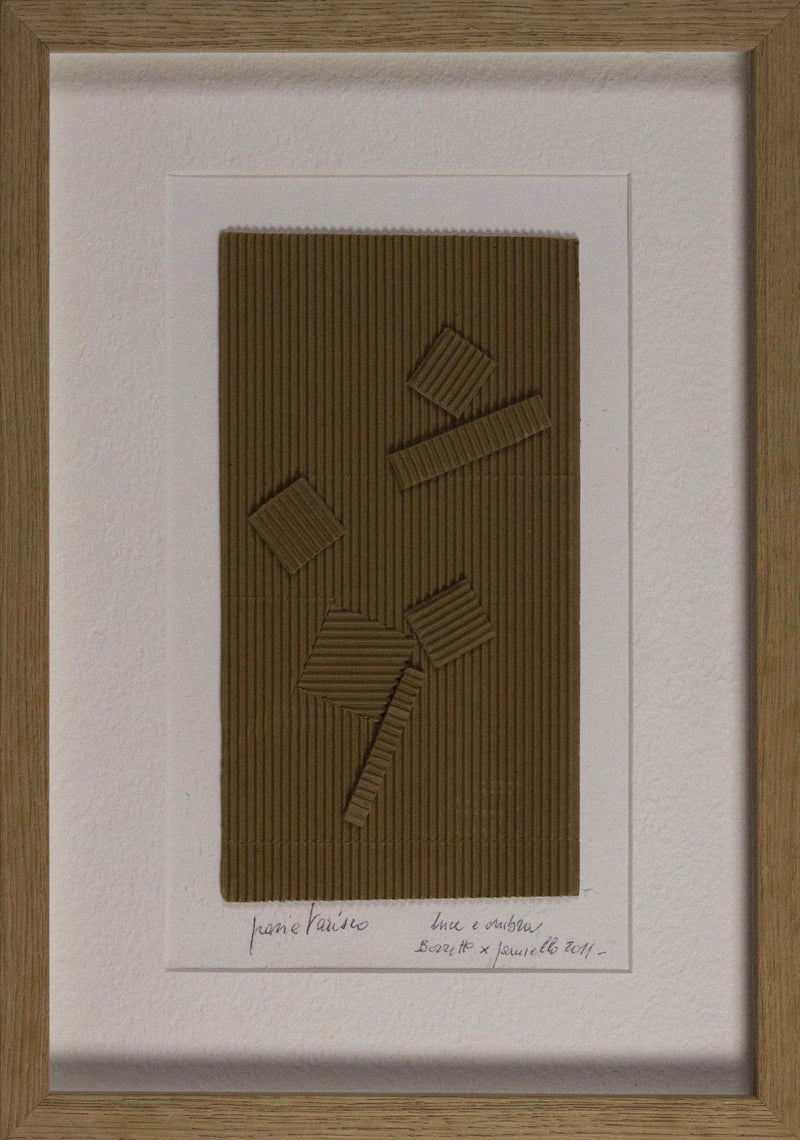
This attention to perception brings her oeuvre closer to issues specific to architecture and design, without canceling its artistic nature. Industrial materials and orderly structures are not used to celebrate technology, but to make often overlooked everyday phenomena visible. The shadow, for example, is not just a secondary effect: it can become a component that changes as the lighting changes. The artwork thus lives in a dynamic relationship with the environment, and not only with its photographic image.
For artworks on paper and editions it is important to distinguish a graphic project, an original print, a multiple and photographic documentation of a kinetic artwork. In some cases the material or movable component is essential to the identity of the artwork and cannot be deduced from a simple image. Her research demonstrates that geometry can be surprising and that even the most basic of signs can transform into an experience of time and space.
In collecting, this specificity requires an accurate description. For a three-dimensional multiple, the assembly, the materials, the presence of mobile elements and the storage conditions can be decisive; for a graphic sheet, however, the printing technique, format and edition matter. Even the way of displaying an artwork can influence perception: lighting, distance and observation point are not neutral details. A respectful cataloging of the project should therefore avoid reducing different artworks to a generic category of "geometric abstraction".
Do you like Grazia Varisco?
Leave your email to receive updates on newly available artworks and news about this artist.
Grazia Varisco
Art that lives in your spaces
Choosing an artwork by Grazia Varisco means making room for an individual artistic language. The artworks gathered here suggest combinations and perspectives to bring into your own surroundings, letting art guide your gaze.

DISCOVER THE ARTIST
Frequently asked questions
Answers to common questions about Grazia Varisco, the artist’s life, artworks and value on the art market.
Who is Grazia Varisco and why is she important for kinetic art?
Grazia Varisco (born 1937) is an Italian artist associated with programmed and kinetic research developed in Milan in the 1960s. She investigated perception through geometric shapes, real or suggested movement, light and spectator participation. Her research questions the idea of the work as a fixed image.
What relationship did Grazia Varisco have with Gruppo T?
Varisco participated in Gruppo T, a Milanese group that was a protagonist of Italian programmed art. The group explored time, movement and perceptual processes, often through non-traditional devices and materials. The collective experience contributed to the development of her research, which she then continued autonomously.
What does programmed art mean in the artworks of Grazia Varisco?
In programmed art the artist organizes elements and relationships according to a project that generates perceptive variations. In Varisco's artworks, vision can change with the movement of the observer, with light or with the interaction between surfaces and structures. The visual effect is not just decorative: it is part of the meaning of the artwork.
What materials and techniques does Grazia Varisco use?
Varisco's research includes reliefs, three-dimensional structures, artworks on paper and experiments with industrial materials and reflective surfaces. There is no single technique valid for all production. To identify a specific artwork, it is necessary to read the technical data sheet and check the materials, execution methods and possible edition.
How to distinguish an original artwork by Grazia Varisco from a reproduction?
An original artwork, even when created in an edition, must be distinguished from a photographic or decorative reproduction. The description of the technique, the print run when expected, the documentation of authenticity and the provenance are relevant. In kinetic or structural artworks it is also important to check the integrity and functioning of the elements.
Discover more artists
Explore more leading figures in modern and contemporary art


