
Painter
Remo Brindisi
Italy, 1918–1996
Stay up to date with this artist
Leave your email to receive updates on newly available artworks and news about this artist.
Artworks by Remo Brindisi
1 artwork

Biography of Remo Brindisi
Remo Brindisi (Rome, 1918 – Lido di Spina, 1996) was one of the leading figures in Italian figurative painting in the second half of the twentieth century. His oeuvre, associated with Expressionism and the New Figuration, addresses themes related to the human condition, war, memory, and the transformations of contemporary society. Through intensely expressive figures and compositions characterized by an energetic use of color, Brindisi…
Read the full biographyClose the biography
Remo Brindisi (Rome, 1918 – Lido di Spina, 1996) was one of the leading figures in Italian figurative painting in the second half of the twentieth century. His oeuvre, associated with Expressionism and the New Figuration, addresses themes related to the human condition, war, memory, and the transformations of contemporary society. Through intensely expressive figures and compositions characterized by an energetic use of color, Brindisi developed a personal language capable of uniting emotional engagement and historical reflection. His oeuvre includes paintings, artworks on paper, ceramics, and artworks in other materials. Particularly important is the Remo Brindisi House Museum in Lido di Spina, conceived as a meeting place for art, architecture, and everyday life.
Artistic training
Remo Brindisi was born in Rome in 1918 to a family of Abruzzese origin. His father, Fedele Brindisi, was a sculptor, cabinetmaker, and teacher. L'the family environment fostered an early interest in the visual arts. During his youth, Remo studied drawing and painting in depth, developing a sensitivity to the depiction of the human figure. His training took place during a complex historical period, marked by the rise of European dictatorships and the tensions that led to the Second World War. These experiences would profoundly influence his oeuvre.
The first figurative studies
Brindisi's early artworks developed within the figurative tradition. The human figure plays a central role. L'artist seeks more than a faithful representation of his subjects. He is above all interested in expressing psychological states and emotional tensions. Color gradually becomes a fundamental tool. Forms may be simplified and distorted to heighten their expressive intensity. This exploration brings him closer to the tradition of European Expressionism.
War and Historical Memory
L'experience of the Second World War was a decisive moment in Brindisi's sensibility. Violence, persecution, and the consequences of conflict became recurring themes. L'artist developed a style of painting capable of addressing the tragic dimension of contemporary history. The figures may appear isolated, distorted, or set within dramatic compositions. The representation goes beyond mere reportage. It seeks to express a universal human condition, marked by suffering and the need to preserve memory. This ethical dimension would remain present throughout his oeuvre.
L'Expressionism and New Figuration
In the postwar period, Brindisi developed a style that critics associate with international New Figuration. His painting reflects an engagement with Post-Cubism, Art Informel, and some strands of Abstract Expressionism. His interest in Picasso is particularly significant, as is the possibility of using the distortion of figures as an expressive tool. The compositions often feature an intense interplay between line and color. The figures remain recognizable, but are transformed through free-flowing, dynamic painting. Brindisi's artistic research does not fully align with any single movement.
It retains a strong sense of independence, grounded in the need to interpret its own time.
The Rural and Pastoral World
One of the recurring themes in Brindisi's oeuvre is the rural and pastoral world. L'artist sees rural life as an environment in which forms of human connection and solidarity survive. The representation is not necessarily idyllic. Artwork, hardship, and social conditions remain fundamental elements. The figures may appear gathered in compositions in which color heightens the emotional dimension. This theme allows Brindisi to reflect on the relationship between the individual, the community, and the transformations of society.
The Contemporary City
Alongside the rural world, Brindisi explores the representation of the modern city. Urban space becomes a place where the contradictions of contemporary society come to light. Figures may appear immersed in complex, dehumanizing environments. The city is interpreted as a space of alienation, but also as a potential site of civic transformation. The contrast between the rural world and the urban environment is one of the most significant aspects of his artistic research. Through these subjects, Brindisi reflects on the social changes of the second half of the twentieth century.
Figures and the existential dimension
The human figure remains at the center of Brindisi's oeuvre. Faces, bodies and groups of people become a way to explore universal themes. Painting can suggest loneliness, tension, fear or solidarity. L'artist is interested in the existential condition of the individual. Distortions and formal simplifications are not simply stylistic choices. They serve to make an inner dimension visible. This sensitivity contributes to the emotional power of his compositions.
Color and the composition of the image
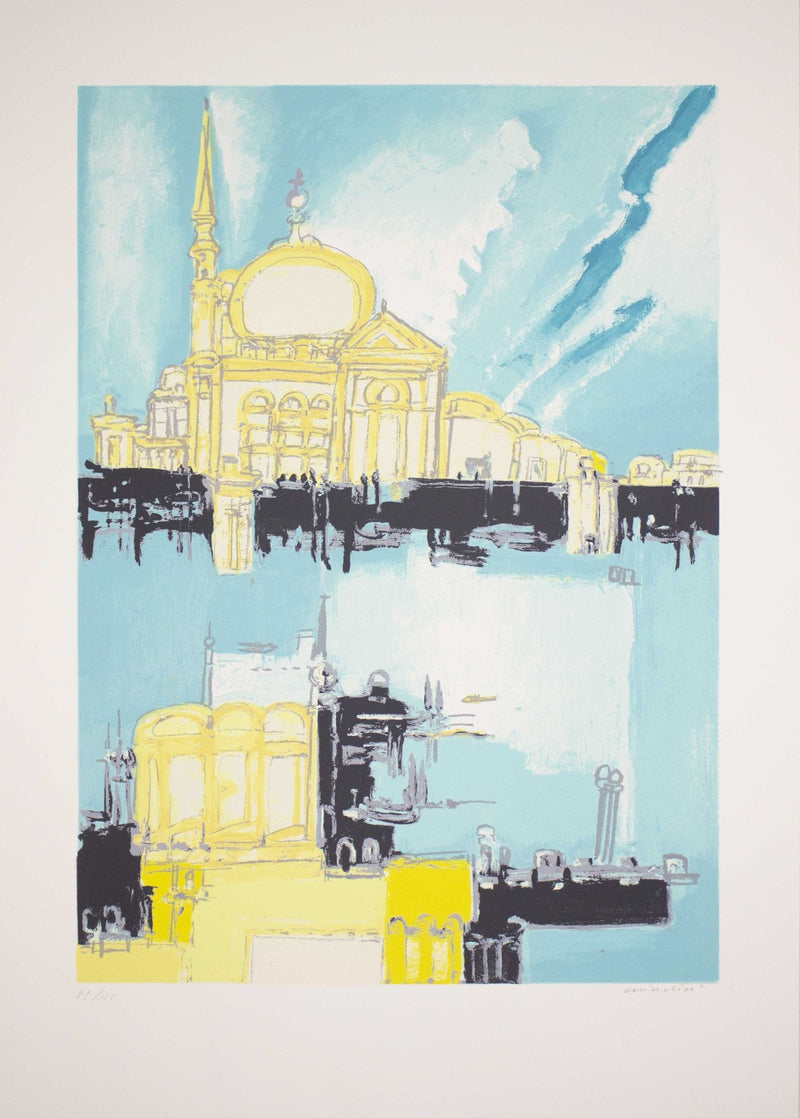
In Brindisi's painting, color plays a fundamental role. The hues can be intense and contrasting. The painterly mark helps create movement and tension. Forms are not always defined by regular outlines. They can emerge from fields of color and dynamic relationships between surfaces. Color serves more than a descriptive function. It becomes a tool for communicating emotions and meanings.
Graphic art and printmaking techniques
Brindisi develops a significant body of graphic artwork. He produces lithographs, engravings and other prints, revisiting the main themes of his paintings. Original printmaking allows him to experiment with different relationships between line, color and surface. Figures can be constructed using essential marks while retaining great expressive intensity. His graphic artworks should not be considered simple reproductions of his paintings. They represent an independent area of his oeuvre, in which the artist translates his visual language through specific technical processes.
Ceramics and other materials
Alongside painting and graphic art, Brindisi experiments with ceramics, bronze and Murano glass. L's interest in different materials reflects his desire to expand the expressive possibilities of figurative art. Ceramics make it possible to combine color with a three-dimensional surface. Bronze introduces a sculptural dimension. Glass offers new possibilities related to transparency and light. These experiments confirm the artist's versatility.
The Remo Brindisi House Museum
One of the most important projects of his mature period is the Remo Brindisi House Museum, located in Lido di Spina, in the Comacchio area. Lhe building, designed by architect Nanda Vigo, was conceived as a place where home, museum, and artistic research could coexist. Lhe modern architecture engages in dialogue with the artworks in the collection. The house was not conceived merely as a private space. It became a place dedicated to the preservation and sharing of contemporary art. The project testifies to Brindisi's interest in a direct relationship between art and everyday life.
Lhe artistic legacy
Remo Brindisi died in 1996. His oeuvre represents an important record of Italian painting in the second half of the 20th century. Through figures, landscapes, and group scenes, he addressed the major themes of contemporary history. His artistic research combines human engagement, expressive intensity, and formal experimentation. His graphic oeuvre and use of different materials broaden the significance of his career. The House Museum remains a tangible testament to his vision of art as a shared cultural experience.
Do you like Remo Brindisi?
Leave your email to receive updates on newly available artworks and news about this artist.
Remo Brindisi
Art that lives in your spaces
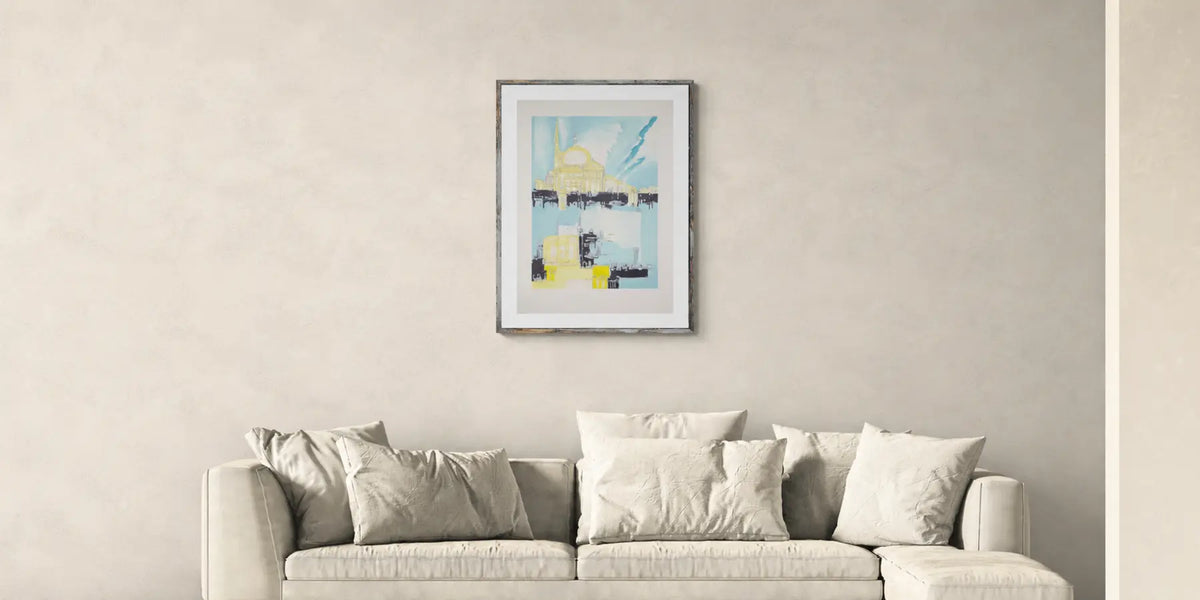
Choosing an artwork by Remo Brindisi means making room for an individual artistic language. The artworks gathered here suggest combinations and perspectives to bring into your own surroundings, letting art guide your gaze.
DISCOVER THE ARTIST
Frequently asked questions
Answers to common questions about Remo Brindisi, the artist’s life, artworks and value on the art market.
Who was Remo Brindisi?
Remo Brindisi (1918–1996) was an Italian painter of the twentieth century. His production crosses figurative, social and historical themes, with a painting recognizable for its expressive intensity and decisive use of color. He has also worked on subjects related to war, the human condition and daily life.
What are the most recurring subjects in Remo Brindisi's artworks?
The themes present in his production include human figures, motherhood, landscapes, scenes of life and subjects of civil commitment. The choices vary according to the periods and pictorial cycles. To interpret an artwork it is useful to distinguish the theme represented from the historical context in which it was created.
How to recognize Remo Brindisi's pictorial style?
Many artworks feature synthetic figures, intense colors and an energetic line, but the style does not remain unchanged over time. Recognition requires comparisons with documented artworks from the same period, in addition to examining the signature, technique and provenance. Chromatic similarities alone are not sufficient to attribute a painting.
What is the difference between a painting and a screenprint by Remo Brindisi?
A painting is an artwork created directly on a support, while a screenprint is a print obtained by transferring ink through a prepared frame. A screen print can be an original artwork, if designed as such, but it is not a one-of-a-kind painting. Technique, print run and signature must be precisely described in the artwork sheet.
How much is a signed screenprint by Remo Brindisi worth?
There is no single value for all signed screenprints. Title, print run, size, conservation, print quality, signature and market demand have an impact. To estimate an example it is necessary to compare sales of equivalent artworks, distinguishing requested prices and actually realized prices.