
Painter, writer and art critic
Michel Seuphor
France, 1901–1999
Stay up to date with this artist
Leave your email to receive updates on newly available artworks and news about this artist.
Artworks by Michel Seuphor
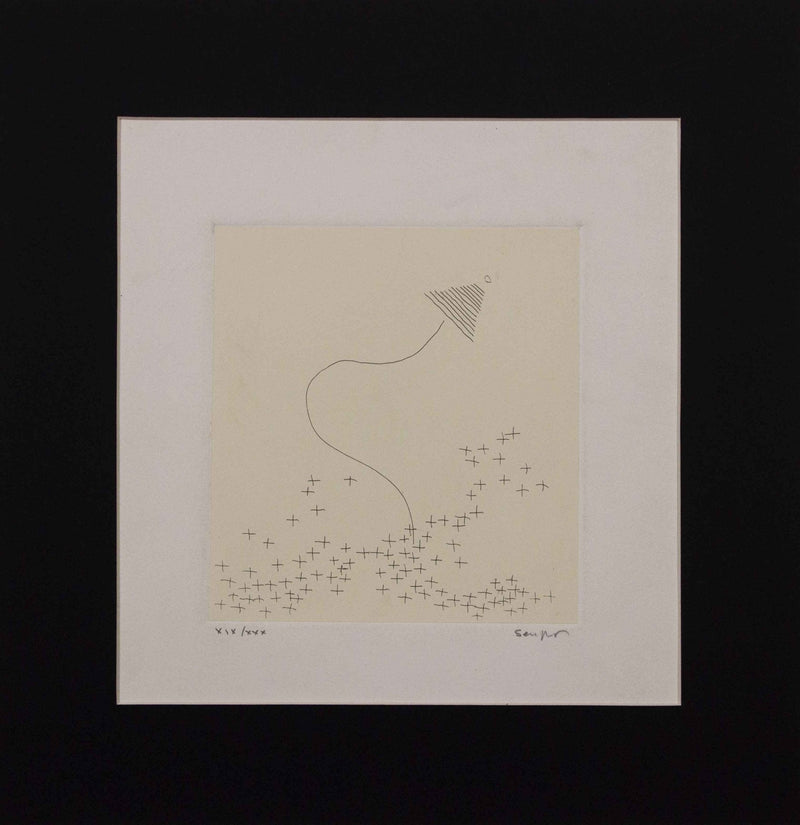
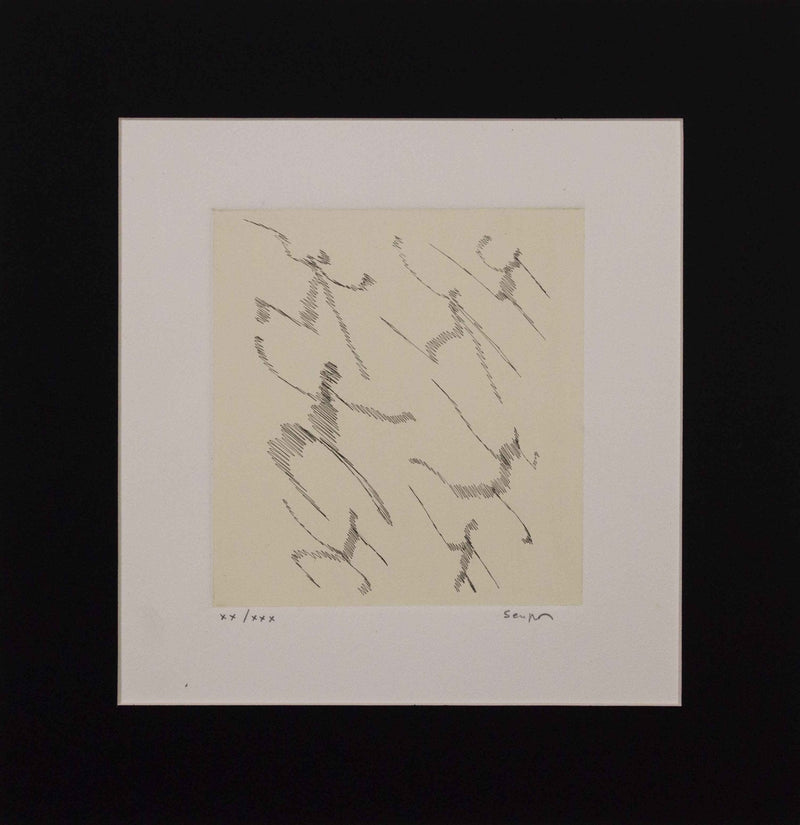
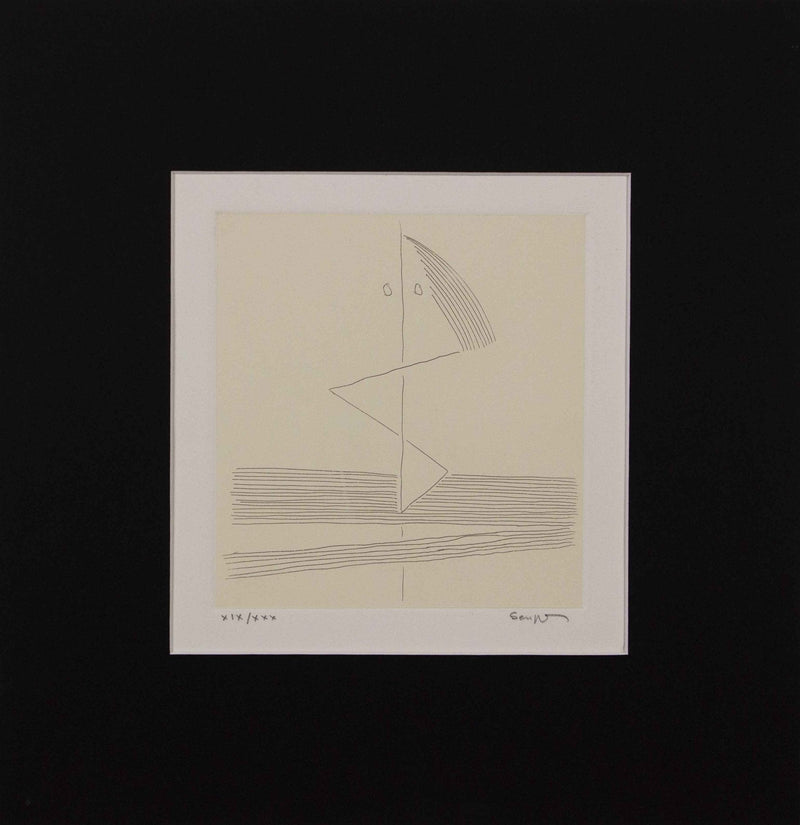
5 artworks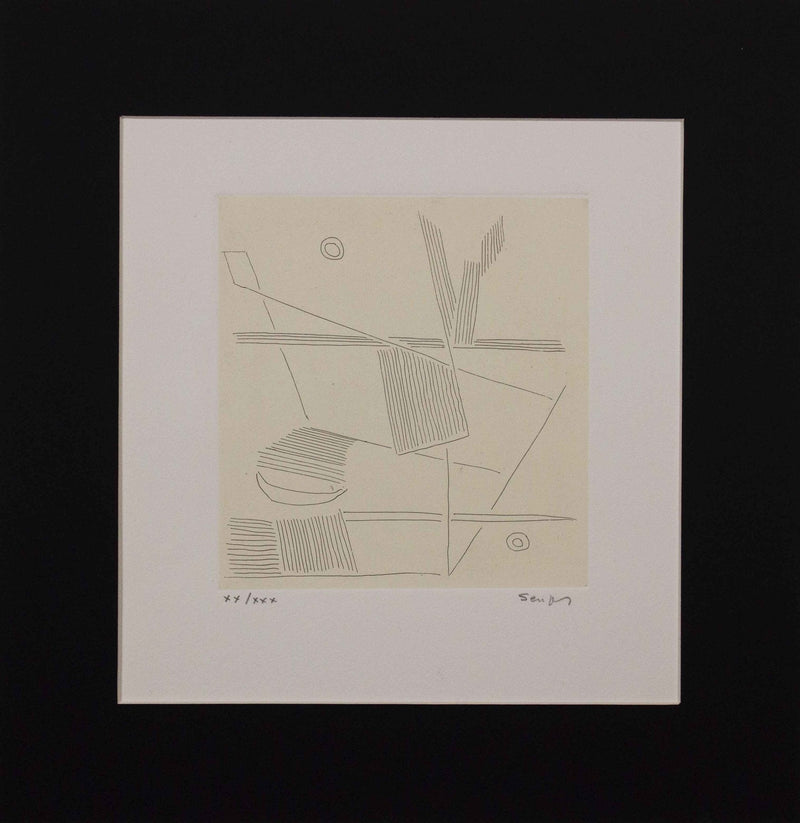

Biography of Michel Seuphor
Michel Seuphor (Antwerp, 1901 – Paris, 1999), pseudonym of Fernand-Louis Berckelaers, occupies a particular position in the art of the twentieth century: he was an artist, poet, writer and critic, but above all a tireless interpreter of abstraction. His visual artwork and his theoretical activity do not constitute two separate paths. Both arise from the desire to understand how lines, rhythms and geometric relationships can…
Read the full biographyClose the biography
Michel Seuphor (Antwerp, 1901 – Paris, 1999), pseudonym of Fernand-Louis Berckelaers, occupies a particular position in the art of the twentieth century: he was an artist, poet, writer and critic, but above all a tireless interpreter of abstraction. His visual artwork and his theoretical activity do not constitute two separate paths. Both arise from the desire to understand how lines, rhythms and geometric relationships can build an autonomous language, capable of communicating without describing recognizable objects.
From avant-garde magazines to Paris
At a very young age, Seuphor participated in the European cultural renewal through the magazine Het Overzicht, published in Antwerp in the 1920s. The editorial work allowed him to enter into relationships with artists and writers interested in overcoming the conventions of representation. Having moved to Paris in 1925, he became a connecting figure between different environments, at a time when the avant-garde was looking for new ways to define the relationship between art, architecture and modern life.
In 1929 he founded the Cercle et Carré group with Joaquín Torres García, an important experience for the diffusion of geometric abstraction. The initiative did not pretend to impose a uniform style, but to create a space for discussion between artists who recognized non-figurative construction as a central possibility of modern art. Seuphor thus contributed to an international network of exchanges, publications and debates, in which critical thinking was an integral part of artistic practice.
Seuphor's activity as a cultural organizer is inseparable from his curiosity about the differences between artists. The network of European avant-gardes was not a homogeneous block: it included positions that attributed spiritual, architectural, social or purely visual meanings to geometry. Journals and exhibitions allowed these ideas to meet, discuss and sometimes conflict. Seuphor contributed to creating opportunities for discussion, taking on a role that went beyond that of author of his own artworks. This ability to connect different experiences also helps to understand his artistic production: the formal rigor does not arise from isolation, but from a long collective reflection on the possibility of a non-figurative language.
Horizontal lines, pauses and rhythm
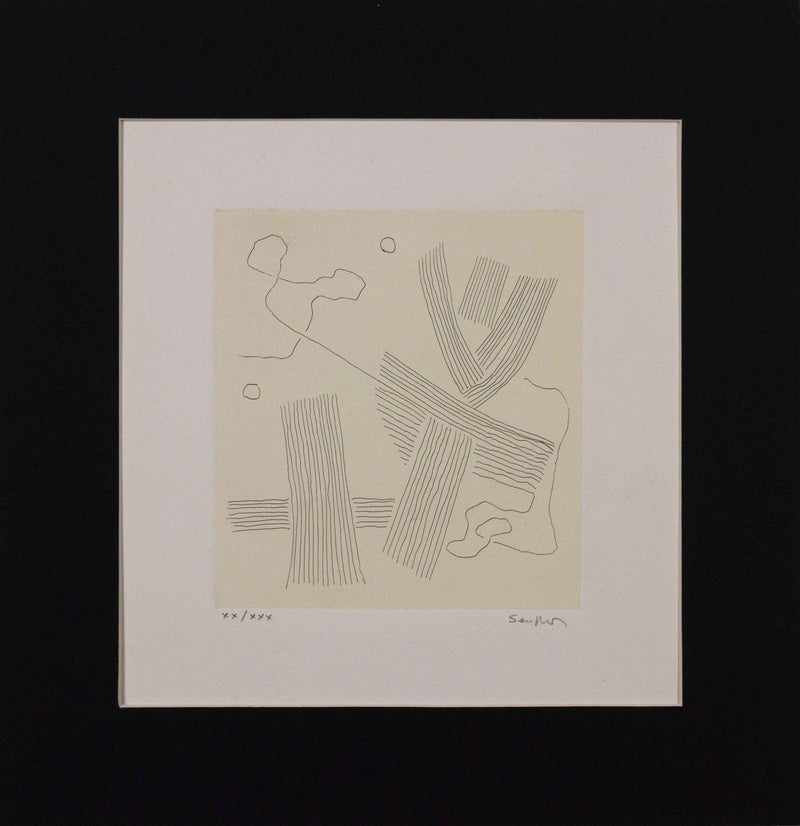
His visual language is particularly recognizable in the horizontal line drawings with gaps. Close, apparently regular lines are interrupted by empty spaces that give rise to figures, movements and variations in density. The image does not arise from the addition of a traditional outline, but from the relationship between what is traced and what is left free. The white of the paper thus acquires an active role, while the rhythm of the lines can recall writing or a score.
The apparently simple nature of the procedure allows us to appreciate how important the relationship between rule and freedom is. If all the lines were perfectly identical and continuous, the image could appear as a uniform surface. Instead, it is the gaps, variations and pauses that introduce a personal rhythm. The eye spontaneously tries to connect the gaps and recognize shapes that have never been drawn with a complete outline. The procedure thus highlights the active role of perception: the viewer participates in the construction of the image. Even in a small artwork, this dynamic can produce a surprising sensation of space and movement.
This research shows how stripped-down grammar can produce surprisingly complex results. The horizontal sign is repetitive, but not mechanical; the variation of the intervals introduces tension, lightness and movement. Abstraction becomes an experience to follow with the gaze, rather than an enigma to decipher. Seuphor also created collages and tapestry projects, expanding the dialogue between drawing, surface and image construction.
In horizontal line drawings, the rhythm can be understood by observing how the interruption of a stroke transforms the entire surface. A white area can suggest a volume without the need to draw its outline; a thickening of lines can give the impression of a shadow or a vibration. The initial regularity thus becomes the term of comparison that makes every deviation perceptible. It is a practice that requires patience and attention, because the precision of the sign must not cancel out the vitality of the hand. The relationship between solids and gaps also invites us to distinguish abstraction from the simple absence of a subject: even when it does not describe an object, an image can produce depth, movement and intensity.
Writing and the memory of abstraction
In parallel with his artistic production, Seuphor dedicated fundamental books to the history of abstract art and to Piet Mondrian, helping to preserve his memory and clarify his aspirations. His activity as a historian and critic must be read as part of a broader cultural commitment: documenting a transformation of art which, during the twentieth century, had called into question the primacy of naturalistic representation.
The interest in Mondrian reveals another characteristic of his thought: the attempt to understand an artwork through the choices and aspirations of those who produced it, not only through the succession of styles. Seuphor thus participates in the construction of the memory of abstraction, in a period in which many avant-garde protagonists had not yet received a shared historical accommodation. His testimony is precious, but, as happens with every author personally involved in the events narrated, it also requires a comparison with other sources. For those who observe his drawings, this double identity of artist and historian is particularly stimulating: the line is at the same time a sensitive experience and a stance on the meaning of modernity.
In artworks on paper it is important to distinguish the original drawing from the printed edition and the editorial reproduction. The presence of a linear image does not automatically identify the technical procedure. For the collector, signature, support, dating, provenance and bibliographic documentation are relevant. Seuphor's legacy lies in having combined the precision of the sign with the generosity of intellectual research: his lines show that rigor can become a form of poetry.
Do you like Michel Seuphor?
Leave your email to receive updates on newly available artworks and news about this artist.
Michel Seuphor
Art that lives in your spaces
Choosing an artwork by Michel Seuphor means making room for an individual artistic language. The artworks gathered here suggest combinations and perspectives to bring into your own surroundings, letting art guide your gaze.
DISCOVER THE ARTIST
Frequently asked questions
Answers to common questions about Michel Seuphor, the artist’s life, artworks and value on the art market.
Who was Michel Seuphor?
Michel Seuphor, pseudonym of Fernand Berckelaers, was an artist, writer and abstract art theorist of Belgian origin. He had an important role in the diffusion and documentation of the abstract experiences of the twentieth century.
What relationship did Michel Seuphor have with abstract art?
Seuphor was both the protagonist and interpreter of abstraction: he created his own artworks and wrote texts dedicated to his developments. His contribution helps to understand the dialogue between visual research, theory and the European avant-garde.
What is the Cercle et Carré group?
Cercle et Carré was an artistic initiative born in Paris around 1929, associated with Michel Seuphor and Joaquín Torres-García. He promoted the comparison between different forms of abstract art through publications and exhibitions.
What characteristics do Michel Seuphor's drawings have?
A significant part of his production is based on lines, rhythms and geometric relationships, sometimes with a controlled use of color. The precision of the sign and the compositional structure are useful elements for reading his artworks on paper.
How to distinguish an original artwork from a print by Michel Seuphor?
You need to read the technique reported in the sheet: drawing, engraving, lithography and reproduction are different categories. Signature, numbering, paper, any stamps and origin can contribute to identification, without replacing a specialist check when necessary.
Discover more artists
Explore more leading figures in modern and contemporary art


