
Sculptor
Umberto Mastroianni
Italy, 1910–1998
Stay up to date with this artist
Leave your email to receive updates on newly available artworks and news about this artist.
Artworks by Umberto Mastroianni
3 artworks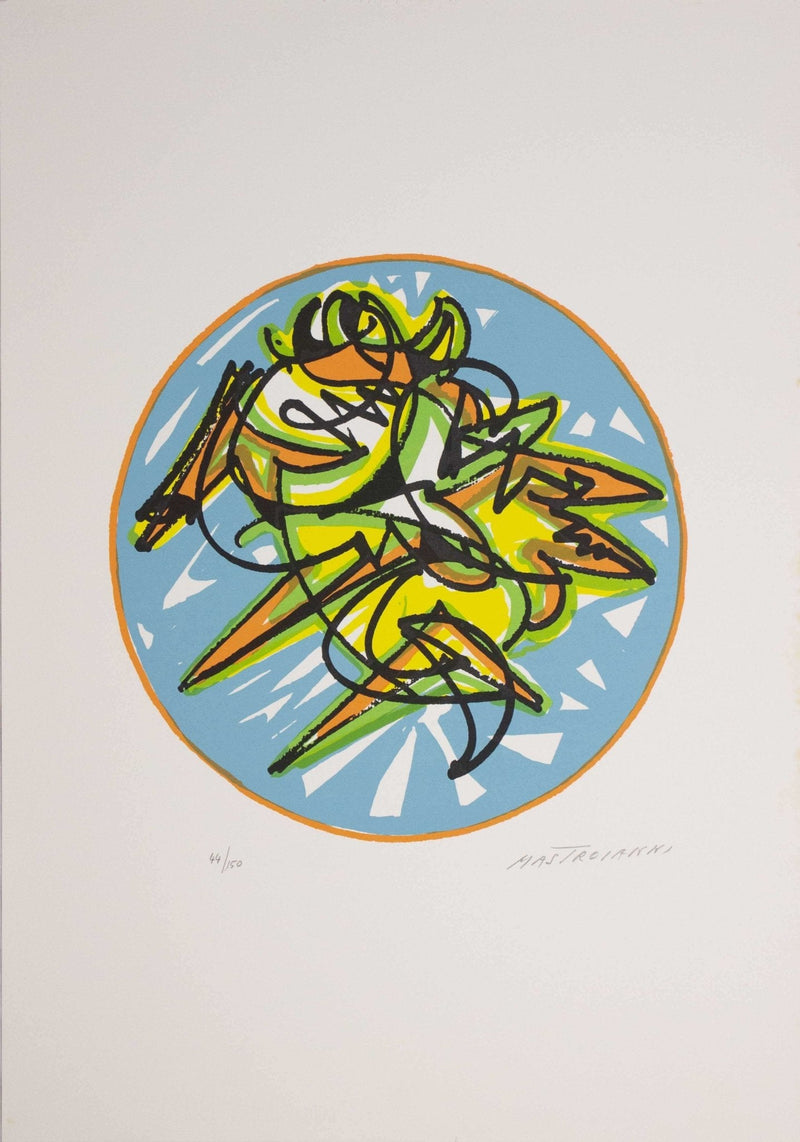

Biography of Umberto Mastroianni
Umberto Mastroianni (Fontana Liri, 1910 – Marino, 1998) is a central figure of twentieth-century Italian sculpture. His oeuvre stands out for a dynamic energy that seems to pass through the metal, break volumes and transform matter into movement. While in dialogue with the historical avant-gardes, in particular with Futurism, Mastroianni developed an autonomous research, marked by the experience of war and the Resistance and by…
Read the full biographyClose the biography
Umberto Mastroianni (Fontana Liri, 1910 – Marino, 1998) is a central figure of twentieth-century Italian sculpture. His oeuvre stands out for a dynamic energy that seems to pass through the metal, break volumes and transform matter into movement. While in dialogue with the historical avant-gardes, in particular with Futurism, Mastroianni developed an autonomous research, marked by the experience of war and the Resistance and by the desire to express the tensions of the contemporary world.
Training and first developments
Having moved to Turin at a young age, he came into contact with an artistic environment in which sculpture, architecture and modern research offered important stimuli. His training included the study of plastic techniques and materials, but his interest progressively turned to a less static conception of the volume.
The Turin environment offered Mastroianni a context in which the reflection on modernity did not only concern images, but also materials and their ability to occupy space. The comparison with twentieth-century research pushed him to consider sculpture as a dynamic organism, capable of relating surfaces, directions and voids. The transition from more compact forms to articulated structures was not sudden: it matured through a long attention to plastic construction.
To understand this evolution it is useful to think about the difference between a volume that can be circumscribed with the gaze and a composition that invites you to follow its branches. In the second case the artwork seems to continue beyond its material limits, involving the space that surrounds it. It is a decisive characteristic of his artistic maturity.
In traditional sculpture the block may appear closed and compact; Mastroianni instead tends to open it, cross it, multiply its directions. This transformation is not just formal: it expresses the idea that modern reality is crossed by forces, contrasts and accelerations that are difficult to enclose in an immobile image.
War, Resistance and expressive tension
The experience of the Resistance played an important role in his biography and his vision of art. The violence of war and the fight for freedom fueled a research in which the form often appears torn, snappy, riddled with tensions. The energy of the artworks does not coincide with a naive celebration of the machine or of speed: it also takes on a historical and human value.
The comparison with Futurism concerns above all the dynamism and the breakdown of the volumes. However, Mastroianni belongs to a later generation and brings a different awareness to sculpture, matured through the tragedies of the twentieth century. His compositions sometimes seem to represent a held explosion, a momentary balance between opposing forces.
The memory of the war introduces a substantial difference compared to the enthusiasm for speed that had characterized part of early Futurism. In Mastroianni's artworks, movement can suggest impact, fracture, resistance and reconstruction. The form does not simply appear accelerated: it seems to be crossed by a conflict that calls into question its stability.
This tension allows us to read the sculptures even beyond the biographical references. The contrast between a sharp surface and a sudden void, between a vertical axis and a diagonal thrust, can communicate a sense of retained energy. Abstraction thus becomes a language capable of evoking historical experiences without transforming them into illustrative images.
Matter, light and space
Bronze and other materials become tools for building open structures, with planes, edges, cavities and surfaces that intercept light in a changing way. Sculpture doesn't just occupy a space: it sets it in motion. The voids are as important as the solids, because they allow the gaze to travel through the artwork and grasp its complexity from different perspectives.
This attention makes three-dimensional observation fundamental. A frontal photograph can document the profile, but does not always convey the dialogue between solids and voids. The artwork changes as the viewer moves, and the light continuously accentuates new aspects.
The choice of materials is closely linked to the expressive result. Metallic surfaces can reflect light clearly or absorb it through different patinas and processes. Edges, cavities and overlaps are not simple decorative effects: they determine the path of the gaze and modify the perception of the artwork as the lighting changes.
In the sculptures intended for public space, the relationship with architecture and the movement of people becomes even more evident. The artwork does not appear as a fixed image: it is encountered from afar, visually crossed by approaching it and recomposed by observing it from different angles. The environmental dimension is therefore an integral part of his conception of sculpture.
Drawings, engravings and multiple artworks
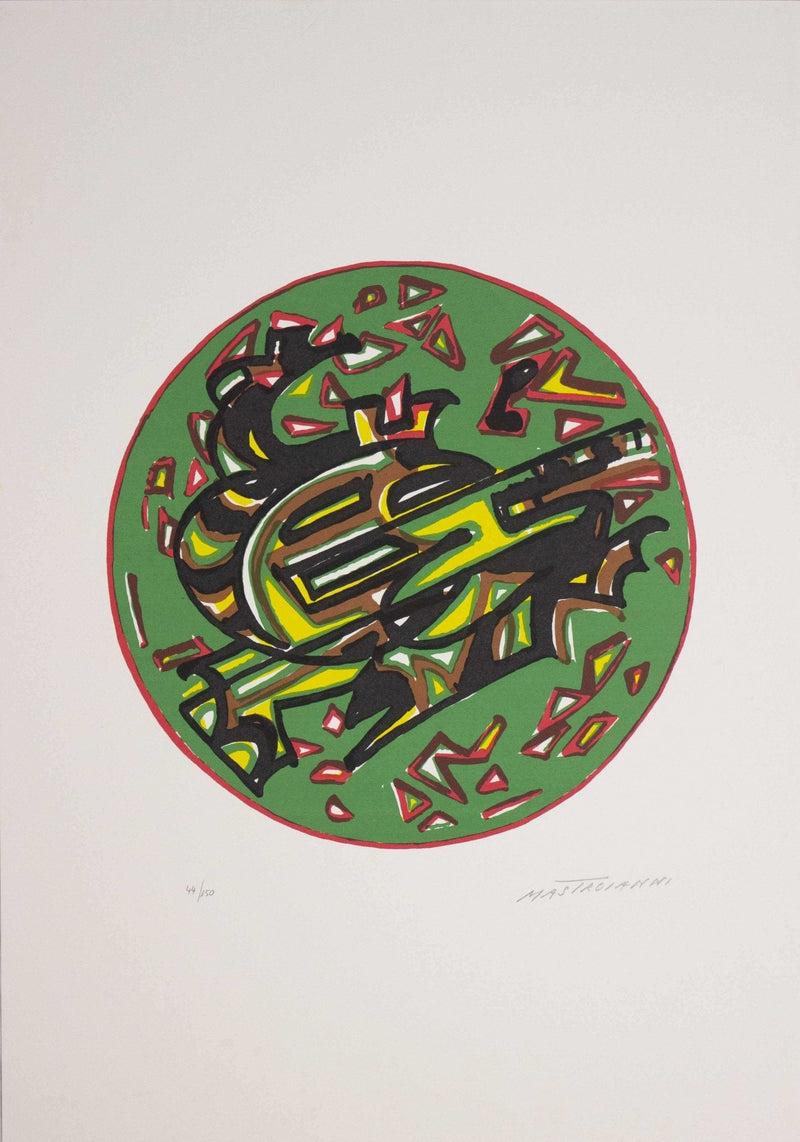
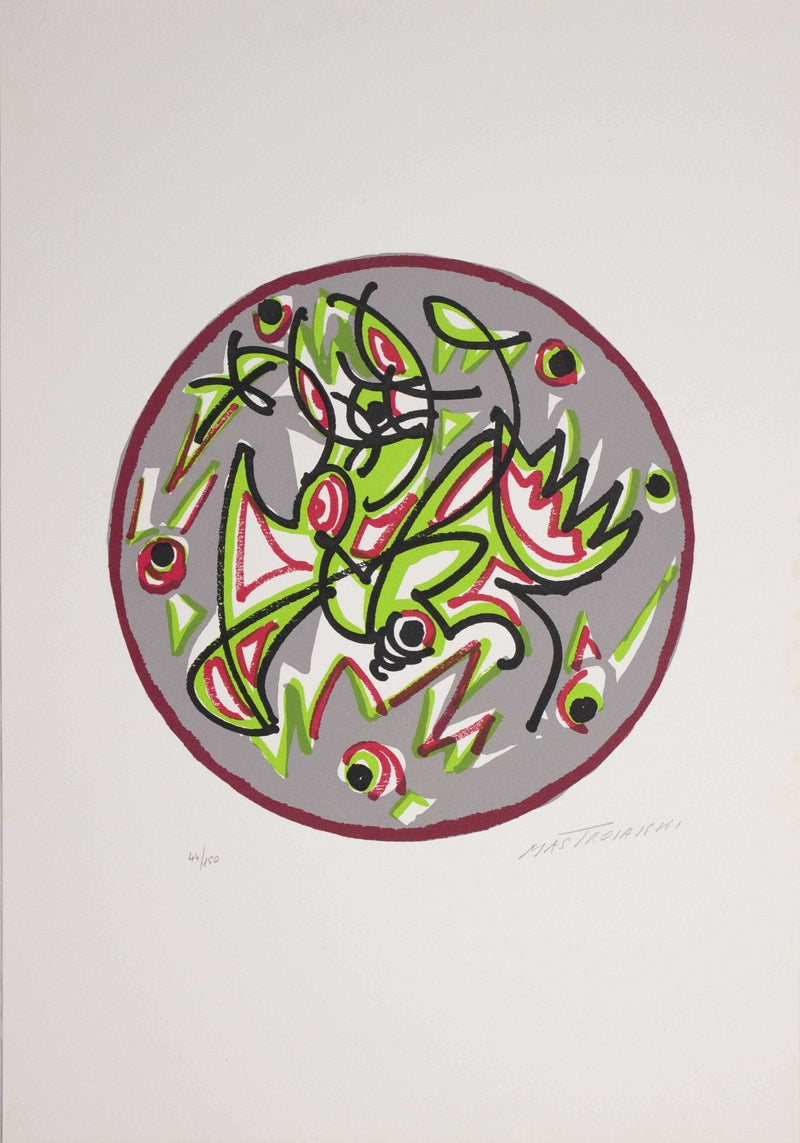
Alongside sculpture, Mastroianni also dedicated himself to drawing and graphics. In artworks on paper the sign can take on a swirling pattern, with lines and backgrounds that recall the tension of the plastic structures. When you encounter a multiple artwork it is necessary to precisely identify whether it is an original print, a reproduction, a relief or another type of edition.
Drawing constitutes an important terrain for understanding his way of thinking about form. A quick mark can indicate a direction of force, while the accumulation of lines produces a density reminiscent of metal surfaces. In artworks on paper, however, these tensions acquire their own autonomy: not every image should be interpreted as a preparatory project for a sculpture.
Even in the original graphics, movement can be constructed through contrasts of black and white, overlaps and changes in rhythm. It is essential to distinguish an engraving made as an independent artwork from a reproduction print taken from a sculpture. The similarity of the subject is not enough to identify the nature of the procedure: indications are needed on the edition, on the technique and, when available, bibliographical references.
For an edition sculpture, the signature, numbering, possible foundry mark and documentation are relevant; for a print, technique, edition size, support and state of conservation matter. His artistic legacy lies in the ability to make energy visible: matter is no longer just mass, but a form of thought in movement.
For plastic multiples it is useful to document not only the numbering, but also the dimensions, the actual material and any signs of workmanship. The term "bronze" does not by itself describe the casting process or the origin of the specimen. Similarly, in artworks on paper it is advisable to distinguish the size of the image from that of the sheet and record any annotations.
An accurate file should not replace an expert opinion, but can make the complexity of the artist's production more readable. In fact, Mastroianni crossed different languages and scales while maintaining a coherent research: transforming the tensions of his time into concrete relationships between matter, light and space.
Do you like Umberto Mastroianni?
Leave your email to receive updates on newly available artworks and news about this artist.
Umberto Mastroianni
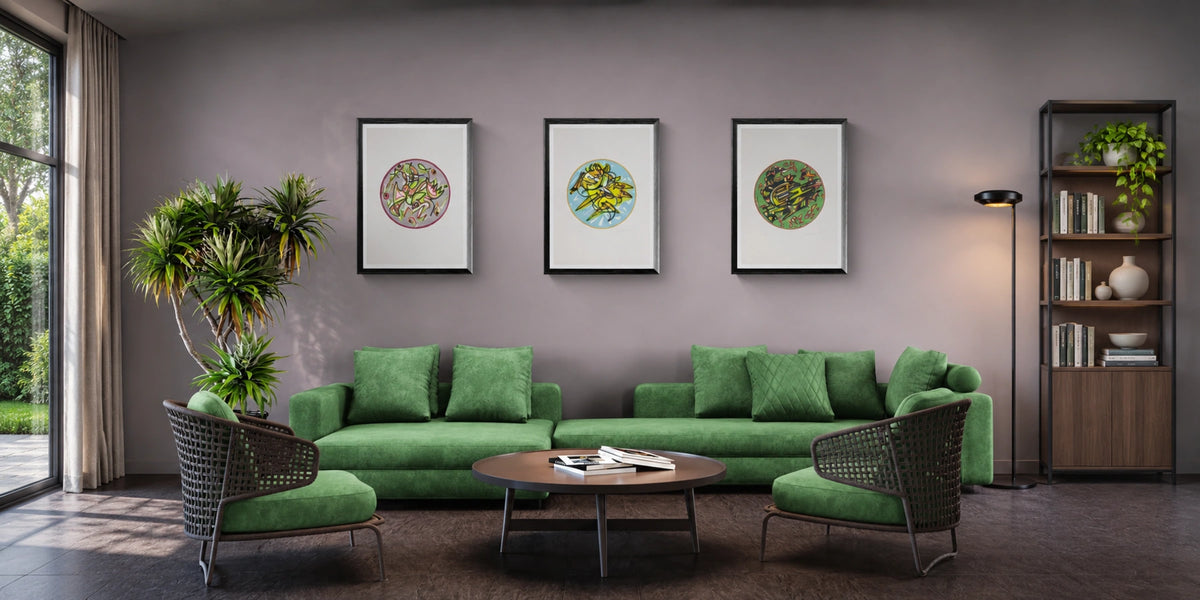
Art that lives in your spaces
Marks, rhythms and forms: artworks by Umberto Mastroianni bring a new sense of balance to a space. Understated furnishings give the composition room to breathe and invite you to rediscover it every day from a different perspective.
DISCOVER THE ARTIST
Frequently asked questions
Answers to common questions about Umberto Mastroianni, the artist’s life, artworks and value on the art market.
Who was Umberto Mastroianni?
Umberto Mastroianni (1910–1998) was an Italian sculptor known for dynamic compositions and abstract forms, often inspired by movement and energy. Alongside monumental sculpture, he created drawings, engravings and other artworks on paper.
What are the characteristics of Umberto Mastroianni's sculptures?
His sculptures are characterized by broken volumes, intersecting planes and a strong spatial tension. The shapes suggest explosions, rotations and movements, transforming matter into an image of energy.
What relationship did Mastroianni have with Futurism?
Mastroianni took up some themes dear to Futurism, especially dynamism, without limiting himself to repeating its historical language. His research developed in the context of sculpture of the second half of the twentieth century, with an independent attention to abstraction and space.
Did Umberto Mastroianni also create graphic artworks?
Yes. His activity includes artworks on paper and original graphics, in which the energy of the sign and dynamic constructions reappear. For each example it is important to distinguish the original technique from the simple reproduction of a sculpture or a drawing.
How do you evaluate a bronze by Umberto Mastroianni?
It is necessary to verify authenticity, edition, any foundry marks, dimensions, provenance and bibliography. The state of conservation and importance of the model also influence the value; the signature alone is not sufficient to determine authenticity or price.
Discover more artists
Explore more leading figures in modern and contemporary art


