

RANUCCI Lucio


The story of Lucio Ranucci (Perledo, 1925 – Nice, 2017) spans postwar Italy and Latin America, bringing together painting, journalism, and theater. His figurative style, often associated with realist cubism, stems from a desire to portray human beings and social tensions without relinquishing the freedom of modern form. Faces, bodies, and groups of figures fill his compositions with an intense presence, built through planes of color and distortions that make emotions, conflicts, and relationships visible.
Travel as an artistic experience
After spending his childhood in several Italian cities, Ranucci lived through the dramatic events of the Second World War and worked as a journalist in Milan. In 1947, he left for Argentina, beginning a long period of travel through various Latin American countries. His education did not take place only in classrooms or studios: it was shaped by encounters with different social environments, everyday life, and a wide range of professional experiences. He continued painting as he traveled and held a solo exhibition in Lima, Peru, in 1949.
His relationship with Latin America had profound consequences for how he understood art. Social inequality, poverty and political struggles did not become mere subjects for him to illustrate, but a reason to question the public function of the image. Ranucci looked to the tradition of muralism and painting's ability to address a community, while maintaining his own narrative and chromatic sensibility.
Costa Rica, theater and social painting
From 1951, Ranucci settled in Costa Rica, where he also contributed to theater life. Together with artist Olga Espinach Fernández, he took part in educational and experimental initiatives; he also served in a leadership role at the university theater. This activity was not unrelated to his painting: a sense of the stage, the arrangement of characters and the ability to condense a story into a gesture or a glance also recur in his images.
Among the most significant public artworks of the period is the mural Alegoría a la Segunda República, created in the 1950s and linked to the history of the Costa Rican Republic. Its monumental scale allowed him to address collective themes through a dynamic figurative language. Political experiences in Central America were sometimes difficult; after further moves, he returned to Europe in 1963, continuing his artistic career.
Fragmented figures, color and emotional engagement
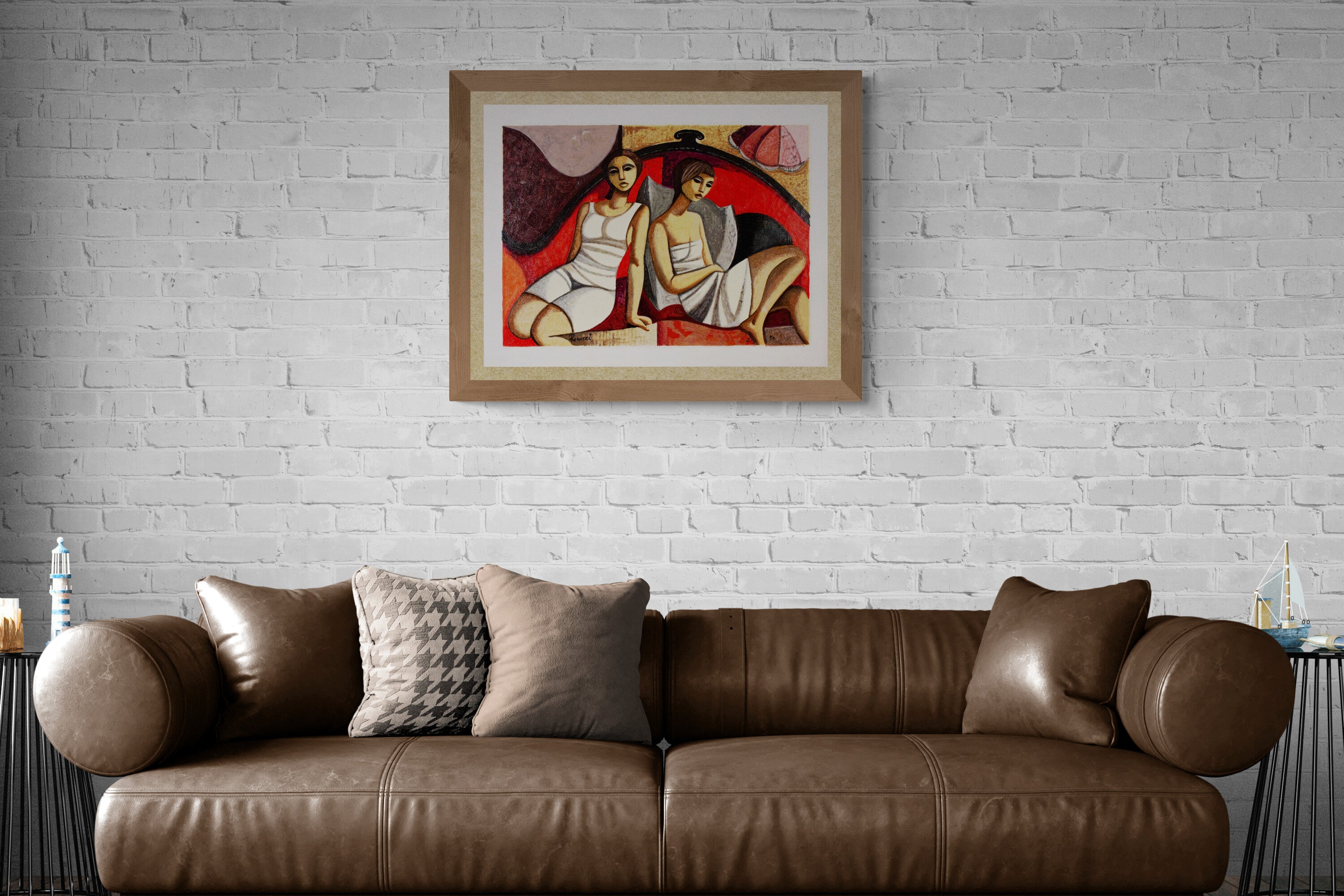
The reference to realist Cubism helps explain the structure of Ranucci's paintings, but should not be understood as rigid adherence to a school. Figures are often arranged in planes, with bold outlines, simplified perspectives and volumes reassembled for expressive effect. The face may appear both frontal and in profile at the same time; the hands and eyes take on a central role in conveying the tension of the scene. The result does not aim to depict the world with photographic accuracy, but rather to convey the human weight of events.
L'The artist worked with oil and acrylic, sometimes enriching the surface with materials such as sand and earth. These choices help accentuate the texture of the figures and backgrounds, while the color contrasts make the story more immediate. Even when the subjects are gathered together or intimate, a sensitivity to people's dignity and social conditions remains.
Drawing, printmaking and prints
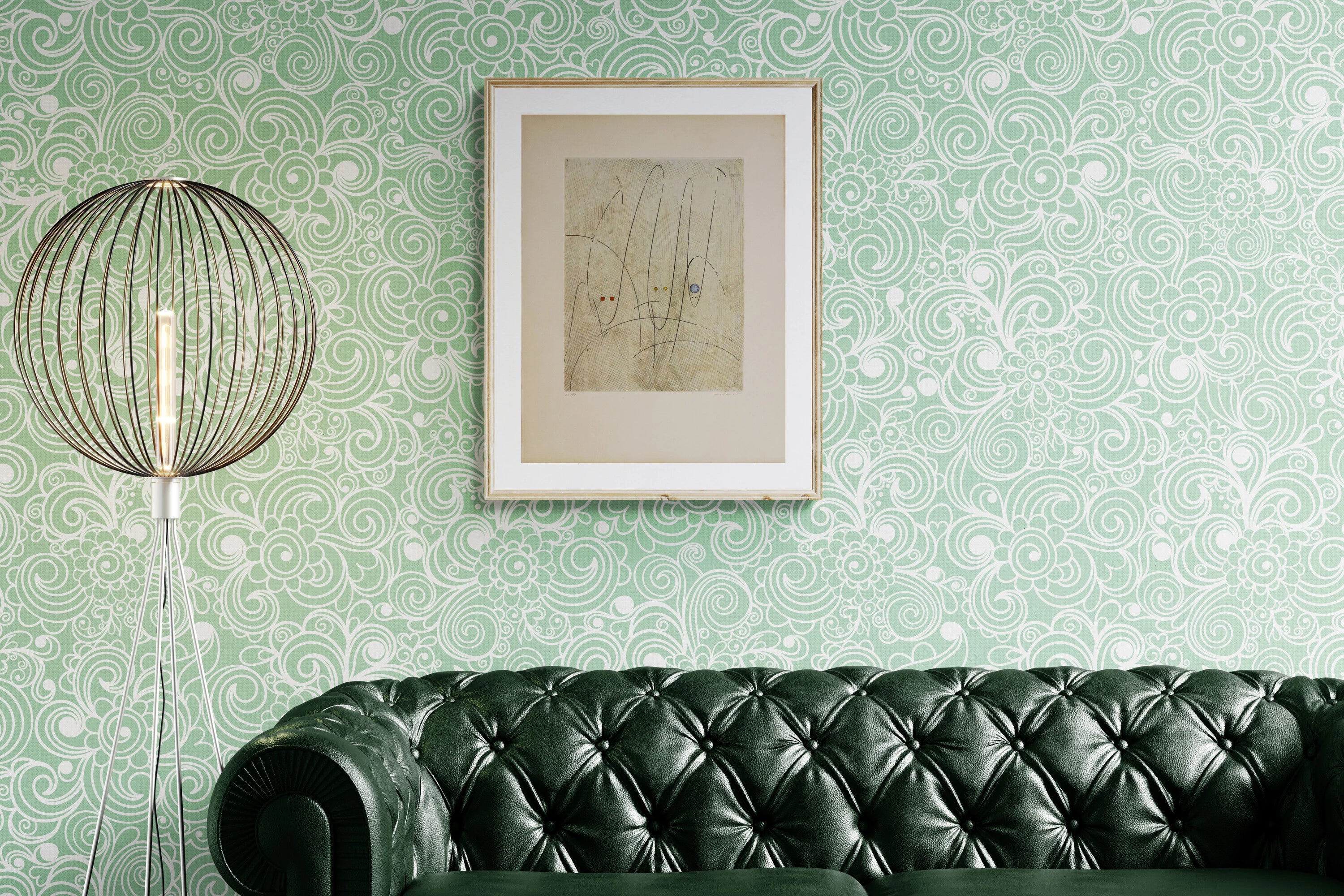
Alongside paintings, his output includes drawings and graphic artworks. L's documented printmaking activity makes it possible to encounter different kinds of copies on paper, but the technique must be identified on a case-by-case basis: an original etching, a lithograph and a reproduction of a painting are not equivalent. The signature, edition, support, any publisher and documentation help identify the work correctly. Taken as a whole, Ranucci's career reflects a conception of art as participation in life: the human figure is never merely a formal subject, but the center of a reflection on freedom, memory and society.
Ti piace Lucio Ranucci?
Per ricevere gli ultimi aggiornamenti di questo artista, lascia la tua email qui sotto: