

PACE Achille


Achille Pace (Termoli, 1923 – Rome, 2021) developed one of the most distinctive approaches to abstraction in Italian art of the second half of the twentieth century, entrusting a simple material such as cotton thread with the task of probing pictorial space. His artworks invite us to observe what normally escapes notice: the distance between two points, the path of a line, the tension created when a slender element crosses an apparently motionless surface. This choice reflects a conception of art as inquiry rather than as a representation of the visible world.
From Informalism to the poetics of thread
After moving to Rome with his family in 1935, Pace took an interest in painting in the 1940s, starting with landscape and a language attuned to Expressionism. His engagement with Paul Klee and European painting, together with his interest in American experiences of action painting, helped shift his focus from subject to mark. L’Informalism offered the freedom to consider the surface as the site of an action, but Pace also sought a principle capable of giving continuity and measure to the gesture.
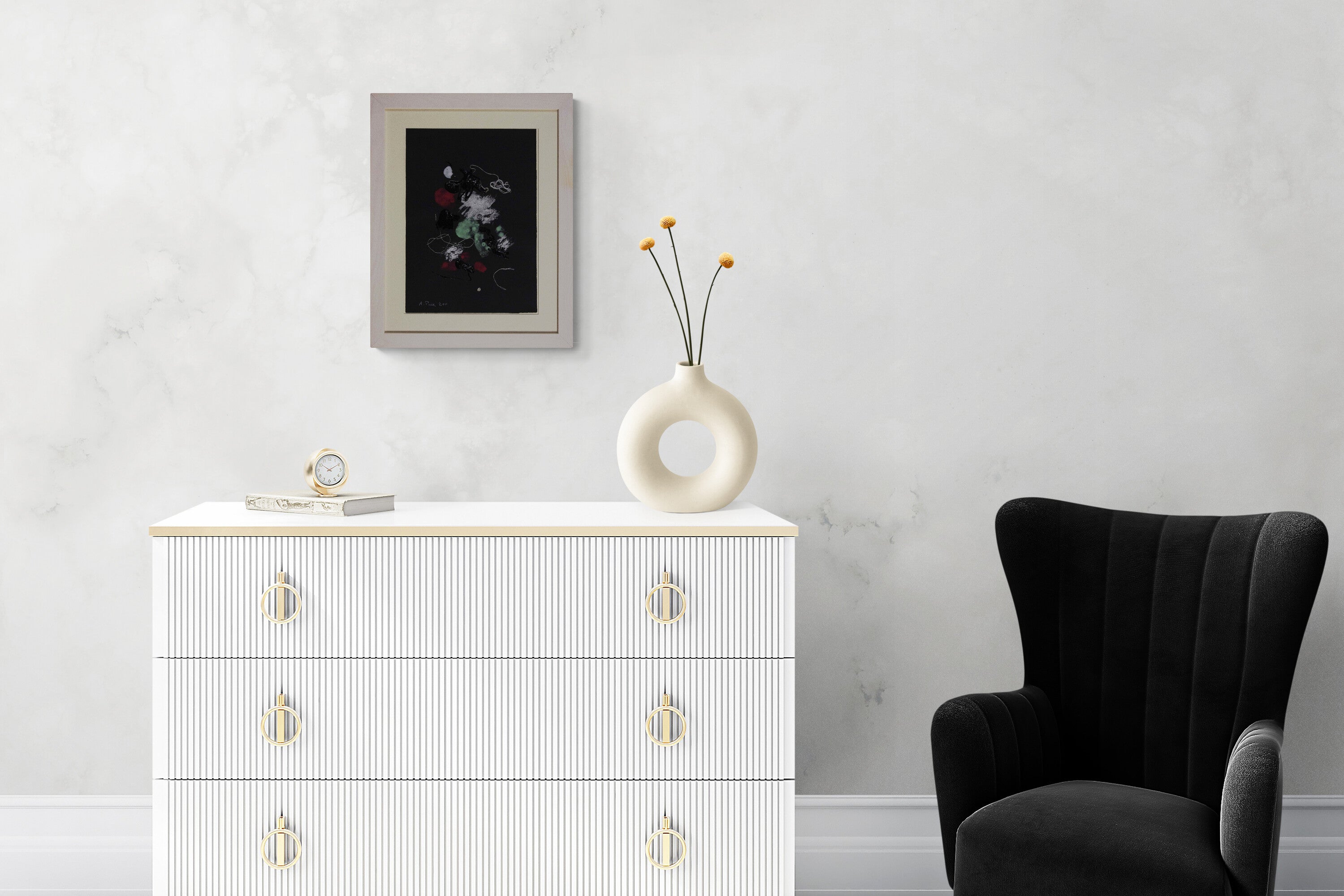
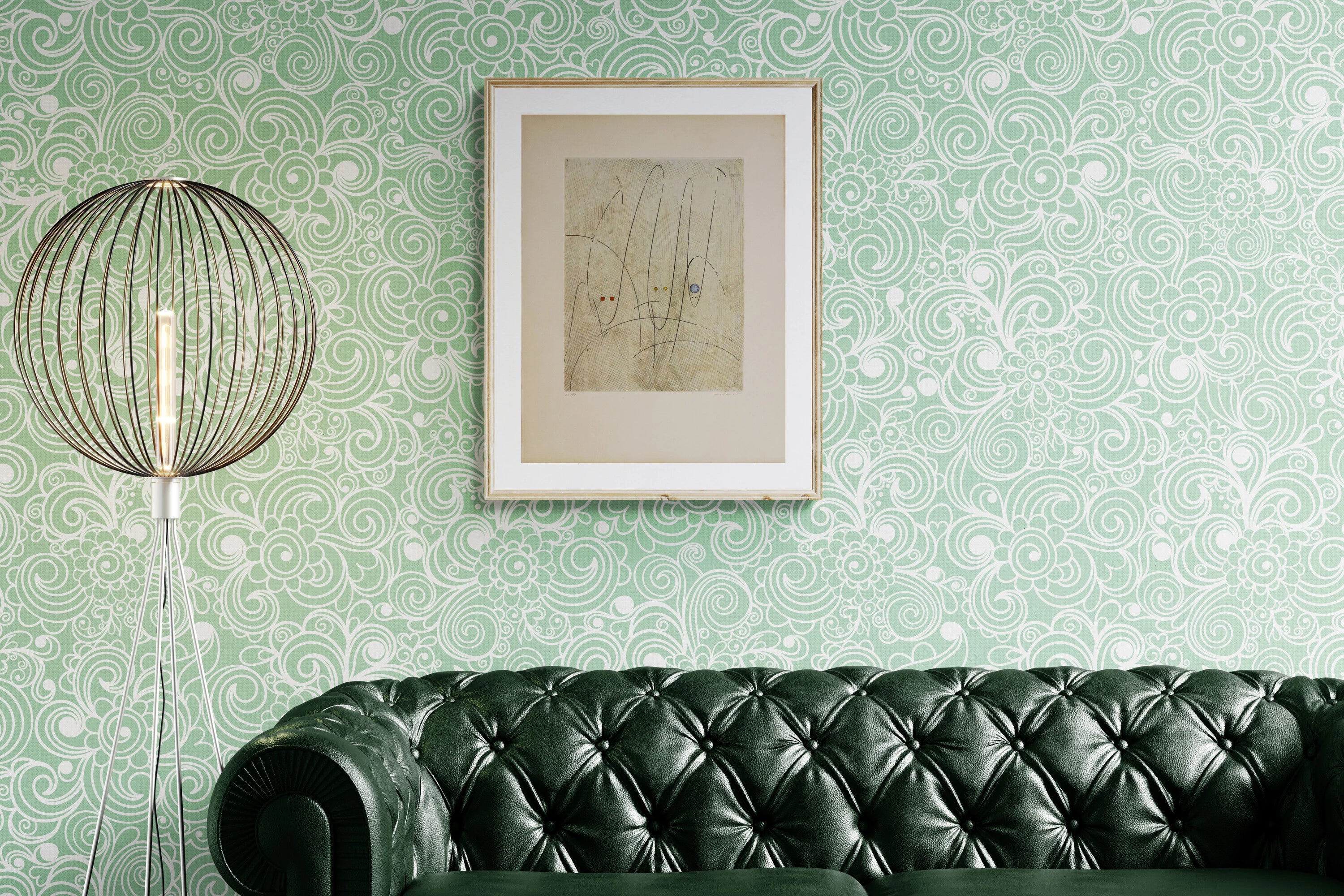
From the second half of the 1950s onward, thread became a permanent feature of his compositions. Applied to often monochrome fields, it functioned neither as an ornament nor as a simple collage material: it became a real, physically present drawing that traversed the surface and altered its perception. At times, the line seems to advance naturally; elsewhere, it tightens, veers, or comes to a halt. The viewer follows its path with their eyes and ends up perceiving space as a relationship in constant becoming.
Scale, color, and Group One
L’the essentiality of the artworks should not suggest cold painting. The black, gray, white, blue, or red backgrounds possess a distinct emotional intensity, while the thread introduces a discreet yet decisive presence. L’the artist thus creates a balance between materiality and immateriality: the thread can be touched, but what it suggests above all is a mental movement. The tension between the field of color and the line gives rise to compositions that change profoundly depending on the distance from which they are viewed.
In 1962, Pace took part in founding Group One, alongside artists including Nicola Carrino, Giuseppe Uncini, Nato Frascà, Gastone Biggi, and Pasquale Santoro. The group sought to move beyond certain assumptions of the Informal movement through greater attention to structures and to the relationship between artistic research and society. Although he shared this outlook, Pace retained an independent voice, recognizable in the continuity of his thread-based poetics.
Works on paper and the identity of the artistic practice
His body of work includes paintings, assemblages, and works on various supports. In artworks that use applied thread, the distinction between a unique work and a print is essential: the presence of a visible line does not prove that it was drawn using a printmaking process, and a photographic reproduction is not equivalent to the original, with its material qualities. When cataloguing an example, it is therefore necessary to check the support, materials, any edition information, signature, and provenance, without automatically assigning a technique.
As founder of the Termoli Prize in 1955, Pace also contributed to the cultural life of his hometown. He took part in the Venice Biennale in 1980 and 1982, as well as major Italian and international exhibitions. His legacy lies in showing that a minimal gesture, repeated and explored over time, can open up inexhaustible visual possibilities: a simple line becomes a place where thought, matter, and perception meet.
Ti piace Achille Pace?
Per ricevere gli ultimi aggiornamenti di questo artista, lascia la tua email qui sotto: