

ARTISTIC TECHNIQUES
Screen printing
Colour takes shape, one layer at a time.
A printing technique that brings intensity to colour and builds images through solid areas, transparencies and overlapping layers.
OUR SCREEN PRINTS
Works to discover, choose and live with every day.
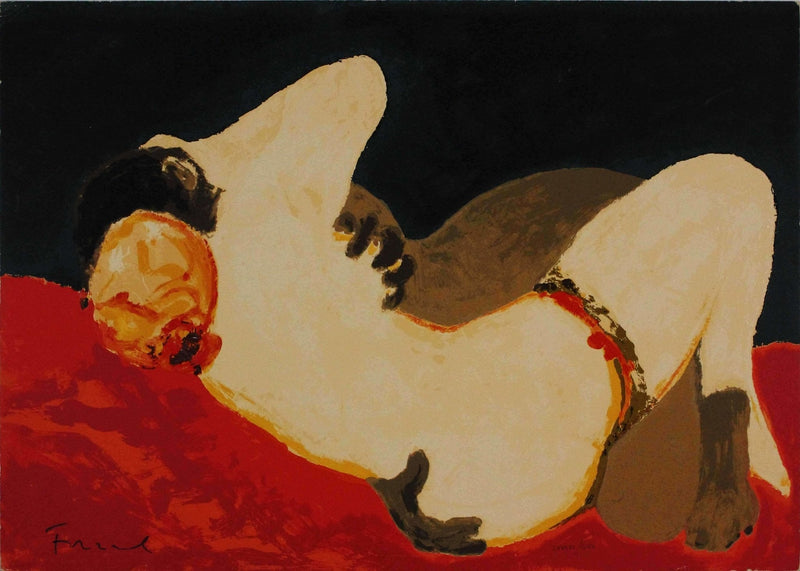
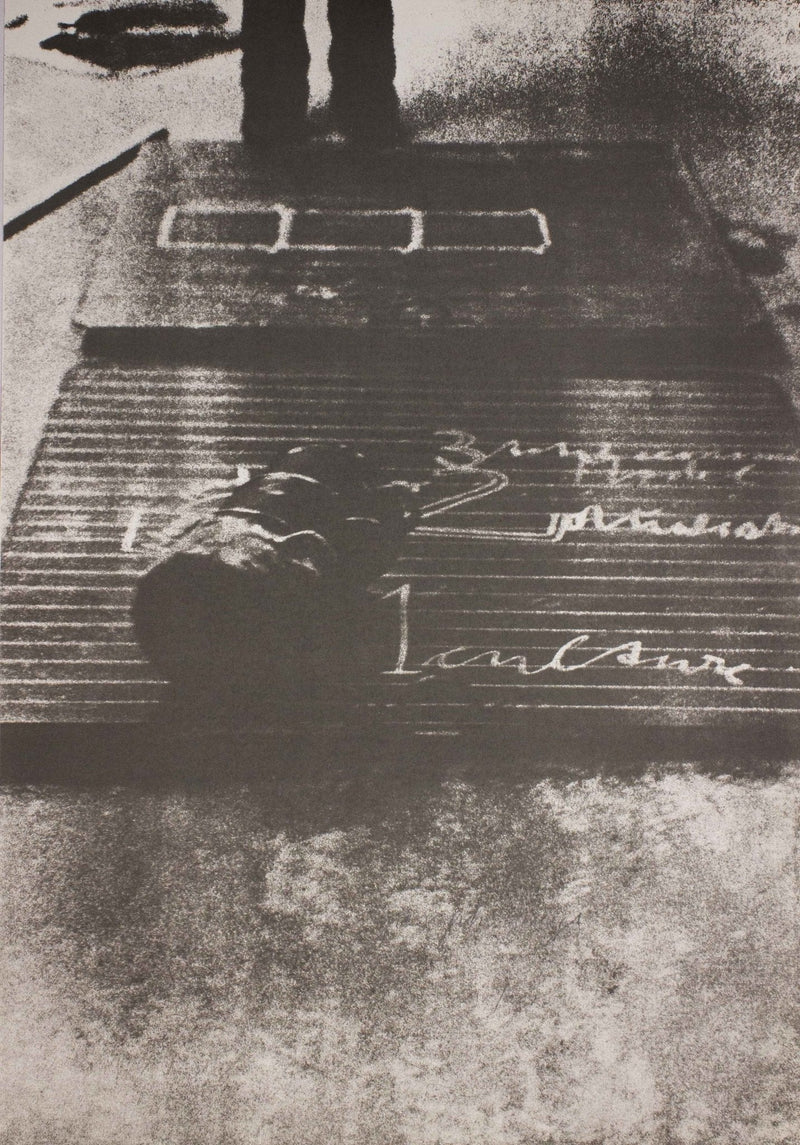
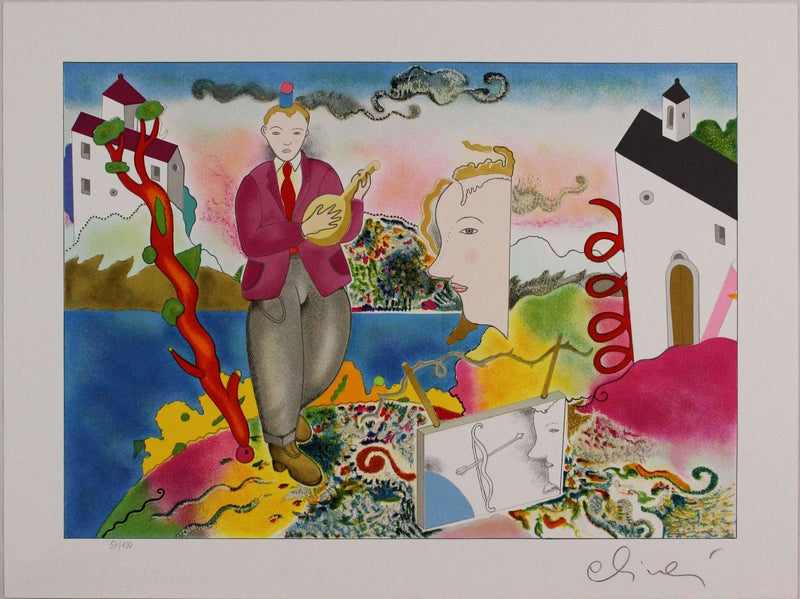
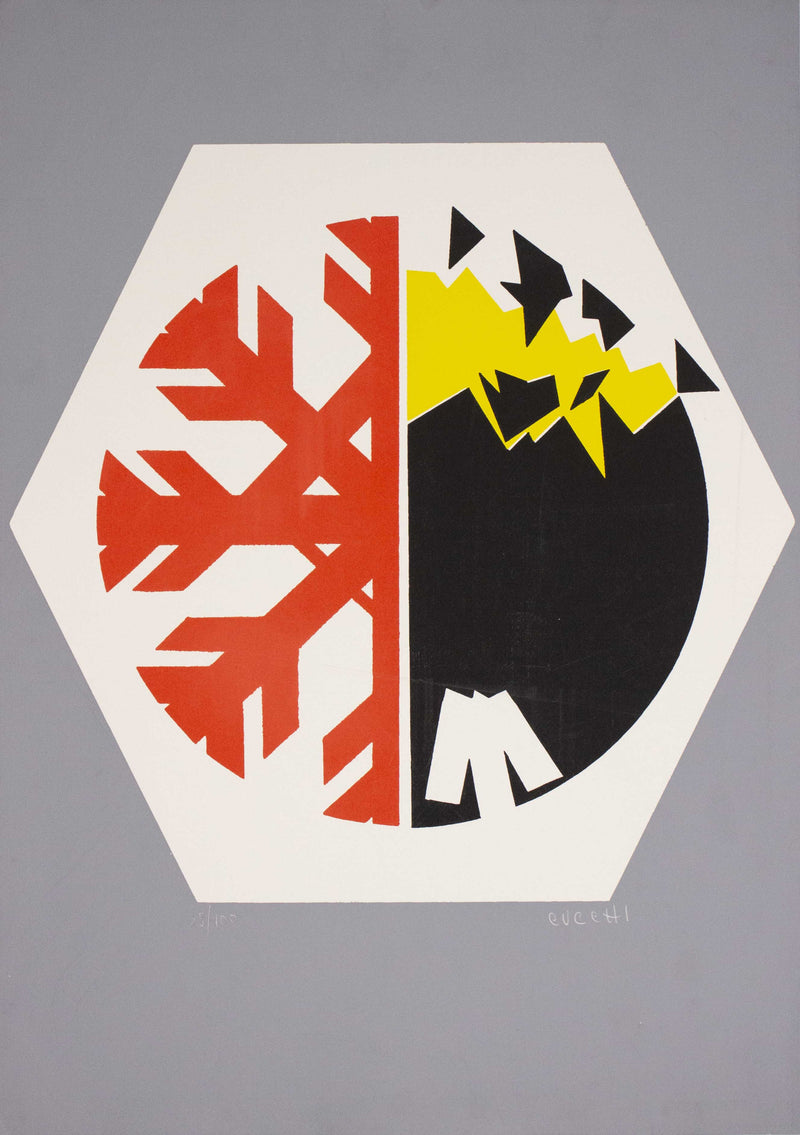
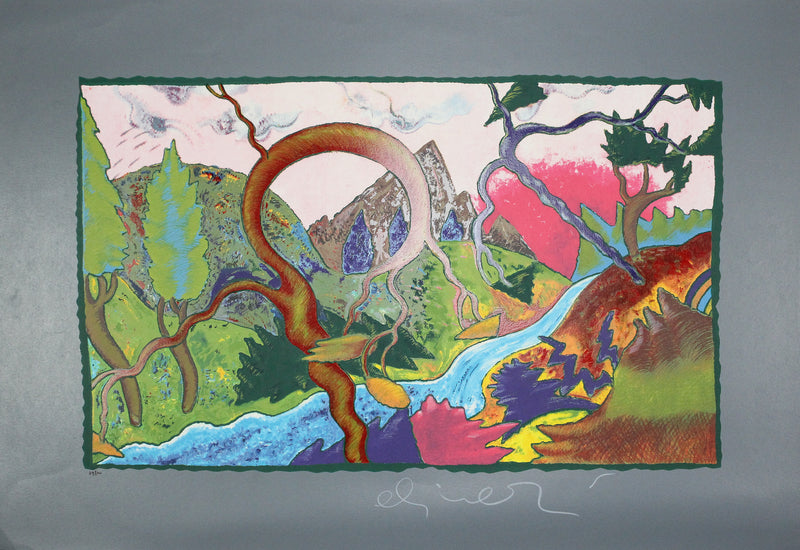

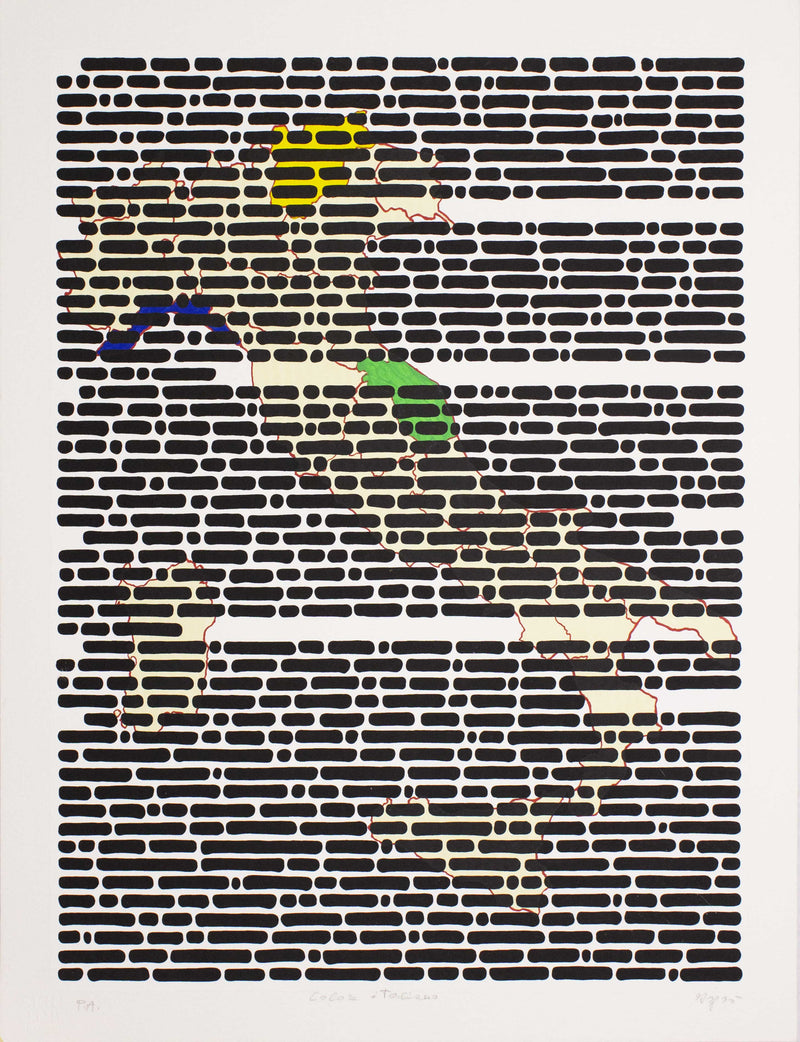
Mimmo Rotella
Marilyn Bellezza Eterna
2005, Screenprint and décollage with paper hand-torn by the artist
6.555,00 kr

Mimmo Rotella
Marilyn Bellezza Eterna
2005, Screenprint and décollage with paper hand-torn by the artist
6.555,00 kr

KNOWING ARTISTIC TECHNIQUES
What is screen printing?
Screen printing is an artistic printing technique that allows an image to be transferred onto paper or other supports by passing ink through fabric stretched over a frame. Some parts of the surface are made impermeable, while others remain open to the passage of color, allowing the shapes and lines of the composition to be reproduced with precision.
The process is distinguished by the ability to achieve intense color fields, defined outlines, overlays, and particular transparency effects. Through successive matrices, complex images can be built, in which each color contributes to the definition of the work.
Screen printing has been widely used in modern and contemporary art, especially for its expressive versatility. Although it is often associated with geometric abstraction and Pop Art, it is not tied to a specific artistic language: it can be used to create abstract compositions, portraits, landscapes, still lifes, and figurative images.
In original graphics, screen printing constitutes an independent creative process, through which the artist develops works conceived to be printed in multiple copies.
Origins — How and when screen printing was born
The origins of screen printing are linked to ancient printing techniques using permeable matrices, which developed in Asia and were later spread to other regions of the world. Processes based on the use of fabrics and stencils were used to decorate surfaces and transfer ornamental motifs, especially in the field of textile production.
Modern screen printing, however, developed between the late 19th and early 20th centuries, when the introduction of new materials and matrix preparation systems made greater precision in image reproduction possible.
Initially, the process found application mainly in commercial printing, advertising, decoration, and poster production. The ability to achieve uniform and intense colors, even on different materials, made it particularly suitable for visual communication.
During the 20th century, the technique began to be used also as a means of artistic expression. In the United States, during the 1930s, some artists helped promote original screen printing, distinguishing it from exclusively commercial applications.
An important turning point occurred in the 1960s, when Pop Art enhanced its possibilities of repetition, color variation, and appropriation of images from mass culture. Andy Warhol made screen printing one of the most recognizable processes of his research, using it to explore the relationship between art, photography, advertising, and reproducibility.
At the same time, numerous abstract and geometric artists adopted this technique for the precision of its shapes and the richness of its color combinations.
Screen printing also played a significant role in Italian art. Artists such as Carla Accardi, Piero Dorazio, and Bruno Munari explored its possibilities within different research projects, while Michele Cascella also used it for figurative images, landscapes, and still lifes.
Its widespread use demonstrates how the same technique can adapt to very different languages while retaining its own expressive characteristics.
How it is made — From matrix to print
The creation of an original screen print is based on the use of a frame on which a fabric with a regular weave is stretched, traditionally made of silk and today generally made of synthetic fibers.
The fabric constitutes the surface through which the ink is transferred onto the printing support. To obtain the image, some areas of the weave are made impermeable, while others remain open to the passage of color.
The matrix can be prepared through different processes. One of the most common involves applying a photosensitive emulsion to the fabric, which is then exposed to light using a film or an image prepared for printing.
The areas intended to let the ink pass through are cleared of the emulsion, creating a matrix that reproduces the shapes of the composition.
Once the frame is prepared, it is placed over the chosen sheet or support. The ink is distributed over the surface of the fabric and pushed through the open areas using a squeegee, a tool generally consisting of a flexible blade mounted on a handle.
The movement of the squeegee allows the color to be deposited on the support according to the design of the matrix.
To create a multi-color screen print, different frames are normally used, each corresponding to a color component of the image. The subsequent steps require careful registration so that the shapes overlap in the intended position.
Through this succession of impressions, the artist can achieve uniform color fields, transparencies, overlays, and particularly intense contrasts.
The choice of inks, the type of paper, the fabric weave, and the printing order significantly affects the final result. Even small variations in color density or the pressure applied can change the appearance of the image.
In the production of original graphics, the artist can directly participate in the preparation of the matrices or collaborate with a specialized printer, defining the characteristics of the work and approving the test prints.
Before the final edition, test copies can be made to check the colors, overlays, and overall quality of the composition.
The process therefore allows for multiple copies of an image conceived through the language of screen printing to be obtained, maintaining remarkable fidelity to the artistic project.
Characteristics — What distinguishes an original screen print
One of the most recognizable characteristics of screen printing is the ability to achieve uniform color surfaces and particularly intense colors. The process also allows for precise outlines, geometric shapes, overlays, and contrasts that can play a central role in the composition.
These qualities encouraged its use in abstraction, Pop Art, and research related to design, but they do not limit its expressive possibilities. Screen printing can indeed reproduce figurative images, gradients, and complex details, depending on the matrices and printing methods adopted.
An original screen print is distinguished from a simple reproduction by the role of the screen printing process in the conception and creation of the work. The artist develops an image intended to be produced through this technique, intervening directly or collaborating with the printer on expressive and operational choices.
An original screen print generally belongs to an edition consisting of multiple copies. The total number can be predetermined and indicated by pencil numbering, frequently accompanied by the artist's signature.
Numbering such as 25/100 conventionally identifies a copy belonging to an edition of one hundred numbered copies. The first number does not necessarily indicate the chronological order in which the copies were printed.
Alongside the numbered edition, artist proofs may be present, indicated by the initials P.A., as well as other proofs related to the preparation of the edition.
The signature, when present, represents an important element, but does not by itself constitute an absolute guarantee of authenticity. To properly evaluate a work, it is also necessary to consider its provenance, the edition, the publisher if any, the printer, and the available documentation.
The quality of the paper, the stability of the inks, and the storage conditions also affect the condition of the individual copy.
A particularly interesting aspect of screen printing is the possibility of achieving very different results from the same technical process. One artist can use it to create essential geometric compositions, while another can develop figurative images rich in details and color variations.
Original screen printing therefore represents an independent form of artistic expression, in which the relationship between matrix, color, and support contributes to the definition of the work.
Its versatility explains why it continues to be one of the most used techniques in modern and contemporary graphics, offering collectors the opportunity to approach extremely different artistic languages through original works produced in editions.
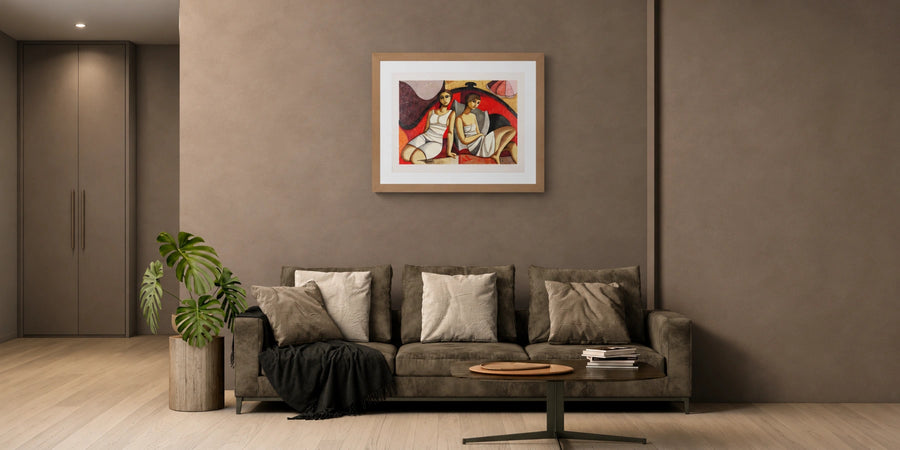
Art in interiors
A screen print, a thousand possibilities.
At home or in the office, the shapes and colours of screen printing complement a range of interiors and give your space character.


FREQUENTLY ASKED QUESTIONS
Everything about screen printing
Simple and clear answers to the most common questions.
What is the difference between an original screen print and a reproduction?
An original screen print comes from an image conceived for screen printing with the artist's contribution. A reproduction reproduces an existing image. To understand how the work was created, consult the edition data and documentation.
How to recognize an original screen print?
Check the stated technique, provenance, and edition data. The signature, numbering, and information about the publisher and printer help identify the copy when compared with the available documentation.
Can a screen print be an original work of art?
Yes. When the artist conceives the image for printing and participates in the choices that define the work, the edition can include multiple original copies.
What does a screen print numbered 25/100 mean?
It indicates the copy marked with the number 25 in an edition of 100 numbered copies. The number may differ from the printing order. The edition may also include artist proofs.
How to store and frame a screen print on paper?
Avoid direct sunlight and damp environments. Use pH-neutral storage materials and a mat or spacer to keep the sheet separate from the glass.
Explore other art techniques
 Etching
The appeal of the etched line
 Aquatint
The nuances of intaglio
 Lithography
Freedom of line
 Linocut
The strength of shapes
 Woodcut
The line cut into wood
