
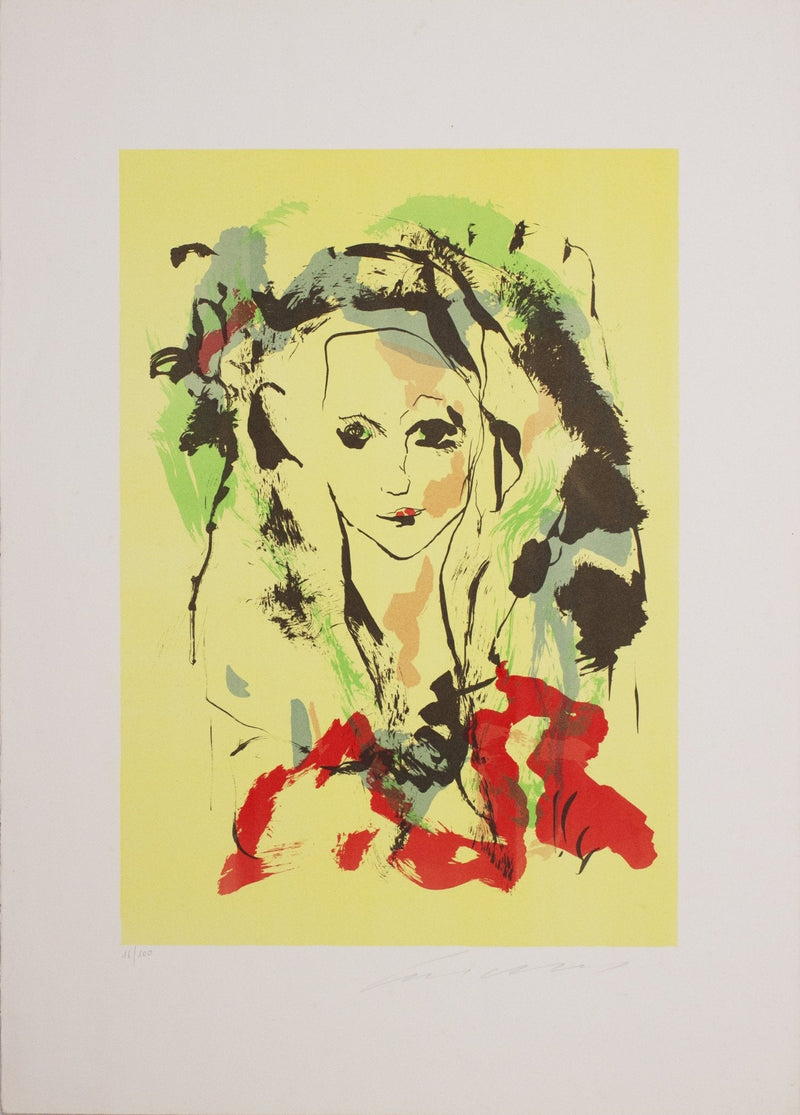
Painter
Ernesto Treccani
Italy, 1920–2009
Stay up to date with this artist
Leave your email to receive updates on newly available artworks and news about this artist.
Artworks by Ernesto Treccani
2 artworks
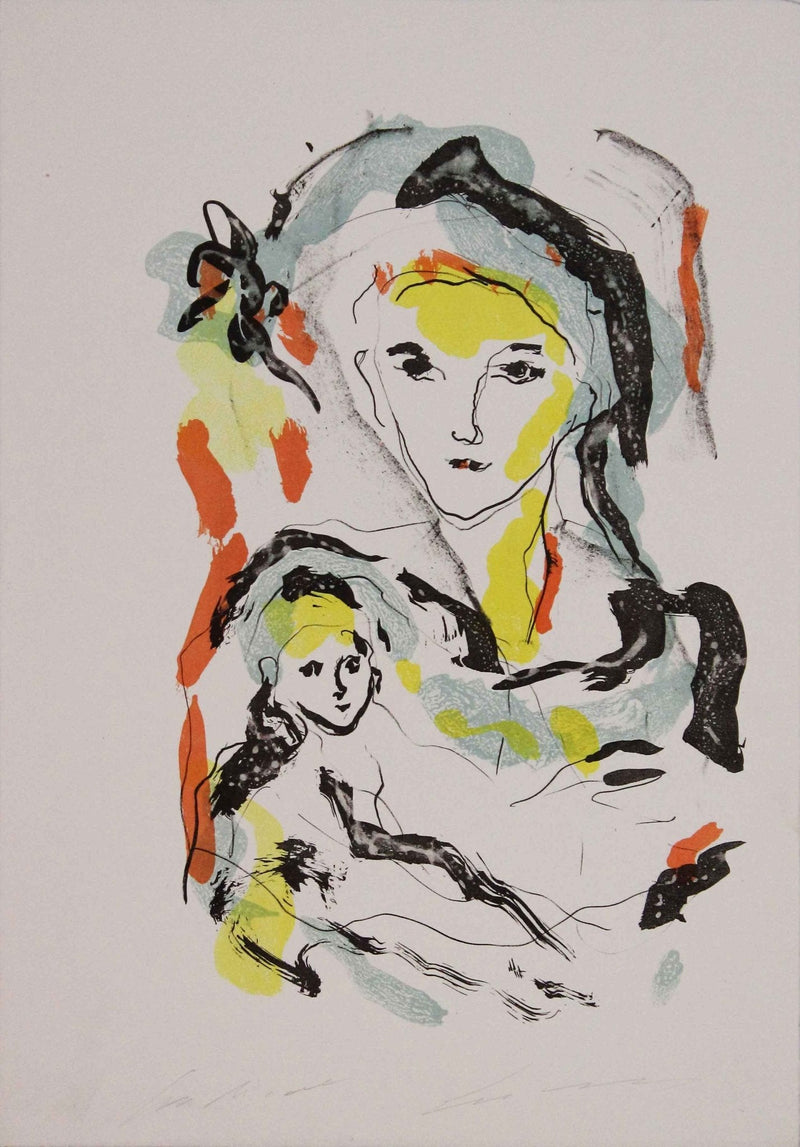

Biography of Ernesto Treccani
Ernesto Treccani (Milan, 1920–2009) crossed the Italian twentieth century maintaining an intense link between painting, human experience and civil responsibility. His language, initially close to a committed figuration, has progressively opened up to a freer and more vibrant chromatic material, without losing attention to people and landscape. Figures, flowers, fields and faces are not simple subjects to describe: they become presences through which the artist…
Read the full biographyClose the biography
Ernesto Treccani (Milan, 1920–2009) crossed the Italian twentieth century maintaining an intense link between painting, human experience and civil responsibility. His language, initially close to a committed figuration, has progressively opened up to a freer and more vibrant chromatic material, without losing attention to people and landscape. Figures, flowers, fields and faces are not simple subjects to describe: they become presences through which the artist reflects on the dignity of artwork, on memory and on the relationship between the individual and the world.
"Current" and the choice of commitment
Very young, Treccani founded the magazine «Vita Giovanile» in 1938, which later took the name of «Corrente» and became a point of reference for a cultural environment critical of the conformism of the fascist regime. Artists and intellectuals interested in an art capable of dealing with contemporary reality gathered around the magazine. The experience of war and participation in the Resistance strengthened Treccani's belief that painting should not isolate itself from the events of society.
The experience of «Corrente» shows how important the collective dimension of culture was for Treccani. The magazine not only represented an editorial tool, but a place for comparison between artistic languages, literature and intellectual responsibility. His subsequent story retains this dialogic character: painting encounters the world of artwork and territories, but does not pretend to exhaust its meaning in an exemplary image. Even the portrait can become an opportunity to reflect on the concrete presence of a person, on his dignity and on the context in which he lives. The choice of subjects therefore arises from human participation even before a stylistic program.
In the post-war years this position found expression in artworks dedicated to work, popular neighborhoods and the transformations of the country. However, the relationship with realism should not be interpreted as adherence to an immutable formula. Treccani constantly sought a balance between the recognizability of the subjects and the freedom of painting, rejecting the idea that civil commitment should necessarily produce rigid or illustrative images.
Landscapes and the transformation of color
The encounter with different places, from the Italian countryside to the territories marked by artwork and industry, fueled a production rich in landscapes and figures. In particular, the experiences linked to the peasant world and industrial centers offered opportunities to reflect on social conditions without sacrificing pictorial quality. As time passed, the color acquired an increasingly autonomous presence: the shapes opened up, the contours became more mobile and the surface seemed to come alive with an internal light.
The transition towards a freer painting does not imply the renunciation of social themes. Rather, the way of translating them into images changes: instead of an always clear definition, Treccani lets the color suggest atmospheres, movements and memories. In landscape scenes the relationship between human presence and nature can be perceived through the rhythm of the brushstrokes, even when a central figure does not appear. Light helps to unify different elements and makes the image less descriptive, closer to a lived experience. It is precisely this continuity between attention to reality and expressive research that prevents an overly rigid division of his oeuvre into a political phase and a lyrical phase.
In the flowers and landscapes of maturity this freedom appears particularly clearly. Nature is not treated as a repertoire of botanical details, but as a set of chromatic relationships and rhythms. Even when the subject remains recognisable, painting tends to convey the emotion of the meeting, the sensation of a place and the passing of the seasons. The pictorial gesture thus preserves a profoundly human character.
Drawing, graphics and cultural activity
Treccani has combined painting with a production of drawings and graphic artworks, as well as a cultural activity that includes writings and initiatives dedicated to the dialogue between art and society. The artworks on paper allow us to observe the speed of the sign and the way in which a figure can emerge from a few strokes. In printed editions, however, the relationship between color and matrix requires a specific reading: lithography, screen printing and engraving are different processes and must not be attributed without documentation.
Graphics allow us to closely observe the relationship between invention and diffusion of images. An original edition can arise from a project designed for a specific technique, while a reproduction transfers the image of a pre-existing artwork onto paper. The difference is relevant both from a historical point of view and in the commercial description. Drawings, lithographs and other artworks on paper also require consideration of dimensions, quality of the support, possible numbering and state of conservation. When a print accompanies a book or publication, the editorial context can be part of its history. In Treccani the relationship between art and communication remains significant precisely because cultural diffusion is not foreign to his idea of civil responsibility.
For correct cataloging, technique, signature, numbering, possible publisher and provenance are relevant. Treccani's importance lies in the continuity between civil conscience and pictorial research: even when his language becomes more lyrical, the desire to recognize in art a form of participation in life remains alive.
A significant aspect of his activity is the desire to create meeting opportunities between artists, writers and the public. The idea of a shared culture runs through not only his youthful choices, but also his maturity, when Treccani continues to consider artistic work part of civil life. The variety of subjects reflects this openness: the face of a person, a landscape or a flower can become opportunities to restore attention to what risks going unnoticed. Painting retains an affective dimension, but does not renounce the complexity of the world. The freedom of the sign and color makes the artist's involvement perceivable without imposing a single interpretation on the viewer.
Do you like Ernesto Treccani?
Leave your email to receive updates on newly available artworks and news about this artist.
Ernesto Treccani
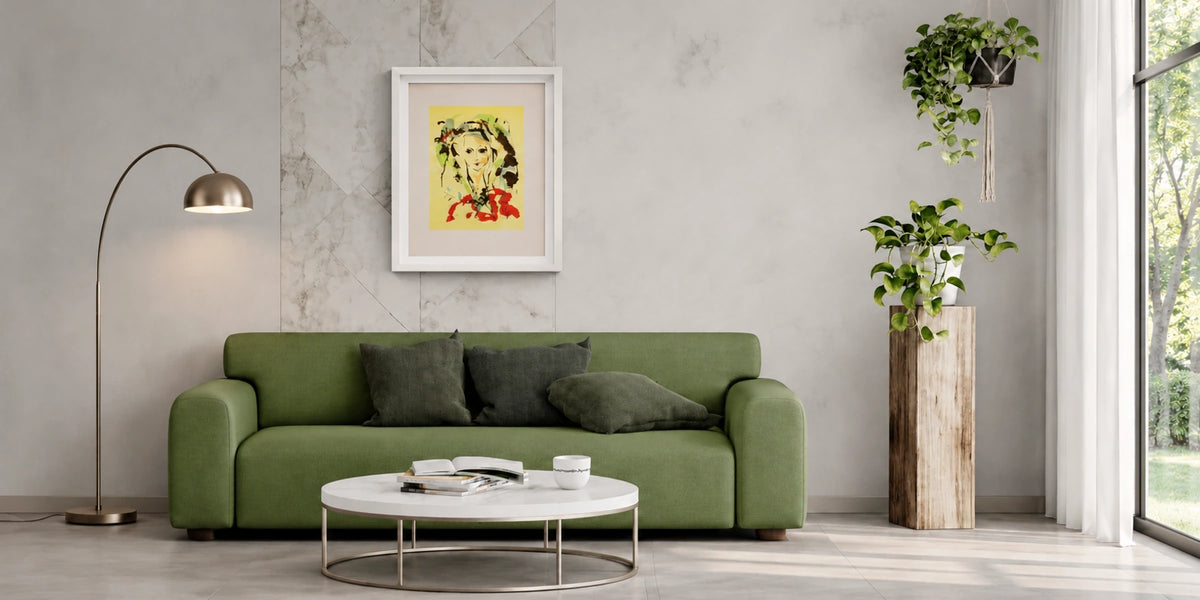
Art that lives in your spaces
Choosing an artwork by Ernesto Treccani means making room for an individual artistic language. The artworks gathered here suggest combinations and perspectives to bring into your own surroundings, letting art guide your gaze.
DISCOVER THE ARTIST
Frequently asked questions
Answers to common questions about Ernesto Treccani, the artist’s life, artworks and value on the art market.
Who was Ernesto Treccani and what themes did he address in his painting?
Ernesto Treccani (1920–2009) was an Italian painter whose research combines attention to the human figure, the landscape and the civil dimension of art. His painting is characterized by an expressive style and an intense use of colour. He also addressed social and political themes, without giving up lyrical subjects such as flowers and landscapes.
What are the most recognizable subjects in Ernesto Treccani's artworks?
Recurring subjects include human figures, landscapes, flowers and scenes related to everyday life. In many artworks, color and pictorial gesture prevail over detailed description. The variety of themes makes it useful to read the title and dating to place each artwork in its period of production.
What relationship did Ernesto Treccani have with the Corrente movement?
Treccani was among the central figures of the Corrente experience, a magazine and cultural environment born in Milan at the end of the 1930s. The group brought together artists and intellectuals interested in an expressive language and a critical comparison with their time. This context helps to understand the human and civil dimension present in his oeuvre.
Did Ernesto Treccani make serigraphs and lithographs?
Yes, his production also includes graphic artworks. Lithography and screen printing are different techniques, and not all prints have the same edition characteristics. For each artwork it is advisable to check the declared technique, the numbering, any signature and the dimensions, distinguishing the original graphics from the reproductions.
What to check when buying graphics by Ernesto Treccani?
Check that the title, technique, measurements and state of conservation are described precisely. If the print is numbered or signed, check that these items are documented with clear photographs. Provenance and editorial references can contribute to identification. The value depends on multiple factors and cannot be deduced from the presence of the signature alone.