

Painter and sculptor
Sandro Chia
Italy, 1946
Stay up to date with this artist
Leave your email to receive updates on newly available artworks and news about this artist.
Artworks by Sandro Chia
1 artwork

Biography of Sandro Chia
Sandro Chia (Florence, 1946) is one of the leading figures of the Italian Transavanguardia, a movement that emerged in the late 1970s through a revival of painting, the figure, and expressive freedom. After an initial phase close to conceptual art, he developed a style characterized by monumental figures, intense colors, and references to the European artistic tradition. His painting engages with the Renaissance, Expressionism, and…
Read the full biographyClose the biography
Sandro Chia (Florence, 1946) is one of the leading figures of the Italian Transavanguardia, a movement that emerged in the late 1970s through a revival of painting, the figure, and expressive freedom. After an initial phase close to conceptual art, he developed a style characterized by monumental figures, intense colors, and references to the European artistic tradition. His painting engages with the Renaissance, Expressionism, and the avant-gardes of the twentieth century, reinterpreting them through ironic, symbolic images. Alongside paintings, he creates sculptures, drawings, and artworks in printmaking. His international career includes major exhibitions in the United States and Europe.
Education in Florence
Sandro Chia was born in Florence on April 20, 1946. He attended the Institute of Art and later the Academy of Fine Arts. His education took place in a city deeply rooted in the Renaissance tradition. His engagement with art history contributed to the development of his sensibility. L’s interest in the figure and in painterly construction would remain important during his subsequent experimentation.
The travels
After his studies, Chia traveled to India, Turkey, and several European countries. These experiences broadened his cultural horizons. His contact with different environments contributed to the development of a language open to multiple references. In 1970, he settled in Rome.
The conceptual phase
During the early 1970s, Chia developed an artistic practice close to Conceptual Art. The artworks could take the form of interventions, photographs, and actions. L’s attention focused on the relationship between idea and image. This phase represents an important moment in his career. His subsequent return to painting did not stem from a simple revival of tradition, but from a reflection on the limits and possibilities of contemporary languages.
The return to painting
In the mid-1970s, Chia gradually moved toward figuration. Painting once again took center stage. The images featured recognizable figures, but these were not necessarily part of traditional narratives. Color took on an expressive function. The compositions were characterized by strong visual energy.
Transavanguardia
In the late 1970s, critic Achille Bonito Oliva identified the Italian Transavanguardia. The movement included Sandro Chia, Francesco Clemente, Enzo Cucchi, Nicola De Maria, and Mimmo Paladino. Transavanguardia advocated a recovery of painterly freedom after conceptual and minimalist experiments. The artists did not share a uniform style. They were united by their desire to explore different languages and traditions without rigidly adhering to a single model.
Monumental figures
Human figures are one of the main subjects in Chia's painting. The bodies can appear monumental, characterized by ample volumes. The poses sometimes evoke classical sculpture and Renaissance painting. The depiction nevertheless retains a contemporary character. The figures seem engaged in actions with ambiguous meaning.
Color
Color is a fundamental element. Chia often uses intense hues and pronounced contrasts. The painted surface can appear dense. The brushstroke contributes to the construction of forms. Color does not serve merely a descriptive function. It becomes a means of expressing energy and tension.
The relationship with tradition
Chia's painting is in constant dialogue with art history. References include the Italian Renaissance and the Expressionist movements of the twentieth century. The allusions are not used as simple imitations. L'artist transforms them through distortions, juxtapositions, and personal interpretations. Tradition becomes an open repertoire.
L'irony
One characteristic aspect of his oeuvre is the presence of irony. The figures may strike heroic poses while being involved in seemingly ordinary situations. The contrast creates enigmatic images. The paintings do not necessarily offer a single, unambiguous meaning. They invite viewers to develop different interpretations.
New York
In 1981, Chia moves to New York. The city is a key center of the international art market and culture. L'artist builds a career spanning the United States and Italy. Engagement with the American scene contributes to the spread of his artworks.
The Guggenheim Museum
In 1983, the Solomon R. Guggenheim Museum in New York presents an exhibition devoted to his oeuvre. L'exhibition marks an important moment in his international recognition. In 1984, his artworks are also presented at the Metropolitan Museum of Art. His presence at these institutions confirms the standing he achieved in the art scene of the 1980s.
Sculpture
Alongside painting, Chia develops a significant body of bronze sculptures. The figures retain the monumentality of the paintings. Their surfaces may be painted in vivid colors. Sculpture allows him to explore the relationship between body and space. The forms seem to belong to the same symbolic universe as the paintings.
Original prints
Chia also creates lithographs, etchings, and other artworks in print. Printmaking techniques make it possible to reinterpret the subjects of painting. The figure retains a central role. Line and color contribute to the creation of independent images. The artworks grafiche attest to the variety of expressive media used by the artist.
International exhibitions
Chia takes part in major exhibitions and solo shows. Institutions that have presented his oeuvre include the Nationalgalerie in Berlin, Villa Medici in Rome, and Palazzo Pitti in Florence. He also takes part in several editions of the Venice Biennale. His oeuvre receives lasting international recognition.
L's artistic identity
Sandro Chia is a central figure in contemporary Italian painting. His oeuvre has helped reaffirm the expressive possibilities of the human figure and color. Through a language rich in cultural references, he has developed images in which tradition, irony, and painterly freedom coexist.
Do you like Sandro Chia?
Leave your email to receive updates on newly available artworks and news about this artist.
Sandro Chia
Art that lives in your spaces
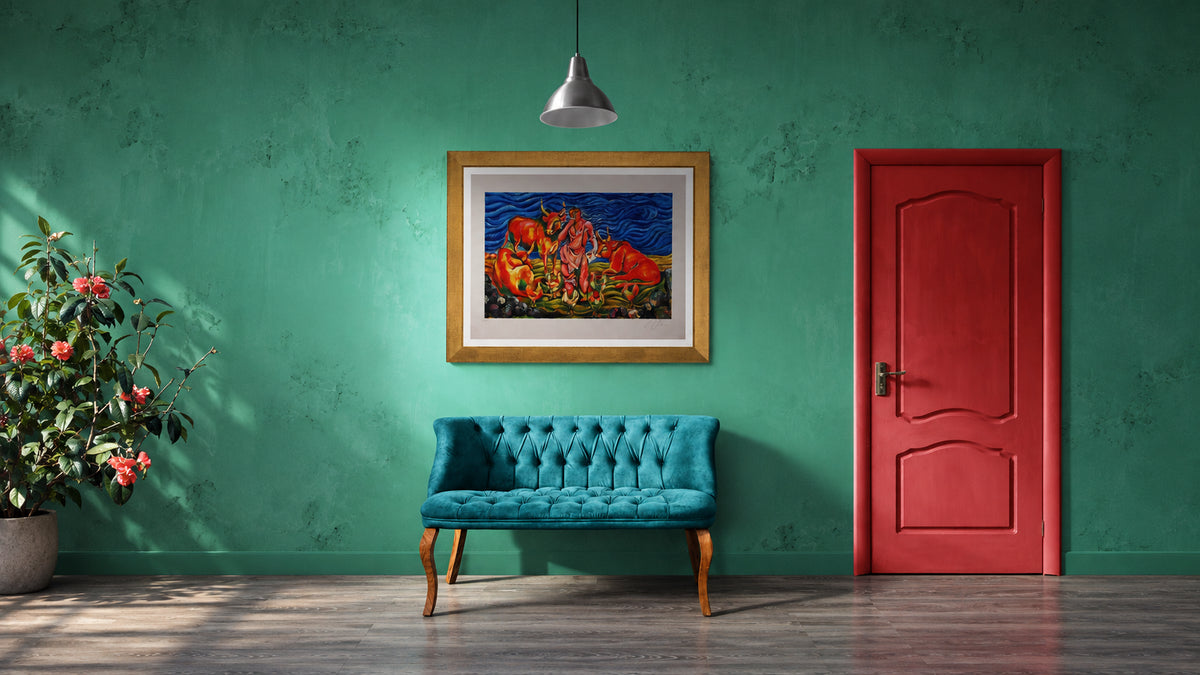
Choosing an artwork by Sandro Chia means making room for an individual artistic language. The artworks gathered here suggest combinations and perspectives to bring into your own surroundings, letting art guide your gaze.
DISCOVER THE ARTIST
Frequently asked questions
Answers to common questions about Sandro Chia, the artist’s life, artworks and value on the art market.
Who is Sandro Chia?
Sandro Chia (born 1946) is an Italian artist associated with the Transavantgarde, a movement that since the end of the Seventies has brought painting, color and the comparison with the history of art back to the center. His artworks often feature monumental figures, symbolic images and a strong chromatic energy.
What is Transavantgarde and what role did Sandro Chia have?
Transavantgarde is a critical and artistic trend promoted by Achille Bonito Oliva, which valorized the return to painting and the freedom to cross styles and historical references. Chia is one of its best-known exponents, together with other Italian artists active between the Seventies and Eighties.
Why do the figures in Sandro Chia's paintings seem monumental?
Chia often builds large and plastic bodies, accentuated by color and poses that recall the painting and sculpture of the past. This monumentality does not necessarily imply a heroic subject: it can create tension between irony, myth and everyday life. The meaning must be read in relation to the individual composition.
Has Sandro Chia also made lithographs and serigraphs?
Yes, alongside paintings and other original artworks, Chia created art graphics. For each print it is important to check the technique, publisher, print run, signature and numbering. An original lithograph is not the same as a photographic reproduction of a painting, even when both are printed on paper.
How much are Sandro Chia's artworks worth?
The values vary greatly between paintings, drawings and graphics in the edition, as well as in period, size, subject and provenance. The artworks of the central years of the Transavantgarde may have a particular historical interest, but any evaluation requires documented comparisons and attention to the conditions of the specimen.
Discover more artists
Explore more leading figures in modern and contemporary art
