

RAMOS Mel


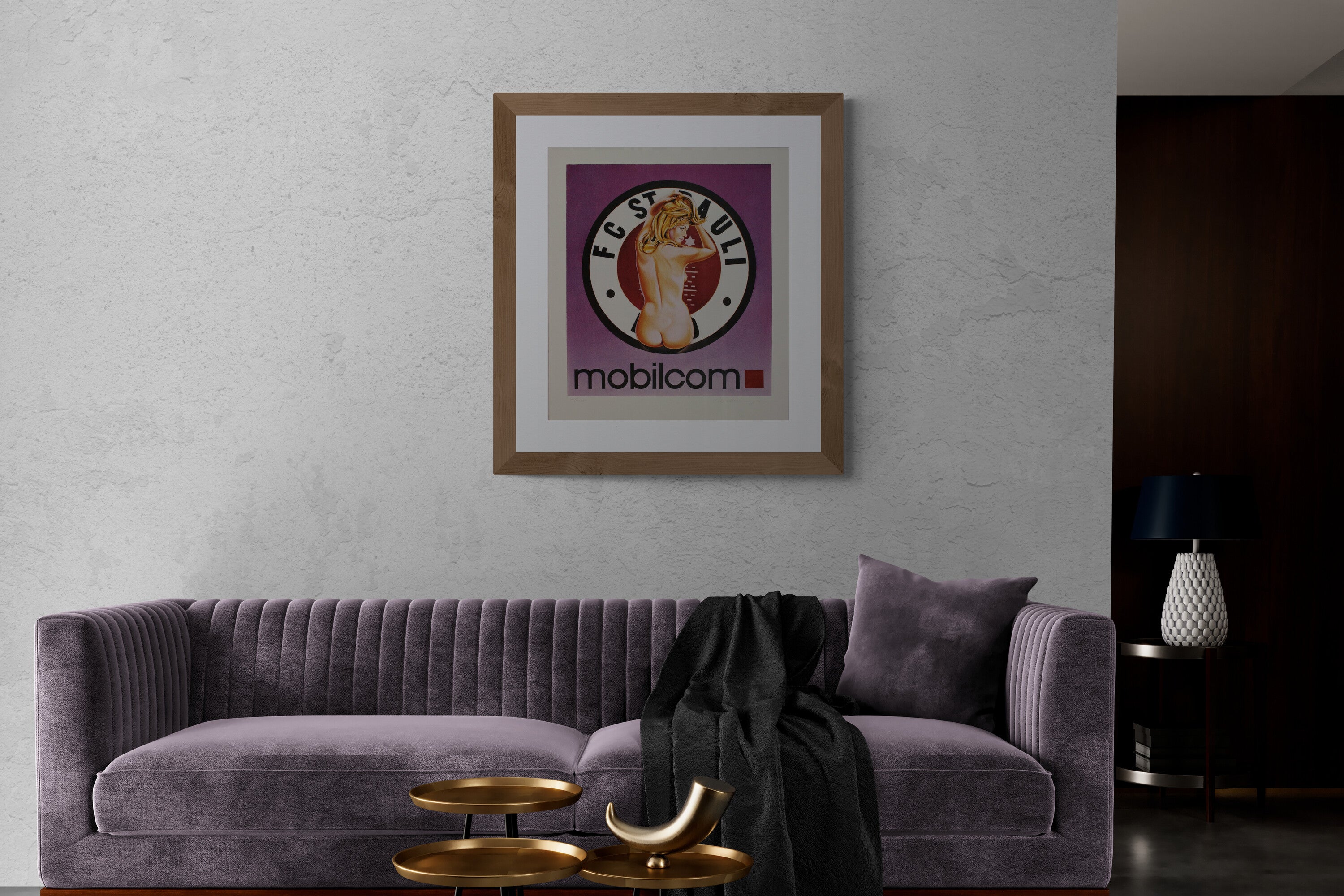
Mel Ramos (Sacramento, 1935 – Oakland, 2018) was one of the leading figures of American Pop Art, known for transforming images from advertising and comics into an ironic reflection on desire, consumerism, and the representation of the body. His instantly recognizable style pairs idealized female figures with commercial products, packaging, and everyday objects. Beneath the apparent lightness of these images lies an engagement with the history of the nude in art and with the way mass culture constructs ideals of beauty.
From California to comic-book superheroes
Raised in California, Ramos studied art in Sacramento and developed his artistic background amid the art scene of the western United States. The painter Wayne Thiebaud, his teacher and a key influence, encouraged him to approach painting as a tangible practice, shaped by color, surface, and image construction. Before finding his own Pop language, Ramos explored figurative and abstract art; in the early 1960s, he began painting comic-book characters, such as superheroes and female figures with crisp outlines.
This choice brought him closer to a generation of artists who challenged the divide between high culture and popular imagery. What distinguished his work from simple illustration was the transfer of mass-media language onto the painted surface, changing its scale, intensity, and context. The figures seemed familiar yet strangely out of place: removed from their original narratives, they became autonomous presences, almost emblems of a collective imagination.
Advertising, the nude, and consumer culture
The best-known phase of his work pairs female nudes with cigars, soft drinks, fruit, sweets, and commercial packaging. The composition is often built with advertising-like clarity: bright colors, smooth surfaces, and a subject that immediately catches the eye. Ramos brings together two seemingly distant visual traditions, the nude in Western painting and the seductive promise of consumer goods. L's juxtaposition can seem amusing, provocative, or deliberately over-the-top.
The meaning of these artworks remains open to different interpretations. On the one hand, the theatrical poses and absurd pairings can be read as an ironic comment on the mechanisms of advertising; on the other, the representation of the female body reproduces stereotypes that today raise questions about the gaze and objectification. This tension is part of the artist’s critical history and should not be erased by reducing the images to mere Pop decorations.
Ramos maintained a lasting interest in pictorial tradition. In some series, he reinterpreted the relationship between model and artist and revisited celebrated images from art history, showing that Pop Art could engage not only with supermarkets and magazines, but also with museums. The compositions’ formal elegance thus coexists with a conscious cultural ambiguity.
Painting and artworks on paper
His output includes paintings, drawings, and prints in editions, in which precise outlines and vivid color fields find a particularly effective medium. When documented, screenprint makes it possible to deposit color through screens prepared on frames, creating crisp surfaces and controlled overlays; other artworks may be made using different processes. It is therefore essential to verify the technique used for each individual print, rather than automatically identifying every Pop artwork as a screenprint.
For an accurate catalog entry, the edition size, signature, publisher, sheet and image dimensions, and any stamps or documents are important. Ramos’s artworks retain an immediate visual impact, but acquire greater depth when viewed as images born of the encounter between painting, advertising, and changing social customs in the second half of the twentieth century.
Ti piace Mel Ramos?
Per ricevere gli ultimi aggiornamenti di questo artista, lascia la tua email qui sotto: