

Visual artist
Antonio Dias
Brazilian, 1944 – 2018
Stay up to date with this artist
Leave your email to receive updates on newly available works and news about this artist.
Works by Antonio Dias
4 works

Antonio Dias
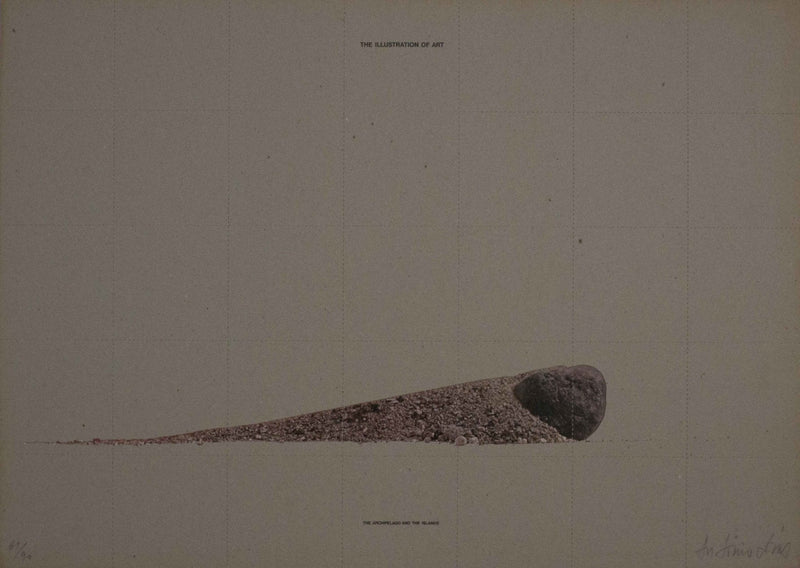
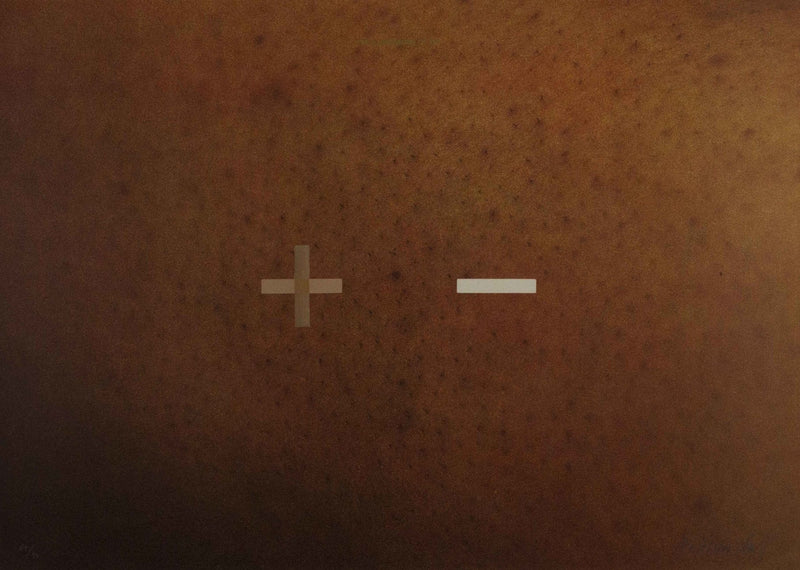
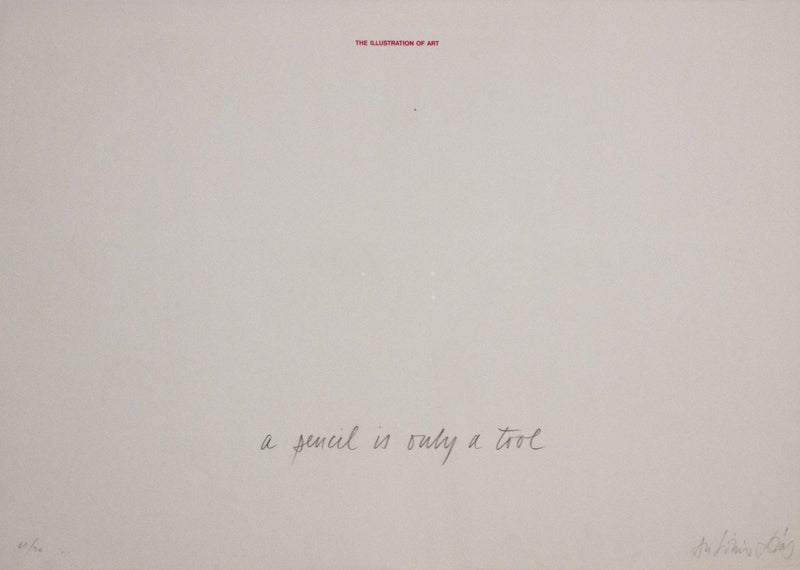
The artworks of Antonio Dias question how images are constructed, interpreted and used in society. His language spans figuration, conceptual experimentation, painting, graphic art and unconventional materials, while retaining a recognizable core: the desire to challenge the relationships between signs, power and communication. For Dias, an image is never merely something to look at; it is also a system of meanings that can be dismantled,…
Read the full biographyClose the biography
The artworks of Antonio Dias question how images are constructed, interpreted and used in society. His language spans figuration, conceptual experimentation, painting, graphic art and unconventional materials, while retaining a recognizable core: the desire to challenge the relationships between signs, power and communication. For Dias, an image is never merely something to look at; it is also a system of meanings that can be dismantled, contradicted or transformed.
From Brazil to Europe: Images and Political Tension
Born in 1944 in Campina Grande, in the Brazilian state of Paraíba, Dias moved to Rio de Janeiro, where he worked as a graphic designer and illustrator. During his training, he attended classes taught by Oswaldo Goeldi, a printmaker whose work demonstrates how a mark can possess an expressive force of its own. L'experience in graphic design and Brazil's political climate in the 1960s helped shape his early artworks, associated with New Figuration: fragmented images, symbols and references to the body or violence became tools for addressing a reality marked by conflict.
Although some elements recall Pop Art, his position differs from a simple celebration or reproduction of mass culture. Dias uses recognizable images to reveal their ambiguities and their capacity to convey ideological messages. His 1964 solo exhibition at Galeria Relevo in Rio de Janeiro, introduced by Pierre Restany, and the recognition he received at the 1965 Paris Biennale helped launch his international career. After a period in the French capital, he settled in Milan at the end of 1968, where he began an important relationship with Studio Marconi.
Milan and the Transformation of Language
In the Milanese context, his work takes on an increasingly conceptual character. Figures become less prominent, while words, diagrams, symbols and geometric surfaces gain importance. The change is not merely stylistic: Dias wants to show that the meaning of an artwork lies not only in the visible image, but also in its title, the arrangement of its elements and the conventions that guide its interpretation. A boundary drawn on a surface can allude to a real space, a political territory or an arbitrary rule; this very uncertainty becomes part of the work.
Projects such as The Space Between, developed in the early 1970s, demonstrate an interest in what separates and connects elements, not only in physical space but also in communication. During this period, Dias also experimented with forms of expression that went beyond traditional painting, including objects, installations, and sound works. His stay in the United States, also supported by a Guggenheim Foundation grant in 1972, broadened his engagement with international art discourse without interrupting the continuity of his inquiry.
Nepal and paper as the material of the artwork
A particularly significant turning point came in 1977, when Dias traveled to India and Nepal. His encounter with handmade paper production led him to work directly with local materials and processes. Handmade paper was no longer merely a neutral support for an image: its fibers, thickness, irregularities, and ability to absorb pigments all contributed to the result. The material thus acquired a conceptual as well as visual role, making evident the process through which the work is produced.
Experiences related to Nepal and the Série Trama include works that require accurate technical classification. A work on handmade paper may be a unique piece, a collage, a mixed-media work, or an original print: the support material alone is not enough to determine this. Dias's practice also includes documented experiments with woodcut, in which the relationship between printed areas and areas left blank is consistent with his attention to the structure of the image. For individual artworks, woodcut, screenprint, lithography, and other processes must be distinguished based on specific information.
The return to painting and the meaning of the research
In the 1980s, Dias returned to painting more consistently, without abandoning the questions that had emerged in earlier phases. Graphite, oxides, pigments, and textured surfaces made it possible to combine geometry with the physical presence of the artwork. International exhibitions, including the 1984 retrospective at the Lenbachhaus in Munich, documented the significance of his research. Dias died in 2018, leaving behind a body of work that is difficult to confine to a single movement: the thread connecting his experiences is his ability to transform every material and every image into a question about how we construct meaning.
Do you like Antonio Dias?
Leave your email to receive updates on newly available works and news about this artist.
Antonio Dias
Art that lives in your spaces
Choosing a work by Antonio Dias means making room for an individual artistic language. The works gathered here suggest combinations and perspectives to bring into your own surroundings, letting art guide your gaze.
DISCOVER THE ARTIST
Frequently asked questions
Answers to common questions about Antonio Dias, the artist’s life, works and value on the art market.
Who was Antonio Dias?
Antonio Dias (1944–2018) was a Brazilian artist also active in Europe, known for research that crosses painting, graphics and conceptual languages. His work reflects on images, power, communication and systems of representation.
Is Antonio Dias considered a Pop Art artist?
Some early works dialogue with the visual language of Pop Art, but his research is not limited to this label: it includes a strong critical, political and conceptual component.
Why do words, symbols and diagrams appear in Antonio Dias' works?
Texts and signs function as visual and conceptual elements, often challenging how we interpret images and messages. They are not simple captions added to the painting.
What importance does paper made in Nepal have in the work of Antonio Dias?
The experience with artisanal paper production in Nepal led Dias to explore the support as an active part of the work. Material, process and image become inseparable aspects of the work.
How to distinguish an original multiple by Antonio Dias from a reproduction?
It is necessary to identify the technique, edition, possible signature and numbering, publisher, provenance and bibliographical references. The presence of a famous image does not in itself guarantee that the sheet is an original graphic work.