

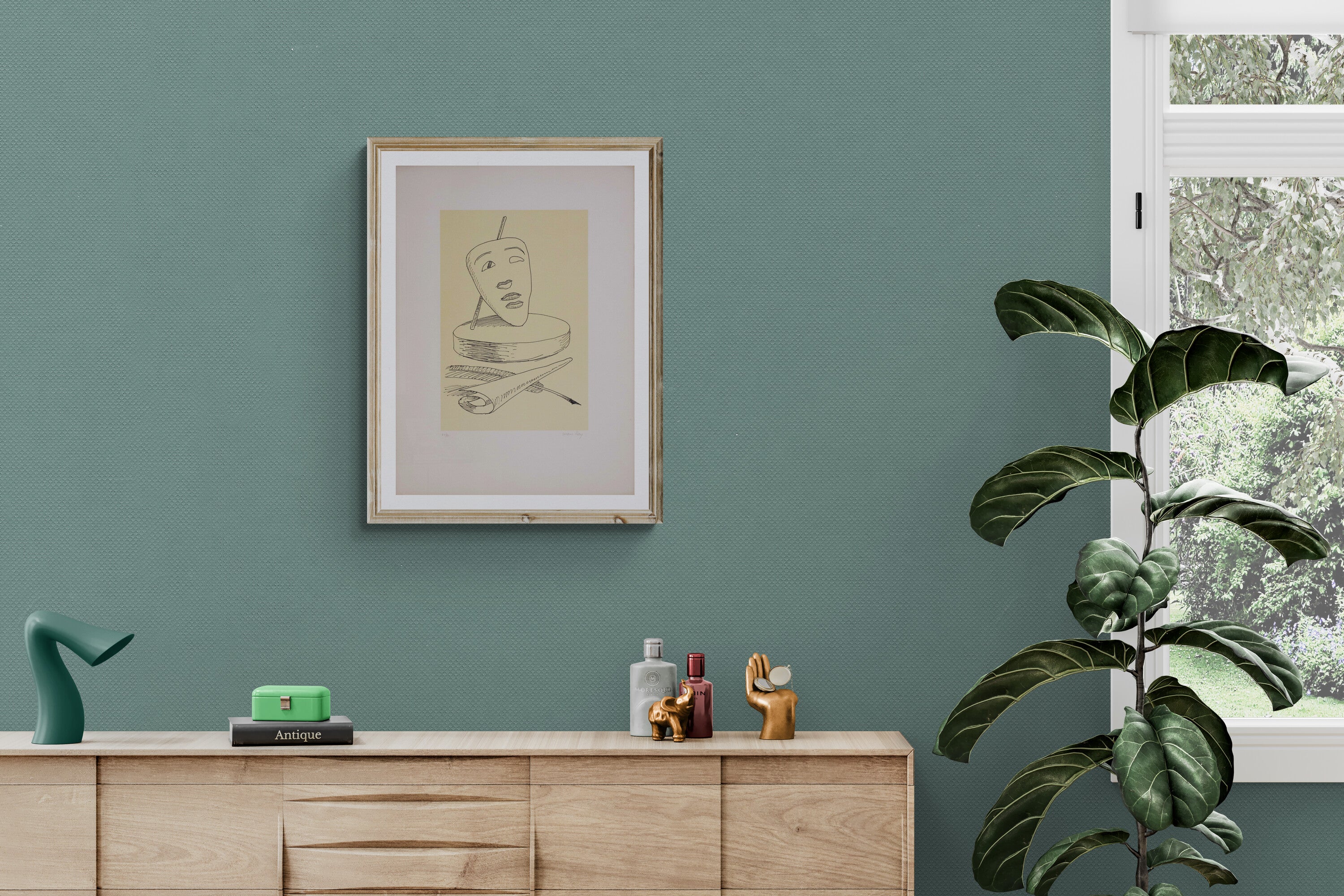
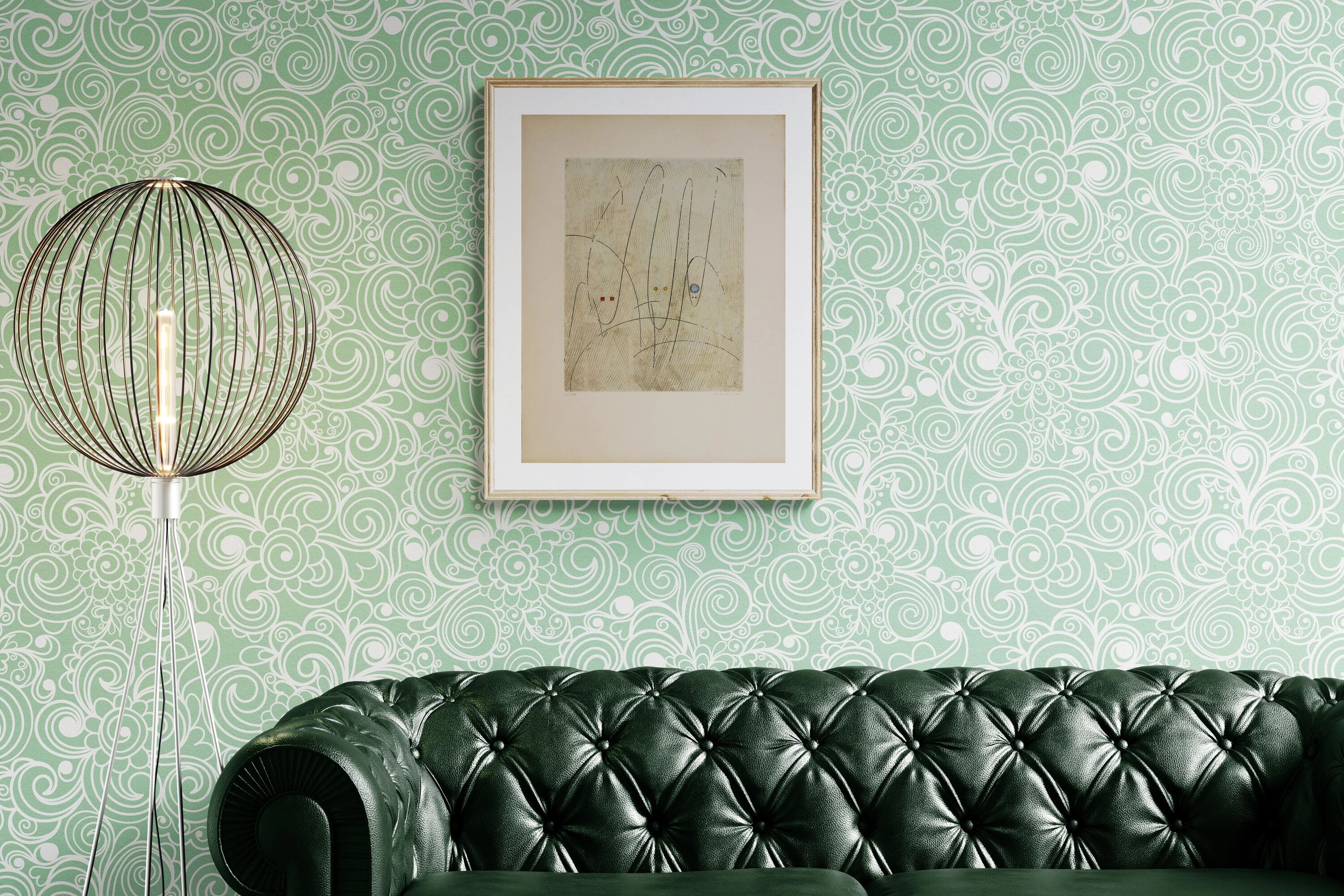
Remo Brindisi biography
Remo Brindisi

Remo Brindisi was an Italian painter. He was born in Rome in April 1918. Eighth of eleven children, from his first year of life he moved with his entire family to Abruzzo and attended the School of Art in Penne, a small town in the province of Pescara, thus beginning to follow his passion for art.
In the following years he moved to Rome, his hometown, where he attended the Experimental Center of Scenography and the lessons at the Free School of the Nude of the Academy of Fine Arts. He later won a scholarship that led him to enroll at the Higher Institute of Art for Book Illustration
His studies were interrupted by the call to arms caused by the outbreak of the Second World War, an experience that took him to Florence at the Military Geographic Institute.
It is precisely in Florence that he lived after the armistice of 1943, enjoying a carefree pause in his life also thanks to the fellowship with artists and friends including the self-taught painter Ardengo Soffici, the famous painter and engraver Ottone Rosai and the founder of the Roman school Felice Carena. In 1940 Remo Brindisi presented his first solo exhibition in the Tuscan city where he exhibited works of descriptive and lyrical style, also displaying the catalog made for the occasion by Eugenio Montale
In 1944 the painter was imprisoned by the Germans but managed to escape and take refuge in Venice until the liberation. In Venice he met the art dealer Carlo Cardazzo, defined by many as the discoverer of the greatest talents of post-war Italian painting, who proposed an intense exhibition of his works at the Galleria Il Cavallino. Among the painter's favorite themes in these years are the human figure, the shepherd boys, the Venetian and Abruzzese landscapes wrapped in a dreamy and relaxed atmosphere. Linked in his youthful works to a descriptive and realistic approach, he later matured his style by adding expressionist nuances.
In the fifties and sixties he participated in all the Venice Biennales and the Rome Quadriennales, proving to be a great painter inspired by political and social commitment and focusing his works on the calls of expressionism with clear informal intentions. Remo Brindisi indeed concentrated on works that favored the emotional aspect of reality rather than the objectively perceivable one and used expressionist traits within what he would call New Figuration.
In 1947 the same Caldazzo invited him to Milan to exhibit in his new Galleria Il Naviglio. The Milanese cultural climate of those years was turbulent and, in the controversy between abstractionists and realists, Brindisi took sides by joining the Gruppo Linea, founded the same year together with painters Giovanni Dova and Ibrahim Kudra, marking a first break with neocubism. In 1950 the group dissolved and the painter approached the Realism movement.
In 1955 Remo Brindisi made a new artistic turn due to a heated controversy on Realism with the painter Renato Guttuso, on the occasion of a retrospective exhibition that the municipality of Milan organized in his honor at the Art Pavilion, marking the break from the movement.
Between 1956 and 1961 he began the historical cycles focused on civil commitment, composed of large canvases characterized by cyclical themes, in which the painter became a witness of great collective suffering, whose representation gives the works an epic character. His poetics, the lyrical transfiguration of reality, the reading of humanity in feeling and existential condition, characterize his path, always capable of evoking in the melody of the subtle or with dazzling shock waves. He painted 14 canvases of Via Crucis (1956-1957) in a moment of strong inner religiosity in the climate of terror that had characterized the post-war period, the Demolition of the Myth of Stalin (1958), the Trial of Cardinal Mindszenty (1959) and the two versions of the History of Fascism (1960-1961) which in particular allow us to understand the stylistic change of Remo Brindisi in those years and the salient features of his new figurative research. The impulse of strong tensions and lyricism of memory continue to characterize him still.
In 1970 he created the Alternative Museum of Remo Brindisi in Lido di Spina to which he donated a large collection of 20th-century artists, demonstrating that in him the identification of art with social activities is a precise civil duty and a precise human belief. The museum is housed inside the house-museum designed by the Milanese architect Nanda Vigo, now owned by the municipality of Comacchio by the artist's testamentary wishes.
At the same time he was awarded the special "Federico Bernagozzi" prize, on the occasion of which he created ten portraits of illustrious people from Ferrara, visible at the Teatro Sociale della Concordia in Portomaggiore. These years are characterized by a production of the painter that determines his research of the dynamism of figures and the use of bright colors; among these are the Three Profiles, Profiles, Venice and another Venice, all produced in the seventies and eighties.
In 1972 he was appointed president of the Venice Biennale and for a long time held the position of director and professor at the Academy of Fine Arts of Macerata, receiving the Gold Medal of Public Education for cultural merits. His works are part of public and private collections in national and international museums.
Remo Brindisi passed away in Lido di Spina in 1996 and will be remembered as the epic singer of the historical myths of our time.