

REGGIANI Mauro


Mauro Reggiani (Nonantola, 1897 – Milan, 1980) is one of the leading figures in the emergence of Italian geometric abstractionism. His painting marks a fundamental transition from the figurative language of the early twentieth century to a conception of art based on autonomous forms, proportions, and color relationships. His path, however, was not that of an artist who suddenly abandoned reality: abstraction grew out of a long reflection on the structure of images, space, and painting’s ability to express an inner order.
His training and the turning point of the 1930s
After studying art in Modena and Florence, Reggiani moved to Milan in 1924, entering a cultural milieu shaped by different trends. His early work was still figurative and influenced by the climate of Novecento Italiano. However, trips to Paris, in 1926 and 1930, gave him a more direct acquaintance with the European avant-garde and allowed him to engage with the work of artists such as Alberto Magnelli, Jean Arp, and other leading figures of modernity.
In the early 1930s, his painting moved toward a gradual reduction of representational elements. Figures and objects gave way to compositions constructed through lines, planes, and fields of color. This was not a renunciation of complexity: on the contrary, the artist sought a language in which each form acquired value through its relationship with the others.
1934 marked a decisive moment. Reggiani took part in the historic exhibition at Milan’s Galleria del Milione and was among the signatories of a manifesto declaration of Italian abstractionism. In a context where figurative art retained considerable cultural weight, advocating the full autonomy of geometric form meant proposing a profoundly new idea of painting.
Geometry, balance, and space
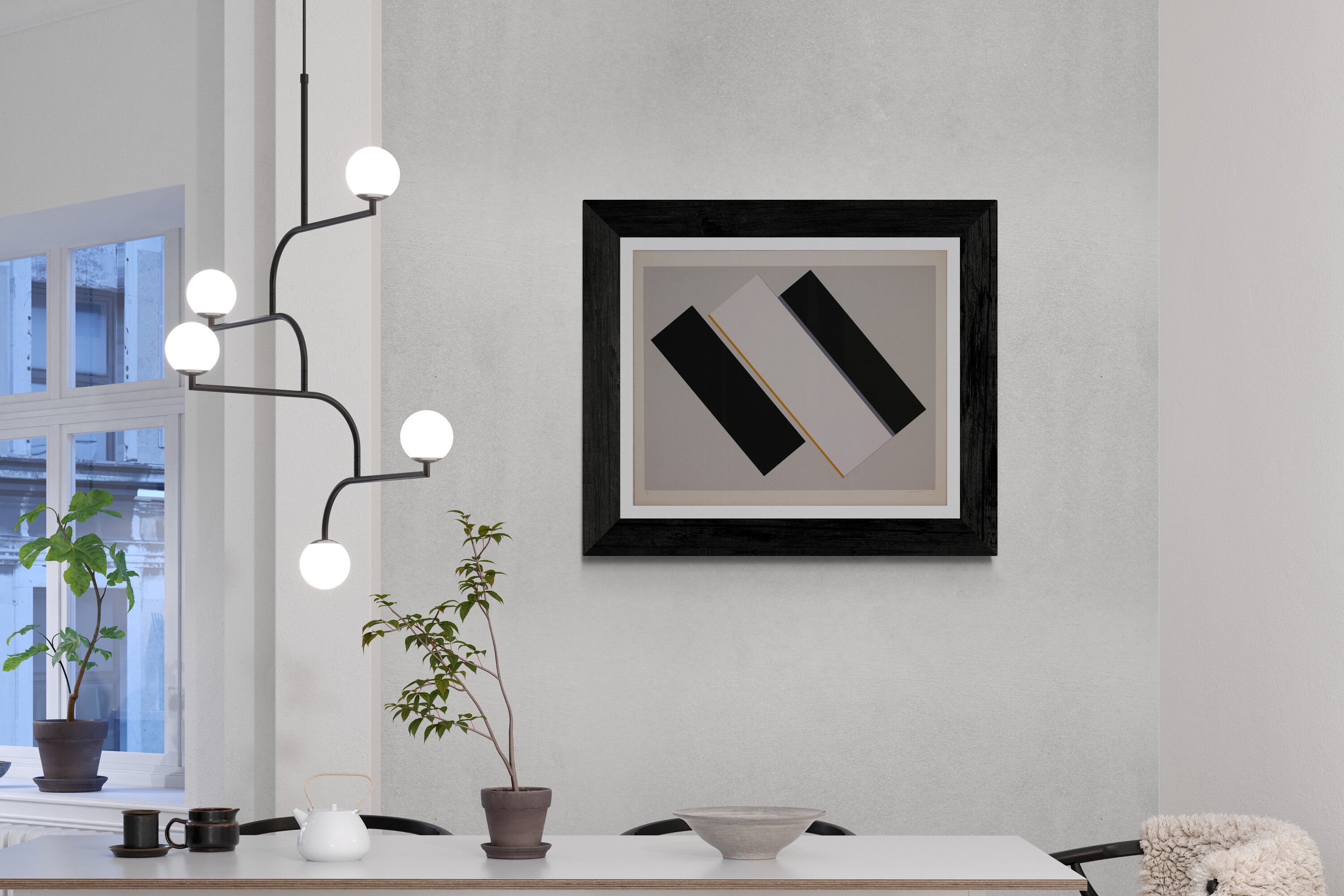
In Reggiani's compositions, rectangles, circles, lines, and color fields seem to belong to a rigorous system. Yet the result is not coldly mechanical. Rhythm arises from the difference between solids and voids, from the proximity of contrasting tones, and from the tensions created between vertical, horizontal, or tilted forms. A small shift can change the entire perception of the image, demonstrating how much balance depends on subtle relationships.
His joining the international group Abstraction-Création in 1935 confirmed the European scope of his artistic research. In the postwar period, Reggiani continued to develop non-figurative painting, also taking part in the Concrete Art Movement (MAC) in the 1950s. L'arte concreta, from this perspective, is not a simplified representation of the external world, but a visual reality with its own laws.
Color plays an essential role. At times, the fields of color are crisp and separate; elsewhere, the composition seems to take on greater fluidity. The precision of the outlines coexists with a chromatic sensibility that prevents geometry from being reduced to a simple diagram. The artworks invite slow contemplation, during which correspondences and differences that are not immediately evident emerge.
Drawing, graphic art and editioned artworks
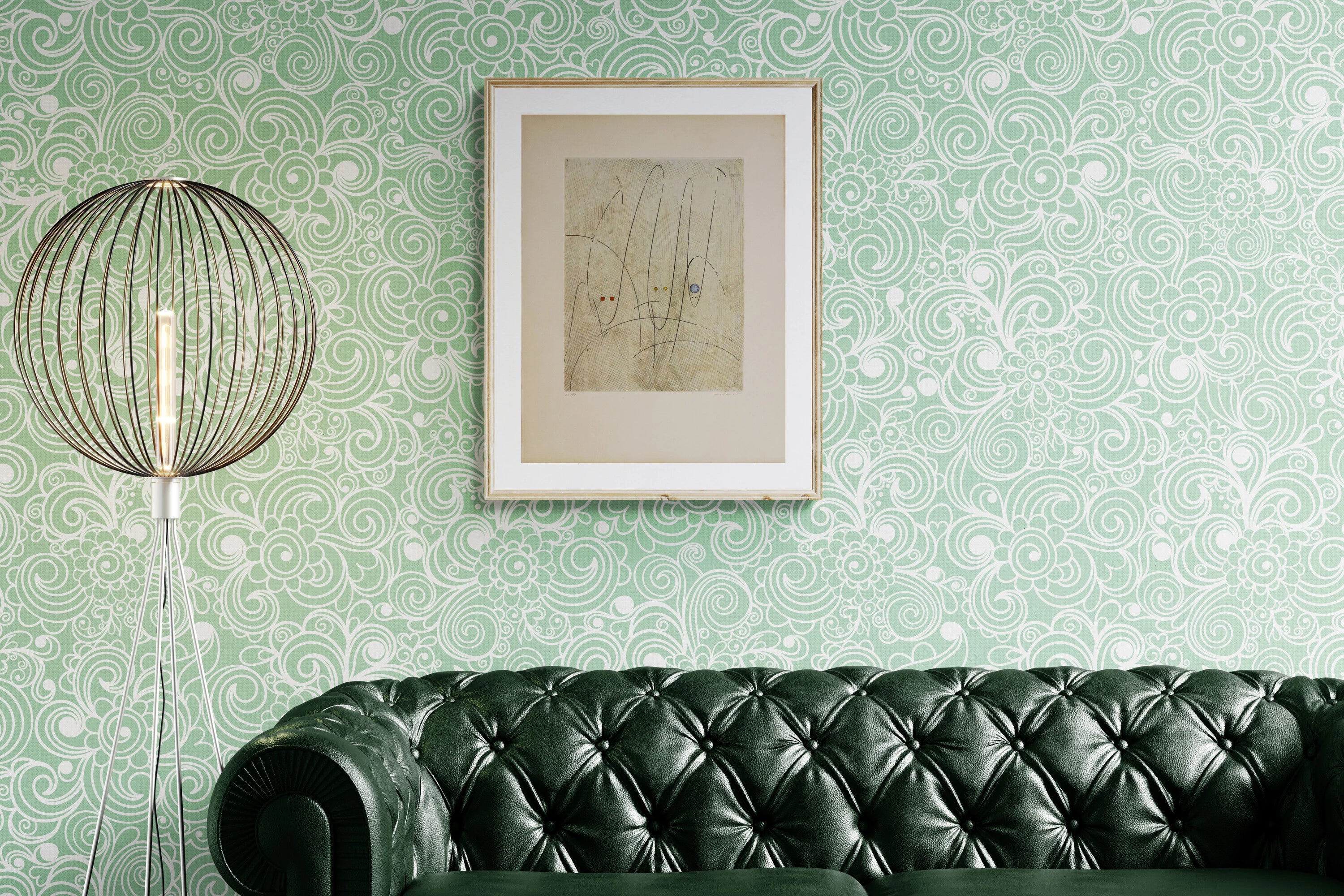
Alongside paintings, Reggiani created drawings and graphic artworks that allow us to observe the process of constructing an image up close. The sheet's dimensions focus attention on essential relationships: a line can establish the dominant direction, while a field of color can alter the apparent weight of the other forms. Even in prints, the language remains consistent with his painterly practice.
To describe a work accurately, it is important to distinguish original drawing, mixed media, lithograph, screenprint and reproduction, when these categories are actually documented. The presence of a signature and numbering is not, by itself, enough to identify the printing process. Sheet and image dimensions, support, any publisher, and catalogue references are useful elements in the assessment. L's legacy lies in having helped give Italian abstraction a rigorous, independent voice, demonstrating that geometry can become a form of visual poetry.
Ti piace Mauro Reggiani?
Per ricevere gli ultimi aggiornamenti di questo artista, lascia la tua email qui sotto: