

Painter
Mario Schifano
Italy, 1934–1998
Stay up to date with this artist
Leave your email to receive updates on newly available artworks and news about this artist.
Artworks by Mario Schifano
5 artworks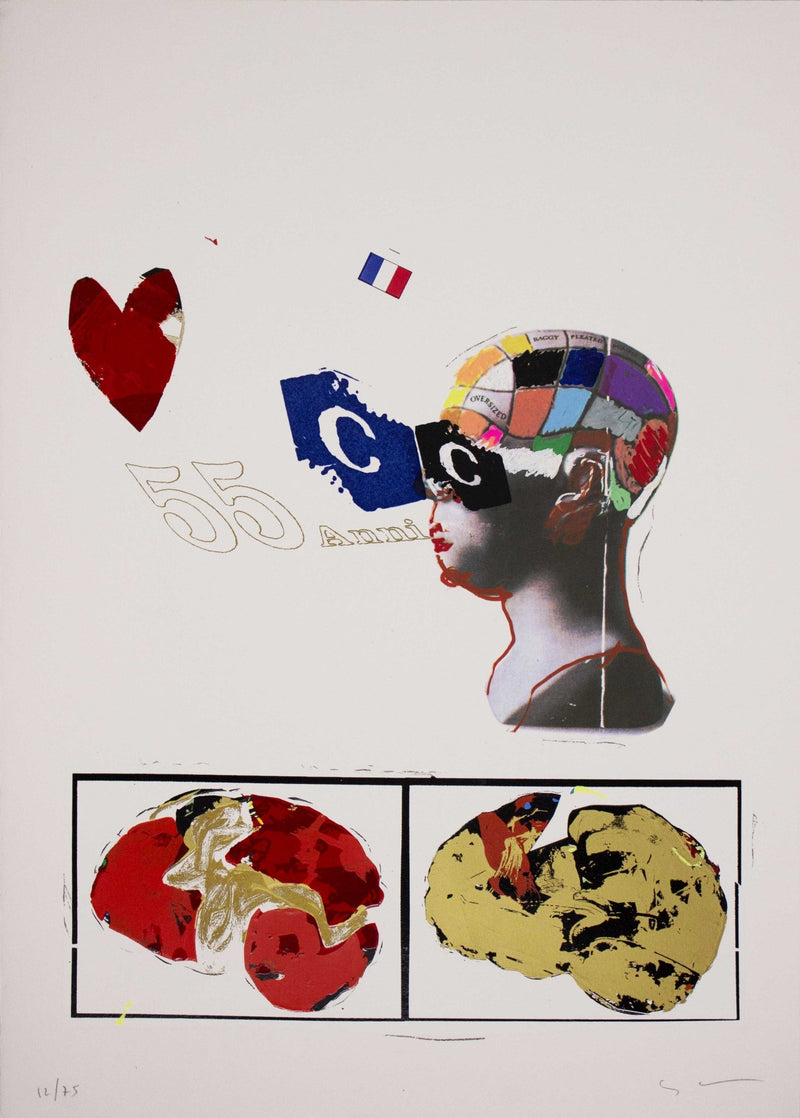

Biography of Mario Schifano
Mario Schifano (Homs, Libya, 1934 – Rome, 1998) was one of the most vital and contradictory protagonists of Italian art of the second half of the twentieth century. His painting crosses the monochrome, the symbols of mass communication, the landscape and television images, building a language capable of absorbing the speed of the contemporary world. In Schifano the surface of the painting is never a…
Read the full biographyClose the biography
Mario Schifano (Homs, Libya, 1934 – Rome, 1998) was one of the most vital and contradictory protagonists of Italian art of the second half of the twentieth century. His painting crosses the monochrome, the symbols of mass communication, the landscape and television images, building a language capable of absorbing the speed of the contemporary world. In Schifano the surface of the painting is never a neutral place: it becomes a screen on which images, signs and colors appear, interrupt and transform.
Rome and the new image of the sixties
Growing up in Rome, Schifano approached art through different experiences and established himself at the beginning of the 1960s in the environment of the Piazza del Popolo School. His research dialogued with that of artists such as Franco Angeli and Tano Festa, who shared an interest in the images of modernity and their circulation in society. The first monochromes are not empty surfaces: they present a paint spread with energy, often within delimited fields, which calls into question the traditional function of the painting.
Soon letters, brands, signs and fragments of the urban landscape appear. Advertising images and logos, including those of large companies, become pictorial materials. The relationship with Pop Art is evident, but Schifano does not limit himself to reproducing the symbols of consumption. It alters them, interrupts them, immerses them in gesture and color, transforming the impersonal language of communication into a subjective and often restless experience.
The Roman scene of the 1960s constitutes a meeting point between painting, cinema, music and new languages of communication. In this environment Schifano developed a particularly receptive sensitivity towards the images that circulate outside museums. The initial monochromes are already a reflection on the painting as an object: the pictorial layering, the edges and the irregularities of the surface prevent them from being considered simple uniform fields. When brands and signs appear, the relationship with mass culture becomes more explicit. The logo is not repeated only to make it recognizable, but is subjected to transformations that interrupt its advertising function. The speed of communication thus meets the time of the pictorial gesture. This tension distinguishes Schifano from an overly generic reading of Pop Art, because the material and manual intervention maintain a decisive role.
Anemic landscapes, screens and visions
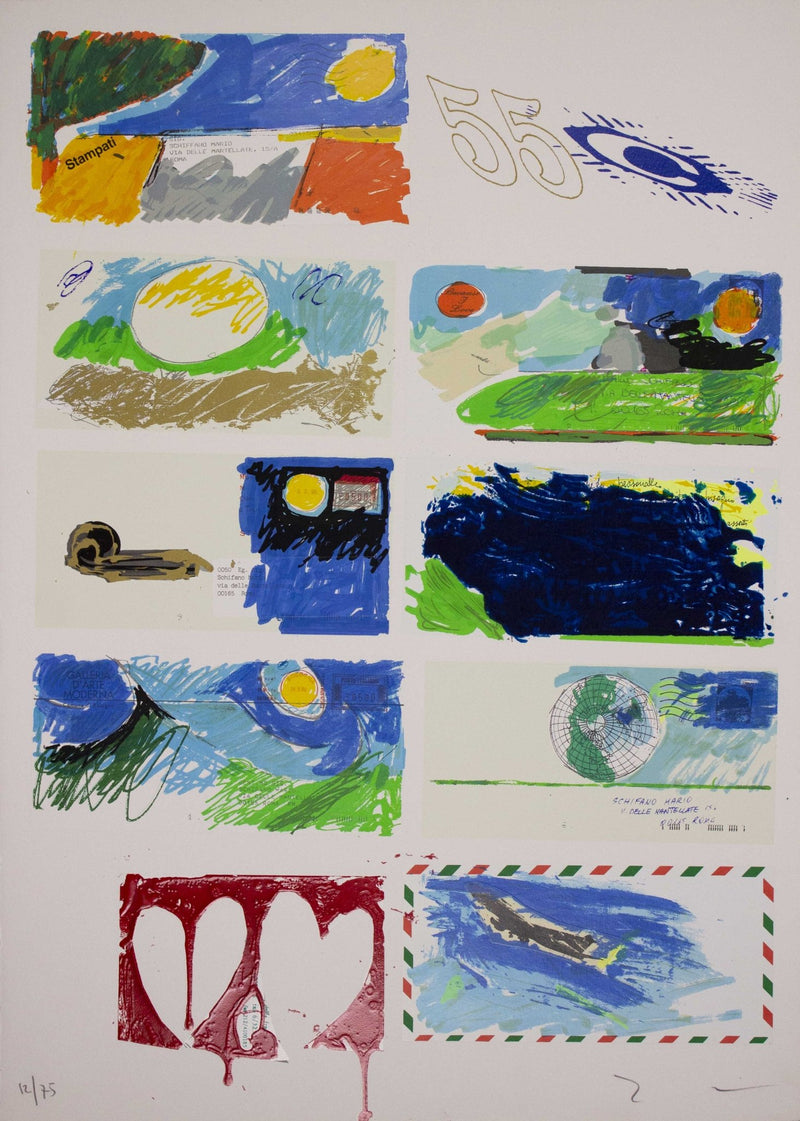
The Anemic Landscapes series show another aspect of his research. Nature appears through traces and fragments that seem to recall an image rather than describe it. The idea of landscape is filtered by memory and the means of communication, while the painting alternates rapid signs, backgrounds and areas left open. The image is always on the verge of being born or disappearing.
In the following years, Schifano deepened his relationship with photography, cinema and television. The images transmitted by the screens are reworked through pictorial interventions and transfer procedures, anticipating questions that will become central in contemporary visual culture. His interest does not only concern the reproduced subject, but the way in which technology modifies the perception of reality.
The landscape is a useful motif for understanding the continuity between the artist's different seasons. Even when the image appears fragmentary, it retains the suggestion of a horizon, vegetation or a surface crossed by light. It's not necessarily about describing a specific place. Schifano seems interested in the way in which memory and technical reproduction transform the direct experience of nature. The image can be seen, remembered, photographed and finally painted, going through steps that modify its meaning. The intervention on television material makes this process even more evident: the screen offers a continuous flow of figures, while the painting isolates some moments and subjects them to new variations. The painting becomes a space in which different times overlap, from the immediate gesture to the persistence of a collective image. The comparison between repetition and variation also crosses the series. A recognizable motif may reappear in different images, but the gesture, medium and color treatment change the effect. Seriality therefore does not imply uniformity. It is precisely in the gap between repeatable image and individual intervention that an important part of his poetics manifests itself.
Silkscreens, multiples and cataloging problems
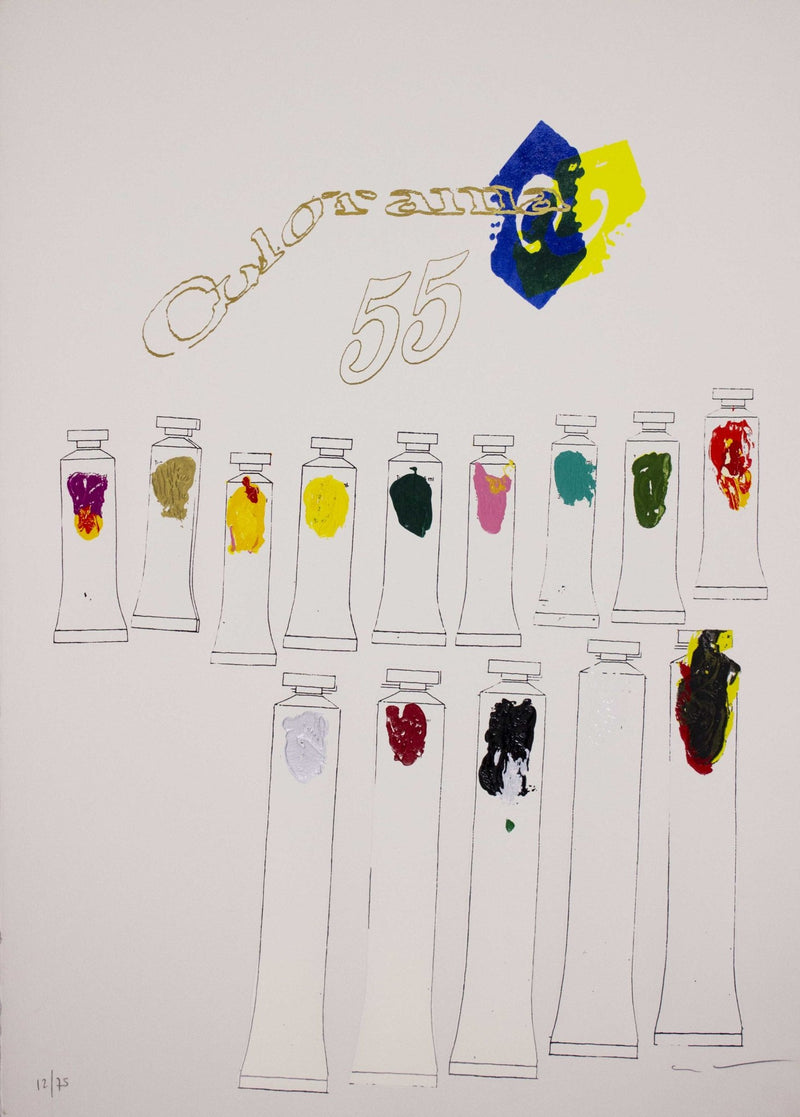
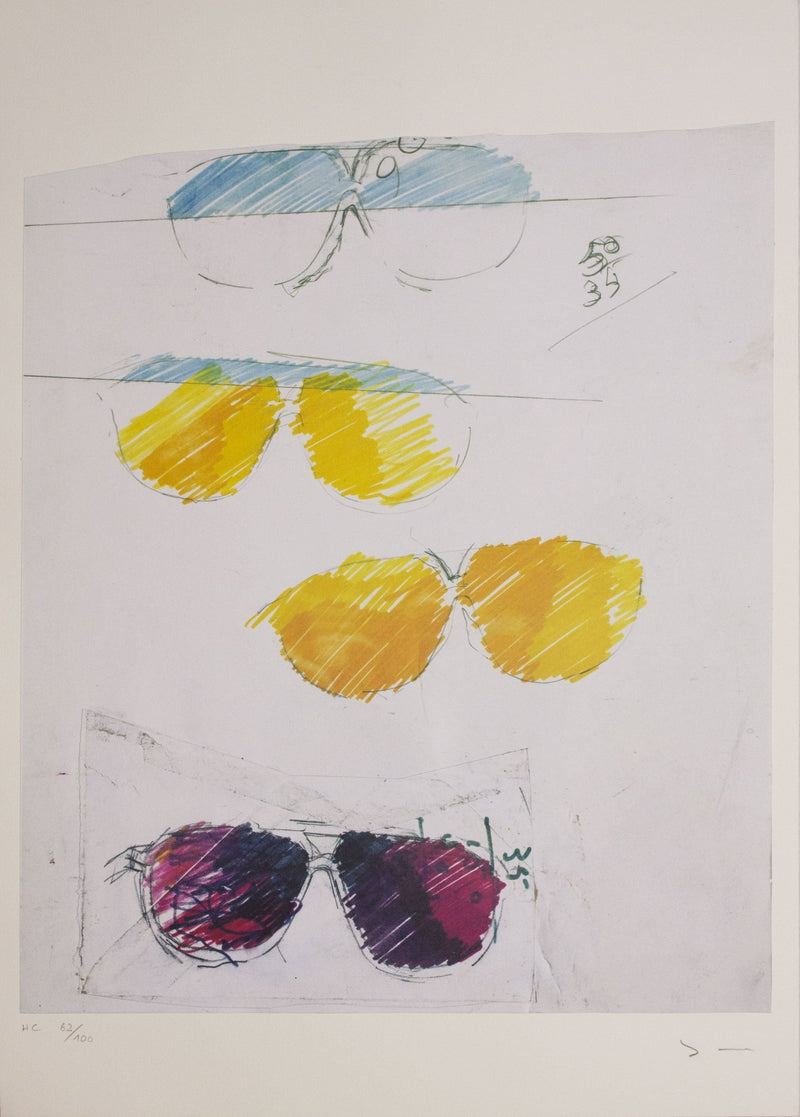
Schifano's production includes paintings, drawings, reworked photographs and numerous graphic artworks. Screen printing, based on the passage of color through a prepared fabric, lends itself to repetition and overlapping of images; however, not every artwork on paper by Schifano is a screenprint. There are different editorial techniques and typologies, which must be identified on the basis of documents and material characteristics.
For those who collect it is particularly important to verify authenticity, provenance, technique, signature, print run and archive references. The artist's notoriety and the complexity of his production make it essential to avoid attributions based solely on stylistic similarity. Schifano's legacy lies in having given painting a rare ability to deal with the rapidity of contemporary images, while at the same time preserving the immediacy of the artistic gesture.
The variety of supports and processes requires particular caution in the market. A unique artwork created with pictorial interventions, an original edition print and a subsequent reproduction may present similar images, but have different history and characteristics. Screen printing allows successive passes of color through prepared frames; a lithography instead follows a planographic procedure, while other techniques can use different matrices and supports. The bright appearance or the presence of uniform backgrounds are not enough to establish the technique. Any numbering, dating, publisher, printer, stamps, provenance and archival references must be considered, without treating a single element as definitive proof. The accurate cataloging is not a formality foreign to the artwork: it helps to reconstruct the relationship between pictorial invention and circulation of images, the central theme of Schifano's entire research.
Do you like Mario Schifano?
Leave your email to receive updates on newly available artworks and news about this artist.
Mario Schifano
Art that lives in your spaces
Artworks by Mario Schifano bring the language of Pop art into everyday spaces. Paired with clean lines and contemporary furnishings, they become the starting point for a personal interior, open to colour and a dialogue with art.

DISCOVER THE ARTIST
Frequently asked questions
Answers to common questions about Mario Schifano, the artist’s life, artworks and value on the art market.
Who was Mario Schifano and why is he considered a protagonist of Italian Pop Art?
Mario Schifano (1934–1998) was one of the protagonists of Italian art of the second half of the twentieth century. His oeuvre dialogues with media images, brands, landscapes and contemporary languages; for this reason it is often compared to Italian Pop Art. Its production, however, includes many different phases and experiments.
What are the most famous subjects of Mario Schifano's artworks?
Recognizable motifs include monochromes, anemic landscapes, television images, palm trees, and references to advertising and visual culture. The presence of one of these subjects is not enough to establish the dating or authenticity of an artwork: specific evidence is needed.
Did Mario Schifano use photographs and television images?
Yes. Schifano experimented with the use of photographs, television images and mass communication materials, often reworking them pictorially. This practice reflects his interest in the circulation of images in contemporary society and makes it important to correctly identify the support and process of each artwork.
What is the difference between a painting and a silkscreen by Mario Schifano?
An original painting is a unique artwork, while an original screenprint is a print made in an edition that can include multiple copies. There are also reproductions that should not be presented as original graphics. Technique, print run, signature, documentation and state of conservation must be verified for each artwork.
How can the authenticity of an artwork by Mario Schifano be verified?
It is necessary to reconstruct provenance, documentation, any relevant publications and archival references, verifying the reliability of each document. The market includes different types and periods, so signature or visual similarity are not sufficient proof. Before purchasing it is advisable to request all available documentation.
Discover more artists
Explore more leading figures in modern and contemporary art


