
Painter
Karl Plattner
Italian, 1919 – 1986
Stay up to date with this artist
Leave your email to receive updates on newly available works and news about this artist.
Works by Karl Plattner
1 work

Karl Plattner
Karl Plattner was one of the most important South Tyrolean painters and engravers of the Second World War, protagonist of an artistic research that combined the tradition of European mural painting to the experiences of modernity. Born in Malles Venosta, South Tyrol, on February 13, 1919 and died in Milan on December 8, 1986, he developed a personal figurative language, characterized by intense attention to…
Read the full biographyClose the biography
Karl Plattner was one of the most important South Tyrolean painters and engravers of the Second World War, protagonist of an artistic research that combined the tradition of European mural painting to the experiences of modernity. Born in Malles Venosta, South Tyrol, on February 13, 1919 and died in Milan on December 8, 1986, he developed a personal figurative language, characterized by intense attention to the human condition, the construction of space and the expressive force of the design. Its production includes monumental frescoes, paintings, drawings and graphic works, through which the artist has dealt with themes related to memory, identity and complexity of existence.
The origins and artistic training
Plattner was born in a family of modest economic conditions, the last of ten children. Remained father's orphan during childhood, he grows in an environment in which work takes on a fundamental importance. The desire to devote itself to painting emerges early, but its formative path begins through an artisanal apprenticeship. After the school of obligation he works as a whitening and decorator, acquiring a direct knowledge of materials and techniques that will be particularly important for the subsequent activity of mural painter.
In Brixen, he joined Anton Sebastian Fasal, an artist and lecturer related to the Academy of Fine Arts in Vienna, which encourages him to undertake academic training. This experience allows him to deepen the relationship between design, color and architectural surface, approaching it to a conception of painting in which the image must dialogue with the space that hosts it.
World War II interrupts the formative path. The call to arms interrupted the apprenticeship started thanks to Fasal, with short filming until 1945. After the war he resumed his training in Florence and later at the Accademia di Brera in Milan, coming into contact with a wider artistic environment and with the transformations that characterize the European painting of the post-war period.
Comparison with European painting
The following years of the war are a fundamental period for the maturation of Plattner's language. The stays in Florence, Milan and Paris allow him to confront different artistic traditions, from great Italian painting to modern research developed in France. His interest is mainly focused on the human figure and the possibility to represent it through a rigorous formal construction, capable of overcoming the simple naturalism.
The comparison with the experiences of Cubism and modern figuration contributes to progressively change its way of organizing the image. The figures acquire a more essential structure, while the space is built through relationships between floors, lines and chromatic surfaces. The artist does not abandon the recognisability of the subjects, but submits them to a reprocessing that emphasizes the psychological and expressive dimension.
This tension between representation and formal synthesis becomes one of the main features of his painting. The design retains a structural function, while the color contributes to defining the atmosphere and the relationship between the figures. The image can appear severe and collected, but maintains a remarkable emotional intensity, resulting from the ability to transform everyday situations and presences into larger representations of meaning.
Frescoes and major public commissions
One of the most important aspects of Plattner's activity concerns the mural painting, where artisanal and academic training find a particularly effective synthesis. Since the Second World War, he has created numerous frescoes and decorative interventions in South Tyrol and in other European contexts, addressing the problem of the relationship between image, architecture and public function.
Among the significant achievements are the frescoes for religious and civil buildings of the Val Venosta, the work for the room of the Provincial Council of Bolzano and the table for the palace of the Salzburg Festival, created for the architect Clemens Holzmeister. In these works, painting takes on a monumental dimension and is confronted with the need to organize compositions articulated on large surfaces.
Periods abroad and Brazil
Plattner's career develops through continuous shifts between Italy and other countries. Between 1952 and 1954 and then between 1956 and 1958 he lives in Brazil. Before the final return he presents his work in two exhibitions in São Paulo. This experience expands its cultural and professional horizon, allowing it to get in touch with new artistic environments and to realize important commissions of mural painting.
In Brazil he works on projects for public and private buildings, comparing with an architectural culture in transformation. The monumentality of the surfaces and the relationship between painting and built space offer new possibilities for its research. The international experience also contributes to consolidating a concept of art in which figurative language can overcome geographical and cultural boundaries.
Plattner continues to work between South Tyrol, Milan, Paris and southern France, maintaining a constant relationship with his homeland. This alternation between territorial rooting and international openness is a fundamental element of its artistic identity.
The human figure and the existential dimension
In Plattner's painting, the human figure occupies a central position. The characters are often represented through essential forms, collected attitudes and compositions in which the relationship between body and space contributes to suggesting a particular psychological condition. His research is not simply intended to describe people or situations, but to express internal tensions and questions related to existence.
The figures can appear isolated, silent or immersed in environments characterized by a strong geometric construction. The simplification of volumes and the attention to the contours give the images an almost monumental quality, even when the dimensions of the work are contained. The drawing thus becomes an instrument to make visible an emotional condition without resorting to a detailed narrative description.
The relationship with the European figurative tradition remains constant, but is reinterpreted through a modern sensibility. Plattner seeks a balance between solidity of form and expressive intensity, building images in which human presence assumes a more general symbolic value.
Original prints and the final decades
Starting in the mid-1960s, Plattner pays increasing attention to easel painting and graphic work, developing a production in which the sign takes on an increasing importance. The printing techniques allow to deepen the relationship between line, surface and structure of the image, offering different expressive possibilities regarding fresco and monumental painting.
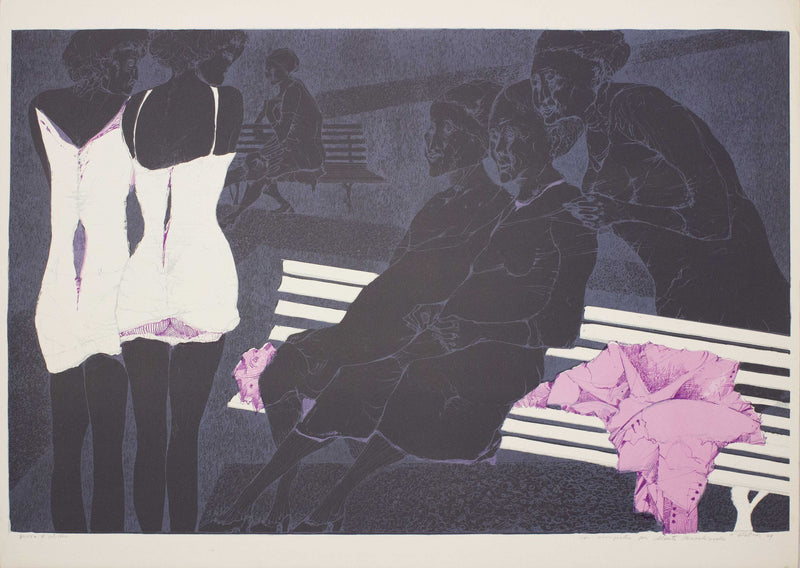
In lithography and other graphic works, the composition is often constructed through a rigorous synthesis of figurative elements. The relationship between full and empty, the layout of the figures and the rhythm of the signs contribute to defining images of great expressive concentration. The graphic work therefore represents a significant component of its research, not a simple secondary activity than painting.
In the last decades of his life, Plattner continues to work between Milan, Paris and southern France, maintaining links with South Tyrol. His production testifies to a constant research, in which the comparison with the human figure and with the construction of space remains central.
Karl Plattner died in Milan in 1986, leaving a work that occupies an important position in the history of South Tyrolean and European art of the second twentieth century. His contribution is to have been able to unite tradition of fresco, modern figurative sensibility and graphic research, developing a language capable of addressing universal themes through essential and deeply expressive forms. His works continue to bear witness to the value of a painting in which compositional rigour and human intensity remain inseparable.
Do you like Karl Plattner?
Leave your email to receive updates on newly available works and news about this artist.
Karl Plattner
Art that lives in your spaces
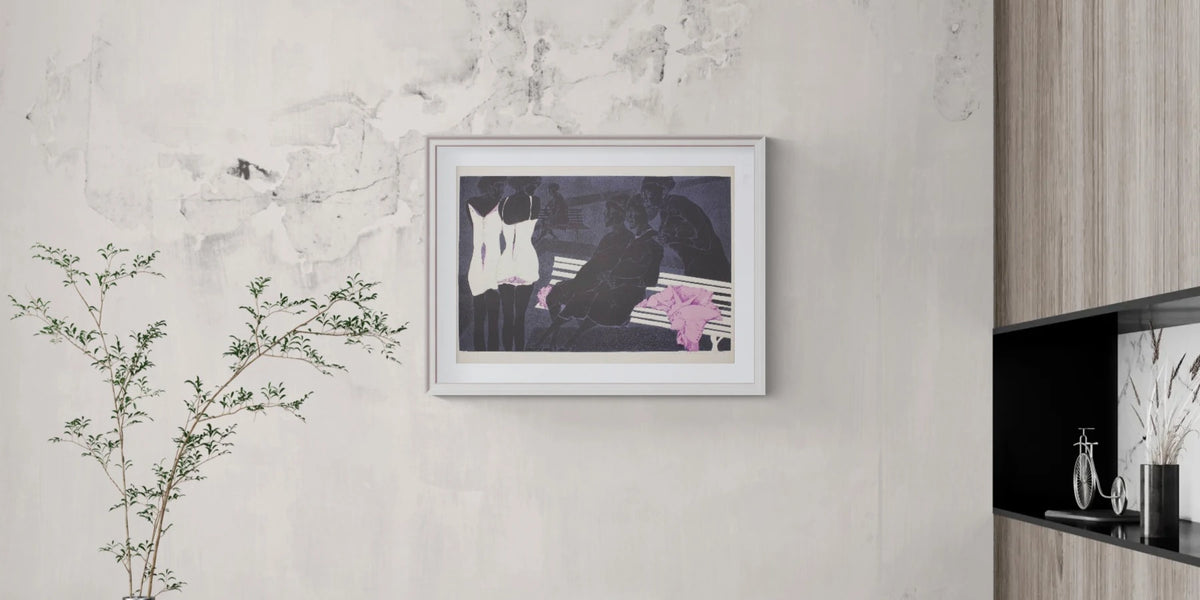
Choosing a work by Karl Plattner means making room for an individual artistic language. The works gathered here suggest combinations and perspectives to bring into your own surroundings, letting art guide your gaze.
DISCOVER THE ARTIST
Frequently asked questions
Answers to common questions about Karl Plattner, the artist’s life, works and value on the art market.
What monumental technique did Plattner practise?
He painted frescoes and received mural commissions, including work for the Provincial Council in Bolzano.
What role does the human figure play?
Essential volumes and clear outlines often convey solitude or introspection.
Which work is in the catalogue?
EmporiumArt lists Le due generazioni (1969), a signed lithograph.
Where did Plattner train after the war?
He attended the academies in Florence and Brera in Milan before moving to Paris.
When did he live in Brazil?
He lived there from 1952 to 1954 and from 1956 to 1958. He also exhibited in São Paulo.