
Printmaker and Painter
Johnny Friedlaender
Germany and France, 1912–1992
Stay up to date with this artist
Leave your email to receive updates on newly available artworks and news about this artist.
Artworks by Johnny Friedlaender
2 artworks

Biography of Johnny Friedlaender
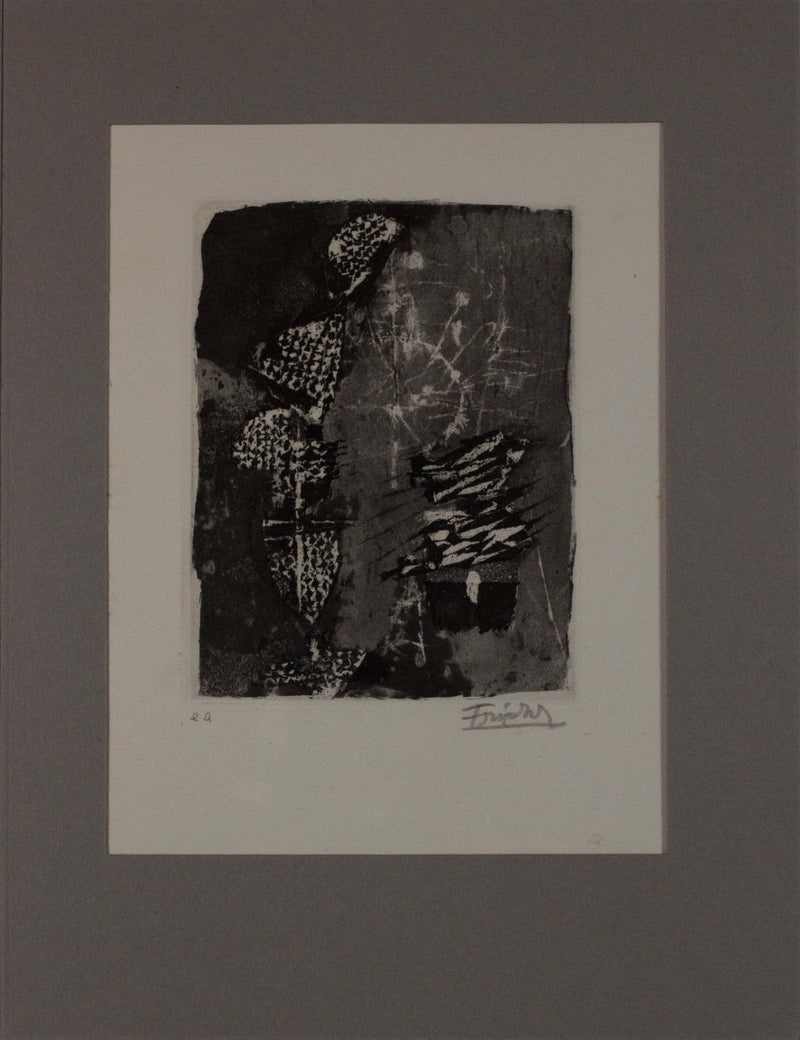
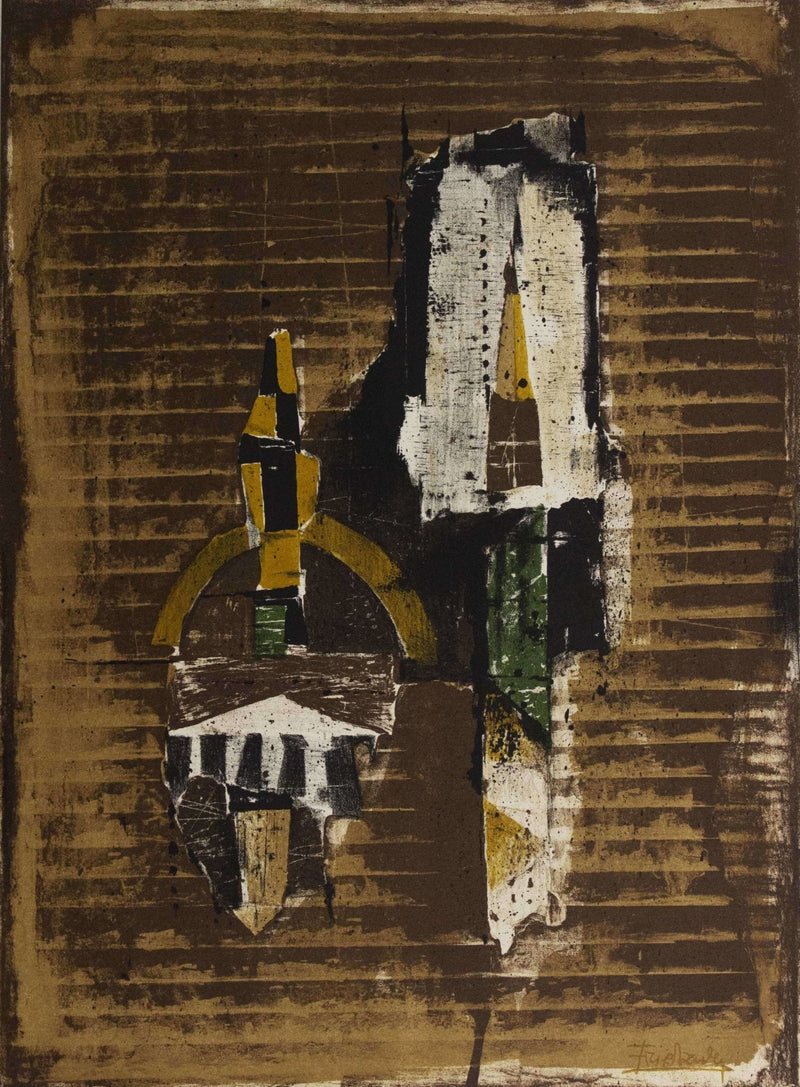
In the engravings of Johnny Friedlaender, color does not simply fill in already drawn forms: it emerges together with the mark, the textures, and the depths of the printed surface. A German-born printmaker and painter, active mainly in France, Friedlaender played a decisive role in renewing color intaglio in the second half of the twentieth century. His oeuvre demonstrates how printmaking can be an independent…
Read the full biographyClose the biography
In the engravings of Johnny Friedlaender, color does not simply fill in already drawn forms: it emerges together with the mark, the textures, and the depths of the printed surface. A German-born printmaker and painter, active mainly in France, Friedlaender played a decisive role in renewing color intaglio in the second half of the twentieth century. His oeuvre demonstrates how printmaking can be an independent language, capable of achieving results different from those of painting.
Training, Exile, and the Postwar Period
Friedlaender was born on June 21, 1912, in Pless, in what was then German Silesia and is now Pszczyna, Poland. He studied at the Academy of Fine Arts in Breslau, under Otto Mueller and later Carlo Mense. From his student years, he explored painting, drawing, etching, and lithography, developing an interest that would shape his entire career.
L's advent of Nazism profoundly shaped his life. He faced persecution and periods of detention, left Germany, and traveled through several European countries. In 1937, he exhibited watercolors and engravings in the Netherlands and moved to Paris, where he sought to rebuild his career. World War II brought further experiences of internment. In the postwar period, the graphic series Images du Malheur gave form to a reflection on suffering and the human condition, conveying the weight of personal and collective memory through the density of the mark.
In 1948, he opened an engraving studio in Paris, which would become an international point of reference. Here, artistic experimentation went hand in hand with teaching: numerous printmakers from diverse backgrounds visited his studio to learn intaglio techniques and explore their expressive possibilities.
From Figuration to Abstraction
In the 1950s, Friedlaender progressively moved away from figurative representation. The images are constructed through marks, color fields, interwoven lines, and chromatic overlays that can evoke organisms, landscapes, leaves, and natural structures without literally depicting them. References to the visible world are transformed into an abstract vocabulary, often marked by a lyrical quality and a complex organization of the surface.
The result also depended on his extraordinary technical mastery. In etching, the design is drawn on a metal plate coated with a protective varnish and etched by the action of an acid; after inking, the image is transferred to paper using a press. L'aquatint, by contrast, makes it possible to create tonal areas, extending the plate's possibilities beyond simple linear marks. Friedlaender combined these processes and experimented with color printing using multiple plates or different inking methods. The layered applications create delicate transitions, dense areas, and depth that are specific to the language of printmaking.
The Workshop and the Legacy of Color Printmaking
His teaching helped spread a creative approach to printmaking. Artists associated with his workshop included Arthur Luiz Piza, Brigitte Coudrain, and Graciela Rodo Boulanger. Friedlaender also participated in numerous exhibitions in Europe, America, and Asia, earning recognition above all for the quality and originality of his prints.
Describing his artworks accurately requires care: many prints combine etching and aquatint, sometimes in multiple colors, and should not be generically described as lithographs. The technique, signature, edition, and catalog references must be verified for each individual print. Friedlaender died in Paris in 1992, leaving behind a body of work that helped free printmaking from the role of merely translating a painted image and establish it as a fully autonomous art form.
Do you like Johnny Friedlaender?
Leave your email to receive updates on newly available artworks and news about this artist.
Johnny Friedlaender
Art that lives in your spaces
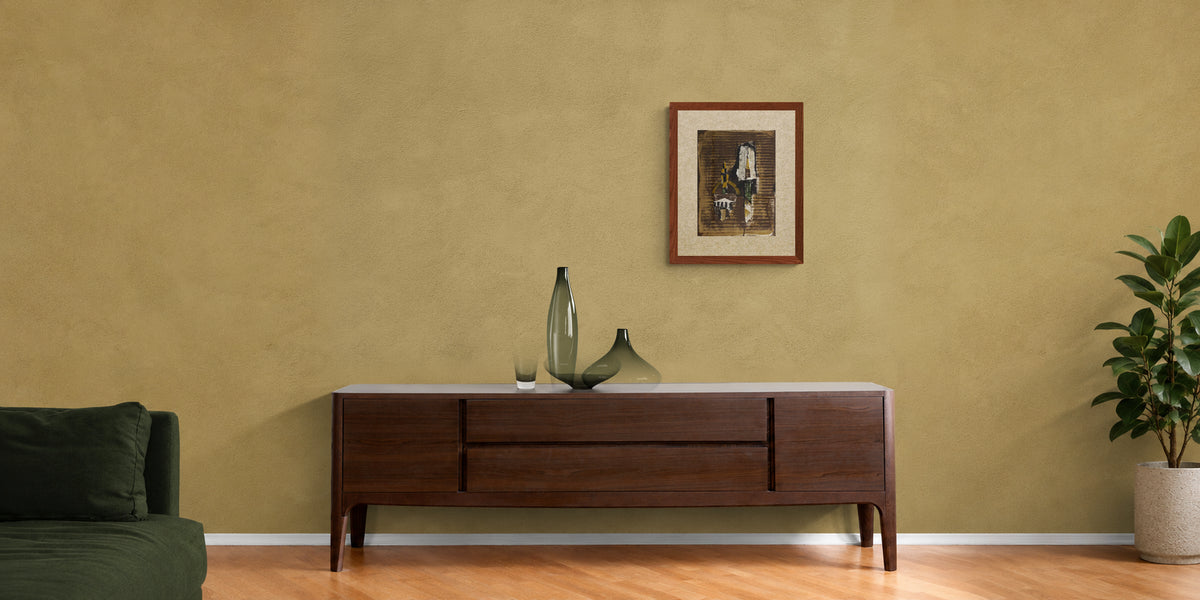
Marks, rhythms and forms: artworks by Johnny Friedlaender bring a new sense of balance to a space. Understated furnishings give the composition room to breathe and invite you to rediscover it every day from a different perspective.
DISCOVER THE ARTIST
Frequently asked questions
Answers to common questions about Johnny Friedlaender, the artist’s life, artworks and value on the art market.
Who was Johnny Friedlaender?
Johnny Friedlaender (1912–1992) was an engraver and painter born in Germany and active mainly in France. He is remembered for his contribution to the original graphics of the twentieth century and for his experimentation with color in engraving.
Why is Johnny Friedlaender important in the history of engraving?
He developed a personal graphic language and contributed to enhancing color engraving as an autonomous expressive means. His oeuvre and teaching influenced numerous artists.
What printing techniques did Friedlaender use?
It is particularly associated with etching and aquatint, even in colour. The precise technique of each sheet must be verified in the artwork sheet and, when available, in the edition documentation.
How can you recognize an original aquatint by Friedlaender?
Aquatint allows tonal effects obtained through an engraved matrix. To recognize an original copy you need data on technique, print run, signature, publisher or printer and provenance; photography alone is not enough.
How much is a recording by Johnny Friedlaender worth?
The value varies according to subject, date, technique, rarity, edition, signature, conservation and provenance. It is useful to compare sales results of truly comparable sheets, not all the artist's artworks without distinction.
Discover more artists
Explore more leading figures in modern and contemporary art


