

ARTISTIC TECHNIQUES
Etching
From plate to paper, the strength of the etched line.
The plate and the intaglio press turn the artist’s gesture into fine lines, contrasts and richly textured marks.
OUR ETCHINGS
Works to discover, choose and live with every day.

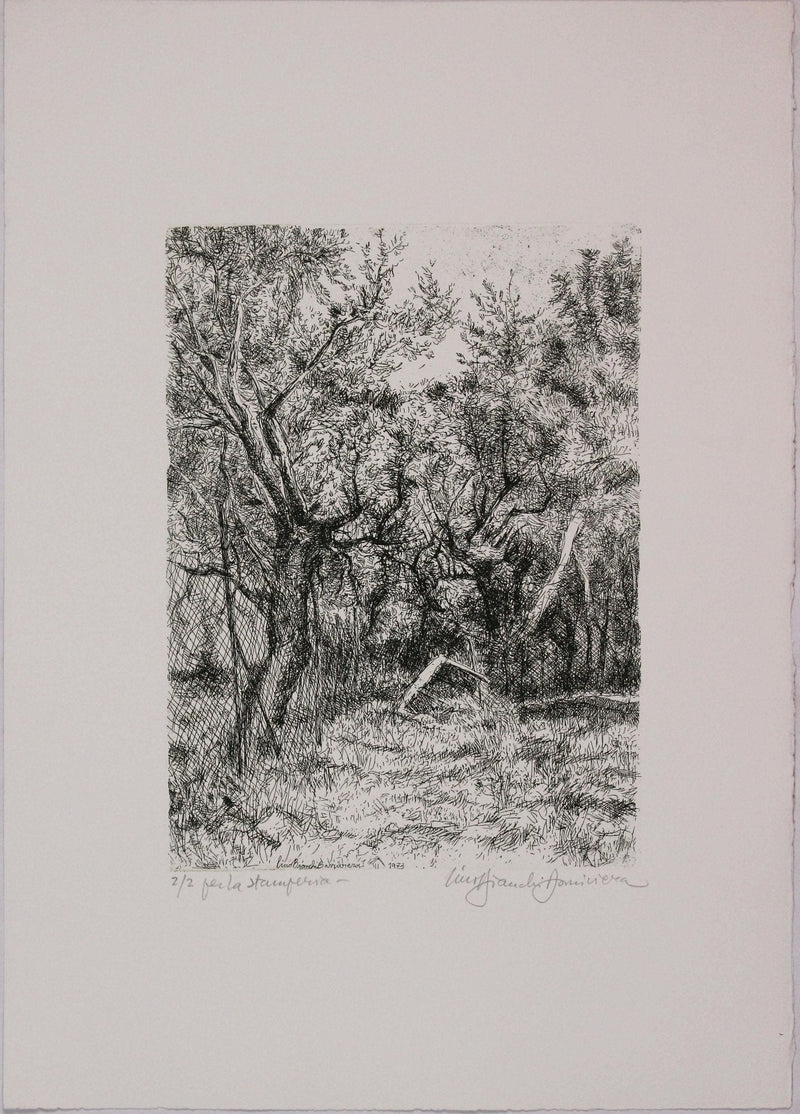
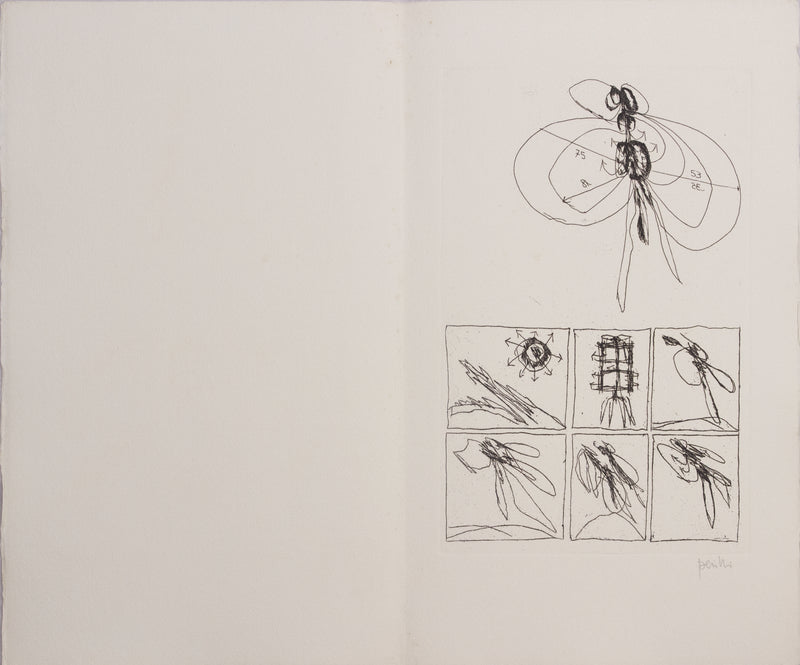
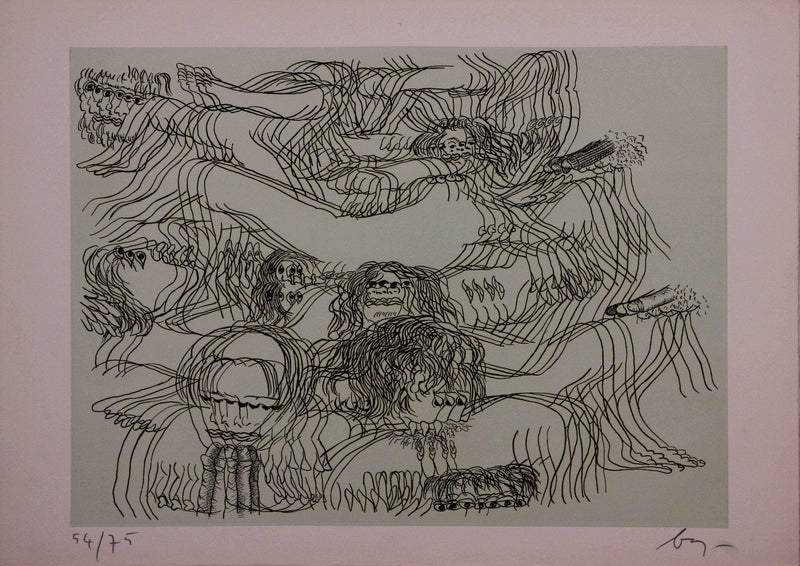
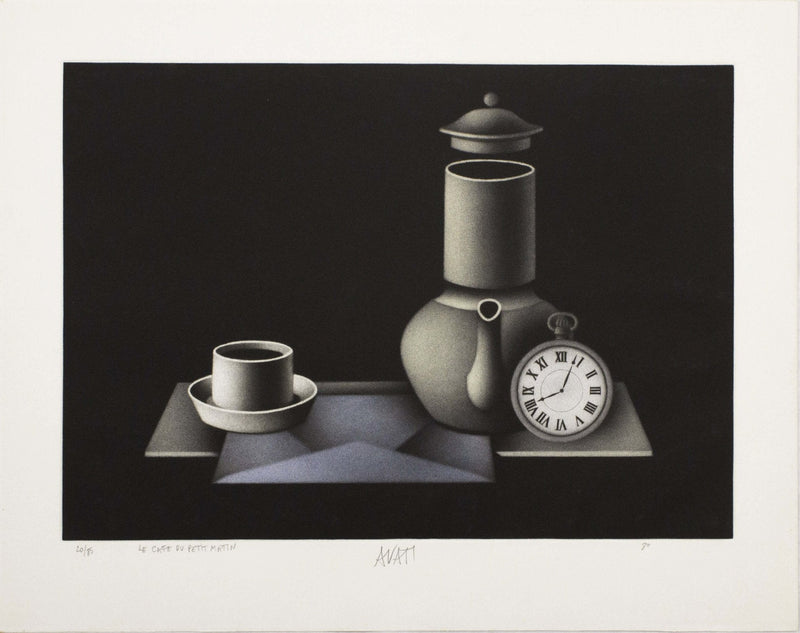

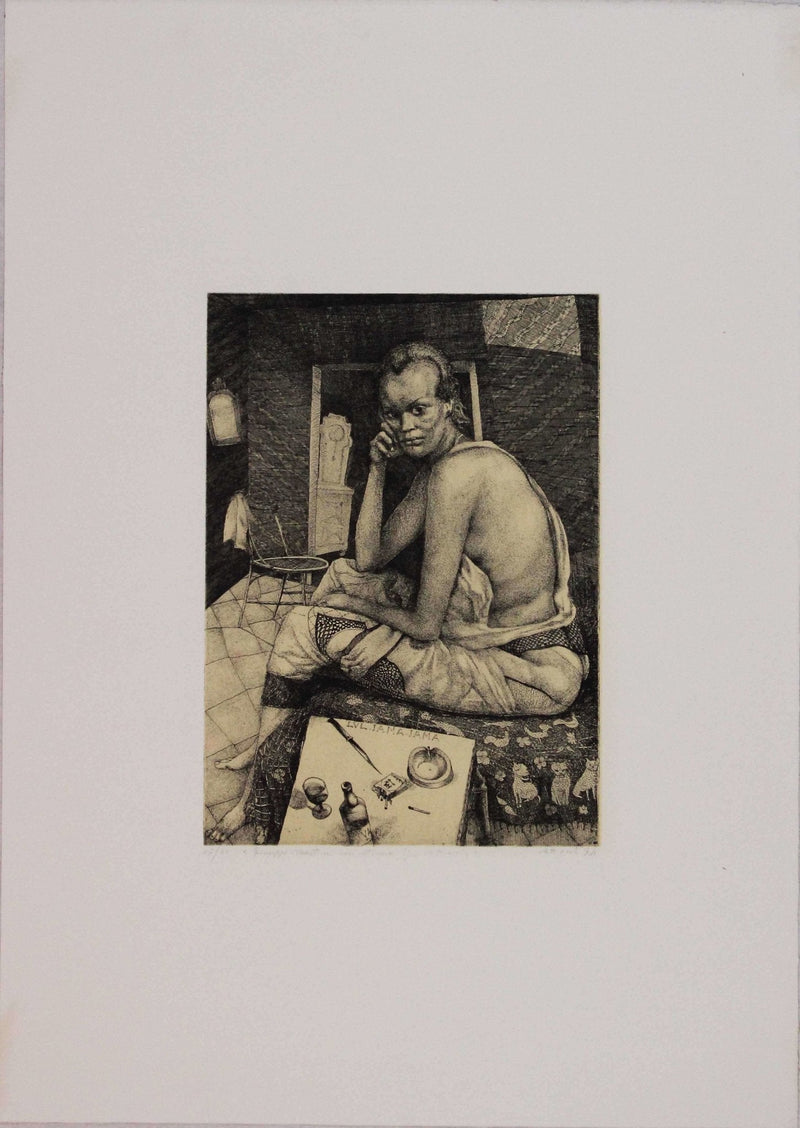

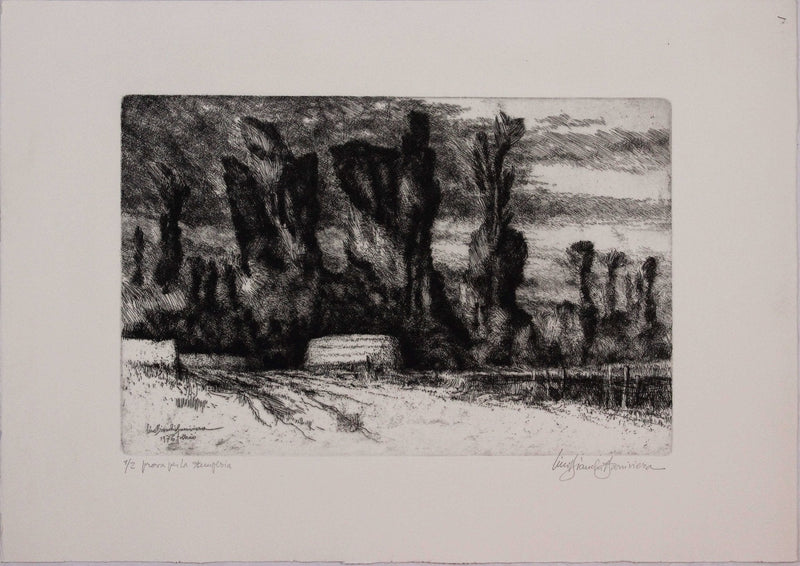
EXPLORING ARTISTIC TECHNIQUES
What is etching?
Etching is an intaglio printmaking technique in which an image is transferred to paper from a metal plate worked with a mordant.
The artist coats a plate, usually copper or zinc, with a protective ground and draws into it with an etching needle. The lines expose the metal underneath. A mordant then bites grooves into the exposed surface.
During printing, these grooves hold the ink, which the pressure of an intaglio press transfers to the paper.
Etching offers a remarkable range of marks, from hairline strokes to deep, intense lines. By biting the plate in stages, the artist can vary the strength of the drawing and create images rich in contrasts and nuances.
Used for centuries by some of the most important figures in art history, etching continues to play a significant role in modern and contemporary original printmaking.
Origins — How and when etching began
Etching developed as an artistic technique in the late fifteenth and early sixteenth centuries, drawing on methods already used to work and decorate metals.
Craftspeople were familiar with using mordants to cut into metal surfaces, particularly those who decorated arms and armour.
The move from decorative engraving to printing on paper was a turning point in the history of printmaking. Artists realised that a metal plate bitten with a mordant could be inked and used to produce multiple impressions of the same image.
Compared with burin engraving, which requires cutting directly into the metal with a sharp tool, etching gave artists more freedom to draw. The needle that removed the protective ground could move almost as naturally as a pen.
Daniel Hopfer was among the earliest artists to experiment with the process. Leading figures of the Renaissance and Mannerism subsequently took it up.
In the seventeenth century, Rembrandt achieved remarkable results by continually exploring line, light and tonal variation. His etchings show how the technique became an expressive medium in its own right, capable of conveying atmosphere, emotion and psychological depth.
In the eighteenth century, Giovanni Battista Piranesi used etching for celebrated views and architectural compositions. Francisco Goya explored its expressive possibilities in powerful print series, often combining it with aquatint.
Numerous artists continued to practise etching in the nineteenth and twentieth centuries, adapting its visual language to their own sensibilities.
Etching has remained one of the fundamental techniques of original printmaking because of the close relationship between the artist’s gesture, the working of the plate and the quality of the impression.
The process — From the etched plate to the print
An original etching begins with the preparation of a metal plate, usually copper or zinc, which is carefully cleaned and polished.
The surface is coated with a protective ground that resists the mordant. Once dry, this coating forms the layer into which the artist can draw.
Using a needle, the artist removes the ground along the lines of the composition, exposing the metal underneath. At this stage, the needle’s main purpose is to uncover the areas the mordant will bite.
The plate is immersed in a mordant bath or treated with a solution that acts selectively on the exposed metal.
The mordant gradually bites grooves corresponding to the drawing. Their depth depends on factors including the metal, the concentration of the solution and the length of exposure.
The artist can interrupt the process, protect selected areas and bite the plate again. This produces lines of varying intensity and allows a more complex composition to develop.
Once the plate has been etched, the protective ground is removed and the plate is prepared for printing.
Intaglio ink is spread over the plate and worked into the grooves. The surface is then wiped to remove excess ink from the areas that are meant to remain clear.
A sheet of paper, usually dampened to make it more pliable, is laid over the plate and passed through an intaglio press.
Under the pressure of the press, the paper is pushed into the grooves, where it picks up the ink and takes the etched image.
The process can be repeated to produce multiple impressions of the same composition.
Before printing the final edition, the artist can pull proofs, assess the results and work on the plate again.
Etching can also be combined with other intaglio techniques, including aquatint, drypoint and burin engraving, expanding the expressive possibilities of the image.
Each etching takes its particular character from the interplay of the artist’s drawing, the action of the mordant and the printing process.
Characteristics — What distinguishes an original etching
The defining characteristic of etching is the quality of the etched line. By letting the mordant act on the metal plate, the artist can create lines of varying intensity, build complex textures and modulate the relationship between light and shade.
In burin engraving, a cutting tool makes the groove directly. In etching, the depth of the groove comes primarily from the chemical action of the mordant.
This gives the artist greater spontaneity and the freedom of movement associated with drawing in pen.
The expressive possibilities are wide. An etching can consist of a few spare marks or a dense network of lines that conveys complex surfaces, volumes and atmospheres.
Artists use the technique for figurative images, landscapes, portraits, abstract compositions and independent explorations of line.
Intaglio prints often show a plate mark, a slight rectangular impression or indentation made by the pressure of the press. It can be a useful clue when examining a print, though it alone cannot establish authenticity.
An original etching generally belongs to an edition of multiple impressions printed from the same plate.
The artist may sign and number the impressions. A number such as 25/100 conventionally identifies an impression in an edition of one hundred numbered copies. It does not necessarily indicate the order in which it was printed.
An edition may also have artist’s proofs, marked A.P. or P.A., and state proofs made at different stages of the plate’s development.
The signature, numbering and documentation help identify the work and should be considered alongside provenance, the characteristics of the impression and information about the edition.
Paper quality, the strength of the inking and condition also affect how an individual impression looks and is assessed.
An original etching is printed from the etched plate itself. A photographic reproduction of an etching is made by a separate process.
The direct relationship between plate, ink and paper gives etching a material richness that is often best appreciated up close.
Etching remains important to collectors of modern and contemporary prints because it combines technical precision, expressive depth and freedom of line.
Art in interiors
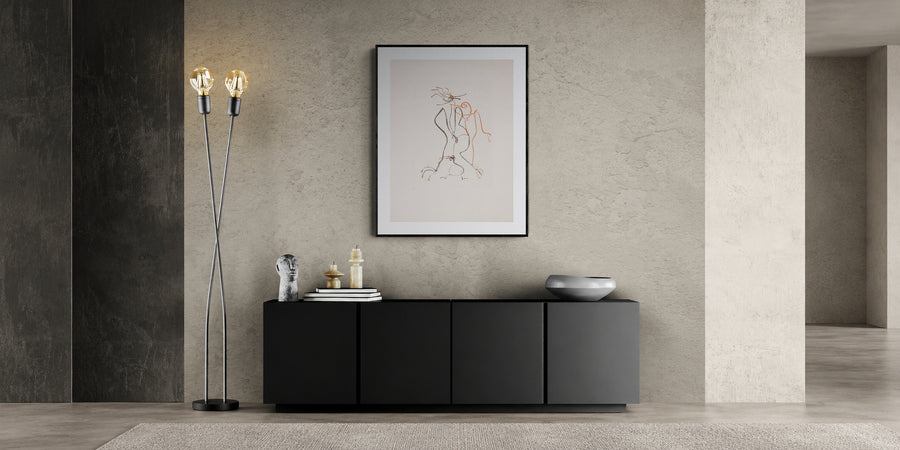
An etching, a thousand possibilities.
At home or in the office, the lines and tonal nuances of etching bring character to your space.


FREQUENTLY ASKED QUESTIONS
All about etching
Clear, straightforward answers to common questions.
What is the difference between etching and burin engraving?
In etching, a mordant bites the exposed lines into the plate. In burin engraving, the printmaker cuts directly into the metal with a sharp tool.
How can you identify an original etching?
The plate mark and quality of the line offer clues. To identify an impression, also check its provenance, edition details and available documentation.
What is the difference between etching and aquatint?
Etching lends itself to line work, while aquatint produces areas of tone and gradations. Both techniques can appear in the same print.
What does 25/100 mean?
It identifies the impression numbered 25 in an edition of 100 numbered copies. The number may differ from the order of printing.
How should you store and frame an etching?
Keep the paper away from direct light and moisture. For framing, use pH-neutral conservation materials and leave a space between the paper and the glazing.
Explore other art techniques
 Aquatint
The nuances of intaglio
 Lithography
Freedom of line
 Screen printing
Colour takes shape
 Linocut
The strength of shapes
 Woodcut
The line cut into wood