
Painter
Domenico D'Oora
United Kingdom, 1953
Stay up to date with this artist
Leave your email to receive updates on newly available artworks and news about this artist.
Artworks by Domenico D'Oora
1 artwork
Biography of Domenico D'Oora
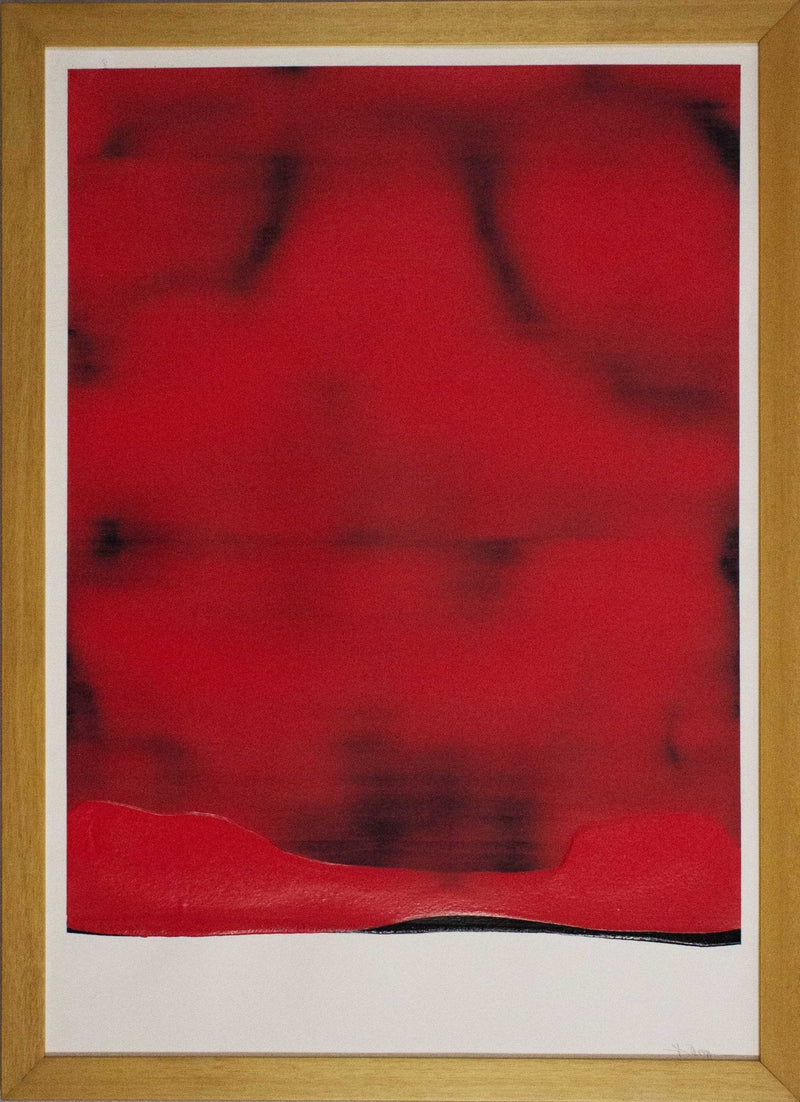
The painting of Domenico D’Oora invites us to observe what, at first glance, seems almost not to happen: a surface of uniform color, a barely perceptible change in light, the profile of a support that interrupts the picture’s conventional geometry. Behind the apparent simplicity of his artworks lies an exploration of the relationship between color, material, and space, in which the viewer’s experience becomes an…
Read the full biographyClose the biography
The painting of Domenico D’Oora invites us to observe what, at first glance, seems almost not to happen: a surface of uniform color, a barely perceptible change in light, the profile of a support that interrupts the picture’s conventional geometry. Behind the apparent simplicity of his artworks lies an exploration of the relationship between color, material, and space, in which the viewer’s experience becomes an integral part of the artwork.
Origins and Artistic Training
Born in London in 1953, D’Oora belongs to the generation that inherited postwar abstraction, questioning what painting could still express once it had abandoned the need to depict figures and landscapes. Alongside his artistic practice, he has taught and pursued theoretical reflection, maintaining a consistent interest in the material construction of the artwork. His exhibition activity, developed through solo and group shows in Italy and abroad, accompanies a path in which changes in language never erase the centrality of the painted surface.
From Geometry to Painting as Object
In the artworks associated with geometric abstraction, D’Oora organizes shapes and fields of color according to relationships of balance and tension, already exploring the boundary between image and structure. A significant example is Beyond (1989), held in the collection of MA*GA in Gallarate: the juxtaposition of painted elements and metal components introduces an object-based dimension that cannot be reduced to composition on canvas alone. L’aluminum, the color contrasts, and the arrangement of shapes combine to construct a space in which painting engages with its own physical presence.
This attention to the support deepens in his later oeuvre. Wood, plywood panels, MDF, and shaped PVC are not merely bases on which to apply color, but contribute directly to defining the artwork. Edges, thicknesses, and curves become expressive elements, while the painted surface can extend beyond the front plane, engaging the surrounding space. The boundary between painting and sculpture thus becomes less distinct: the picture remains a chromatic experience, but takes on the character of an autonomous object.
Monochrome, material, and light
Monochrome occupies a central place in the artist’s mature practice, without ever being reduced to a simple, uniform field of color. Beneath the apparent continuity of the color, layers, reliefs, slight irregularities, and tonal shifts emerge only through close observation. As viewers change position, they can see a surface that initially seems solid come alive with reflections and shadows; as the lighting changes, so do the relationships between its parts.
In these artworks, light is not an external element that merely makes the painting visible: it gradually reveals its structure. Painting calls for time, because its meaning does not coincide with the immediate recognition of a subject. Rather, the experience of color, perceived as both material and presence in space, lies at the heart of the artist’s research. The shaped and ovoid forms found in the more recent artwork also expand this exploration through profiles and surfaces that respond differently to their surroundings.
Recent research and techniques
The exhibition Painting Never Lies, presented in 2025 at AD Dal Pozzo Galleria d’Arte in Padua, documented D’Oora’s interest in three-dimensional supports, layered surfaces, and tones created through complex relationships between pigment and material. A 2023 Untitled, made with acrylic polymer on shaped supports of MDF, particleboard, wood, and PVC, demonstrates how inseparable the choice of materials is from the visual result: color is not simply applied to a form, but accompanies and transforms its perception.
His documented output mainly comprises painting, mixed media, and artworks on rigid supports. For this reason, it is appropriate to distinguish these artworks from original prints: the presence of an artwork on paper alone does not justify attributing a specific printmaking technique to it. Overall, D’Oora’s career shows how abstract painting can continue to renew itself through seemingly elementary questions—surface, color, light, and thickness—transforming them into a complex and changing visual experience.
Do you like Domenico D'Oora?
Leave your email to receive updates on newly available artworks and news about this artist.
ART IN YOUR SPACES
The art of Domenico D'Oora in your spaces
Choosing an artwork by Domenico D'Oora means making room for an individual artistic language. The artworks gathered here suggest combinations and perspectives to bring into your own surroundings, letting art guide your gaze.

DISCOVER THE ARTIST
Frequently asked questions
Answers to common questions about Domenico D'Oora, the artist’s life, artworks and value on the art market.
Who is Domenico D'Oora?
Domenico D'Oora is a contemporary Italian artist whose research focuses on painting as an object and on the relationship between surface, matter and light. To correctly place a single artwork it is advisable to check its dating, technique and documentation.
What characterizes the monochrome artworks of Domenico D'Oora?
Color tends to become the protagonist of the artwork: it not only serves to represent a subject, but defines a physical surface that changes perception in relation to the light and the point of observation.
Are Domenico D'Oora's artworks paintings or sculptures?
Some artworks question this distinction, because the pictorial surface takes on a material and three-dimensional presence. However, the classification depends on the specific artwork and the materials actually used.
How does the appearance of an artwork by D'Oora change with light?
Lighting can highlight relief, texture and surface variations. Before choosing the location, it is best to observe the artwork with diffused and lateral light, avoiding excessive reflections.
How do you evaluate an artwork by Domenico D'Oora?
Authenticity, provenance, dimensions, dating, technique, state of conservation and comparisons with documented artworks count. It is not correct to attribute a single price to all production.
Discover more artists
Explore more leading figures in modern and contemporary art


