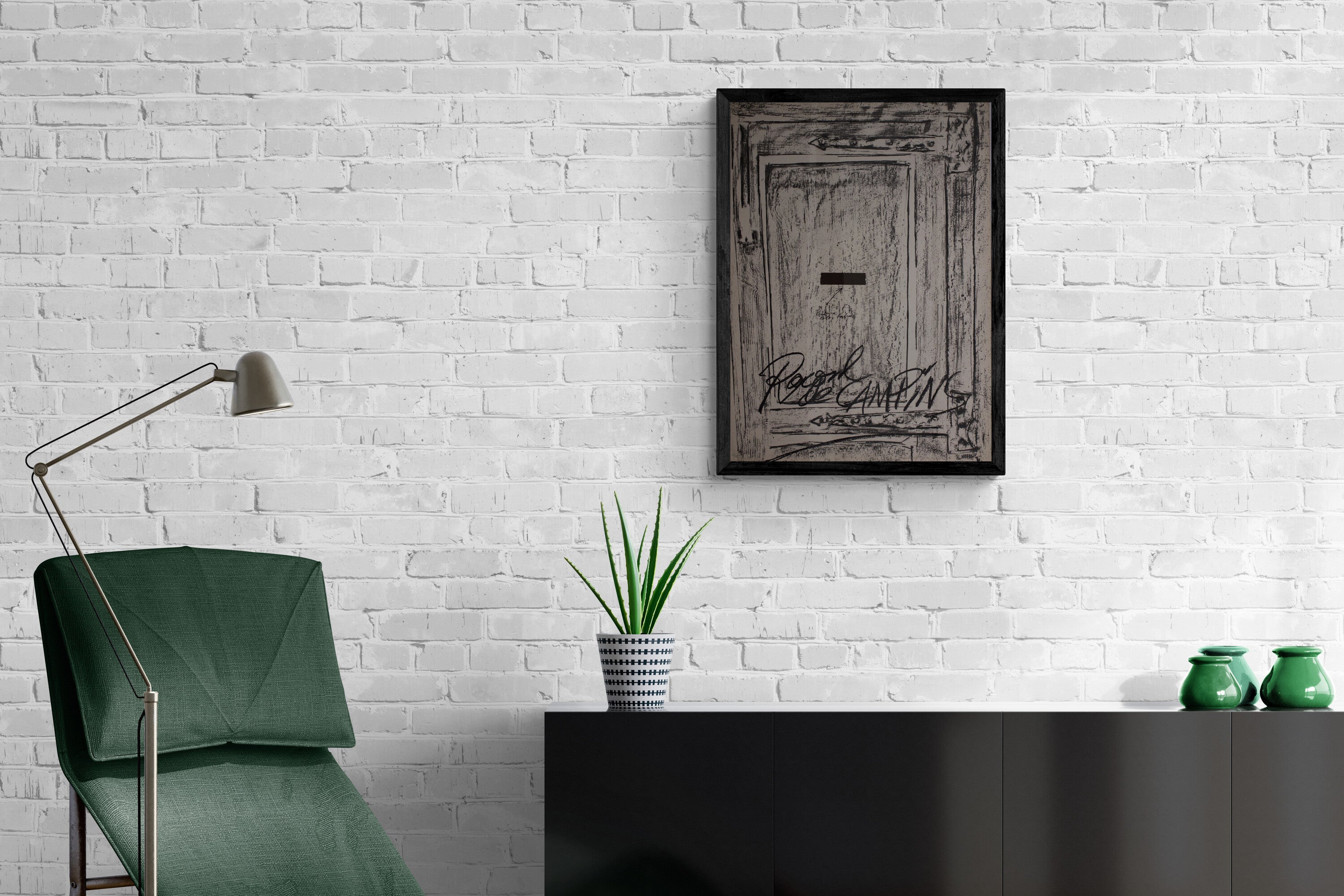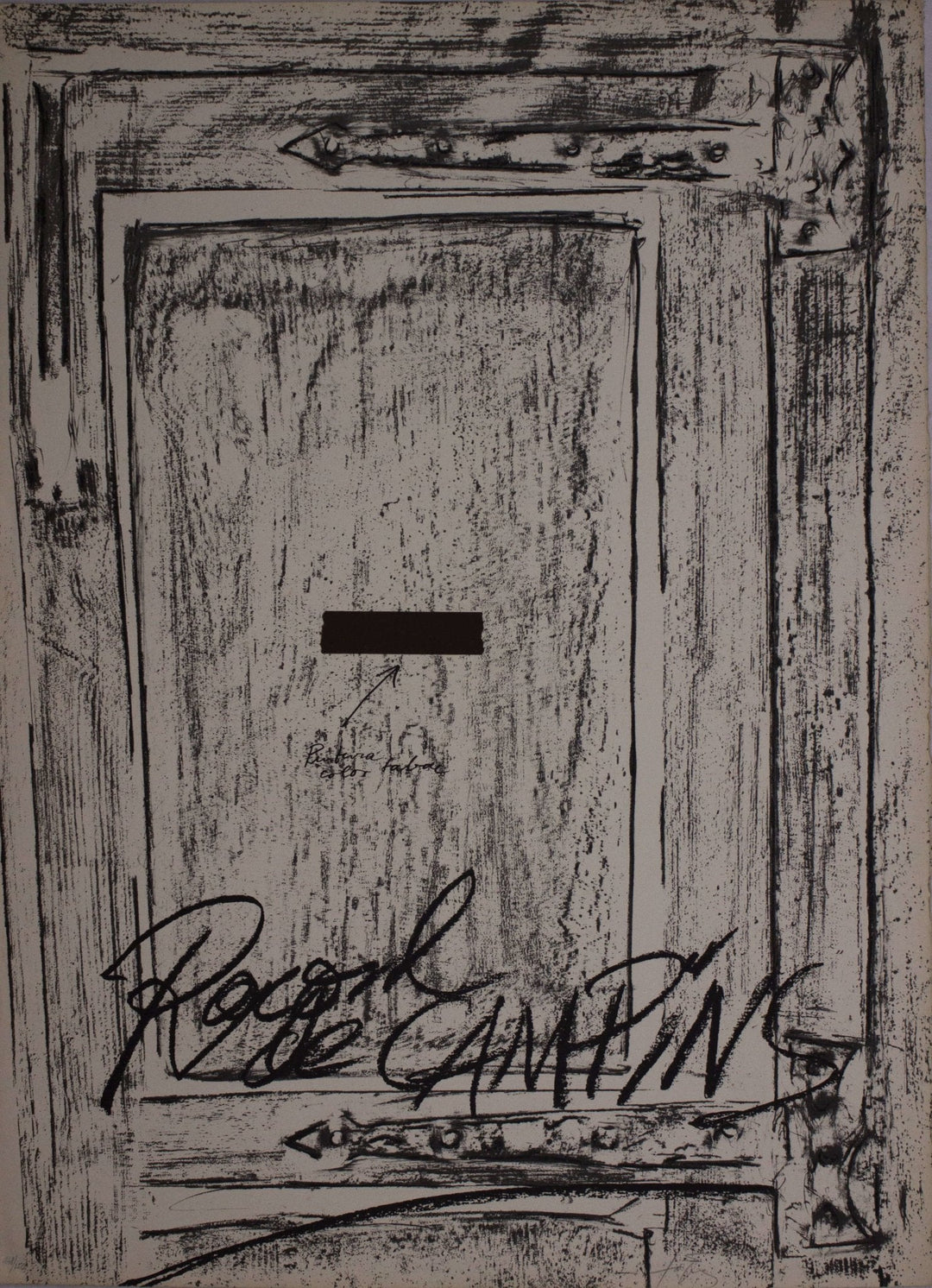


In the European art of the second half of the twentieth century, Antoni Tàpies (Barcelona, 1923–2012) gave the painted surface an almost physical presence, transforming dust, sand, marks and everyday objects into tools for reflecting on life. His work does not merely ask viewers to recognize an image: it invites them to observe the traces left by time, the weight of materials and the meaning of what we usually consider poor or insignificant. A painter, printmaker, sculptor and writer on art, Tàpies built a visual language in which matter becomes memory, symbol and experience all at once.
From postwar Barcelona to “Dau al Set”
He was largely self-taught. During a long period of convalescence in his youth, he devoted himself intensely to reading, drawing and painting; later, he abandoned his law studies to pursue his artistic vocation. Postwar Barcelona, marked by Franco’s dictatorship, was a difficult environment but one animated by lively cultural exploration. In 1948, Tàpies took part in founding Dau al Set, a group that brought together artists and intellectuals interested in Surrealism, poetry and freedom of the imagination. His early paintings reveal affinities with Joan Miró, Paul Klee and dreamlike imagery, but already show a personal interest in enigmatic signs and the texture of surfaces.
International recognition came in the 1950s, when his work moved closer to Informalism and its focus on material. Tàpies did not simply intend to replace the subject with a thicker paste: he wanted to question the very idea of the painting as an illusory window. The canvas became a wall, a terrain, a fragment of reality on which to read engravings, abrasions, deposits and erasures. The colors, often focused on grays, earth tones, blacks and whites, also contributed to this sense of density and contemplation.
Walls, crosses, and everyday objects
His compositions often feature crosses, letters, numbers, imprints, hands, and graffiti-like marks. The cross can be read as a geometric form, a spatial indication, or a spiritual symbol, without being limited to a single meaning. At times, the letter appears as a fragment of writing; at others, as a purely visual presence. The surface bears the marks of human passage, almost like a wall on which different generations have left their testimonies.
The choice of unconventional materials — sand, marble dust, fabric, ropes, cardboard, and everyday objects — did not stem from a taste for provocation for its own sake. Tàpies valued ordinary reality and its capacity to raise philosophical questions. In this respect, his work engages with Eastern thought, with an attentiveness to emptiness, and with a conception of art as an exercise in awareness. The Catalan political and cultural dimension emerges in certain signs and references, but it coexists with broader questions about the fragility of the body, suffering, and transformation.
Original printmaking and experimentation with the surface
Printmaking on paper holds an important place in his work. Lithographs, etchings, aquatints, screenprints, and artists’ books allowed him to experiment with the relationship between gesture, matrix, and impression. In lithography, the mark is developed on a surface suited to planographic printing; in etching, a metal plate is engraved through mordanting; in screenprint, ink passes through the open areas of a prepared mesh. These processes can be combined with textural interventions and mixed techniques, but the exact description must be verified for each work.
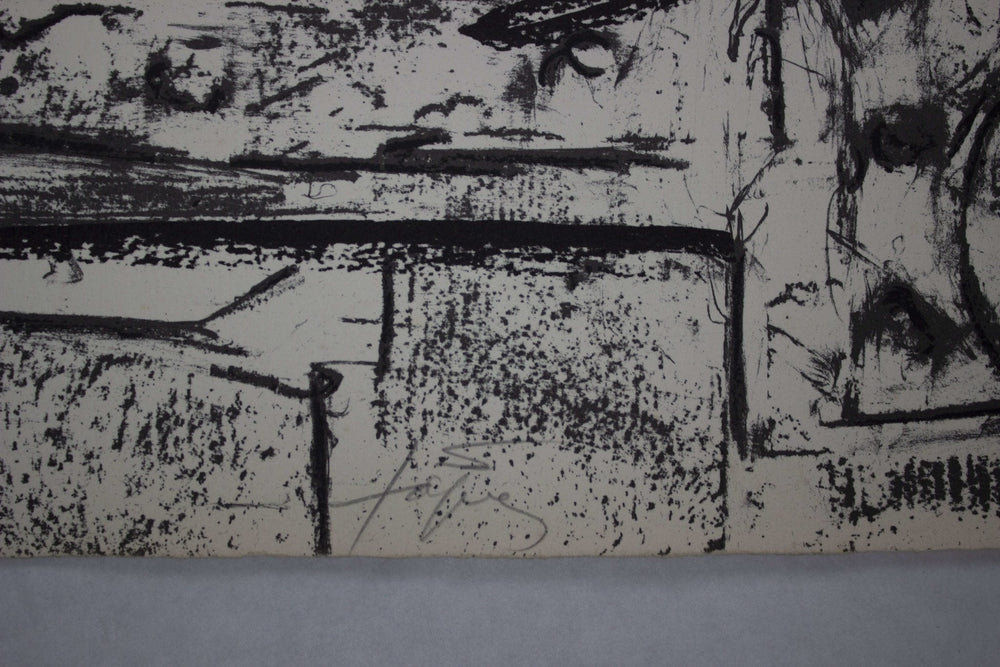
Even when working in editions, Tàpies maintains the idea of the surface as a place of layering. The sheet is not a simple neutral support: it can become a symbolic wall, crossed by imprints and marks. For collectors, it is therefore important to distinguish an original print from a reproduction by checking the technique, publisher, edition size, signature, and bibliographic references. His legacy lies in showing that the humblest material can open up a reflection of surprising depth.
Ti piace Antoni Tapies?
Per ricevere gli ultimi aggiornamenti di questo artista, lascia la tua email qui sotto:Il tuo indirizzo email è stato aggiunto alla lista dell'artista.