
Painter and sculptor
Tommaso Cascella
Italy, 1951
Stay up to date with this artist
Leave your email to receive updates on newly available artworks and news about this artist.
Artworks by Tommaso Cascella
3 artworks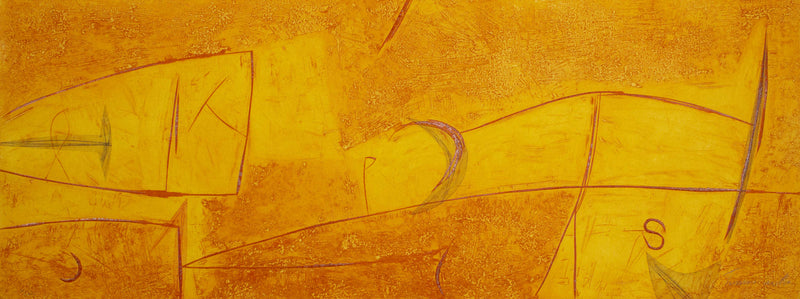

Biography of Tommaso Cascella
Tommaso Cascella (Rome, 1951) is an Italian painter, sculptor, and art publisher from a family that has played an important role in figurative culture for generations. The son of the sculptor Pietro Cascella and the painter Annamaria Cesarini Sforza, he has developed a personal language in which painting, sculpture, material, and mark continually interact. His compositions are characterized by vivid colors, symbols, and structures reminiscent…
Read the full biographyClose the biography
Tommaso Cascella (Rome, 1951) is an Italian painter, sculptor, and art publisher from a family that has played an important role in figurative culture for generations. The son of the sculptor Pietro Cascella and the painter Annamaria Cesarini Sforza, he has developed a personal language in which painting, sculpture, material, and mark continually interact. His compositions are characterized by vivid colors, symbols, and structures reminiscent of imaginary alphabets. Alongside paintings, he creates bronze sculptures, ceramics, graphic artworks, and artist’s books. His relationship with poetry and publishing is fundamental to his artistic practice, as evidenced by the founding of the magazine Cervo Volante and his collaborations with leading contemporary poets.
The Cascella family tradition
Tommaso Cascella was born in Rome in 1951. He is the son of the sculptor Pietro Cascella and the painter Annamaria Cesarini Sforza. He belongs to a family with an established tradition in painting, sculpture, ceramics, and graphic arts. L’family environment fostered an early familiarity with artistic materials and tools. His training developed through direct experience and engagement with different forms of expression.
Studies and early experiences
After completing high school, Cascella attended the School of Architecture for several years. At the same time, he took an interest in painting, sculpture, and art publishing. L’interest in architecture contributed to the construction of his compositions. Forms are arranged as complex structures in which surface and volume maintain a continuous relationship.
L’art publishing
Before establishing himself through solo exhibitions, Cascella pursued an intense career in art publishing. He founded a print shop and a publishing house, collaborating with artists and poets. The book is considered a space where words and images can interact. Printing is not merely a tool for reproducing artworks. It becomes a medium for visual experimentation.
The Cervo Volante magazine
In 1981, Cascella founded Cervo Volante, a magazine devoted to art and poetry. The first issues were edited by Adriano Spatola. Edoardo Sanguineti and Achille Bonito Oliva later joined the editorial team. Published until 1984, the magazine provided a space for dialogue between different forms of expression. The project attests to Cascella's interest in the relationship between the visual arts and literature.
The first solo exhibition
In 1985, Cascella held his first solo exhibition at the Luigi De Ambrogi Gallery in Milan. L’exhibition marked the beginning of an intense public career. During the same period, he showed artworks in other Italian galleries, developing collaborations with poets and writers. His oeuvre is distinguished by the freedom of its mark-making and the use of symbols.
Painting and structure
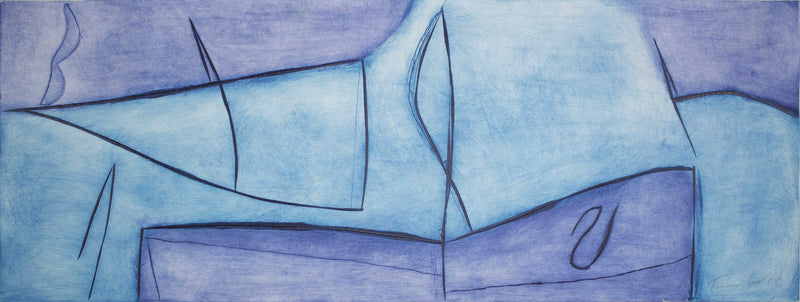
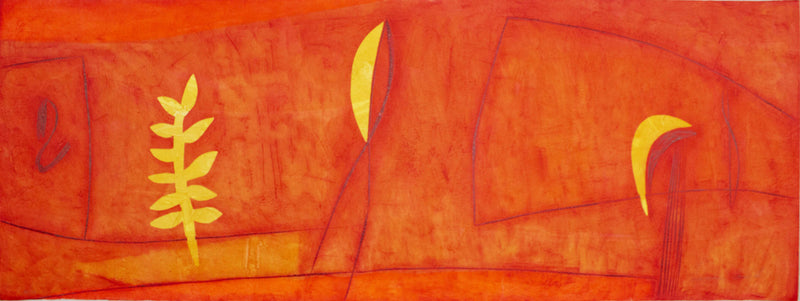
Cascella's painting shows particular attention to structural dimensions. Compositions are often built from intense fields of color. Signs and forms overlap. The surface may appear organized like an imaginary architecture. Color serves more than a decorative function. It helps define the composition's rhythm and tension.
L's symbolic alphabet
One of the most distinctive aspects of his oeuvre is the presence of signs and symbols. The forms may resemble letters from an unknown alphabet. These elements do not necessarily correspond to precise linguistic meanings. They help build a personal visual universe. Painting becomes a space in which signs, materials, and color suggest relationships and narratives.
The relationship with poetry
Poetry holds a fundamental place in Cascella's artistic research. Many titles of the artworks derive from literary texts. His relationship with contemporary authors helps define a language in which the image does not merely illustrate the word. Painting and poetry are considered expressive forms capable of engaging with one another without losing their autonomy.
Bronze sculpture
Alongside painting, Cascella develops an important body of bronze sculptures. The three-dimensional forms retain clear connections with the marks found in the paintings. The surfaces may be traversed by symbolic elements. Sculpture makes it possible to transform structures born in the painterly imagination into volume. The relationship between the two disciplines is one of the fundamental aspects of his career.
Ceramics
Cascella also created numerous ceramic artworks. The material made it possible to combine color, volume, and surface. The family tradition of applied arts thus found a new interpretation. The ceramic artworks retain the symbolic and chromatic character of his oeuvre.
Bomarzo and the studio
In 1987, Cascella restored a historic building in Bomarzo, in the province of Viterbo, and converted it into a studio. The site became an important center for his oeuvre. L’here, the artist developed pictorial and sculptural artworks, while maintaining ties with galleries and institutions in Italy and abroad.
Graphic artworks and artist’s books
His oeuvre includes etchings, original prints, and artist’s books. L’editorial experience allows Cascella to explore the possibilities of printmaking in greater depth. The graphic mark retains a strong autonomy. The relationship between image and word remains central. Artist’s books bring together visual research and a passion for literature.
Exhibitions and awards
In 1991, Cascella presented a sculpture exhibition at the Mara Coccia Gallery in Rome. He took part in the Gubbio Sculpture Biennale in 1992 and the Rome Quadriennale in 1996. In 1995, he became a member of the National Academy of San Luca. In 2011, he took part in the Venice Biennale with the sculpture Upside-Down Sky. His oeuvre has been presented in numerous exhibitions in Italy and abroad.
L’s artistic identity
Tommaso Cascella developed an artistic practice in which painting and sculpture influence one another. The mark becomes a form of visual writing. The material contributes to the creation of symbolic compositions. L’s interest in poetry and artist’s books broadens the meaning of his oeuvre. His career represents an original continuation of the family’s artistic tradition.
Do you like Tommaso Cascella?
Leave your email to receive updates on newly available artworks and news about this artist.
Tommaso Cascella
Art that lives in your spaces
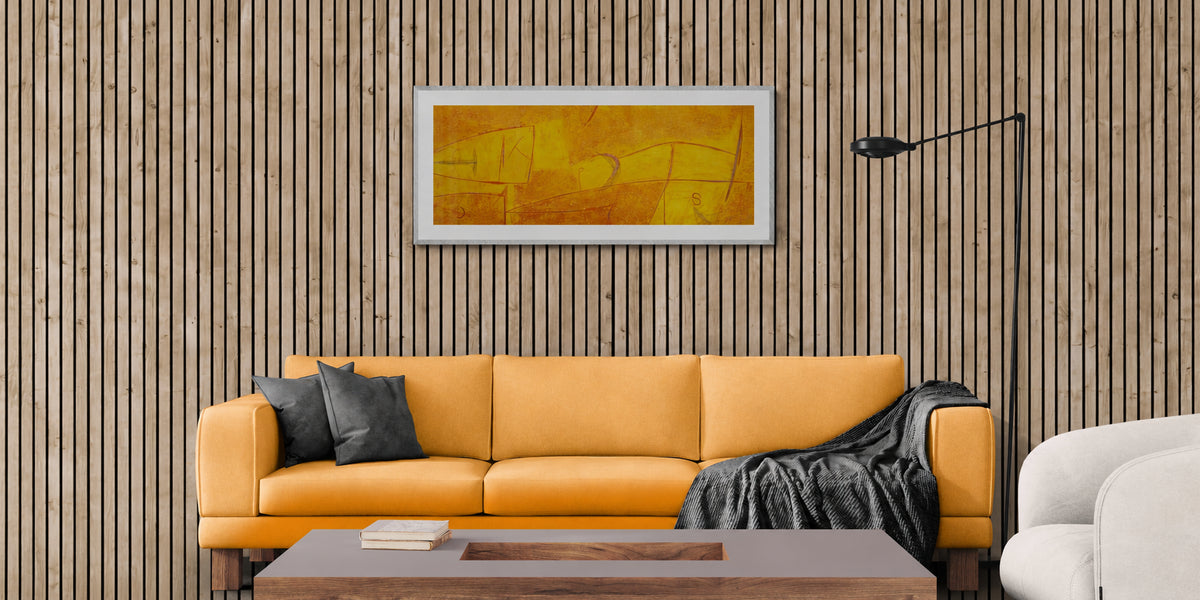
Choosing an artwork by Tommaso Cascella means making room for an individual artistic language. The artworks gathered here suggest combinations and perspectives to bring into your own surroundings, letting art guide your gaze.
DISCOVER THE ARTIST
Frequently asked questions
Answers to common questions about Tommaso Cascella, the artist’s life, artworks and value on the art market.
Who is Tommaso Cascella?
Tommaso Cascella is an Italian artist belonging to the well-known Cascella family of artists. His practice spans painting and sculpture, with a language that combines signs, geometric forms and symbolic associations. It is important to distinguish him from the other members of the family, as techniques, periods and market values are not interchangeable.
What characterises Tommaso Cascella’s artworks?
His compositions often combine geometric structures, elements recalling imaginary alphabets and an expressive use of colour. The forms may suggest architecture, objects or symbols without becoming literal representations. To interpret an artwork, it is useful to observe the relationship between signs, surfaces and materials.
Does Tommaso Cascella also make sculptures?
Yes. Alongside painting, Cascella has developed a sculptural practice in which the sign becomes volume. In his sculptures, the forms may appear as symbolic constructions or assemblages. The material, dimensions and any edition size must be checked in the description of the individual artwork.
How can an artwork by Tommaso Cascella be distinguished from artworks by the other Cascellas?
The surname alone is not enough: the artist’s first name, signature, dating, technique and provenance must be checked. The family includes artists from different generations with different visual languages. A reliable attribution is based on documentation and comparison with recognised artworks, rather than stylistic resemblance alone.
What determines the value of an artwork by Tommaso Cascella?
Authenticity, technique, dimensions, period, condition and provenance all matter. A unique sculpture, a painting and an editioned print are not directly comparable. Exhibitions and bibliography may also affect collecting interest; a valuation requires information relating to the specific example.