

ARTISTIC TECHNIQUES
Soft-ground etching
Soft marks, textured surfaces.
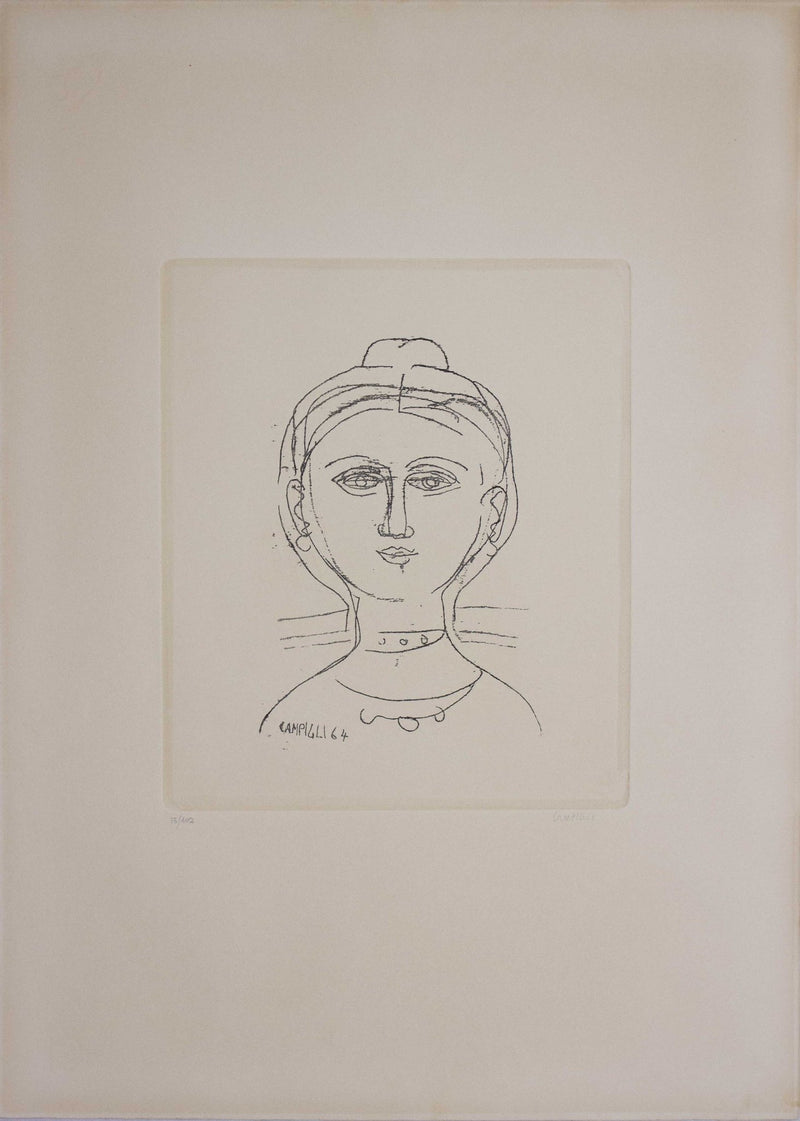
An intaglio technique that transfers the grain of a drawing and impressions of fabrics, leaves and other materials to the plate.
OUR SOFT-GROUND ETCHINGS
Works to discover, choose and live with every day.

KNOWING ARTISTIC TECHNIQUES
What is soft-ground etching?
Soft-ground etching is an indirect intaglio technique belonging to the etching family, which allows for prints characterized by soft lines, textures, and particular tactile effects. It is also known by the French term vernis mou.
The process uses a metal plate covered with a protective varnish that, unlike that used in traditional etching, remains relatively soft and sensitive to pressure.
The artist can place a sheet of paper on the surface and draw on it with a pencil. The pressure exerted causes the varnish to adhere to the back of the sheet, which, once lifted, removes part of the protection from the plate.
The exposed areas of metal are subsequently etched using a mordant solution.
The technique allows for lines that can resemble those of a pencil, preserving variations in pressure, irregularities, and the expressive qualities of drawing.
It can also be used to transfer impressions of fabrics, leaves, and other materials, expanding the creative possibilities of intaglio printing.
Origins — How and when soft-ground etching was born
Soft-ground etching developed within the scope of European intaglio experimentation between the 17th and 18th centuries, when engravers and printers sought processes capable of expanding the expressive possibilities of etching.
Traditional etching already allowed for considerable freedom in drawing, as the artist could trace lines on the protective varnish without having to engrave the metal directly.
Soft-ground etching, however, introduced an additional possibility: to transfer onto the plate not only the path of a tool, but also the characteristics of the pressure exerted during drawing.
The use of a softer and more adhesive varnish indeed allowed for marks close to those of a pencil, expanding the range of available graphic qualities.
During the 18th century, the technique was progressively perfected, especially in the production of prints that sought to reproduce the appearance of original drawings.
French engravers interested in reproducing the qualities of pencil drawing and traditional graphic techniques played an important role in the development of related processes.
During the 19th century, soft-ground etching found application in graphic art, often in combination with etching and aquatint.
The ability to obtain soft marks and tonal variations made it particularly interesting for artists who wished to preserve the spontaneity of drawing in print.
Among the authors who contributed to enhancing its expressive possibilities was Félicien Rops, a Belgian artist active in the second half of the 19th century, who used several engraving processes in his graphic research.
In the field of French engraving, the technique was also experimented with to obtain freer and less rigidly linear effects compared to those of traditional etching.
In the 20th century, soft-ground etching continued to be practiced by artists and engravers interested in the relationship between drawing, surface, and print.
Its ability to transfer impressions and textures encouraged its use also in experimental compositions, in which different materials could become tools for building the image.
The technique thus fits into the long history of intaglio innovations, through which artists have sought to expand the vocabulary of the engraved mark.
Even today, soft-ground etching is used both independently and in combination with other techniques, preserving a character particularly close to the sensitivity of drawing.
How it is made — From soft varnish to print
The creation of a soft-ground etching begins with the preparation of a metal plate, generally made of copper or zinc, carefully cleaned and polished.
The surface is covered with a special protective varnish, formulated to remain relatively soft and adhesive even after application.
This characteristic distinguishes the process from traditional etching, in which the varnish is generally more resistant to contact and is removed using a metal tool.
To obtain a mark similar to that of a pencil, the artist places a sheet of paper on the plate, often characterized by a slightly rough surface.
The drawing is made directly on the sheet using a pencil or another suitable tool.
The pressure exerted during tracing causes the varnish to adhere to the back of the paper in the areas corresponding to the drawing.
When the sheet is lifted, part of the varnish remains attached to the paper and is therefore removed from the metal surface.
The plate thus presents a series of exposed areas that reproduce the characteristics of the traced mark.
The intensity of the pressure, the grain of the paper, and the consistency of the varnish can affect the result, producing continuous lines, broken strokes, and variations particularly close to those of pencil drawing.
Soft-ground etching can also be used to transfer impressions of different materials.
Fabrics, leaves, threads, and other surfaces are placed on the plate and subjected to pressure, causing the selective removal of the varnish according to their structure.
In this way, the artist can obtain textures and impressions that could hardly be reproduced through traditional linear engraving.
Once the preparation of the image is complete, the plate is subjected to the action of a mordant solution.
The mordant etches the metal in the exposed areas, creating grooves and cavities intended to hold the ink.
The duration of the bite and the characteristics of the solution affect the depth of the etching.
Once this phase is finished, the remaining varnish is removed and the matrix is prepared for printing.
Intaglio ink is distributed over the surface and worked into the etched parts.
Subsequently, the plate is cleaned, removing excess ink from the areas not intended for printing.
A properly dampened sheet of paper is placed on the matrix and passed through an intaglio press.
The pressure allows the paper to collect the ink held in the grooves, transferring the image.
Before the final edition, proof prints can be made to check the quality of the marks and impressions.
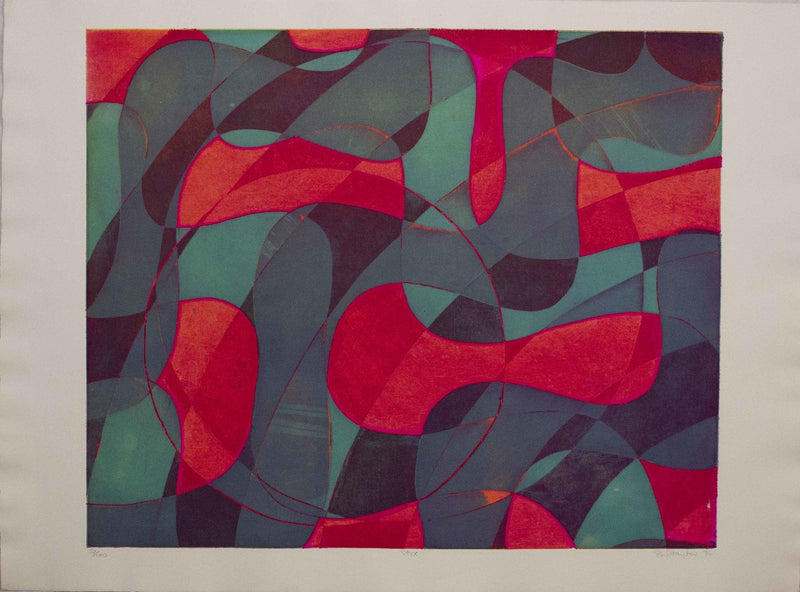
Soft-ground etching can also be combined with etching, aquatint, and other intaglio processes, creating compositions in which different graphic qualities coexist on the same surface.
The characteristics — What distinguishes a soft-ground etching
The most recognizable characteristic of soft-ground etching is the ability to preserve in print qualities close to those of pencil drawing.
The process indeed allows for the transfer of the variations in pressure exerted by the artist onto the matrix, producing soft, irregular marks characterized by a particular graphic sensitivity.
Unlike traditional etching, in which the drawing is generally traced directly on the varnish using a tool, soft-ground etching can use the pressure exerted through a sheet of paper.
This method allows for the creation of lines with a grainy structure, delicate strokes, and variations that resemble the behavior of graphite on a rough surface.
Another important characteristic is the ability to transfer impressions of different materials.
The texture of a fabric, the structure of a leaf, or the surface of an object can be used to create images in which the mark arises from the direct contact between matter and matrix.
The technique thus offers expressive possibilities that go beyond traditional drawing, allowing for the development of compositions based on textures, surfaces, and tactile relationships.
Soft-ground etching can be used for figurative images, landscapes, portraits, still lifes, and abstract compositions.
It is also particularly interesting when combined with other intaglio techniques.
Etching can add more defined lines, while aquatint allows for the introduction of tonal surfaces and chiaroscuro variations.
An original soft-ground etching is born through a process in which the image is conceived and created through the working of the matrix and subsequent printing.
It must therefore be distinguished from a photographic reproduction of a drawing made with a pencil or other tools.
As generally happens in original graphics, a soft-ground etching can belong to an edition composed of multiple copies.
In modern and contemporary editions, the copies can be signed and numbered by the artist.
A numbering such as 25/100 conventionally indicates a copy belonging to an edition of one hundred numbered copies, without necessarily identifying its chronological printing order.
Alongside the edition, artist proofs may be present, generally indicated with the initials P.A., and state proofs made during the working of the matrix.
The signature, numbering, provenance, and any documentation contribute to the identification of the work, but must be considered together with the technical characteristics of the print.
The quality of the paper, the intensity of the inking, and the state of preservation represent further important elements.
The presence of the plate mark can be consistent with the intaglio process, but does not by itself constitute a guarantee of authenticity.
Soft-ground etching continues to be appreciated for the particular relationship between drawing, pressure, and matter, offering artists a language in which the spontaneity of gesture unites with the complexity of the engraving process.
For the collector, it represents a refined form of original graphics, capable of preserving the sensitivity of drawing through the material qualities of intaglio printing.
Art in interiors
A soft-ground etching, a thousand possibilities.
The textures and delicate transitions of soft-ground etchings stand out in diffuse light and reward a closer look.


FREQUENTLY ASKED QUESTIONS
Everything about soft-ground etching
Simple and clear answers to the most common questions.
What is the difference between soft-ground etching and etching?
In soft-ground etching, pressure through the paper or contact with other materials removes part of the protection. In traditional etching, the mark is traced on the varnish with a tool.
Why does the mark resemble a pencil?
The pressure of the gesture and the grain of the sheet determine how the varnish detaches from the plate, transferring the irregularities typical of drawing.
What materials can be used to leave an impression?
Fabrics, leaves, and threads can leave their texture on the soft varnish.
How do you recognize an original soft-ground etching print?
The quality of the impression, the paper, the edition, and the provenance are considered. The signature and the plate mark should be evaluated together with the available documentation.
What does 25/100 mean?
It indicates numbered copy 25 of an edition of one hundred numbered copies. The numbering may follow an order different from the printing order.
Explore other art techniques
 Etching
The appeal of the etched line
 Aquatint
The nuances of intaglio
 Lithography
Freedom of line
 Screenprint
Colour takes shape
 Linocut
The strength of shapes
 Woodcut
The line cut into wood