
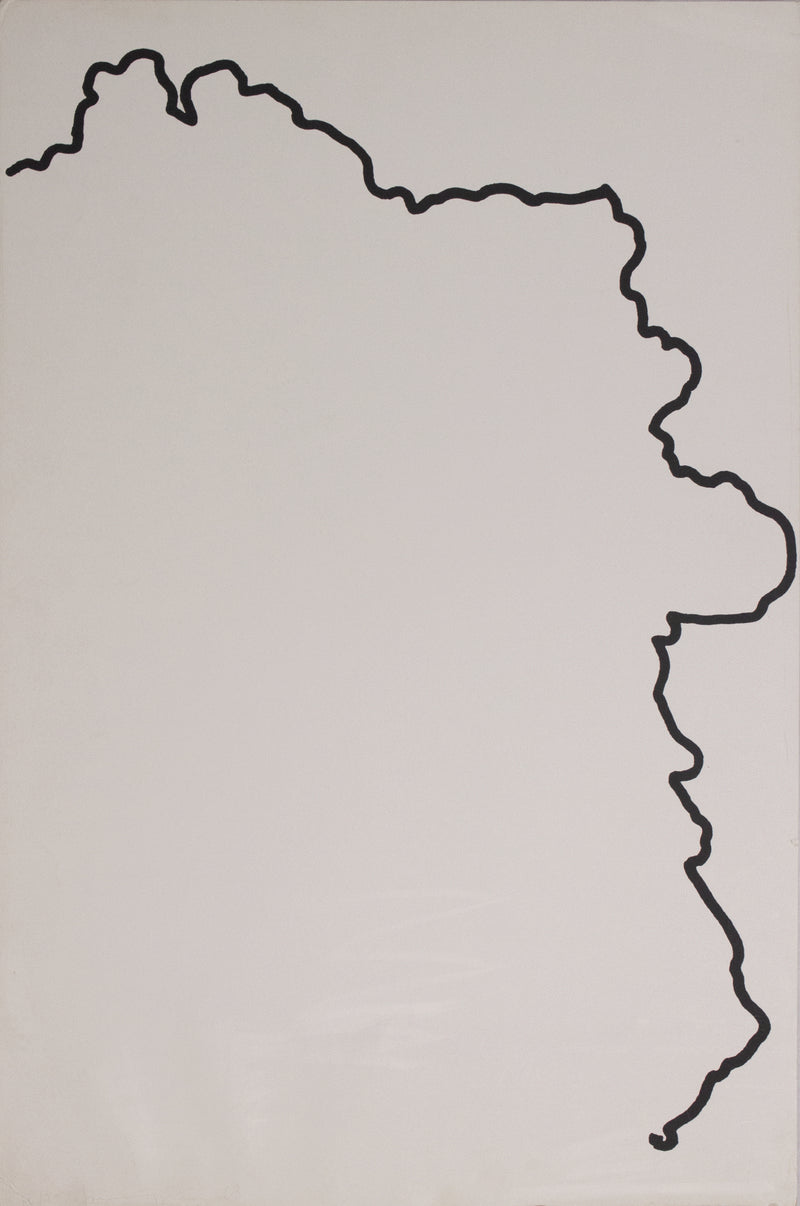
Painter and sculptor
Claudio Parmiggiani
Italy, 1943
Stay up to date with this artist
Leave your email to receive updates on newly available artworks and news about this artist.
Artworks by Claudio Parmiggiani
1 artwork

Biography of Claudio Parmiggiani
Claudio Parmiggiani (Luzzara, 1943) is among the most singular figures of contemporary Italian art. His oeuvre addresses themes that are difficult to represent directly - absence, memory, silence, loss - through objects and images of great evocative power. Books, statues, bells, dust, shadows and fragments are not simple symbols to decipher: they become presences capable of suggesting what is no longer seen. His research is…
Read the full biographyClose the biography
Claudio Parmiggiani (Luzzara, 1943) is among the most singular figures of contemporary Italian art. His oeuvre addresses themes that are difficult to represent directly - absence, memory, silence, loss - through objects and images of great evocative power. Books, statues, bells, dust, shadows and fragments are not simple symbols to decipher: they become presences capable of suggesting what is no longer seen. His research is close in sensitivity to some conceptual experiences, but maintains a profound relationship with poetry and the history of art.
The formation and language of absence
After studying at the Modena Art Institute, Parmiggiani came into contact with avant-garde literary and artistic circles. The dialogue with poetry, and in particular with a culture attentive to the power of images and words, contributed to defining a language far from simple illustration. Since the 1960s, the artist has been interested in objects not so much for their daily use, but for the traces of experience and time that they seem to preserve.
His oeuvre often stages a paradox: what is missing can be more intense than what remains. A subtracted shape, an imprint or a cavity can evoke a presence more effectively than a fully represented figure. This attitude arises from a reflection on the fate of images and their ability to survive the people, places and events that generated them.
Interest in poetry does not end with cultural proximity. In his oeuvre, objects often function as isolated words, capable of opening associations without forming an explicit story. A bell can call the sound even when it is silent; a closed book suggests content that we cannot read; a fragmentary statue refers to a body that is no longer whole. Meaning thus arises from the distance between what is materially present and what the spectator is asked to imagine.
The choice not to explain each image preserves a dimension of mystery. Parmiggiani does not construct enigmas to be solved with a single answer: he lets individual memory meet the collective one. In this sense his research is placed in a profound dialogue with the European artistic tradition, while avoiding transforming the citation of the past into an exercise in style.
The Delocations: the trace as an image
The famous Delocations, started in the Seventies, are one of the fundamental nuclei of his research. In these interventions, surfaces marked by smoke and soot retain the clear silhouettes of removed objects, such as books or paintings. The image is not constructed by directly painting a subject: it emerges from a subtraction. What is observed is evidence of a past presence, a void that becomes visible.
The technique has an almost ritual character, but its effectiveness is above all poetic. Emptied shelves or walls marked by the shadows of objects suggest lost libraries, disappeared archives, fragile knowledge. Time seems to have materially deposited itself on the surface. The artwork does not tell a specific episode and leaves the viewer the freedom to recognize a personal or collective memory.
In Delocations the process of realization is inseparable from the meaning. Smoke settles on surfaces and indirectly registers the presence of objects; when these are removed, a light area remains that preserves their profile. The image is therefore not painted by resemblance, but produced by a real event. It is a fundamental difference: the trace has a physical relationship with what has been removed, even if that object is no longer in front of us.
The reference to the library takes on particular intensity because books are both material bodies and repositories of knowledge. Their imprint can evoke both time gone by and the vulnerability of culture. The viewer observes a marked wall and, through that surface, imagines shelves, readings and absent people. The void is no longer a background: it becomes the very subject of the artwork.
Sculpture, installation and dialogue with history
Alongside the Delocations, Parmiggiani has created installations and sculptures that use casts, statues, glass, fragments and objects of different origins. In artworks such as Iconostasis, veiling and concealment do not erase the image, but fill it with anticipation. In other interventions, the architecture becomes an integral part of the artwork: the exhibition space is not a neutral background, but rather a space crossed by cultural memories.
His artworks require careful reading of the materials. A photograph documenting an installation, an art print conceived by the artist and an original artwork on paper belong to different categories. To identify an example, the actual technique, the possible edition, the signature and the documentation count, without deducing the procedure from the depicted subject alone.
Parmiggiani has participated in several editions of the Venice Biennale and exhibited in important international institutions. The value of his research lies in the ability to give a concrete form to the invisible, without transforming it into a unique message. In front of his artworks, silence is not the absence of content, but a condition that makes listening possible.
The relationship with architecture is particularly important when the artist intervenes in places full of memory. Walls, openings and paths can modify the reading of an artwork, while the objects placed in the space establish relationships that a photograph does not fully convey. The size of the installation invites a slow experience: getting closer, changing position and observing how light transforms a surface become parts of the interpretative artwork.
This complexity also requires attention in documentation. A photographic image can bear witness to an ephemeral intervention, but it is not automatically an autonomous photographic artwork. Likewise, an artist-conceived multiple must be distinguished from an editorial reproduction. For a collector, information on the genesis of the specimen, on the materials and on the possible edition is essential, avoiding attributing undocumented techniques.
Parmiggiani's strength also emerges from the contrast between fragile materials and images destined to last in the memory. Dust, smoke and glass suggest transformation and loss, while classical forms refer to culture's aspiration to conserve. The artwork keeps this tension open without resolving it: it does not simply celebrate the past, but questions its survival in the present.
Do you like Claudio Parmiggiani?
Leave your email to receive updates on newly available artworks and news about this artist.
Claudio Parmiggiani
Art that lives in your spaces
Choosing an artwork by Claudio Parmiggiani means making room for an individual artistic language. The artworks gathered here suggest combinations and perspectives to bring into your own surroundings, letting art guide your gaze.
DISCOVER THE ARTIST
Frequently asked questions
Answers to common questions about Claudio Parmiggiani, the artist’s life, artworks and value on the art market.
Who is Claudio Parmiggiani?
Claudio Parmiggiani, born in 1943, is an Italian artist known for installations and conceptual artworks that investigate memory, absence, time and trace. His oeuvre is expressed through different materials and procedures.
What are Claudio Parmiggiani's Delocations?
The Delocations are artworks in which the presence of objects is evoked through their imprint or absence. In some cases the artist uses smoke and soot to leave negative traces of removed objects on the surfaces.
Why do dust, smoke and ash appear in Parmiggiani's artworks?
These materials make visible the passage of time and the fragility of presence. Their use is not purely decorative: it contributes to the meaning of the artwork and its particular evocative dimension.
Does Claudio Parmiggiani belong to Arte Povera?
Parmiggiani worked in a context close to the great Italian experiments of the second half of the twentieth century, but his path should not automatically be reduced to the label of Arte Povera. His poetics maintains a strong autonomy.
How do you evaluate an artwork by Claudio Parmiggiani?
The evaluation requires distinguishing installations, unique artworks and graphics, considering documentation, materials, state of conservation and provenance. For complex jobs it is also essential to know the setup and storage conditions.
Discover more artists
Explore more leading figures in modern and contemporary art


