
Mauro Reggiani biography
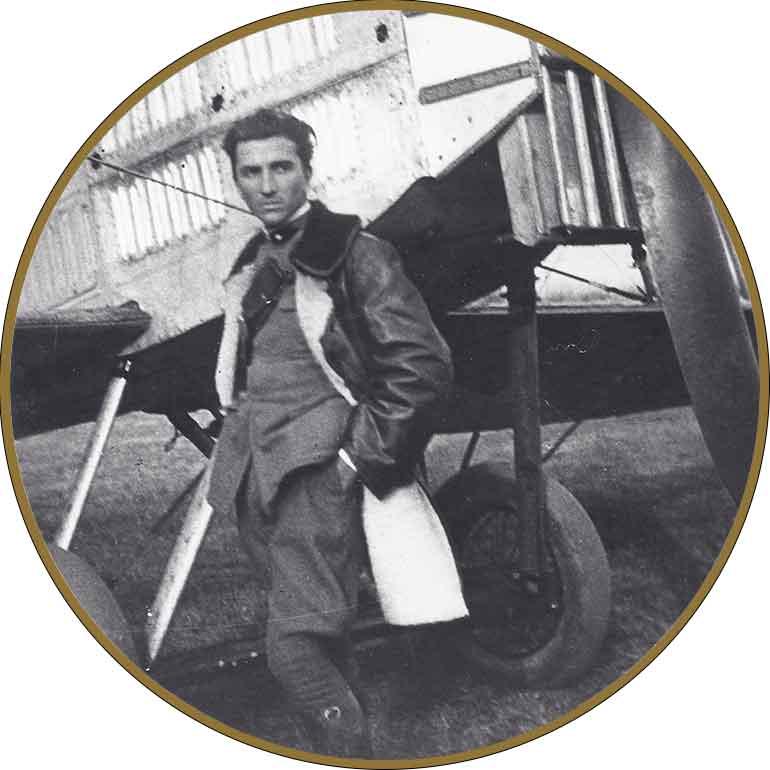
Mauro Reggiani was an Italian painter known for his contribution to geometric abstraction. His life and artistic career were marked by a constant desire to explore new expressive forms and color relationships, making him one of the pioneers of abstraction in Italy. Born in Nonantola, in the province of Modena, in 1897, Mauro Reggiani showed a great interest in artwork from a young age. He attended the Royal Institute of Fine Arts in Modena from 1911 to 1919, where he studied figure and painting. However, his artistic training was temporarily interrupted when he was called to arms in 1917. In 1918, he joined the Pilot Trainee School in Caserta, but after the end of the war in 1919, he resumed his passion for painting.
In 1920, he opened a studio in Modena and painted a series of portraits. At the same time, he enrolled in the third year of the figure course at the Royal Institute of Fine Arts in Florence, where he befriended artists such as Marino Marini and Giuseppe Graziosi. These years were characterized by the search for a personal expressive language and interest in the artists of the Novecento group.
In the '30s, Mauro Reggiani gradually distanced himself from realistic and academic models and approached abstraction, influenced by artists such as Cézanne, Kandinsky, and Max Ernst. In 1934, he participated in the first Abstract Artwork exhibition in Italy at the Galleria del Milione in Milan, along with other artists, including Oreste Bogliardi and Virginio Ghiringhelli. This event marked the beginning of his career in geometric abstraction.
In the following decade, the '40s, Mauro Reggiani continued his artistic research, participating in national and international exhibitions. However, the period was also marked by the tragic events of World War II, which forced him into a hiatus from artistic activity. After the end of the conflict, he returned to Milan and resumed painting.
In the '50s, Mauro Reggiani joined the Concrete Art Movement (MAC), founded in Milan by Gillo Dorfles, Bruno Munari and Atanasio Soldati. His painting became more dynamic in composition and chromatically vibrant. He participated in numerous collective and solo exhibitions in Italy and abroad, receiving recognitions and awards for his contribution to abstract artwork.
In the '60s and '70s, Mauro Reggiani's artwork continued to evolve, exploring new techniques and materials. His solo exhibitions followed one another in various Italian cities, and some retrospectives dedicated to his artwork were organized in important public spaces and art galleries.
In 1980, at the age of 82, Mauro Reggiani died in his home in Milan. After his death, his daughter Virgilia Reggiani Simion collected and archived the material related to her father's artistic activity to create the general catalog of his artworks, published in 1990 under the supervision of critic Luciano Caramel.
Mauro Reggiani was a visionary artist, always in search of new forms of expression and color relationships. His dedication to geometric abstraction made him a significant figure in the history of Italian art and a pioneer of abstract artwork in the country, alongside other important artists such as Alberto Magnelli, Enrico Prampolini, and Atanasio Soldati. His artistic legacy has been celebrated with numerous exhibitions and posthumous recognitions, demonstrating the lasting influence of his work in the Italian art scene.