
Visual artist
Paolo Scheggi
Italy, 1940–1971
Stay up to date with this artist
Leave your email to receive updates on newly available artworks and news about this artist.
Artworks by Paolo Scheggi
5 artworks


Biography of Paolo Scheggi
Paolo Scheggi (Settignano, Florence, 1940 – Rome, 1971) was one of the most original protagonists of Italian artistic research of the Sixties. In a short but very intense career, he overcame the traditional conception of the painting as a single surface, transforming it into a structure made of overlapping planes, openings and real depths. His artworks ask the viewer to look not only at what…
Read the full biographyClose the biography
Paolo Scheggi (Settignano, Florence, 1940 – Rome, 1971) was one of the most original protagonists of Italian artistic research of the Sixties. In a short but very intense career, he overcame the traditional conception of the painting as a single surface, transforming it into a structure made of overlapping planes, openings and real depths. His artworks ask the viewer to look not only at what appears on the surface, but also at what lies beyond it: space becomes an active part of the image.
Milan and the overcoming of the painting
After his Tuscan debut, Scheggi moved to Milan, where he came into contact with an environment full of experimentation. The city hosted artists interested in light, seriality, monochrome and the redefinition of the relationship between painting and space. The comparison with Lucio Fontana and with the research of Spatialism contributed to strengthening his attention to the painting understood as a concrete object, no longer as an illusory window.
Scheggi soon developed a personal language. Instead of engraving or perforating a single canvas, he constructed artworks in which multiple surfaces were arranged at different depths, with circular or other shaped openings that allowed a glimpse of the underlying layers. The composition was therefore not born only from color, but from the relationship between full spaces, voids, shadows and physical distance. The spectator's movement modified the perception of the whole.
The overcoming of the traditional framework arises in a context of intense experimentation on real space. In the 1960s many artists questioned the painted surface, but the solutions were different: some worked on light, others on movement or repetition. Scheggi focuses his research on the relationship between layers and openings. Depth is not simulated with perspective; it is produced by the concrete distance between surfaces. This change also modifies the role of the spectator. Looking at the artwork frontally is not the same as looking at it from the side, because the openings align differently and the shadows change. The image becomes a perceptual event, not a fixed structure. The reference to Fontana helps to historically place this research, but does not exhaust its originality: Scheggi elaborates his own construction system, based on the succession of floors.
Intersurfaces and real depth
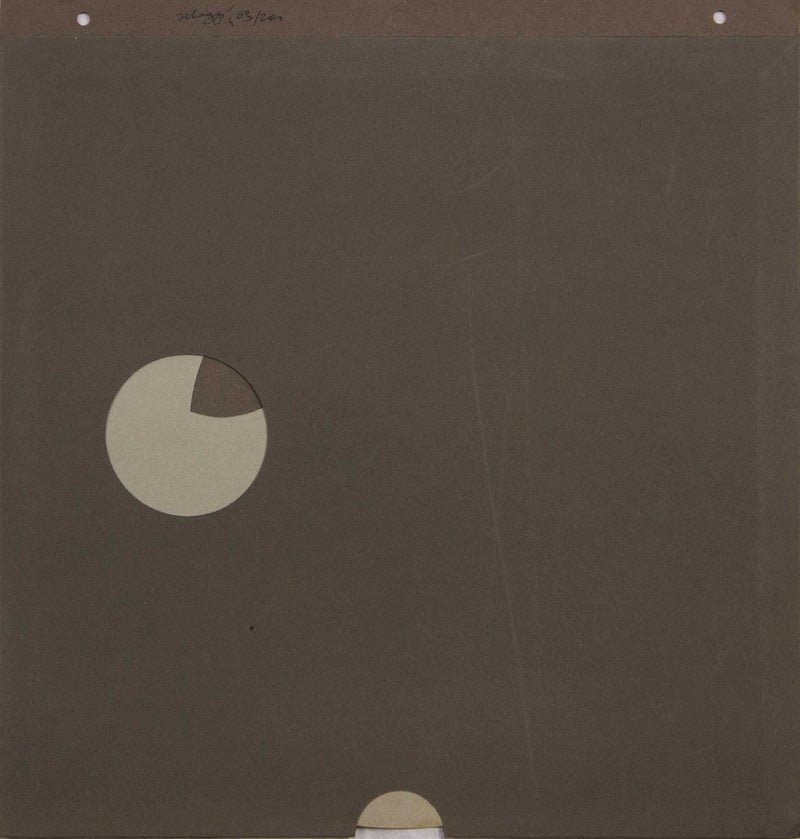
The famous Intersurfaces represent one of the most important results of his research. The overlapping planes, often monochrome, create a visual rhythm that can appear both rigorous and surprisingly sensitive. The openings are not simple drawn figures: they are real gaps, through which light enters and produces variations. The painting becomes a small architecture, capable of organizing an internal space.
The use of monochrome accentuates this experience. By limiting color, Scheggi focuses attention on the quality of edges, shadows and differences between layers. The artwork does not tell a story, but constructs a perceptive situation. The observer discovers that a minimal variation in the position of the openings can change the balance of the entire structure.
Intersurfaces can be read as a comparison between what is shown and what remains partially hidden. The void is not a passive absence: through the opening, the eye reaches a further level and perceives the distance between the parts. Monochrome makes this relationship more evident, because it eliminates many color contrasts that could distract from the spatial experience. Ambient light then takes on a decisive role. Depending on the lighting, the edges of the openings cast more or less clear shadows and the depth seems to become accentuated or attenuated. The format of the artwork also changes the relationship with the body of the viewer. A small structure invites close observation; a wider one involves the visual field more. Geometric rigor thus becomes a tool for producing sensitive variations. An often overlooked aspect is the role of the edge: the edge of the surface not only closes the image, but delimits an object with thickness. Perception also changes in relation to the wall that hosts it. In this sense the Intersuperfici simultaneously interrogate the internal space of the artwork and the real space of the exhibition. The observation distance also modifies this relationship.
From object to environment
Scheggi's research progressively extended beyond the painting, involving environments, interventions and reflections on the relationship between art and lived space. His activity dialogued with the design, architecture and visual culture of the time, showing how disciplinary boundaries could become mobile. His premature death interrupted a path that was expanding his possibilities, but did not reduce his influence on subsequent generations.
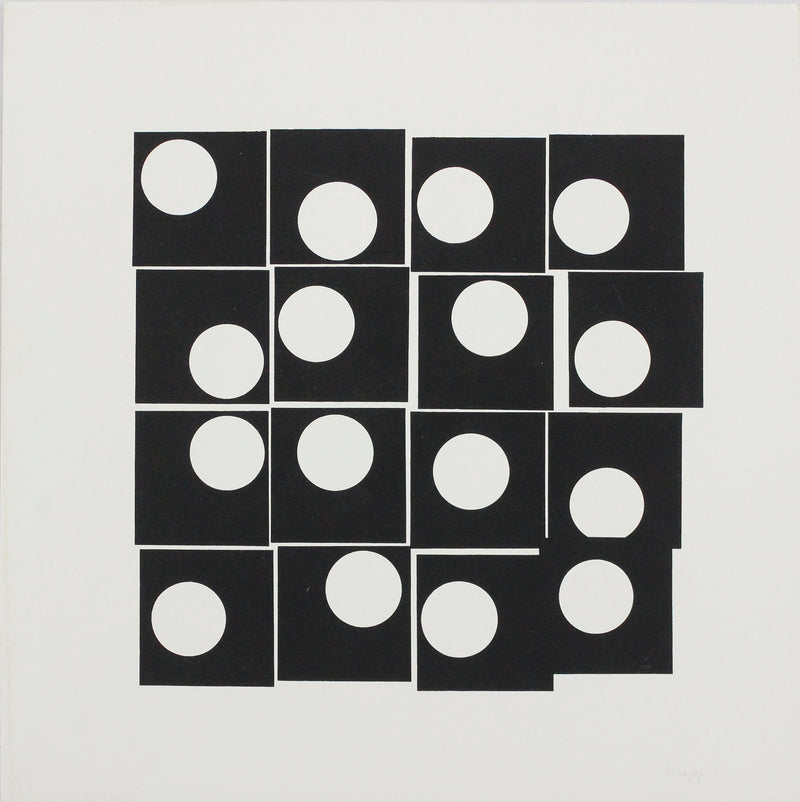
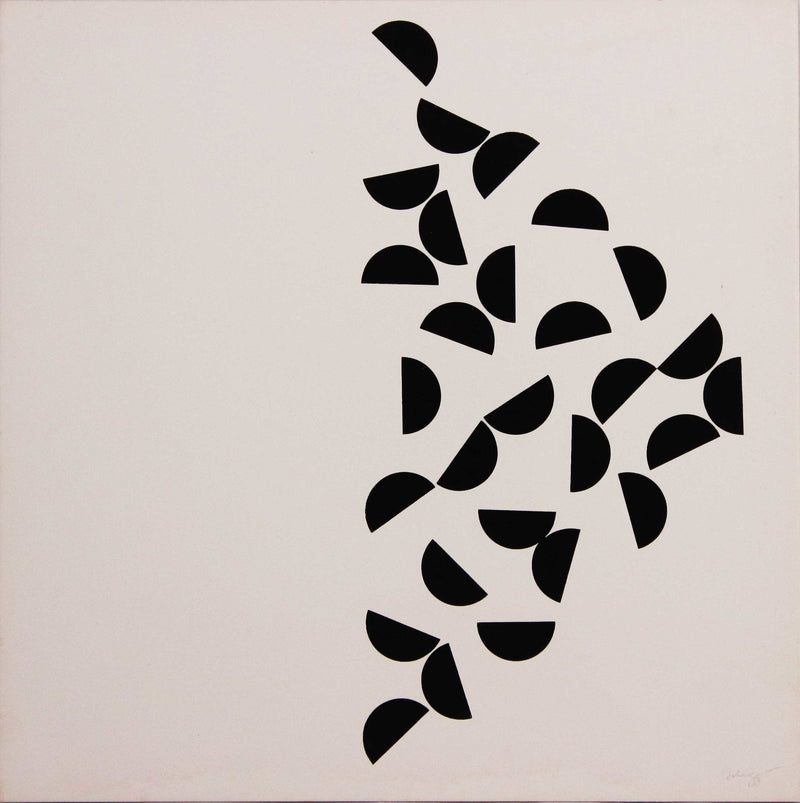
In artworks on paper and graphic editions it is necessary to distinguish the original artworks from the reproductions of its three-dimensional structures. A printed image depicting an Intersurface does not automatically have the same technical nature as the artwork-object. For cataloguing, support, process, edition size, signature and documentation matter. Scheggi's strength lies in having shown that painting can become a concrete experience of space, without losing precision and poetic intensity.
When the research extends to environments, the principle of crossing takes on a different scale. It is no longer just the gaze that ideally penetrates a structure: the spectator can find himself inside a space organized by the artist. This development connects Scheggi to the reflections of the time on the integration between visual arts, architecture and design, without reducing the artworks to functional objects. The short duration of his career makes it important to distinguish different types of jobs and their material conditions. An artwork-object with overlapping surfaces is not equivalent to a printed image that reproduces it; even an original project or drawing has a different nature. To correctly catalog a specimen, information is needed on materials, dimensions, possible edition, documentation and provenance. This data helps to understand an art in which physical construction is inseparable from visual experience.
Do you like Paolo Scheggi?
Leave your email to receive updates on newly available artworks and news about this artist.
Paolo Scheggi
Art that lives in your spaces
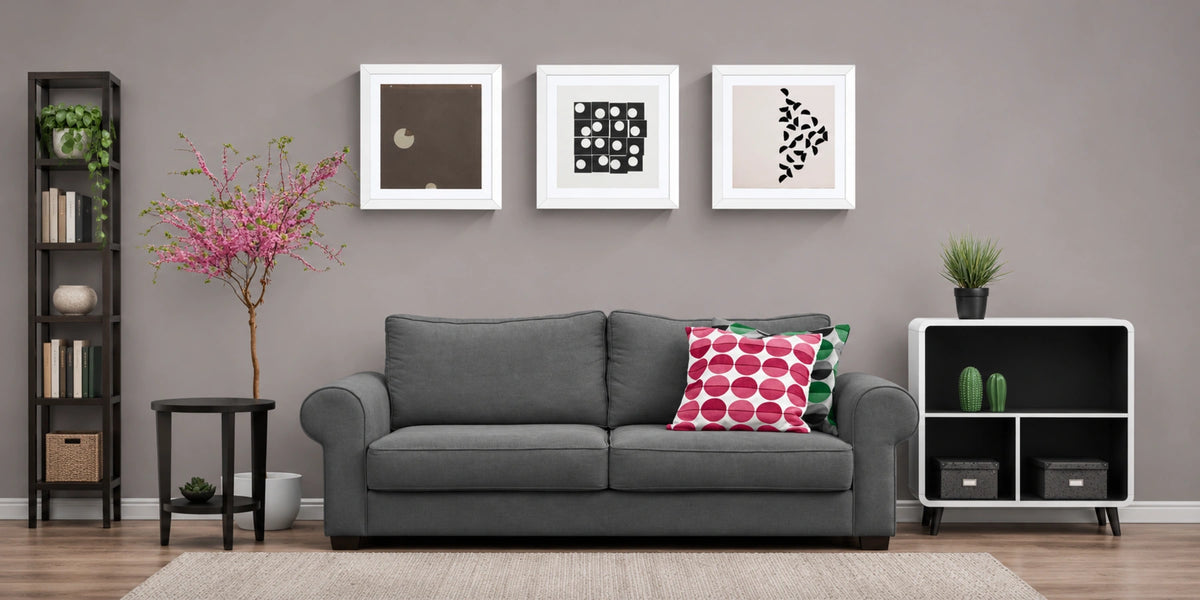
Choosing an artwork by Paolo Scheggi means making room for an individual artistic language. The artworks gathered here suggest combinations and perspectives to bring into your own surroundings, letting art guide your gaze.
DISCOVER THE ARTIST
Frequently asked questions
Answers to common questions about Paolo Scheggi, the artist’s life, artworks and value on the art market.
Who was Paolo Scheggi and why is he important in Italian art?
Paolo Scheggi (1940–1971) was an Italian artist known for spatial research and overlapping and perforated surfaces. Despite a short career, he developed an original language in dialogue with European research on the artistic object, perception and the relationship between surface and depth.
What are Paolo Scheggi's Intersurfaces?
The Intersuperfici are artworks built through multiple overlapping planes, often monochrome, with openings that allow the gaze to perceive depth and spatial relationships. They are not simple two-dimensional paintings: the material structure of the artwork participates directly in the visual experience.
What is the relationship between Paolo Scheggi and Lucio Fontana?
Scheggi worked in an artistic climate also marked by the spatial innovations of Lucio Fontana. Both questioned the traditional surface of the painting, but with different solutions: Fontana is also known for cuts and holes, while Scheggi frequently built structures with overlapping levels and calibrated openings.
Are Paolo Scheggi's artworks paintings or reliefs?
Many of Scheggi's artworks overcome the traditional distinction between painting and relief: color coexists with a physical structure that creates real depth. To correctly describe an artwork it is necessary to report materials, technique, dimensions and construction methods, without automatically applying the same definition to the entire production.
What to check when purchasing an artwork attributed to Paolo Scheggi?
Given the importance of authenticity and documentation, it is essential to check provenance, bibliography, exhibitions and any references to the competent archive. It is also necessary to check the materials and conditions of the surfaces. It is not safe to base an attribution solely on stylistic similarities or a signature.
Discover more artists
Explore more leading figures in modern and contemporary art


