
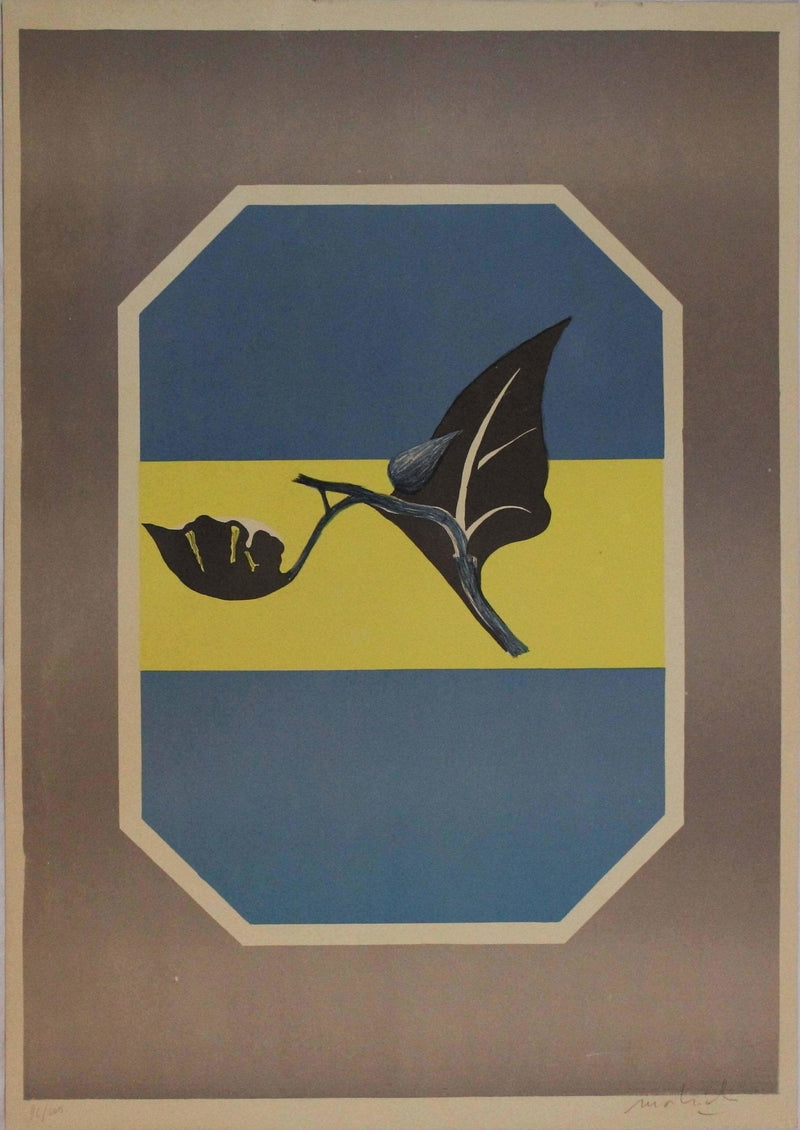

ARTISTIC TECHNIQUES
Lithography
The artist’s mark, the freedom of print.
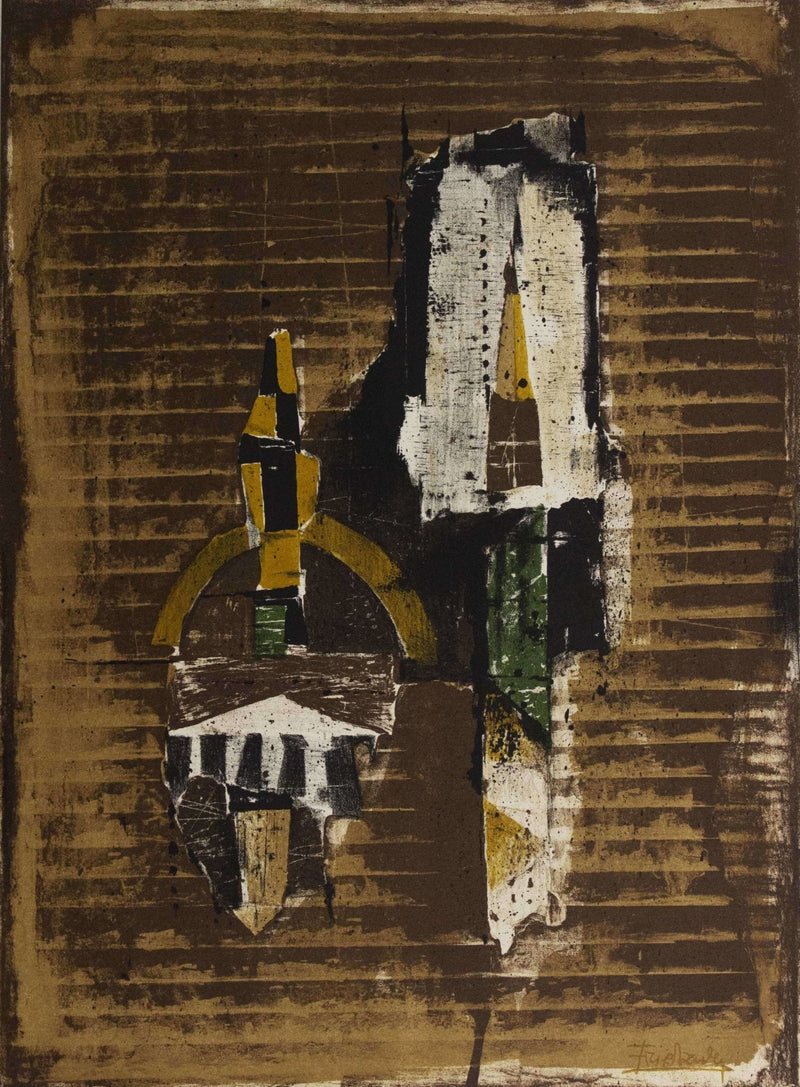
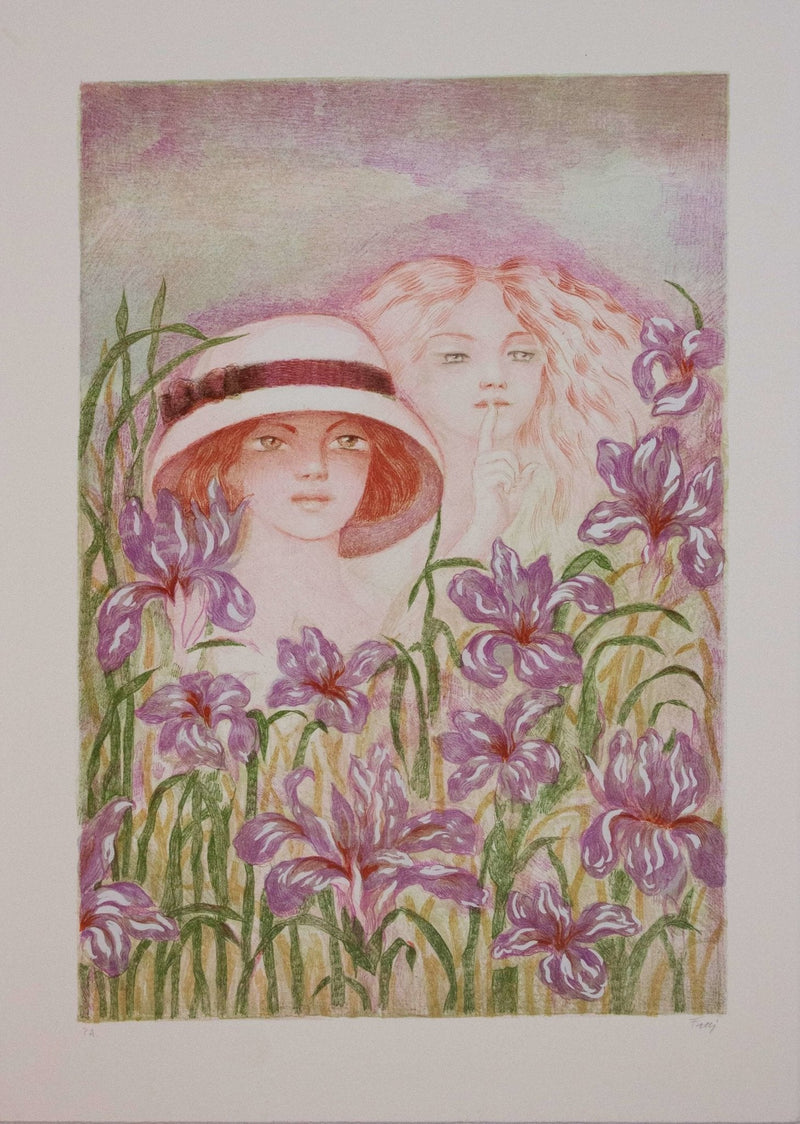
A technique that revolutionised modern art, giving artists the freedom to express themselves through bold marks and colour.
OUR LITHOGRAPHS
Works to discover, choose and live with every day.
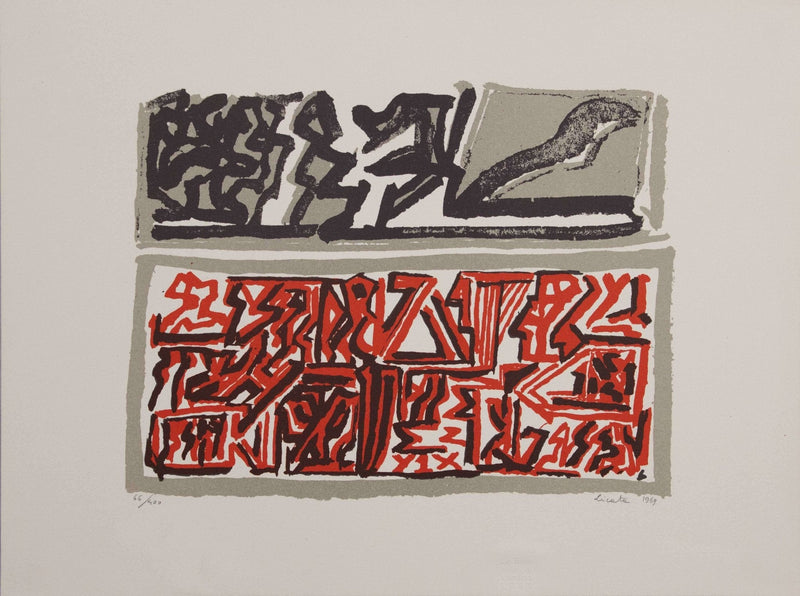

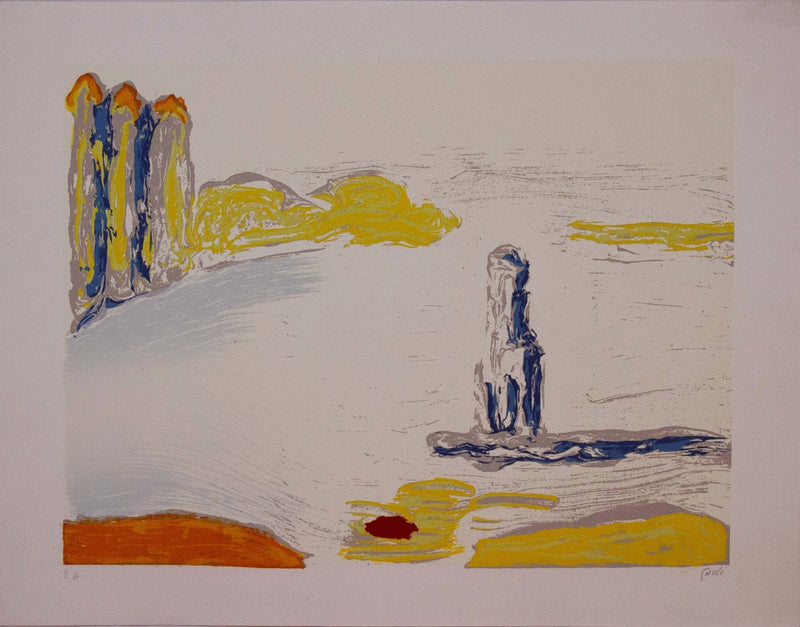
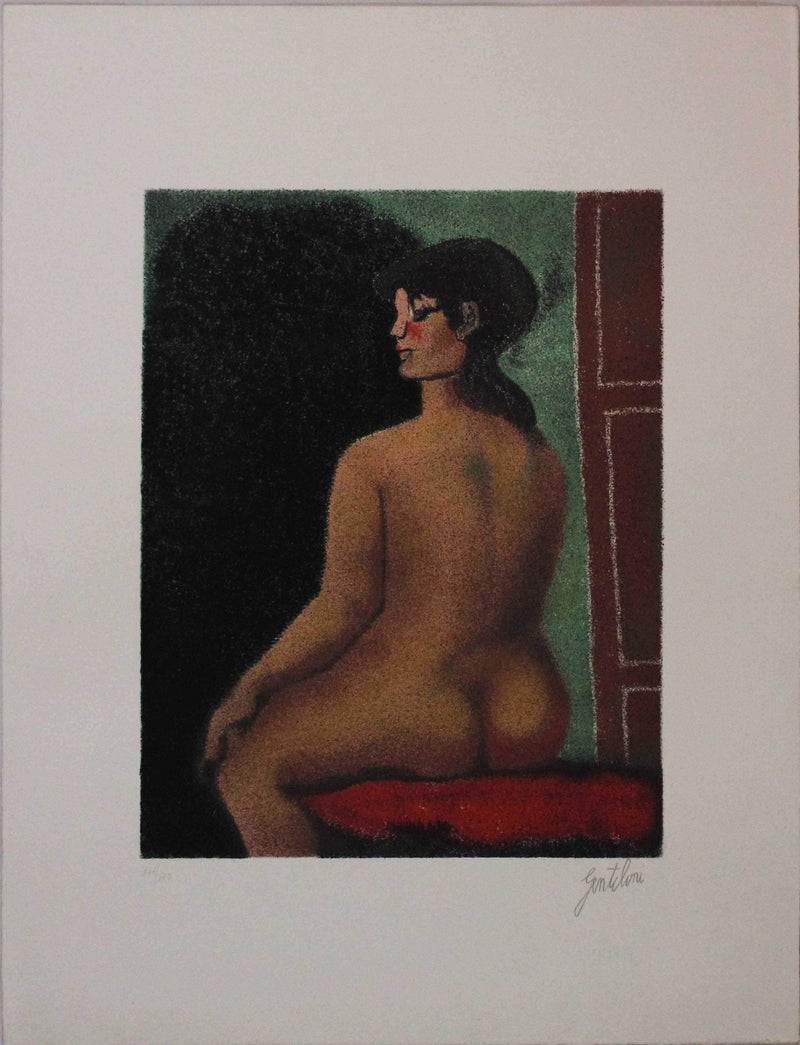


KNOWING ARTISTIC TECHNIQUES
What is lithography?
Lithography is an artistic printing technique that allows an image created on a matrix, traditionally a polished limestone, to be transferred onto paper. The process is based on the principle of repulsion between water and greasy substances: through a special treatment of the surface, the drawn parts retain the ink, while those not intended for printing repel it.
Unlike intaglio techniques, such as etching or engraving, lithography does not require the design to be carved into the matrix. The artist can work directly on the surface using pencils, pastels, and greasy inks, achieving remarkable freedom of expression.
This characteristic allows the print to retain qualities close to the original drawing: the spontaneity of the line, the nuances, the tonal variations, and the richness of the surfaces.
Since its invention at the end of the 18th century, lithography has played a fundamental role in the development of graphic art, becoming one of the most appreciated processes by modern and contemporary artists.
Origins — How and when lithography was born
Lithography was born in 1796 thanks to Alois Senefelder, a German inventor and playwright who, in search of an economical method for reproducing texts and musical scores, developed a printing process based on the chemical properties of limestone.
The new technique represented a major innovation compared to traditional printing methods. While woodcut required the carving of a wooden matrix and intaglio involved working on a metal plate, lithography allowed drawing directly on a flat surface, without having to carve into the material.
This freedom made the process particularly interesting for artists, who could preserve the naturalness of their mark in the print.
During the 19th century, lithography spread rapidly across Europe, finding application in illustration, editorial printing, political satire, and poster production. Artists such as Francisco Goya, Honoré Daumier, and Henri de Toulouse-Lautrec explored its expressive possibilities, helping to transform it from a reproduction tool into an independent artistic language.
With the development of chromolithography, which allowed the production of multi-colored images through the use of different matrices, the technique acquired further creative possibilities.
In the 20th century, lithography became one of the most important processes in original graphic art. Pablo Picasso, Joan Miró, Marc Chagall, and numerous other figures in modern art used it to create works conceived specifically for printing, experimenting with line, color, and overlays.
Even today, lithography retains a significant role in artistic production, thanks to its unique combination of craftsmanship, technical expertise, and freedom of expression.
How it is made — From the matrix to the print
Creating an original lithograph requires a series of operations in which the artist's work combines with the printer's technical expertise.
The traditional process uses a fine-grained limestone, carefully polished to achieve a uniform surface. The artist creates the design directly on the stone using lithographic pencils, greasy pastels, or specific inks, choosing the tools based on the desired effects.
The nature of the material used allows for sharp marks, soft lines, nuances, and different tonal intensities.
Once the drawing is completed, the matrix is subjected to a chemical treatment, generally using a solution based on gum arabic and an appropriately dosed acidic component. This process prepares the surface so that the undrawn areas retain water, while those corresponding to the image retain the ability to receive greasy ink.
During printing, the stone is moistened and then inked with a roller. The ink adheres to the parts intended to form the image and is repelled by the wet areas.
A sheet of paper is then placed on the matrix and subjected to the pressure of a lithographic press, which transfers the image from the stone to the surface of the sheet.
The process can be repeated to obtain multiple copies of the same composition.
To create a color lithograph, the traditional process generally uses separate matrices for the different colors. Each step requires careful registration so that the subsequent impressions overlap correctly.
In addition to stone, lithography can use specially prepared metal matrices, which allow the same chemical principle to be applied through different operating methods.
In the production of original graphic art, the artist participates in the conception of the image intended for printing and can collaborate with the printer in choosing the inks, paper, and color proofs.
Before the final edition, printing proofs can be made to evaluate the result and make any necessary corrections.
The entire process requires precision and expertise, but retains a fundamental characteristic: the ability to transfer onto paper the expressive qualities of an image conceived through the language of lithography.
Characteristics — What distinguishes an original lithograph
One of the most important characteristics of lithography is the ability to preserve the naturalness of the artist's mark. Since the image is created on a flat surface, without physically incising the matrix, the process allows for effects that are particularly close to drawing.
Thin lines, energetic strokes, delicate nuances, and color fields can coexist in the same composition, offering a remarkable variety of expressive solutions.
An original lithograph must be distinguished from a photographic reproduction of a pre-existing work. In the first case, the image is conceived and created through the lithographic process, with the artist's creative involvement. In the second case, an already existing image is reproduced, without the printing process necessarily constituting a new artistic elaboration.
Another characteristic element is the edition. An original lithograph generally belongs to an edition composed of multiple copies, obtained by printing the same matrix or the same matrices in the case of a color work.
The edition can be limited to a predetermined number of copies, frequently indicated by a fraction written in pencil on the sheet. For example, the numbering 25/100 conventionally identifies a copy belonging to an edition of one hundred numbered copies; the number 25 does not necessarily indicate the chronological order of printing.
In addition to the numbered copies, there may be artist's proofs, generally marked with the initials P.A., and other proofs related to the different stages of production.
The artist's signature, when present, constitutes an important element for identifying the work, but it is not sufficient on its own to determine its authenticity. It is also necessary to consider the provenance, the edition, the printer, the publisher if any, and the available documentation.
The quality of the paper, the characteristics of the ink, and the state of preservation also contribute to the evaluation of the individual copy.
An original lithograph is therefore not a simple image reproduced in multiple copies, but a graphic work conceived through a specific artistic process, in which the relationship between mark, matrix, and print constitutes an integral part of the creative result.
These characteristics explain why lithography continues to hold an important place in modern and contemporary art collecting, offering the opportunity to approach the language of great artists through original works produced in editions.
Art in interiors
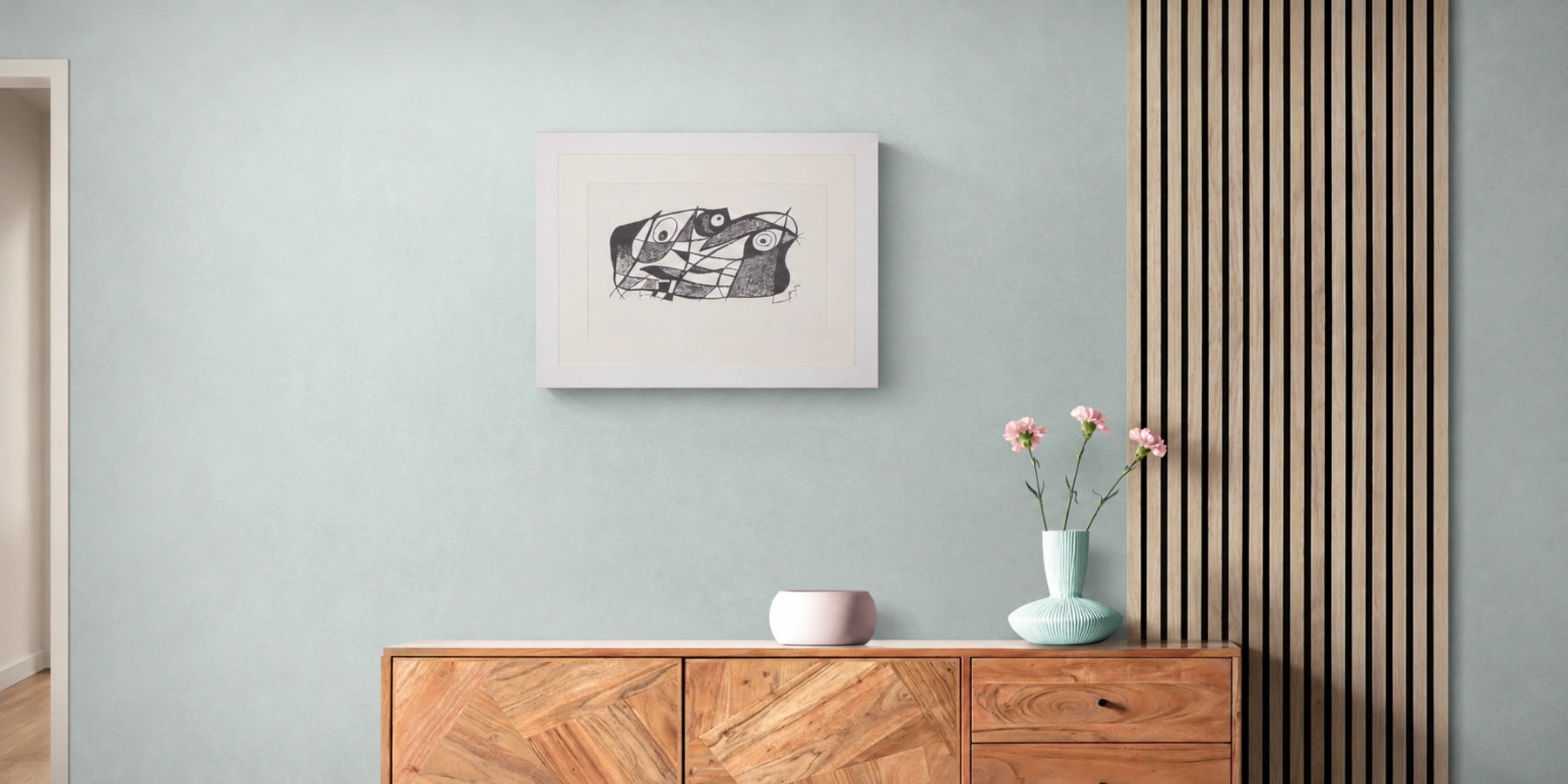
A lithograph, a thousand possibilities.
From home to office, lithographs complement different settings and interiors, giving your space character.


FREQUENTLY ASKED QUESTIONS
Everything about lithography
Simple and clear answers to the most common questions.
What is the difference between an original lithograph and a print?
An original lithograph is a work of art print: it comes from an image conceived for the lithographic process and printed from a matrix prepared for that work. "Print" is a broader term, which also includes reproductions of pre-existing images. The work's information sheet should indicate the technique and, if applicable, the edition and the printer.
How to recognize an original lithograph?
Check the stated technique, provenance, and edition data. Compare the information on the paper, printer, and publisher with the available documentation. A signature or numbering in pencil can help identify a copy, but on their own they do not attest to its authenticity.
Is a lithograph considered an original work of art?
Yes, when the image was conceived for printing and the artist participated in its creation. An edition can include multiple original copies, printed from the same matrices. Originality concerns the way the work is born, not the fact that there is only one copy.
What does a lithograph numbered 25/100 mean?
It indicates the copy marked with the number 25 in an edition of 100 numbered copies. The number does not necessarily indicate the printing order. Artist's proofs and other documented proofs may exist separately.
How to preserve and frame a lithograph?
Avoid direct light and damp environments. To frame it, use a mat and a neutral pH backing, and leave space between the sheet and the glass. For reversible mountings or already damaged sheets, consult a framer specializing in works on paper or a restorer.
Explore other art techniques
 Etching
The appeal of the etched line
 Aquatint
The nuances of intaglio
 Screen printing
Colour takes shape
 Linocut
The strength of shapes
 Woodcut
The line cut into wood