

GILARDI Piero


Recreating a meadow, a riverbed, or an undergrowth using an industrial material means introducing an immediately perceptible contradiction: what appears natural is entirely artificial. This tension underpins a fundamental part of the work of Piero Gilardi, a Turin-based artist who engaged with some of the most important issues in contemporary art, from the relationship between object and viewer to collective participation, and from the use of technology to ecological reflection. His work not only presents new images of nature, but also invites us to question how society transforms, consumes, and perceives it.
The Nature Carpets and Artificial Materials
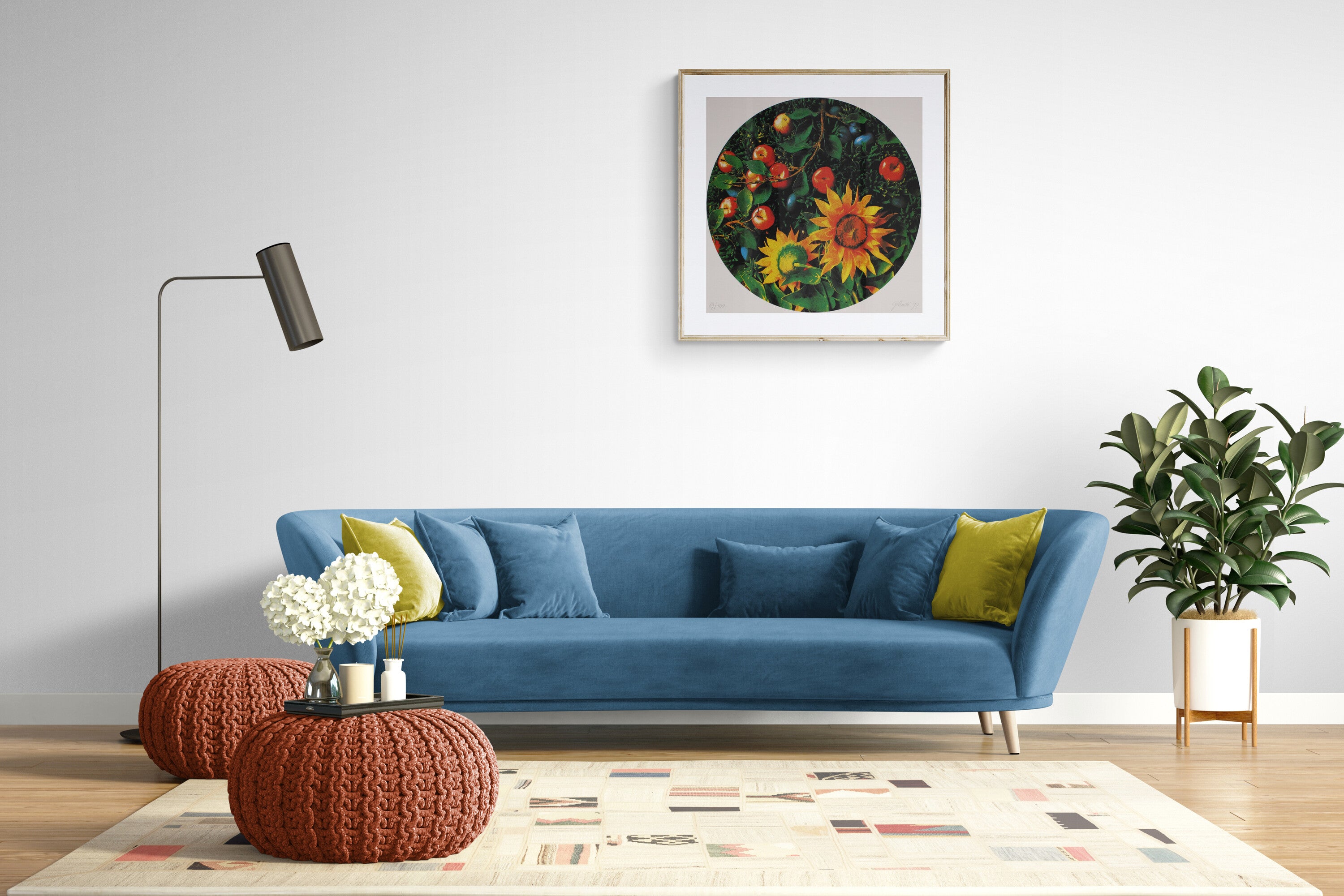
Born in Turin in 1942, Gilardi developed his artistic research amid the experimental climate of the 1960s. In 1965, he began creating the celebrated Nature Carpets, artworks that reproduce sections of landscape using sculpted and painted expanded polyurethane. Stones, leaves, meadows, fruit, and waterways take on a surprisingly realistic presence, but their substance points to the world of industrial production. The material is lightweight, flexible, and capable of taking on three-dimensional forms; these very qualities allow the artist to create surfaces that do not behave like traditional paintings.
The contrast between natural appearance and synthetic composition lies at the heart of the work. On the one hand, the Tappeto-natura evokes the direct experience of an environment; on the other, it reveals its transformation into an artificial object, almost a fragment of landscape made available for domestic life. This ambiguity is linked to the transformations of consumer society and the growing divide between everyday experience and the natural world. L’image is recognizable, but the material forces us to reflect on what we are really looking at.
The Tappeti-natura also introduce a participatory dimension. Their texture suggests a physical relationship with the work and challenges the usual distance between art object and viewer. The audience is no longer seen merely as a passive observer: the body, contact and tactile perception become part of the project. This question would remain with Gilardi even when he temporarily abandoned the more recognizable forms of artistic production.
Arte Povera, social engagement and participation
In the 1960s, Gilardi engaged with the milieu in which Arte Povera took shape. He shared with many of the leading figures of that period an interest in materials and processes, and in moving beyond the idea of the work as an isolated object. His position nevertheless remained distinctive: his use of an industrial material to imitate nature and his focus on audience participation gave his practice an identity of its own. L’encounter with European and American artistic movements further broadened his interest in practices that directly engage social space.
In the late 1960s, Gilardi chose to reduce the production intended for the traditional art world and devoted himself to political and collective initiatives. This shift was not a mere interlude unrelated to art. On the contrary, it developed a conviction already present in his earlier works: creativity can become a tool for connection and for transforming shared experience. Participation, initially suggested through physical contact with the Tappeti-natura, thus expanded into a more explicit social dimension.
Technology and Interactive Installations
In the 1980s, Gilardi returned to developing artistic projects more consistently, directing an important part of his research toward interactive technologies. Electronics and systems capable of responding to audience actions enabled him to create artworks that change during the experience. The visitor does not merely witness a predefined visual event, but contributes to its unfolding. The participatory principle therefore remains consistent with that of his earlier works, while taking on a very different technical form.
Projects such as Pulsations testify to his interest in the relationship between bodily presence and technological response. In these experiences, the machine is not celebrated as an end in itself: it becomes a means of making a relationship visible and tangible. L's work exists through interaction, and its meaning also depends on what the audience chooses to do. This research places Gilardi among the artists who helped develop a conception of art as a shared process, open to nontraditional tools and languages.
Ecology and the Living Art Park
The relationship with nature remains central in his later years, but takes on an increasingly clear ecological dimension. While the Nature Carpets staged the ambiguity between the natural and the artificial, later projects address the relationship between the environment, technology, and collective responsibility. Nature is not merely a repertoire of forms to reproduce: it is a living system with which human activity is constantly interacting, often altering its balance.
This perspective finds one of its most significant expressions in Turin’s PAV — Living Art Park, a project whose conception and realization Gilardi directly contributed to. Open to the public in 2008, PAV offers a space where contemporary art, the environment, and education can come together through installations and shared activities. The park is a tangible extension of his participatory vision: not just artworks to contemplate, but opportunities to develop awareness and relationships around ecological issues.
Drawings, designs, and the correct description of artworks
Alongside three-dimensional works and installations, Gilardi's work includes drawings and prints, which may serve a design function or constitute independent works. The transition from an idea to an interactive environment often requires studies, elaborations, and visual documents, but these materials are not all of the same nature. For anyone viewing or collecting a work, it is important to distinguish an original drawing, a design, an editioned print, and a photographic reproduction of a three-dimensional work.
In particular, a photograph of a Nature Carpet cannot be described as if it possessed the material characteristics of the polyurethane artwork. Likewise, a print should not automatically be identified as a screenprint or lithograph without documentation. Correctly attributing the technique requires information about the support, the process, and any edition. These distinctions are essential to conveying the diversity of an artistic practice that spans very different materials and media.
Dying in Turin in 2023, Gilardi leaves behind a career that uniquely connects artistic experimentation, technology, and environmental commitment. From the Nature Carpets to interactive installations and the PAV, the common thread is the desire to transform the relationship between artwork and audience. L'art is not understood as an object separate from life, but as an experience capable of challenging perceptual habits and collective behaviors.
Ti piace Piero Gilardi?
Per ricevere gli ultimi aggiornamenti di questo artista, lascia la tua email qui sotto: