

Painter and designer
Giuseppe Amadio
Italy, 1944 –
Stay up to date with this artist
Leave your email to receive updates on newly available works and news about this artist.
Works by Giuseppe Amadio
2 works

Giuseppe Amadio
Giuseppe Amadio (Todi, 1944) is a contemporary Italian artist best known for his monochrome bulging canvases, artworks in which the surface of the painting rises and curves, transforming painting into a three-dimensional presence. After an initial phase characterized by an exploration of material and gesture, he developed an abstract language based on the relationship between form, color, light, and space. His apparently essential compositions change…
Read the full biographyClose the biography
Giuseppe Amadio (Todi, 1944) is a contemporary Italian artist best known for his monochrome bulging canvases, artworks in which the surface of the painting rises and curves, transforming painting into a three-dimensional presence. After an initial phase characterized by an exploration of material and gesture, he developed an abstract language based on the relationship between form, color, light, and space. His apparently essential compositions change in appearance depending on the lighting and the viewing angle: the curves of the canvas create shadows and raised areas that become an integral part of the image. His practice engages in a dialogue with the Italian tradition of Spatialism and object painting, while standing out for its personal interpretation of movement and the tensions that run across the surface.
biography and artistic education
Giuseppe Amadio was born in Todi, Umbria, in 1944. His education included technical and artistic studies, as well as courses in design and advertising graphics. At the beginning of his career, he worked in industrial sign-making, taking on projects where precision in drawing and visual clarity played a fundamental role. An important part of his education was his long collaboration with Piero Dorazio, one of the leading figures of Italian abstraction in the second half of the twentieth century. This experience helped shape his artistic language, without leading him simply to imitate the approaches developed by Dorazio. Amadio gradually developed an independent practice in which the surface of the painting becomes the site of a physical and visual transformation.
The early artworks: material, gesture, and experimentation
Giuseppe Amadio’s early work is characterized by an interest in painterly material and freedom of gesture. At this stage, the artist explores the expressive possibilities of the surface through interventions that emphasize its texture and physical presence. The painting is seen not merely as a space for images, but as an object with its own material qualities. Amadio engages with this debate through a personal approach. His move to the extroflexed canvas marks the decisive moment in this evolution.
Giuseppe Amadio’s extroflections
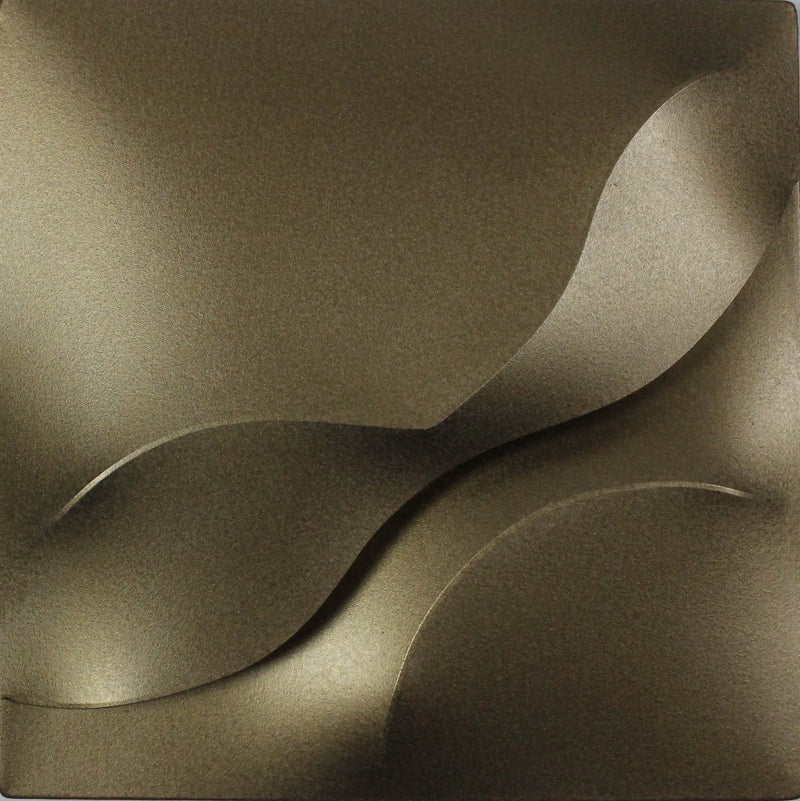
The extroflections are the most recognizable feature of Giuseppe Amadio’s mature work. In these artworks, the canvas does not remain flat on an even plane but is shaped by structures placed beneath the surface. The result is a combination of reliefs, curves, and tensions that alter the traditional form of the painting. Compositions may feature sinuous lines, waves, diagonal passages, or more complex structures in which the reliefs seem to meet and push apart. Amadio places particular importance on lines of force, a concept that links his work to the idea of energy and transformation. The canvas thus becomes a space where balance and tension, geometric order and movement, come together.
Monochrome: when a single color takes center stage
One of the defining features of Giuseppe Amadio's artworks is the use of monochrome. White, red, blue, black, green, and other shades take center stage in compositions where color is not used to distinguish figures from background. At first glance, a monochrome work may seem extremely simple. On closer inspection, however, variations emerge, shaped by the reliefs and the way light falls on the surface. One area may appear more intense, while another takes on a darker tone because of the shadow. The choice of a single color thus becomes a way to emphasize the relationship between painting and relief.
Light and shadow in extroflexed canvases
Light plays a decisive role in Giuseppe Amadio's artistic research. A line may appear more pronounced in side lighting and almost disappear under frontal lighting. The painting does not merely occupy a space: it interacts with the light in the space where it is located. Viewed from one side, some curves may seem more pronounced; as you move, different relationships between the reliefs emerge. Viewing thus becomes a dynamic experience. Amadio creates artworks that are not meant to be viewed only from the front, but invite viewers to explore their physical presence.
Giuseppe Amadio and Spatialism
Giuseppe Amadio's artistic research is often associated with the Italian tradition of Spatialism and three-dimensional painting. The most important historical reference is Lucio Fontana, who transformed the canvas in the postwar period through cuts and holes, challenging the traditional pictorial surface. Another significant point of comparison is the work of Agostino Bonalumi and Enrico Castellani, artists who created artworks in which the canvas takes on a sculptural dimension. It is more accurate to consider Amadio an artist who continues and reinterprets the exploration of surface and space developed by twentieth-century Italian art.
Force lines: movement and energy
The concept of force line is particularly important for understanding Giuseppe Amadio's extroflections. L'artista has linked this research to the idea of energy and the movements of natural structures, also drawing on the forces acting on the Earth's crust. From this perspective, some compositions may evoke the wrinkling of terrain or the movement of a surface under pressure. They do not depict a recognizable landscape, but rather a structure that suggests movement through relief. It is precisely this balance between precision and dynamism that distinguishes many of Amadio's mature artworks.
Giuseppe Amadio's artworks: Ittia, Soma, and other compositions
Giuseppe Amadio's output includes numerous outwardly curved canvases, often identified by short titles, sometimes accompanied by numbers or color references. Documented artworks include Ittia, Soma-26-FUX, Comea-11-BRO, Gezu – Luce!, Beida, Crase, and Brou. Their distinctiveness reflects the abstract nature of an artistic research in which the meaning of the work arises primarily from the relationships between form, color, and surface. Some artworks feature broad, continuous curves, while others are crossed by tighter lines and sudden changes in direction. A white surface can emphasize the composition's essential, luminous character; a dark color can heighten the contrast between lit and shadowed areas.
From painting to object: three-dimensional experiments
Giuseppe Amadio's artistic research is not limited to traditional outwardly curved canvases. Alongside paintings, his output also includes works in which the three-dimensional aspect takes on an even more prominent role. Documented examples include column-shaped compositions made with outwardly curved canvas, as well as artworks on different supports. The surface is no longer viewed only from the front, but can extend around a volume. His background in design and experience in furniture contribute to the particular significance of this dialogue between artwork and environment.
Exhibitions and recognition of his artistic research
In 2011, he presented Scenarios in Florence, in an exhibition curated by critic Carlo Franza. In 2015, the Andrea Ingenito Contemporary Art Gallery in Naples hosted the solo exhibition Estro..ri..Flessioni, dedicated to his outwardly curved compositions. That same year, he took part in the exhibition Visions Beyond the Visible, which brought his work into dialogue with that of Agostino Bonalumi, Enrico Castellani, and Paolo Scheggi. Between 2015 and 2016, Jerome Zodo Gallery in London presented Giuseppe Amadio – Recent Works. In 2019, the Mazzoleni Foundation in Alzano Lombardo hosted Universal Alphabets, an exhibition dedicated to his artistic research. In 2023, Galleria Magenta presented Multicolored Outward Curves, bringing together artworks that highlight the relationship between relief, color, and light.
a study of form and perception
Giuseppe Amadio's artistic journey is characterized by a gradual reduction in visual elements. From his early material- and gesture-based experiments, the artist went on to create artworks in which a few elements—surface, relief, color, and light—are enough to generate complex compositions. This simplicity does not mean a lack of content. Amadio's work continues one of the central questions in contemporary Italian art: how to transform the painting from a window onto an image into an object with its own presence in space. His compositions show that even a monochrome surface can contain a great variety of forms, rhythms, and visual sensations.
Do you like Giuseppe Amadio?
Leave your email to receive updates on newly available works and news about this artist.
Giuseppe Amadio
Art that lives in your spaces
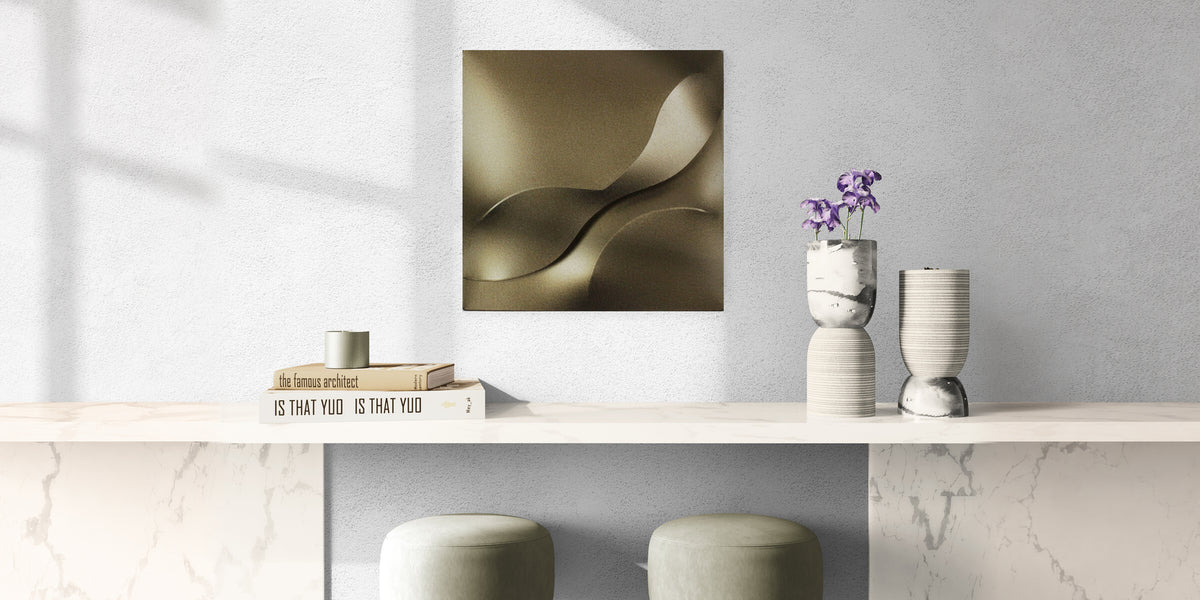
Choosing a work by Giuseppe Amadio means making room for an individual artistic language. The works gathered here suggest combinations and perspectives to bring into your own surroundings, letting art guide your gaze.
DISCOVER THE ARTIST
Frequently asked questions
Answers to common questions about Giuseppe Amadio, the artist’s life, works and value on the art market.
Who is Giuseppe Amadio?
Giuseppe Amadio, born in Todi in 1944, is an Italian artist best known for monochrome shaped canvases. His work explores the relationship between surface, relief, light and space through a restrained, geometric language.
What does a shaped canvas mean in Amadio’s work?
A shaped canvas has raised forms created by modelling the support over underlying structures. The surface is not simply painted: it becomes three-dimensional and changes appearance with the light and the viewer’s position.
Which artistic movement is Giuseppe Amadio associated with?
His practice belongs to contemporary experimentation with surface and monochrome painting. It can be seen in dialogue with twentieth-century spatial and analytical approaches, but should be considered in its own technical and formal terms.
Why do Giuseppe Amadio’s works change with the light?
The raised forms create shadows and variations in brightness that alter the perception of relief. Even when the colour is uniform, the surface appears dynamic through the relationship between folds, geometry and lighting.
How should you choose a work by Giuseppe Amadio?
It is useful to check the materials, dimensions, condition of the canvas, signature, provenance and documentation. For shaped canvases, the quality of the relief and the integrity of the support are particularly important. Check the individual work’s characteristics on its sales page.