

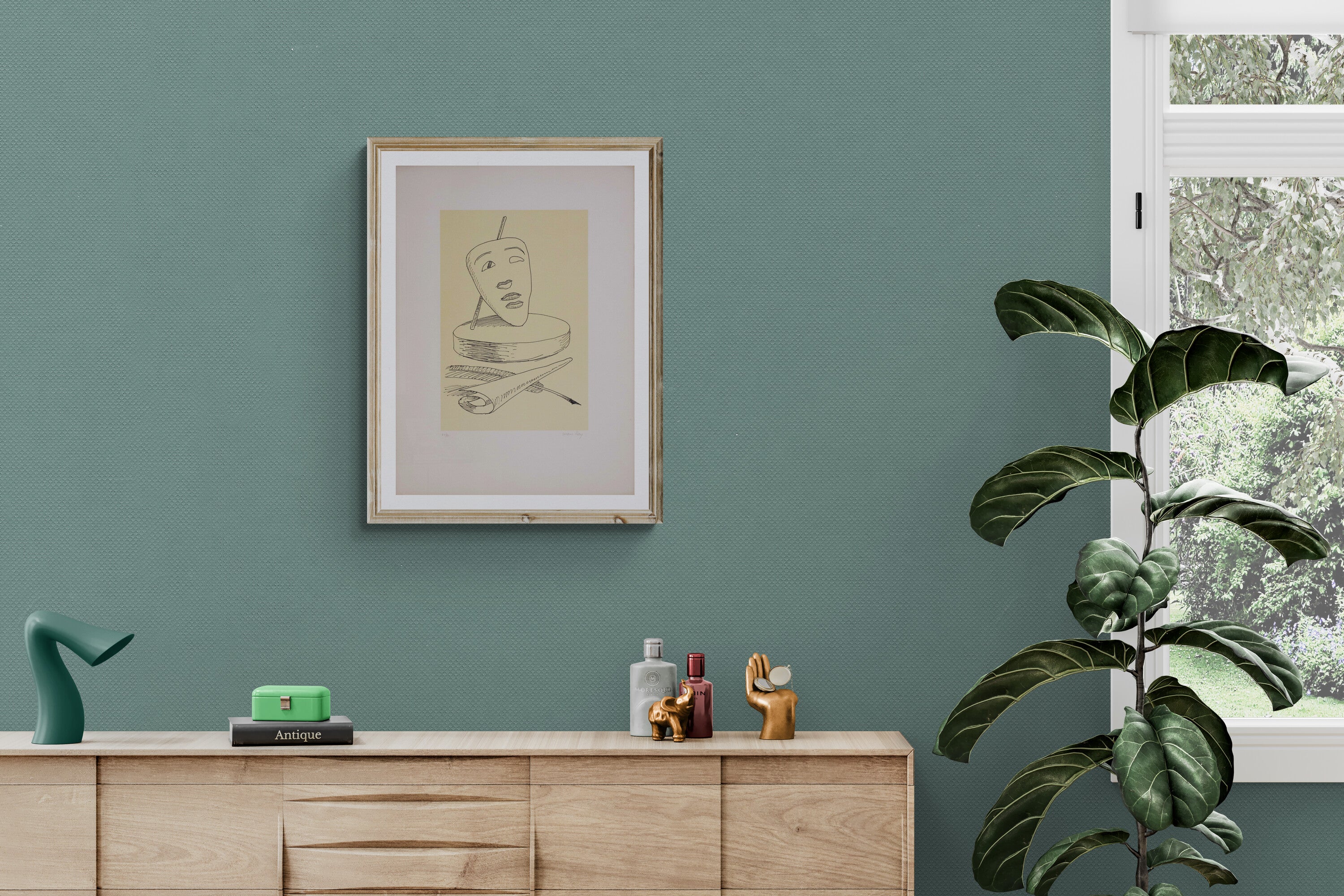
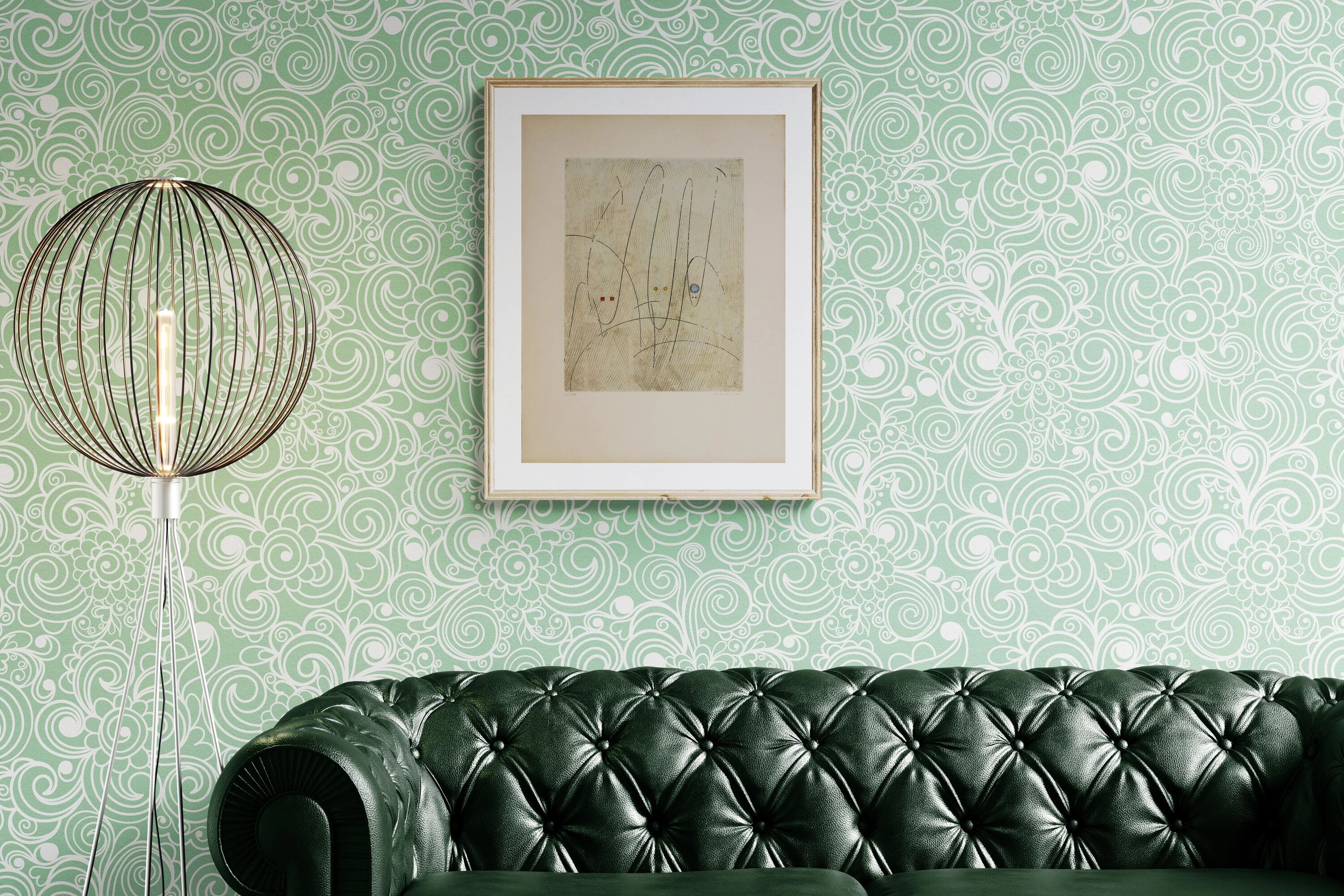

Mario Avati OPERE


Mario Avati was an Italian painter and engraver among the most significant of the second half of the twentieth century and one of the greatest interpreters of maniera nera after Yozo Hamaguchi. Born in Munich on May 27, 1921, to an Italian family, Mario Avati moved to France at a young age, where he began his training by first attending the School of Decorative Arts in Nice and then the prestigious National Superior School of Fine Arts in Paris. He graduated very young and, already in 1947, was influenced by the master Édouard Joseph Goerg, a central figure in the panorama of French engraving and illustration. It was during this period that Mario Avati began experimenting with the techniques of etching and aquatint.
In the following decade, Mario Avati's career was characterized by continuous and intense technical and stylistic research that led him to deepen the complex art of maniera nera. In 1957 he established himself as one of the leading international exponents of this technique, which became the distinctive hallmark of his artistic production. Jean Adhemar, an art historian, described Mario Avati's artworks as “a strange and devastated universe,” highlighting the artist's ability to infuse depth and mystery even into seemingly simple subjects such as still lifes, fruits, musical instruments, flowers, and animals.
A distinctive trait of Mario Avati was his meticulous attention to materials: he used almost exclusively very high-quality rag paper and personally followed all stages of the lithographic process, aware of the delicacy and fragility of mezzotint. This perfectionism contributed to the extraordinary quality of his artworks.
In 1955 Mario Avati achieved international prominence thanks to important exhibitions in London, New York, Los Angeles, and Tokyo. In 1965 the Paul Proute Gallery in Paris hosted one of the most important and extensive retrospectives of his career, during which the artist personally sent friends and collectors a refined illustrated brochure in maniera nera. In 1967 he began a collaboration with the Tamarind Institute, a renowned lithography laboratory at the University of New Mexico.
From 1969 onwards, while maintaining the maniera nera technique, Mario Avati also dedicated himself to color, introducing watercolors into his engravings. During his career he received numerous awards, including the Critics' Prize in 1957, the gold medal at the first Florence Engraving Biennial in 1969, and the Nahed Ojjeh Prize from the Academy of Fine Arts in 1997. He was a member of the Society of French Painters and Engravers and of the French National Engraving Committee.
Mario Avati passed away in Paris in 2009, the city where he lived and worked for most of his life and which always remained at the center of his artistic career.
Maniera nera
The maniera nera, also known as mezzotint, is one of the most fascinating and sophisticated engraving techniques developed in the history of art. This technique is distinguished by the ability to create an intense range of tones, from the deepest blacks to the most delicate shades, making possible a refined play of light and shadow. The maniera nera is created starting from a metal plate completely "bitten" with the rocker until a rough surface capable of holding ink and producing a uniform black is obtained. The artist then acts with specific tools to selectively smooth some areas, thus creating lighter tones.
Precisely because of this ability to achieve extremely sharp contrasts and suggestive atmospheres, the maniera nera has established itself as a preferred technique for subjects full of pathos and intense chiaroscuro effects. In the twentieth century, authors such as Mario Avati contributed to its significant revival, reinterpreting it in a modern key and applying it mainly to still lifes and compositions of great formal and poetic rigor. The maniera nera therefore represents not only a technique but also a visual language capable of evoking depth and mystery.
Ti piace Mario Avati?
Per ricevere gli ultimi aggiornamenti di questo artista, lascia la tua email qui sotto:Il tuo indirizzo email è stato aggiunto alla lista dell'artista.
