
Sculptor
Beverly Pepper
American, 1922 – 2020
Stay up to date with this artist
Leave your email to receive updates on newly available works and news about this artist.
Works by Beverly Pepper
1 work

Beverly Pepper
Beverly Pepper was one of the most important figures of the monumental sculpture of the second twentieth century, protagonist of a research that transformed the relationship between work of art, architecture and landscape. Born in Brooklyn, New York, on December 20, 1922 and disappeared in Todi on February 5, 2020, she developed an autonomous language, characterized by the use of industrial materials, essential geometric shapes…
Read the full biographyClose the biography
Beverly Pepper was one of the most important figures of the monumental sculpture of the second twentieth century, protagonist of a research that transformed the relationship between work of art, architecture and landscape. Born in Brooklyn, New York, on December 20, 1922 and disappeared in Todi on February 5, 2020, she developed an autonomous language, characterized by the use of industrial materials, essential geometric shapes and environmental interventions of great intensity. Its production includes sculptures in steel, iron, bronze and other materials, works on paper and public art projects, in which the presence of the object is constantly confronted with the surrounding space.
From painting to sculpture
Pepper begins her artistic career studying painting and industrial design at the Pratt Institute in New York. The training allows it to acquire a particular sensitivity for the construction of forms, the relationship between materials and functions and the expressive possibilities of geometry. After the Second World War she spent a period in Paris, where she entered into contact with the European artistic environment and deepened her education through experiences related to figures such as Fernand Léger and André Lhote.
In 1951 she established herself in Italy, a country destined to become the main geographical and cultural reference of her life. The comparison with ancient architecture, monuments and the Italian landscape contributes progressively to change its way of conceiving the work of art. The physical presence of historical buildings and the relationship between artefacts and the environment become important elements of a reflection that will lead it beyond the pictorial surface.
The decisive turning point takes place around 1960, when Pepper is oriented towards sculpture. After a trip to Cambodia, during which she remains deeply affected by the monumental complexes of Angkor Wat, she begins to explore the relationship between built forms, nature and memory. The first sculptural experiences include woodwork, realized through a direct approach to matter, but soon the artist is interested in the possibilities of metals and the processes of industrial processing.
Steel and the transformation of matter
In 1962 Pepper participated in the important experience of Sculptures in the city, organized by Giovanni Carandente in Spoleto, where international artists are invited to confront the production of metal works. The artist learns the techniques of welding and initiates a experimentation destined to characterize much of her career. The entry into industrial plants, then mainly male environments, also represents a challenge to the social and professional conventions of the period.
Steel becomes one of the privileged materials of its research. Pepper explores both resistance and visual quality, from polished and reflective surfaces to more compact structures and marked by processing. In stainless steel works, the surface can reflect the environment and involve the viewer in a game of changing images. The sculpture does not appear as an object completely separated from the outside world, but as a presence able to absorb and visually transform some elements.
The choice of industrial materials does not imply a waiver of the emotional dimension. On the contrary, Pepper uses geometric precision to build forms that suggest tension, balance, energy and monumentality. Vertical structures, sloping surfaces and compact volumes establish dynamic relationships with the human body, inviting the work to be observed from different perspectives. Her sculpture thus stands out for the ability to combine regore formal and intense physical presence.
The totemic forms and the symbolic dimension
Over the 1970s and 1980s, Pepper's production is enriched with forms that recall archaic structures, monuments and totemic presences. The series of Todi Columns and Markers bear witness to the interest in vertical elements capable of suggesting a relationship between earth and sky, stability and movement. While maintaining an abstract language, these works evoke cultural and symbolic meanings that go beyond pure geometry.
The sculptor does not seek to reproduce directly ancient monuments, but interprets the ability to organize space and create a lasting relationship with collective memory. Its forms can recall columns, steles or altars, although fully belonging to the language of contemporary sculpture. This tension between ancient and modern is one of the most original aspects of her research.
The relationship with the human figure remains implicit but fundamental. The proportions of the works, their height and the layout in the space determine a direct comparison with the spectator's body. Even when a sculpture does not represent a human being, it can suggest its presence through a vertical structure or a particular organization of volumes.
The environmental sculpture and the landscape
One of the most significant contributions from Beverly Pepper is the development of environmental culture and Land Art. The artist gradually surpasses the idea of sculpture as an autonomous object placed in a neutral space, conceiving interventions in which land, architecture and path of the visitor become integral parts of the work.
Among the most important projects are Dallas Land Canal and Hillside, made in the United States in the 1970s, and Sol i Ombra Park in Barcelona. In these experiences, art is not limited to occupying a place, but contributes to transform it. Forms can emerge from the ground, accompany a path or create new relationships between natural and constructed elements.
The public assumes a fundamental role because the work is perceived through the movement. Walking, changing perspective and crossing space become necessary actions to understand the structure. This concept allows Pepper to approach the sculpture to architecture without sacrificing the expressive freedom of art.
Public art and artistic legacy
During her career, Pepper participates in important international events, including the Biennale di Venezia of 1972, and presents her work in prestigious museums. Its production is recognized for the originality of language and for the contribution offered to the renewal of contemporary sculpture.
The relationship with Italy finds one of the most significant expressions in the Beverly Pepper Park of Todi, inaugurated in 2019, a path of environmental sculptures that testifies to the deep bond between the artist and the Umbrian territory. Another important achievement is Amphisculpture, theatre-sculpture donated to the city of L'Aquila, in which the artistic dimension joins the public and collective function of space.
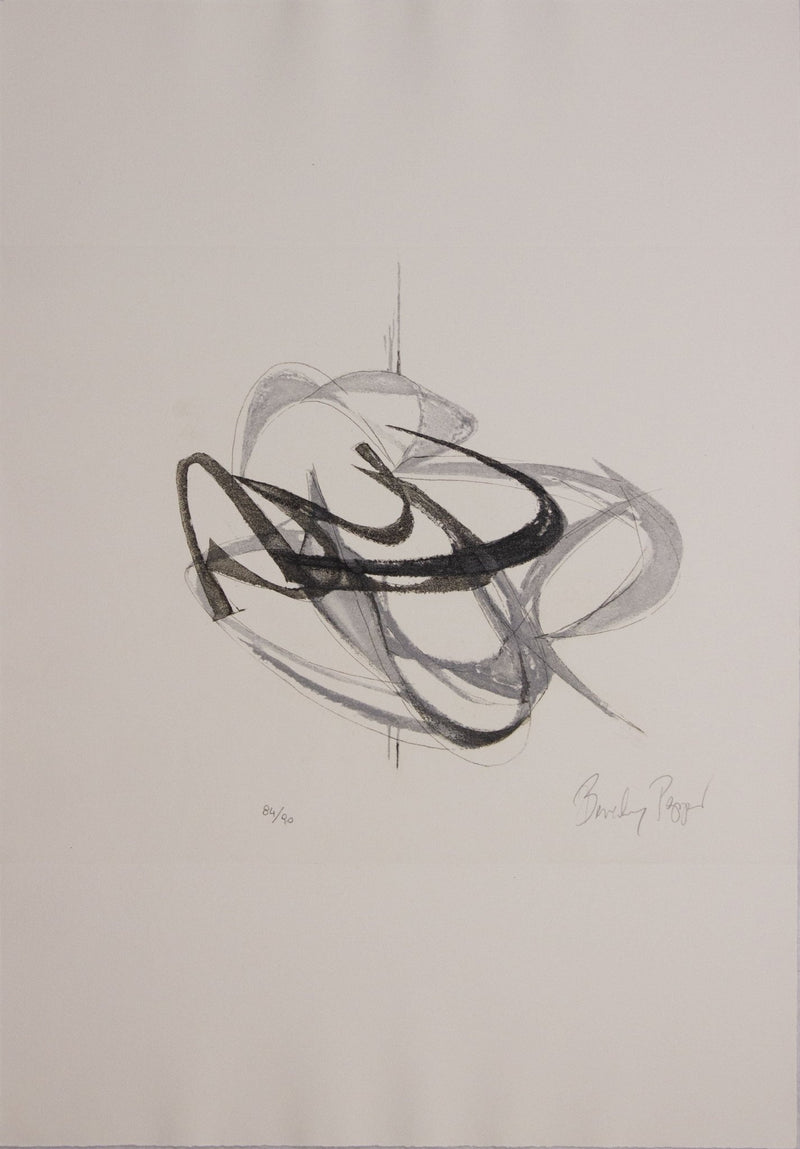
In addition to the monumental works, Pepper develops smaller works and graphic experimentations that allow to closely observe the construction of forms. Also in the works on paper emerge interest in geometric rhythm, tension between surfaces and the ability to suggest volumes through essential elements.
Beverly Pepper leaves a fundamental legacy in the history of sculpture of the twentieth century. Her research has shown that industrial materials, geometric abstraction and landscape sensitivity can coexist in works capable of establishing a deep relationship with people and places. Her art is not limited to being observed, but invites us to live space in a new way, transforming sculpture into a physical, perceptive and cultural experience.
Do you like Beverly Pepper?
Leave your email to receive updates on newly available works and news about this artist.
Beverly Pepper
Art that lives in your spaces
Choosing a work by Beverly Pepper means making room for an individual artistic language. The works gathered here suggest combinations and perspectives to bring into your own surroundings, letting art guide your gaze.

DISCOVER THE ARTIST
Frequently asked questions
Answers to common questions about Beverly Pepper, the artist’s life, works and value on the art market.
What materials did Pepper use?
She worked in steel, iron and bronze, among other materials, exploring reflective finishes and surfaces marked by industrial processes.
How do her sculptures relate to the landscape?
Land, paths and forms are integral to her site-based works, which visitors discover by walking and changing viewpoint.
Which work is in the catalogue?
EmporiumArt lists a signed original etching from 2016.
Which exhibition marked her work with metal?
In 1962 she took part in Sculture nella città in Spoleto, where she worked on metal sculpture.
Where is the Beverly Pepper Park?
The park opened in 2019 in Todi, Umbria.