
Painter
Salvatore Emblema
Italy, 1929–2006
Stay up to date with this artist
Leave your email to receive updates on newly available artworks and news about this artist.
Artworks by Salvatore Emblema
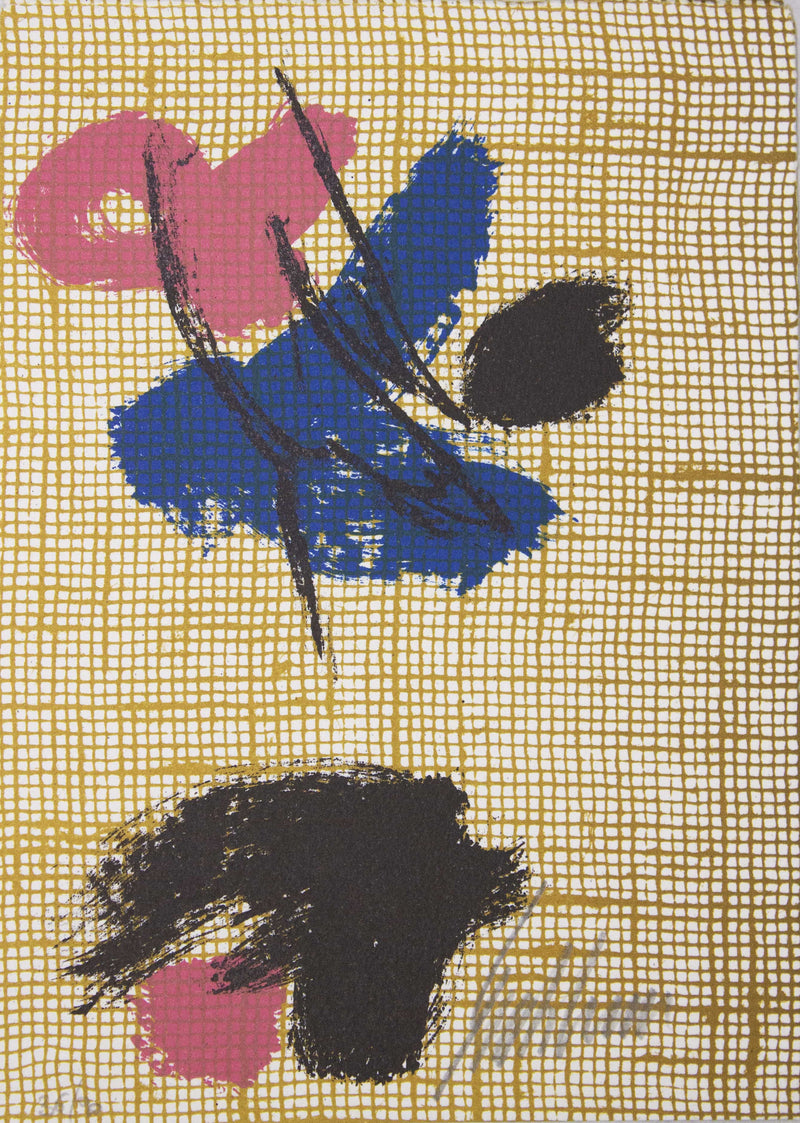
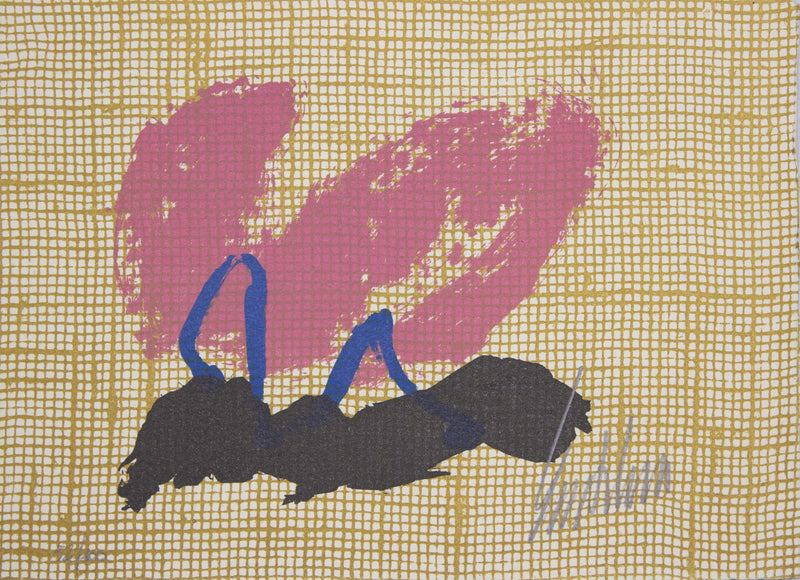
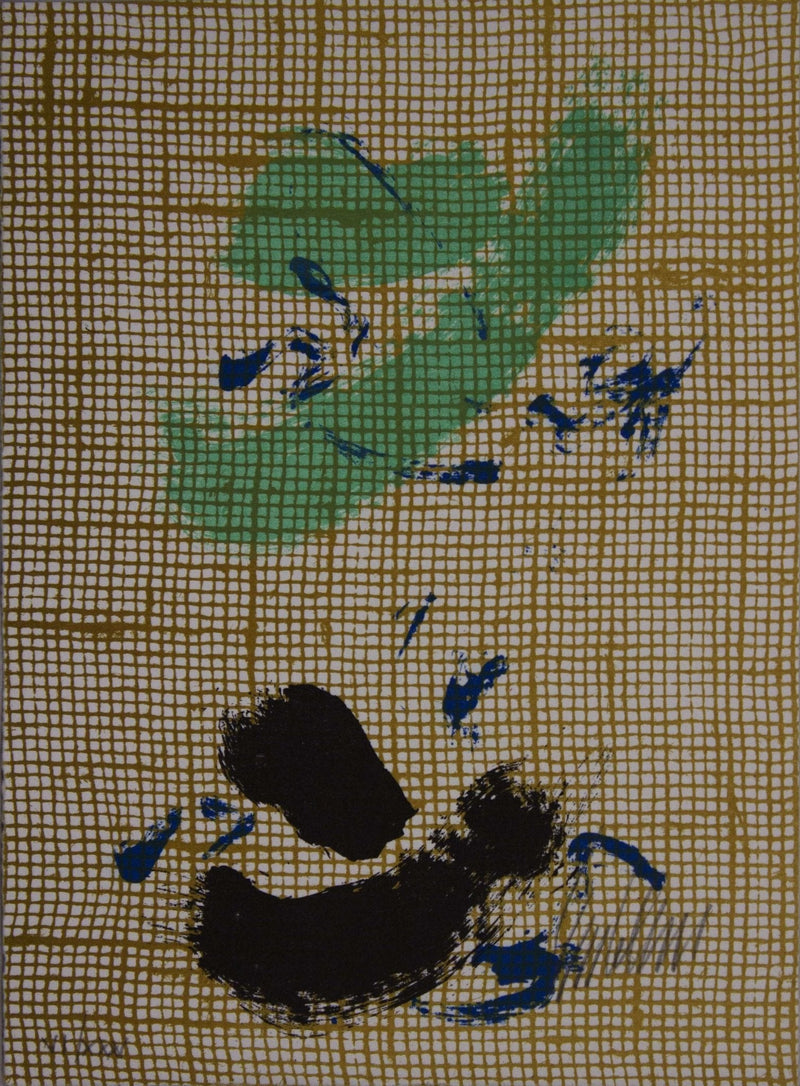
5 artworks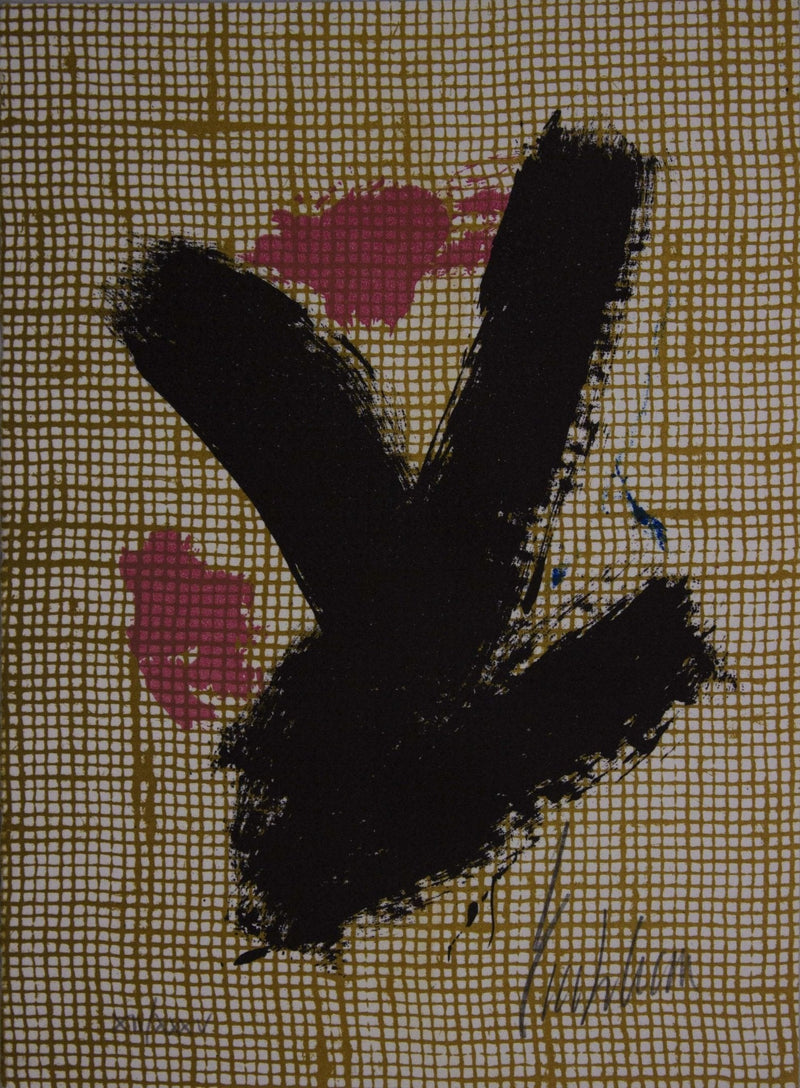

Biography of Salvatore Emblema
In the paintings of Salvatore Emblema, canvas is not merely a support: it becomes a structure traversed by light, capable of revealing what lies beyond the surface. The Campanian painter developed a distinctive language through detessitura, a process that removes threads from the fabric and brings natural pigments, voids, and real space into relation. The landscape around Vesuvius, from which many of his colored earths…
Read the full biographyClose the biography
In the paintings of Salvatore Emblema, canvas is not merely a support: it becomes a structure traversed by light, capable of revealing what lies beyond the surface. The Campanian painter developed a distinctive language through detessitura, a process that removes threads from the fabric and brings natural pigments, voids, and real space into relation. The landscape around Vesuvius, from which many of his colored earths originate, remains a tangible presence even in his most pared-down artworks.
Education and Material Experiments
Salvatore Emblema was born in Terzigno, in the province of Naples, in 1929. He grew up in an area dominated by Mount Vesuvius, whose volcanic earth and natural features would play a fundamental role in his artistic research. He attended the Institute of Art and the Coral School of Torre del Greco. In 1948, he moved to Rome, where he became part of the capital's artistic scene. His early artworks include compositions made with dried leaves, known as fullographies. From the outset, these artworks demonstrate an interest in natural materials and processes outside traditional painting.
In the 1950s, Emblema explores materials in greater depth. He uses leaves, stones, volcanic earth, and pigments derived from the natural environment. The material is not used solely to create decorative effects. It becomes an integral part of the artwork's meaning. L'The artist seeks to establish a direct relationship between painting and nature, using materials that retain a connection to their place of origin. In 1956, he holds a solo exhibition at the Galleria San Marco in Rome. That same year, he travels to the United States, where he encounters contemporary artistic practices.
L's American experience represents an important stage in Emblema's development. L'The artist observes the explorations of American abstract painting, showing particular interest in Mark Rothko. Reflection on color and the perception of space helps shape his artistic research. However, Emblema does not simply adopt the language of Abstract Expressionism. He develops a personal approach to painting, in which color must engage with the support and with light. L'Encountering American art strengthens his interest in a surface capable of transcending its material dimension.
The Color of the Earth and Detessitura
One of the most distinctive features of Emblema’s oeuvre is the use of earths and natural pigments. Materials from the Vesuvian area play a central role. This choice is not driven solely by chromatic considerations. The earth introduces a tangible relationship with the landscape and the memory of the place into the artwork. The colors may have warm, brown, reddish or muted tones, depending on the characteristics of the pigments used. Painting thus becomes the result of a direct relationship between natural material and artistic intervention.
Deweaving is Emblema’s most original contribution to contemporary painting. The process involves selectively removing threads from the canvas weave. The Lartist artworks directly on the support, altering its structure. The surface is no longer a completely closed plane. Through the openings created by deweaving, light and the space behind the canvas become perceptible. The painting thus establishes a relationship with the environment in which it is placed. Transparency is not achieved through a simple translucent layer of paint. It arises from the physical transformation of the canvas.
In traditional painting, the canvas is generally considered a support for receiving color. Emblema radically alters this relationship. The textile structure becomes a compositional element. The threads left on the surface contribute to the construction of the image, while those removed allow light to pass through it. The relationship between weave, color and void produces variable perceptual effects. The Lwork can change depending on the viewer’s position and the lighting conditions.
Transparency, light and space
Color occupies a central place in Emblema’s practice. The fields of color can be simple and built from natural hues. Their presence is altered by the structure of the canvas. The dewoven areas create a relationship between the painted surface and real space. Light contributes to the perception of color, accentuating the differences between opaque and transparent areas. Lthe artist thus develops a form of painting in which color cannot be separated from its support.
Emblema’s dewoven artworks do not merely represent a space. They interact with the real one. The wall behind them may be visible through the canvas. Changes in light alter the perception of the image. The Lwork therefore establishes a direct relationship with the architectural environment. This approach brings Emblema’s practice closer to some of the major experiments of the second half of the twentieth century aimed at moving beyond the painted surface.
Throughout his career, Emblema takes part in numerous exhibitions in Italy and abroad. His research is appreciated for the originality of its technical process and its development of an independent conception of painting. Engagement with international artistic movements does not erase his connection to the Vesuvian region. Nature remains a fundamental presence, both through the materials and through his interest in light.
Printmaking and artistic legacy
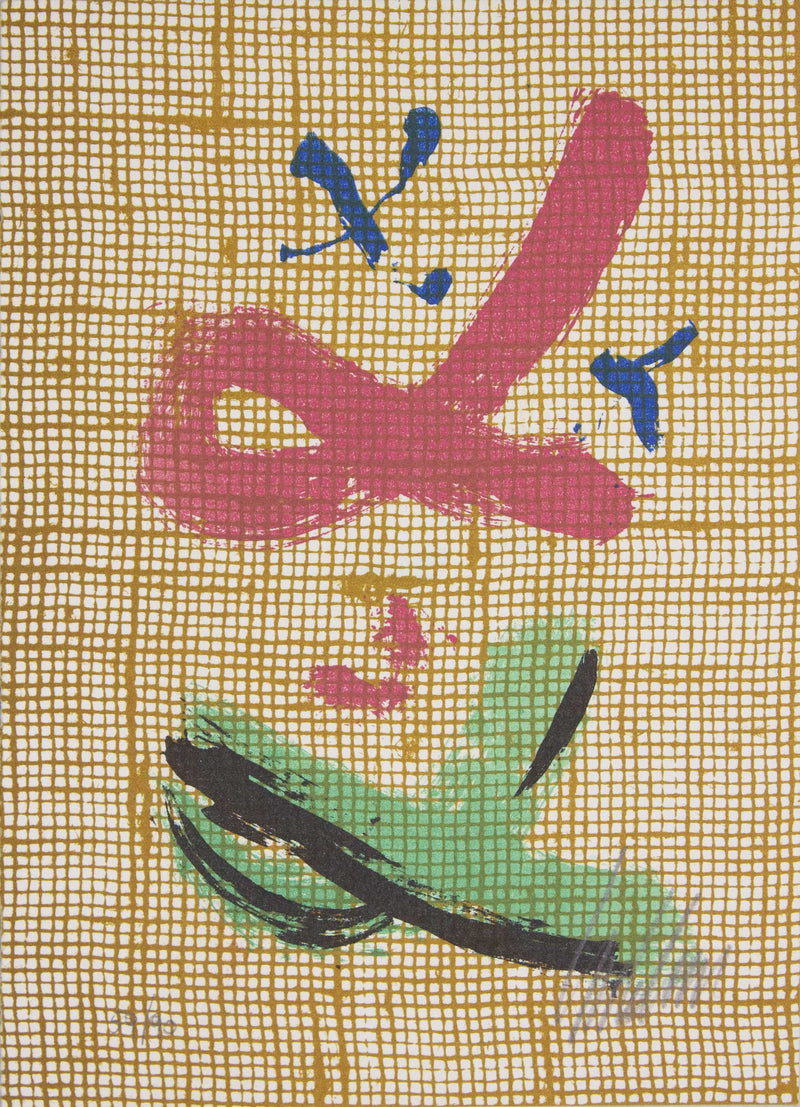
Emblema’s oeuvre also includes artworks on paper and artworks created using processes other than de-weaving. In cataloguing, it is important to distinguish carefully between artworks unique, drawings, mixed media, and prints. The presence of natural pigments or hand-applied elements does not automatically qualify a work as a lithograph or screenprint. Likewise, a photographic reproduction of a de-woven canvas does not possess the material characteristics of the original artwork. For print editions, the actual process used, the edition size, and the available documentation must be verified.
Emblema continues to develop his artistic research while maintaining strong expressive consistency. Transparency, the relationship with light, and the use of natural materials remain central elements of his oeuvre. He dies in Terzigno in 2006. His oeuvre is subsequently explored through exhibitions, studies, and initiatives dedicated to promoting his career.
Salvatore Emblema holds a distinctive place in the history of Italian art in the second half of the twentieth century. De-weaving represents a technical and conceptual solution capable of changing the relationship between painting, support, and environment. Through an essential visual language, the artist transforms the canvas into a surface permeated by light. His contribution lies in developing a form of painting in which natural materials, color, and space become inseparable elements.
Do you like Salvatore Emblema?
Leave your email to receive updates on newly available artworks and news about this artist.
Salvatore Emblema
Art that lives in your spaces
Choosing an artwork by Salvatore Emblema means making room for an individual artistic language. The artworks gathered here suggest combinations and perspectives to bring into your own surroundings, letting art guide your gaze.

DISCOVER THE ARTIST
Frequently asked questions
Answers to common questions about Salvatore Emblema, the artist’s life, artworks and value on the art market.
Who was Salvatore Emblema?
Salvatore Emblema (1929–2006) was an Italian artist born in Terzigno, known for his research on transparency and the relationship between colour, canvas and light. His painting enhances the structure of the support rather than hiding it completely.
Why did Salvatore Emblema make the canvases transparent?
Transparency allows the light and space behind the painting to participate in the perception of the artwork. Emblema worked on the texture of the fabric and on color to overcome the idea of the canvas as an opaque and closed surface.
What does deweaving mean in Salvatore Emblema's artworks?
De-weaving refers to the intervention on the weave of the canvas, often through the removal or loosening of threads, to obtain a surface more open to light. It is an important characteristic of part of his production, to be verified in the concrete artwork.
Is Salvatore Emblema an artist of informal art?
His oeuvre dialogues with the research of the second half of the twentieth century on matter and monochrome, but the centrality of transparency gives it a specific physiognomy. Movement labels can help contextualize it, without exhausting the meaning of the artworks.
How is an artwork by Salvatore Emblema preserved and evaluated?
For processed canvases it is important to check tension, texture, possible deformations, restoration interventions and conditions of exposure to light. Authenticity, dating, provenance, dimensions, documentation and comparisons with similar artworks also affect the value.
Discover more artists
Explore more leading figures in modern and contemporary art


